 |
 |
|
Hi, and welcome back to Line Sheet. Happy Presidents’ Day?
I spent the weekend in California, healing my central nervous system. It was an actual pleasure bumping into several of you on Thursday night at Arroz & Fun, retailer-turned-restaurateur Humberto Leon’s Lincoln Heights spot. The party—pegged to an exhibition of Spike Jonze’s photographs of Björk, selected by Leon—attracted several New York transplants, including Leon’s Opening Ceremony co-founder Carol Lim, Hommegirls’ Jen Brill, and Kim Gordon. (Never-New Yorkers including Scott Sternberg were there, too.)
As one friend texted, “That party was like a time warp back to 2009. It was sweet.” (Except that the sponsor was WeTransfer, not Stolichnaya. Apparently Rivers Cuomo was also there, but I didn’t see him.) Anyway, everyone lives on the Eastside of Los Angeles now. To my dear Phil, whom I hadn’t seen since before the pandemic: I swear I am not on Ozempic, but I appreciate the sentiment!
By the way, if you’re still reading the top of this email and convincing yourself that’s enough, fix your embarrassing misstep now. Look, you at least know how to read your name, right? It’ll probably end up in here someday, so worth getting ahead of things.
And for those of you who just left the Burberry show in London: Can’t wait to see you in Milan. Before I hop back on a plane, though, I’m tying up some loose ends from last week’s utter deluge. Enjoy this gathering of fun-sized intel across many of our favorite topics, from a new creative director appointment of sorts (no, not Alessandro’s new job, not yet) to all the fashion-media news fit to gossip about.
Mentioned in this issue: Carlos Nazario, Karlie Kloss, The Cut, Jim Bankoff, Anna, Ralphcore, David Haskell, Stella Bugbee, Roksanda Ilinčić, Emily Gould, Loro Piana, Ruba Abu-Nimah, Daniel Lee, Charlotte Cowles, Lindsay Peoples, Carol Smith, José Neves, Farfetch, Bom Suk Kim, Ben Lerer’s Group Nine, and Antoine Arnault’s new villa.
|
|
A MESSAGE FROM OUR SPONSOR
|
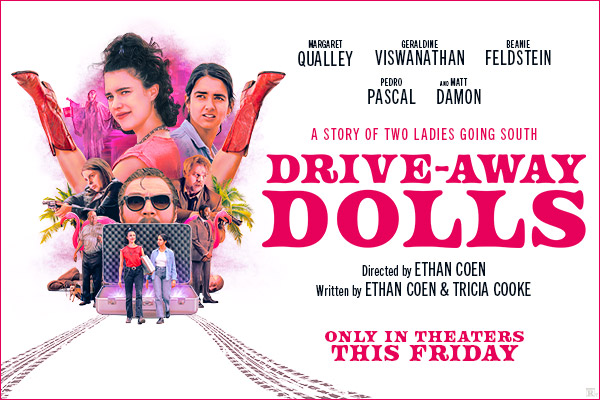 |
From Ethan Coen and Tricia Cooke, this comedy caper follows Jamie, an uninhibited free spirit bemoaning yet another breakup with a girlfriend, and her demure friend Marian who desperately needs to loosen up. In search of a fresh start, the two embark on an impromptu road trip to Tallahassee, but things quickly go awry when they cross paths with a group of inept criminals along the way.
|
|
|
|
|
- Ruba has a new job?: Former Tiffany brand head Ruba Abu-Nimah may be the new creative director of Moncler, at least according to her own social media. Abu-Nimah, who has been consulting for Balenciaga in recent months, had the title in her Instagram bio early last week, but since removed it. If you recall, Abu-Nimah—best known to lifers for her years spent working with Bobbi Brown—had a short but impactful run at Tiffany, where she clashed with LVMH heir Alexandre Arnault. (He has since brought in former Rimowa pal Hector Muelas as chief brand officer.) Moncler’s whole gestalt in the past few years has been using smart marketing to sell a classic item, so I’m curious to see how Abu-Nimah iterates on that. A rep for Moncler did not respond to a request for comment.
- I went shopping on the Apple Vision Pro: So I used it for five minutes to shop the Mytheresa app. I’m sure you know that the thing itself is heavy and uncomfortable; it made me worry about my 20-20 eyesight. As for the experience: In the app, the user is prompted to shop a “Capri edit” and a “Paris edit.” I almost bought a Loro Piana bathing suit just for kicks (cheaper than you’d think), but then I just bought the Eres bathing suit that was served to me next. The verdict: There is absolutely no use case in which I can see this being a desirable way to spend money, but I admire a company like Mytheresa for trying. Let us never speak of it again.
- And finally, a parting note on José Neves: On Thursday, after Farfetch C.E.O. José Neves broke the news to employees that he was out, he sent a memo to the company’s partners—the boutiques and brands that sell through the platform—notifying them of his exit. His closing note: “I will be celebrating every success that Farfetch achieves for many years to come!” (Cue the soundtrack of impending doom. Vivaldi?)
The likelihood that Farfetch survives this catastrophe is decreasing with every superfluous exclamation point, even if Bom Suk Kim, the 45-year-old C.E.O. and founder of Coupang has the right intention to streamline. Kim, currently worth $2.8 billion, according to Forbes, is a Harvard Business School dropout who founded Coupang in 2010 as a South Korean Groupon knockoff. Now it’s the biggest e-commerce player in the country, earning it an “Amazon of” qualifier. And like Amazon in its early years, Coupang has prioritized growth, only achieving full-year profitability in 2023. The company’s current market cap is $28 billion, down from nearly $85 billion at the close of its first day of trading on the New York Stock Exchange in 2021.
As Coupang reckons with the wreckage, there is a faction of former Farfetch employees in mourning, considering what could have been. They believe that, by cutting roughly two-thirds of jobs and focusing on the core marketplace business, they could have built a healthy company with $200 million, $250 million a year in EBITDA. I suspect that’s true.
And yet, even that would not have been easy. Earlier in the week, before the news of José’s departure got out, I caught up with one of Farfetch’s competitors, who reminded me that the luxury marketplace equation was never totally balanced. Farfetch struggled for years with acquiring the right products. They would often front money to the boutiques to make bigger buys in order to stock up on must-have items that were likely to be searched online. The brands didn’t like this, and while some eventually acquiesced, selling directly through Farfetch themselves, others forbade retailers from selling their brand through the platform.
Many brands dislodged from Farfetch long before the delisting became a possibility. The truth is, Farfetch was never a desirable place to be unless you were an independent boutique, looking to move inventory. For consumers, it was never a destination, it was a last resort. If Kim accepts that reality, perhaps Farfetch has a fighting chance of survival. Not that anyone will care.
|
| And now, for a special holiday treat: a brief review of the legacy media chatter du jour… |
 |
| Life & Legacy Media |
| News and notes on the recent murmurs and micro-controversies emanating from the print, and print-adjacent, salt mines. |
|
|
|
| “Seems like Carlos Nazario is the obvious i-D choice to replace Alastair Mckimm?” an editor told me the other day, casually referring to the trending gossip on who might fill the vacancy at the top of i-D, the once very directional magazine where Edward Enninful got his start and which Karlie Kloss recently rescued from the death grips of Vice Media. Nazario, now style director at Harper’s Bazaar, seemed to check various boxes. After all, he was working for both Vogue and i-D before he joined the Hearst publication last fall.
“I can’t imagine a world where they don’t offer it to him,” this person continued. “Also, Alastair lives in New York”—ed. note: does he?—“so I don’t think it would have to be someone in London. Derek [Blasberg] would never do it, glad you saw through that too. All these jobs go to stylists now instead of editors, besides.” (Yes, as loyal readers know, I recently defused the terribly unsophisticated rumor that Kloss was going to hire her friend Derek to run the magazine. Neither one of them needs that friction. I’m sure Blasberg will be a loyal adviser instead.)
Anyway, I agree with most of this person’s analysis, but given that Nazario was part of the Mckimm regime, and something went awry between Mckimm and Kloss, I’m not sure it’ll be easy to lure him back. Also: I am hearing that the unwieldiness of the unwinding from Vice Media is legit and is a big reason why Bedford—Kloss’s entity that now owns i-D—had to temporarily cease publication. Why they couldn’t just hop on WordPress and start publishing, I don’t know, but it is very expensive and time-consuming to migrate a content archive from one platform to another. We’ve all been through it, so let’s give them some grace.
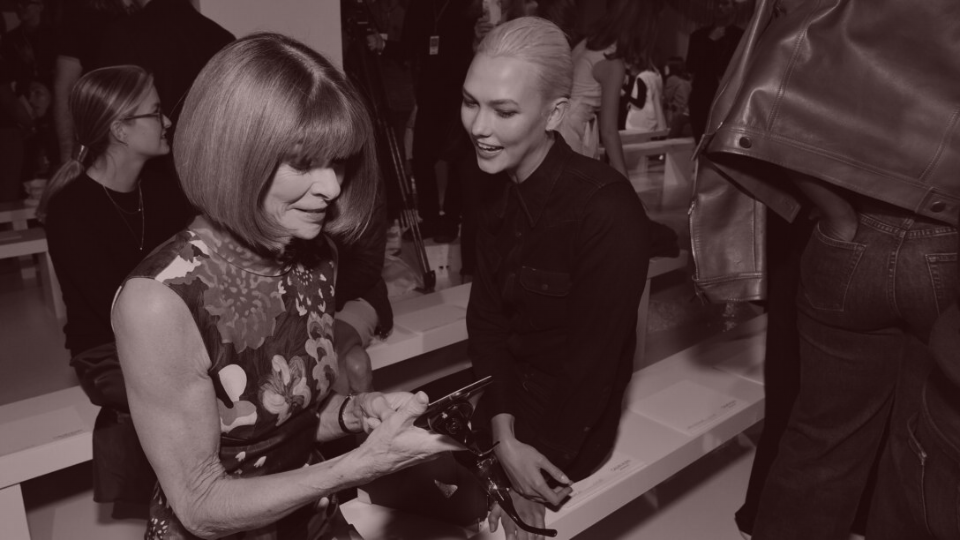
Maybe it’s February, or maybe it’s because a new season is upon us and gossip is a traveler’s best friend, but the i-D microdrama has been one of many bits of legacy intrigue I’ve picked up in recent weeks. Similarly. I’m not sure how thrilled the Vogue people were about the news of Anna Wintour’s Joe Biden fundraiser during Paris Fashion Week, which leaked the day after the Met Gala theme announcement. Although I can’t imagine anyone inside of One World Trade is excited about this year’s “The Garden of Time” concept, either—ugh, there are going to be so many flowers, and probably several pocket watches—so perhaps the Biden news was a welcome distraction.
To me, though, this all raises a larger question. Wintour is free to support whichever candidate she chooses, and many top executives from various industries cap their careers by becoming mega-bundlers. Wintour’s own politics aren’t a secret, either. Vogue endorsed Hillary in 2016, and even went as far as having designers create T-shirts to raise money for her that cycle. Wintour was also expected by many to use the ostensible Clinton administration as an elegant moment to step down and take on an ambassadorship. (Though there are disputes about whether this was real. Anyway, we’ll never know.)
The Newhouses have long permitted, and once essentially encouraged, their very top editors to use their stations effectively as family offices. To be clear, Vogue staffers have nothing to do with the Paris fundraiser. But Wintour’s staff have worked on projects that have nothing to do with Vogue, or even Condé Nast, which has caused frustration in the past among certain employees, some of whom are now part of the union. (Like when they had to manage Roger Federer’s social media account. A Vogue rep did not respond to a request for comment on that.) When it comes to the Met Gala, Condé Nast is an official sponsor and benefits greatly from the exposure, so I’m not sure there’s much to complain about there. But when it comes to employees participating in anything related to politics, it’s more complicated.
Also, just given how charged things have become, this sort of thing seems increasingly anachronistic. One editor juxtaposed the Biden fundraiser with Condé Nast’s guidelines regarding what employees can say on social media about the Israel-Hamas war. The guidelines are actually pretty loose—employees are okay to attend rallies, for instance—but not everyone feels that way. My guess is that Wintour would dismiss any concerns—with an if-you-don’t-like-it-you-can-leave attitude—but maybe she should reconsider. In the old days, Condé Nast famously had two sets of rules: one for Si’s favorites, and then another for everyone else. But that culture faded as those editors exited. Wintour is the last connection to that world. |
|
A MESSAGE FROM OUR SPONSOR
|
|
From Ethan Coen and Tricia Cooke, this comedy caper follows Jamie, an uninhibited free spirit bemoaning yet another breakup with a girlfriend, and her demure friend Marian who desperately needs to loosen up. In search of a fresh start, the two embark on an impromptu road trip to Tallahassee, but things quickly go awry when they cross paths with a group of inept criminals along the way.
|
|
|
|
|
| I am so not on Twitter anymore (who has the time?), but the discourse around Emily Gould’s “The Lure of Divorce,” and Charlotte Cowles’ “The Day I Put $50,000 in a Shoe Box and Handed It to a Stranger,” published last week on The Cut, the Vox-owned, New York magazine sub-brand, traveled to several of my group texts, forcing me to dip in and then zoom out. After years of ho-hum #content, The Cut is having a mini moment. Its recent fashion issue was aimed straight at an audience willing to talk back: disenchanted Millennial/Gen X borderlines with an ax to grind, perhaps the core competency of the David Haskell era of New York.
But it’s only been during the past couple of months—weeks?—that The Cut itself has consistently delivered such fodder. Three years in, it seems, editor-in-chief Lindsay Peoples has finally settled into her role. Remember, she started this job during peak-pandemic times, and it takes a minute to assemble the right team. I hear that New York features editor Marisa Carroll, who was recently promoted to executive editor of The Cut, is excellent. Casey Lewis’s what-tweens-are-buying piece was also excellent. The Cut also brought in Carol Smith, the beloved former publisher of Harper’s Bazaar and Elle, to consult.
Earlier last week, Digiday published a fluffer touting Vox’s investment in The Cut, which can be boiled down to the fact that it was a small growth vehicle inside a right-sizing company. According to The Information, Vox’s revenue declined 15 percent last year as the advertising market wobbled, although I’m told by multiple people that that figure is not right. A person close to Vox’s executive team said that the numbers were actually better than that, but others inside Vox Media posited that things are way worse, although what “worse” means is debatable. Remember, the company took on a $100 million investment from Jay Penske last year on terms that cut its previous 2015 valuation in half, to $500 million.
The decline can be attributed, in part, to the fact that the company stopped making so many television shows, which generated a lot of topline revenue but were not profitable. Several properties, including Vox.com, saw significant declines over the past couple of years. The Dodo, the animal video site thing that was part of the Group Nine acquisition, saw the bottom drop out when the YouTube algorithm changed (although I’m told it’s still profitable).
Vox has always been a confusing collection of properties, patchworked together in a fairly competent, but not entirely logical, way—the result of its origins, presumably, as a sports blog ad network. C.E.O. Jim Bankoff has been a far superior executive than his generational peers, like BuzzFeed’s Jonah Peretti and Vice’s old boss Shane Smith, but many of Vox’s problems stem from chasing trendy revenue opportunities rather than being very good at one thing, resulting in the closure of several publications, and the dwindling of others. I’ll never forget when they tried to make Racked, the shopping brand where I was once a contributor, into a collection of Facebook videos. It shuttered in 2018.
Amid a crazy and regret-filled era of digital media known as the past decade, Vox tried to show that there was a way to make bigger into better. But I always thought it was super weird when Vox acquired New York Media in 2019, and even weirder when it acquired Ben Lerer’s Group Nine, which, along with the Dodo and a bunch of other stuff, includes Thrillist and PopSugar. I know that revenue for many of the Group Nine properties plummeted after folding into Vox Media. (PopSugar’s revenue goal is a sliver of what it was when it was absorbed into the larger business, I’m told by people with direct knowledge.)
Meanwhile, many of the other brands in the portfolio faded. Vox.com lost altitude after its founders departed. The Verge, another seminal internet-era brand, is also a shell of its former self. Recode, where my husband used to work, was once the most influential brand in tech. Now, it has since folded into Vox.com. (That said, Kara Swisher’s Pivot podcast and sub-brand is probably the company’s shiniest asset.)
I’m not positive that heavily shared pieces about early midlife crises, sumptuous as they may be, are the best pairing for luxury advertisers, but The Cut attracts wealthy women, young and old, and it’s worth doubling down on. New York, itself, seems to be prolonging the moment when it is no longer New York and merely a sinew connecting its entities, like The Cut, Vulture, and Intelligencer. The brilliant Adam Moss, Haskell, Jared Hohlt, Stella Bugbee, and others conceived these miniature digital magazines to help the master brand thrive in the digital age. But phrases like digital age seem as old-fashioned as the concept of magazines themselves. Whether she knows it or not, Peoples’ real task is building a version of The Cut that can outlive New York.
My guess is that, deep down, Bankoff realizes this. But he also knows that, in this moment, better is better, and worth investing in. New York may not be a giant business, but it’s prestigious and beloved, and he needs to figure out how to make it live on in spirit one day rather than sell it to Karlie Kloss. Best of luck to them all. I believe I speak for all college-educated, elder Millennials when I say we welcome the baiting. B.R.B., gotta order another pair of $860 High Sport stretchy pants. |
|
|
|
|
| You know those British fashion editors who are so nasty about designers in every city except for London, where they wax via Instagram about the artistic merit of even the most delusional, least progressive of creators? It feels so dated. From afar, I did like Roksanda Ilinčić’s tied-up-with-a-leather-string suiting and of course, J.W. Anderson’s pointelle underthings. As for Burberry: I am desperate to see these clothes in person. From afar, the coats looked good. Perhaps it was Daniel Lee’s best collection since joining. I still don’t know what the big idea is though, and I think a brand like this needs a big idea. [Vogue Runway]
My BAFTA best-dressed awards go to Cillian Murphy (in Zegna) and Carey Mulligan (in vintage Dior). I have little interest in Murphy (too creepy), but he’s been the best-dressed guy this entire awards-season run. Also, let’s give it up for jewelry designer Irene Neuwirth, who escorts her partner, the filmmaker-producer-writer-funny guy Phil Lord, to a lot of these events. She always looks so perfect. [Vogue and Instagram]
Wouldn’t you know it, Guess? Inc. announced its acquisition of Rag & Bone on Friday morning. Sale price: $56.5 million, so I assume pretty much no one made any money, but at least it can continue operating as is. WHP Global, a licensing firm, co-purchased the intellectual property. [Business Wire]
Brand consultant Ramya Giangola and Ida Petersson, the former buying director at Browns, are launching Good Eggs, a full-service agency—they do everything. [WWD]
Cool girl Danielle Goldberg on dressing Hollywood’s cool girls. [New York Times]
I saw someone wearing a Polo cap while walking around the Silver Lake Reservoir on Saturday. [Town & Country]
Jacob went to the pseudo-Trump rally at Sneaker Con. [Wall Street Journal]
Antoine Arnault bought a $19 million villa near his dad’s house in Saint Tropez. Something is wrong with me, but that doesn’t even sound like that much money anymore. [Bloomberg]
Altadena is just a little too far for me, but I understand the appeal. [New York Times]
And finally… Hey Condé Nasties, did you get your bonuses? |
|
|
Until Wednesday,
Lauren |
|
|
|
| FOUR STORIES WE’RE TALKING ABOUT |
 |
|
 |
| Buffett’s Shari Short |
| You don’t get as rich as Buffett without knowing when to cut and run. |
| WILLIAM D. COHAN |
|
 |
|
 |
| Catch-81 |
| The Cafe Milano crowd on the political topic du jour. |
| TARA PALMERI |
|
|
|
|
|
 |
|
|
|
Need help? Review our FAQs
page or contact
us for assistance. For brand partnerships, email ads@puck.news.
|
|
You received this email because you signed up to receive emails from Puck, or as part of your Puck account associated with . To stop receiving this newsletter and/or manage all your email preferences, click here.
|
|
Puck is published by Heat Media LLC. 227 W 17th St New York, NY 10011.
|
|
|
|