{{ 'now' | timezone: 'America/New_York' | date: '%b %d, %Y' }} |
|
|
|
Happy Sunday, and welcome back to The Best & The Brightest. I’m Leigh Ann
Caldwell. If you made it out to the Great American State Fair on the National Mall this weekend, please let me know if it was as empty as it looked. (I took my kids to an early screening of Minions & Monsters instead. My 13-year-old son’s review: “It had no plot, but it was so funny.”) Was there no P.S.A. or advertising for the event?
I was on Meet the Press this morning to share my latest reporting, which you can watch
here. Interestingly, one of the guests, Kansas Sen. Roger Marshall, said that he “will be on the ballot on Election Day” and was definitively “ruling out” any appointment to the Trump cabinet. Kansas, which could be in play this year, has a new Senate vacancy law on the books that would enable an appointee to fill a vacant seat until the 2028 election.
Naturally, this has sparked speculation that Trump could appoint Marshall to a cabinet position to ensure a Republican was in the seat for the rest of his term.
Tonight, my deep dive into how the SAVE America Act has divided the Republican Party, paralyzed Washington, and could even cost the G.O.P. the midterms. Plus, some news about Rep. Alexandria Ocasio-Cortez in the aftermath of the latest democratic socialist wave in New York City and the ongoing lack of briefings
about Iran on Capitol Hill.
Mentioned in this issue: Alexandria Ocasio-Cortez, Bill Cassidy, John Thune, Jen Psaki, Mike Johnson, Chip Roy, Stephanie Murphy, Jay Clayton, Mike Lee, Darializa Avila Chevalier, John Cornyn, Hakeem Jeffries, Anna Paulina Luna, Marc Short, and more. |
- A.O.C.
watch: While some Democrats continue to fret about the election of two democratic socialists in New York City last week, Rep. Alexandria Ocasio-Cortez sent a conciliatory message to progressives and the Democratic Party during an interview with MS NOW’s Jen Psaki. “If you are already panicking and sending little messages in your group chats about how these people need to be reined in and tamped down and shown their place, you are creating the antagonistic
dynamic that we do not need,” she said. “These are two young, talented, intelligent women that got elected against all odds, against millions of dollars. Perhaps there is something we can learn from them.”
A.O.C. knows from experience, obviously, and might be the ideal peacemaker. A Democratic Socialists of America member who upset a powerful incumbent in 2018, she was rightfully construed as a disruptor and subsequently struggled to gain the trust and support of her colleagues. Of
course, she didn’t always help herself, either. After she won her primary eight years ago, she immediately got to work trying to take out other incumbents, including traveling to Florida to campaign against centrist Rep. Stephanie Murphy. She continued to work with Justice Democrats for the next couple of election cycles to defeat insufficiently progressive members of the House.
But now, A.O.C. is a dues-paying member of the D.C.C.C. She didn’t endorse Darializa Avila Chevalier or Claire Valdez, even though she did endorse six less-obstreperous D.S.A. state legislative candidates. In fact, she hasn’t endorsed against any incumbent in the last two election cycles. And in that same interview with Psaki, she said that she will support Hakeem Jeffries for leader after the midterms. She’s going to be very interesting to watch over the next year or two for all the obvious reasons. - What Congress?: Sen. Bill Cassidy has announced that he flipped his vote to oppose an Iran war powers resolution last week after a testy exchange with the president on the issue. “Before I could say, ‘Okay, everything's hunky-dory,’ I said I need to be briefed,” he told Margaret Brennan on CBS’s Face the
Nation today. Cassidy was recently among a small group of Republican senators briefed by real estate diplomat Steve Witkoff. Apparently he’d seen enough.
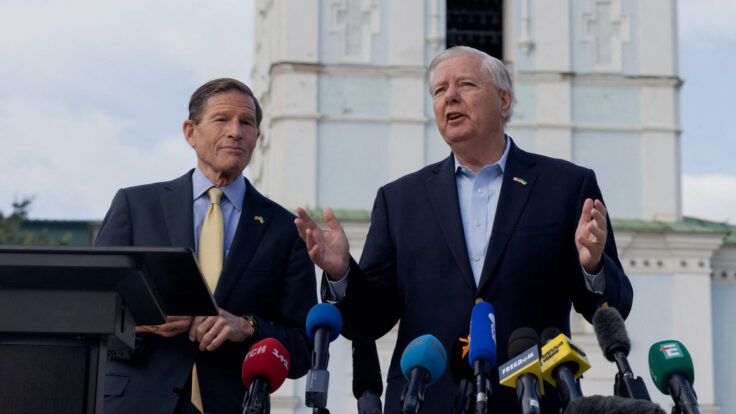
It’s been two weeks since the M.O.U. with Iran was signed, and the full Congress has still not been briefed. Yes, Defense Secretary Pete Hegseth held a classified briefing with a group of conservative House Republicans last week, and negotiators Witkoff and Jared
Kushner briefed House Republicans last week. (They also provided an unclassified briefing for the Gang of Eight, continuing the administration’s pattern of holding briefings for select groups only.) But Democrats have received next to nothing, and notably, Senate Republicans were not part of those select groups.
|
Now, back to Trump’s Washington… |
|
|
|
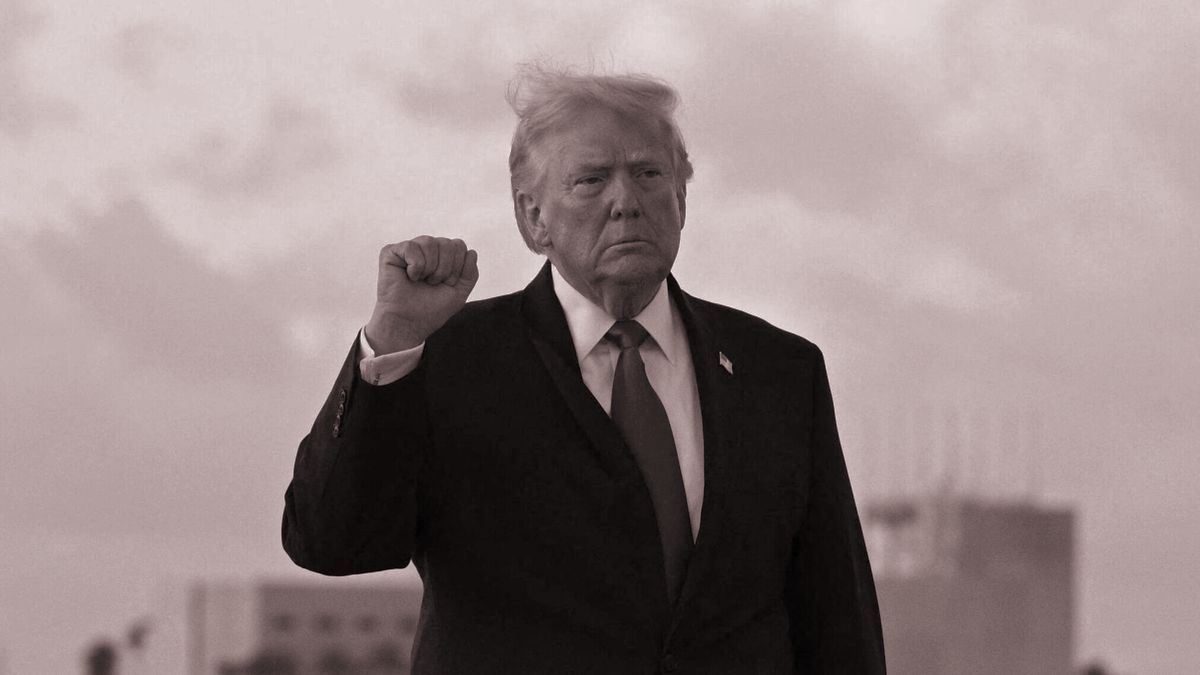
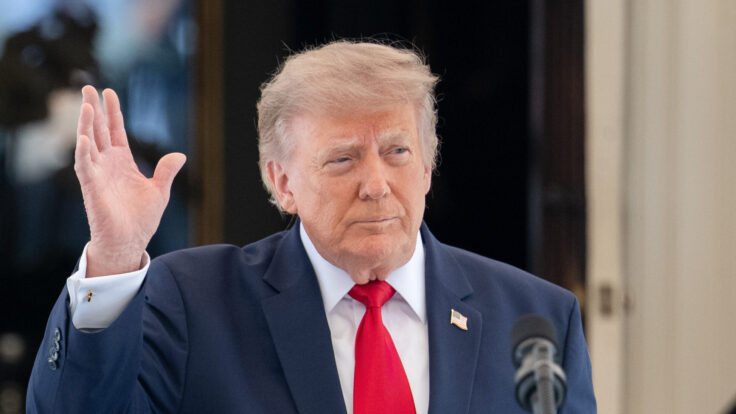
The president has staked everything on passing the SAVE America Act, his divisive voter ID
bill. The result: a Republican civil war over whether feeding the base is the best way to win or merely the fastest way to lose. |
|
|
|
It’s hard to recall a moment when Senate Republicans were more at odds with Donald Trump,
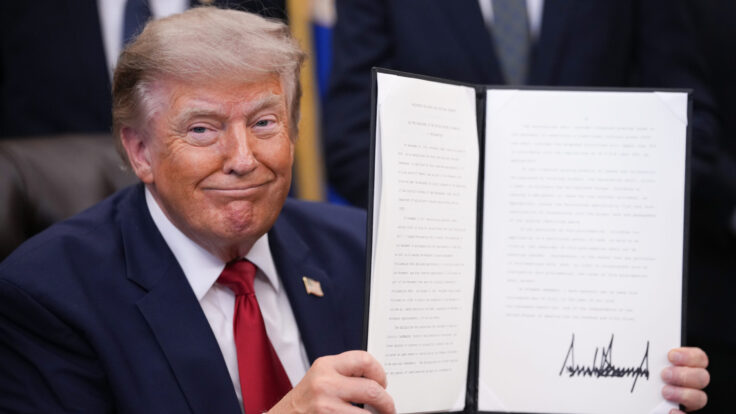
whose all-consuming obsession with the SAVE America Act—his strict voter ID and proof-of-citizenship bill—has paralyzed Congress and pitted G.O.P. lawmakers against one another just months before the midterms. Senate Majority leader John Thune has told the president on numerous occasions that he doesn’t have the votes for the bill, nor the votes to eliminate the filibuster. And yet Trump wants what he wants: In the last few weeks, he’s canceled the signing of a
bipartisan bill to lower housing costs; refused to sign a reauthorization of FISA Section 702, the critical international surveillance tool; sidelined Jay Clayton, his own nominee to replace Tulsi Gabbard as director of national intelligence; and vowed to withhold his endorsement from any lawmaker who doesn’t back the SAVE Act.
The stalemate shows no sign of abating. On Wednesday, Trump spent an hour on Capitol Hill, collectively admonishing Senate
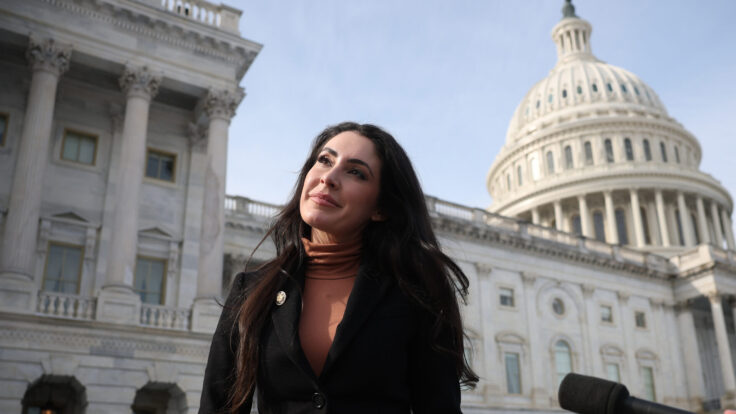
Republicans, also to no avail. One senior Senate aide told me that Trump’s performance did little to change minds, adding that it likely did more harm than good. Also last week, Rep. Anna Paulina Luna shut down the House floor, blocking any legislation from advancing until the Senate does the president’s bidding.
The White House is strategizing other ways to force the Senate’s hand, according to a person familiar with the discussions. But they realize they have few
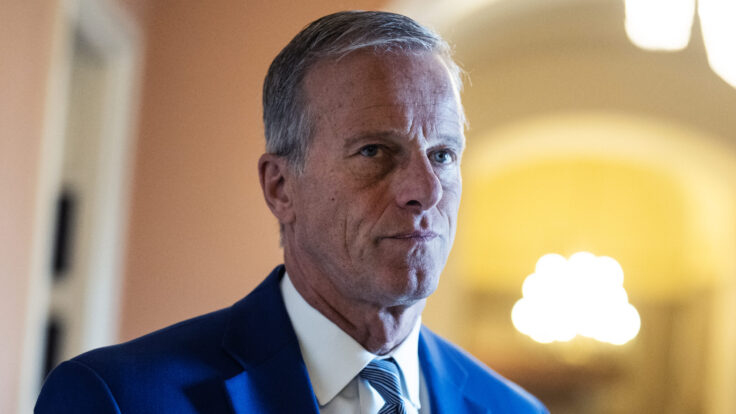
options. Thune, whose relationship with the president has rarely been worse, doesn’t appear to be budging. Both the House and the Senate left town early this past week with little to do amid the president’s blockade.
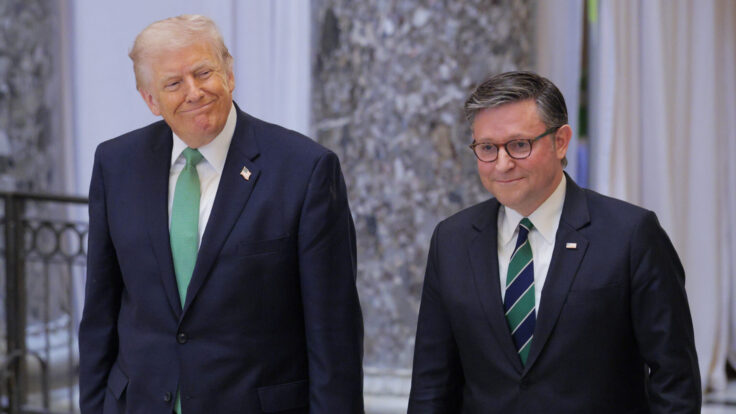
Has a president ever so blatantly worked to undermine his own party, and so close to an election? Speaker Mike Johnson spent nearly three hours in the Oval Office on Thursday, trying to convince Trump that he should sign and take credit for the housing
legislation, which would give vulnerable Republicans something to trumpet on the campaign trail. After the meeting, Trump allowed the bill to be transmitted to the White House, though he still hasn’t agreed to sign it. (It will become law after 10 legislative days, unless the president issues a veto beforehand.) And Johnson’s fingers are crossed that Trump convinces Luna to lift her blockade and legislators can once again legislate—even if this Congress hasn’t been doing much of that
under the best of circumstances.
But the damage will be lasting, regardless. Republicans worry that Trump’s infatuation with so-called election integrity—he continues to insist, contrary to all evidence, that the 2020 election was stolen from him—will not only derail their legislative agenda but ensure that these will be their final months in power. The longer Republicans bicker among themselves and with the president, the worse their odds of retaining their majority. “It’s been a
long session,” one senior Senate G.O.P. aide told me. |
“He’s Setting
the Senate Up for the Fall”
|
The seeds of the present standoff were planted two weeks before Trump even returned to office, when Rep.
Chip Roy first introduced the SAVE Act—responding to the desire of the MAGA base to address alleged voter fraud. Of course, the incidence of actual voter fraud is virtually nonexistent. (The conservative Heritage Foundation, which investigated the issue, found a few dozen cases of in-person fraud or noncitizens attempting to vote, out of billions of legitimate votes over five decades.) House Republicans made the bill a priority and passed it in the first 100 days of the
new Congress.
But it wasn’t until Trump was briefed on the bill, nearly a year later, that the legislation morphed into a rallying cry and a litmus test for Republicans. In February, Senator Mike Lee, who sponsored the Senate version of the bill, along with Ron Johnson and Rick Scott, got some face time with Trump in the Oval Office. By that point, the bill had been expanded to include voter ID requirements. The three conservatives
pitched the president on both the legislation and the changes to the filibuster that would be necessary to pass it.
Trump was sold, of course, and began to fixate on the issue—even as his team was advising him to pivot to the midterms. At a later meeting at his golf club in Miami, he directed that the name be changed to the SAVE America Act. He started to post regularly on Truth Social about it, pressuring the Senate to get it done—and to nuke the pesky filibuster in the
process.
Thune’s resistance to changing Senate rules, which he believes would both diminish the institution and vastly empower Democrats if they retake the upper chamber, has been a central storyline in his falling-out with the president. Conservative activists are mystified about why Thune hasn’t been more aggressive in using every lever at his disposal. “The base actually has reasonable expectations in the sense that they understand if you try and fail,” one conservative strategist told
me. “But the fact that you don’t try infuriates them more than anything else.” (The South Dakota Republican Party tried but failed to censure Thune at its party convention on Friday.)
But the frustrations run both ways. Many Senate Republicans are particularly tired of Sen. Lee, who has turned the SAVE Act into something like a religious crusade. Indeed, I’ve heard from multiple G.O.P. senators and their aides that they no longer recognize the wonky Mormon lawmaker who once worked the
2016 Republican convention to oppose Trump and who championed civil liberties and criminal justice reform. Some of his colleagues have noted, with some bitterness, that Lee has raised nearly $2 million this cycle—much of it from small-dollar donors, thanks to the voter ID issue. But what most infuriates them is that they believe he is setting false expectations for the base, which could depress Republican turnout in November.
Further complicating matters, Trump keeps demanding
that new things be added to the bill, including prohibitions on mail-in balloting and even a transgender sports ban. Republicans are starting to question whether he actually wants to win in November or is instead laying the groundwork to cast blame for the likely loss. “He’s setting the Senate up for the fall,” one Senate Republican strategist told me. “If we lose the House, it becomes the Senate’s fault because they didn’t pass the SAVE Act.” When I mentioned that sentiment to Marc
Short, a former top aide to V.P. Mike Pence, he was in complete agreement: “100 percent,” he told me.
More generously, perhaps, Trump simply has different priorities than the Republican lawmakers who are on the ballot this fall. “Nobody cares about the housing bill at my rallies,” Trump told senators during his trip to the Hill on Wednesday, according to a person familiar with his comments. “But when I mentioned the SAVE America Act, I can’t get them to sit
down.”
The president has consistently shown that his theory of politics is to appeal singularly to his base, which works when he’s on the ballot. Republicans haven’t quite figured out how to win when he’s not. The SAVE Act, some who side with the president think, is their silver bullet—even if it would disenfranchise millions of voters who can’t find their birth certificate or never bothered to get a passport.
But the polling is undeniable: The majority of voters say high gas
prices, persistent inflation, and unaffordable housing are their top concerns going into the midterms. And Republican senators believe those issues are key to appealing to a general electorate, especially in purple states they must win. The president’s aides have been trying for six months to get him to pivot to affordability issues. But he continues to tell reporters that affordability is a “hoax.” (Indeed, Trump has said on more than one occasion that he wants to drive housing prices
up, so as not to threaten the net worth of existing homeowners.) And many Republicans believe that focusing on the SAVE Act is divisive and will hurt their electoral chances. “Promising the moon and stars and yet destining Republicans for failure is a very effective way to demoralize our base and elect more Democrats in the midterms,” Sen. John Cornyn wrote
on X this weekend.
If Republicans lose in November, one thing is certain: Trump will blame voter fraud that would not have happened, he will claim, if the SAVE Act were law. |
|
|
|
Join Emmy Award-winning journalist Peter Hamby, along with the team of expert journalists at Puck, as they let you in on the
conversations insiders are having across the four corners of power in America: Wall Street, Washington, Silicon Valley, and Hollywood. Presented in partnership with Audacy, new episodes publish daily, Monday through Friday. |
|
|
|
Unique and privileged insight into the private conversations taking place inside boardrooms and corner offices up and down Wall
Street, relayed by best-selling author, journalist, and former M&A senior banker William D. Cohan. |
|
|
|
Need help? Review our
FAQ page or contact us for assistance. For brand partnerships, email ads@puck.news.
You received this email because you signed up to receive emails from Puck, or as part of your Puck account associated with {{customer.email}}. To stop receiving this newsletter and/or manage all your email preferences, click here.
|
Puck is published by Heat Media LLC. 107 Greenwich St., New York, NY 10006 |
|
|
|
|