{{ 'now' | timezone: 'America/New_York' | date: '%b %d, %Y' }} |
|
|
Hi, and welcome back to Line Sheet. The sun is out in Los Angeles, and balance
has been restored.
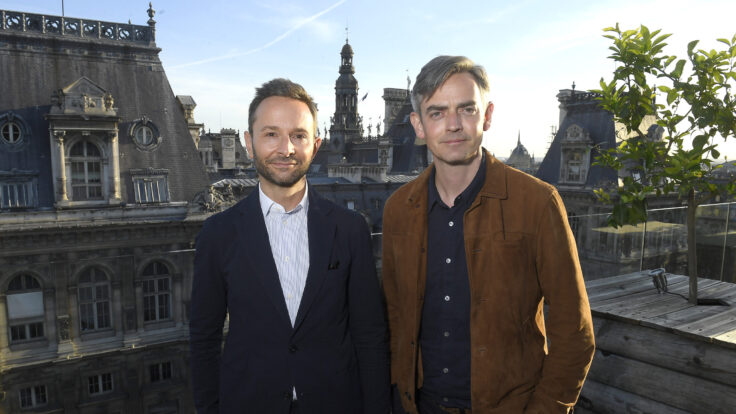
Perhaps no other brand better represents the last decade in skincare than Augustinus Bader, which launched in 2018 and quickly became the go-to cream for luxury consumers and, more importantly, fashion people. I remember stopping by to meet Dr. Bader himself in the early days at the brand’s store in the Palais Royal, just as the line was gaining traction via Violet Grey. But like many promising ventures, the company, run by co-founder Charles
Rosier, seems to have lost its chance at the big exit. No one can tell this story better than our very own Rachel “Rachel@puck.news” Strugatz, whose reporting in the space is, to use a very Puck term, peerless.
Up top, a bit of clarity on the situation at Ferragamo, some notes on modern luxury from Raf Simons and
Miuccia Prada (via Robin Givhan at The Cut), and thoughts on what Balenciaga’s new celebrity slate says about the state of ambassadorships.
As we closed tonight’s issue, Limited Brands founder Les Wexner wrapped his testimony about his long business relationship with Jeffrey Epstein before a congressional subcommittee. “Mr. Wexner honestly answered every question put to him today by the Committee,” a rep for Wexner said in a statement. “Mr. Wexner reiterated that he has no knowledge of, and did not participate in, Epstein’s illegal conduct. He stands by that fervently.” More on this at a later date…
Mentioned in this issue: Deepak Chopra, Charles Rosier, Augustinus Bader, Jeffrey
Epstein, Dua Lipa, Victoria Beckham, Maureen Case, Antoine Arnault, Jacques Veyrat, Salvatore Ferragamo, Sabato De Sarno, Maximilian Davis, Balenciaga, Pierpaolo Piccioli, and more… |
Three Things You Should Know…
|
-
The Ferragamo mystery continues: Yesterday, the powers that be at Salvatore Ferragamo released a statement noting that “with reference to recent speculation concerning a potential change in Ferragamo’s Creative Direction, the Company firmly denies the reports published by certain media outlets.” Errant and bewildering capitalization aside, it’s good that the family-controlled company chose to address the reports that designer Maximilian Davis was on his
way out and Sabato De Sarno was inbound. (When I reached out a few weeks ago after a Daily Front Row report, my request for comment was ignored.)
That said, I’m not sure this statement tells us much. Rumors of Davis’s exit have been circulating for years. At this point, if they are committed to him, they need to say that outright. Meanwhile, there is definitely going to be a show in Milan next week, and Davis designed the clothes.
|
|
|
A MESSAGE FROM OUR SPONSOR |
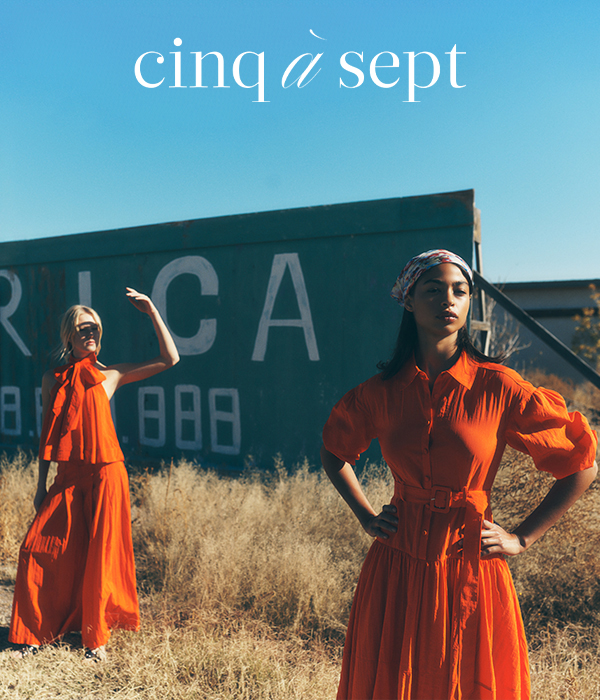
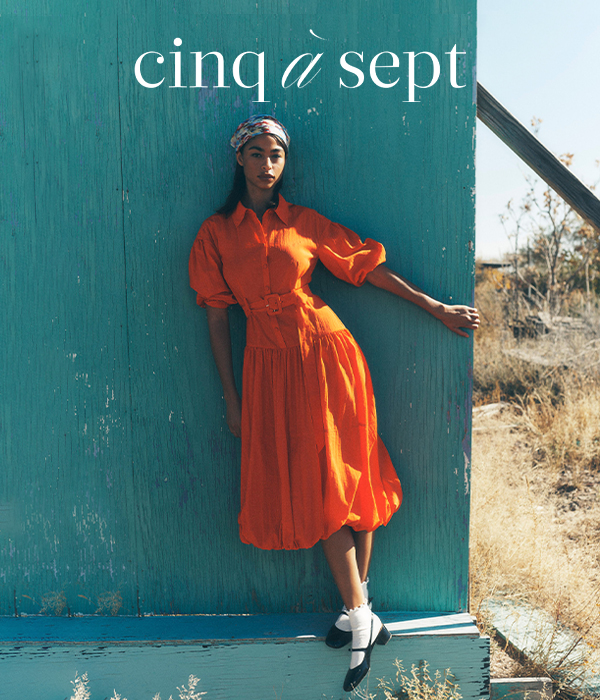
Sharing its name with the French term for the liminal moment linking late afternoon and early evening, Cinq à Sept
brings the intriguing tension between day and night to an advanced contemporary collection. Inspired by the hours between 5 and 7 p.m., when city streets are awash in the warm glow of the vanishing sun and office desks are abandoned for cocktails and as-yet unknown possibilities, Cinq à Sept embodies a deliberate balance between sophistication and ease, youthful daring, and confident allure. |
|
|
-
Prada (and Raf) on Prada: Robin Givhan interviewed Prada co–creative directors Miuccia Prada and Raf Simons for The Cut, and unlike most Q&As, it’s worth a read. After all, Prada and Simons share a certain “intellectual honesty,” as they put it themselves, that is rare in the fashion
business. “Our job is to work for a company that has to sell clothes and bags and everything,” Prada said. “That point for me is crucial.”
The fact that Prada is not in denial about the reason the company exists—to make money—seems to be liberating for her as a designer. Their runway is also one of the vanishing few that makes you think, which is why it’s worth braving the backstage every season to hear them talk over each other. For his part, Simons’ understanding of
fashion’s place in popular culture is sharper than any business-school professor’s. “Creativity in general has become a big business. We have to be honest about it,” he said. “And big business does not always go so easily hand in hand with ideas.”
It’s true, which is why I wish they had discussed some of the bigger challenges they face as designers fronting a big business. For instance, Prada’s handbag program has struggled in recent years to distinguish itself visually (except for the
belt bag), which is odd, given how much they value originality in other categories. But more than anything, the interview was a reminder that tension is necessary to make something good. These two are obsessed with each other, and they also surely drive each other crazy at times. But that’s just chemistry—and Simons and Prada have it. - Balenciaga and the art of brand ambassadorship: I’ll have more on this soon, but it’s worth checking out Balenciaga’s
ambassadorship drop—the brand named 11 new celebrity partners, including Winona Ryder, Harris Dickinson, and Heated Rivalry’s Hudson Williams, all photographed by David Sims and almost all wearing black, one of the house’s (and creative director Pierpaolo Piccioli’s) signature colors.
It’s a decent lineup and speaks to how valuable celebrities are to fashion brands these days, not to mention how
difficult it is to contract A-listers. (Dior, Louis Vuitton, Chanel, and, to a lesser extent, Gucci and Valentino hold a monopoly.) In many ways, this campaign is a much clearer realization of Piccioli’s vision for the house than the ready-to-wear campaign.
|
|
|
The beauty industry has been circling an acquisition of Augustinus Bader for years. Has the
high-end-skincare brand waited too long for its big exit? |
|
|
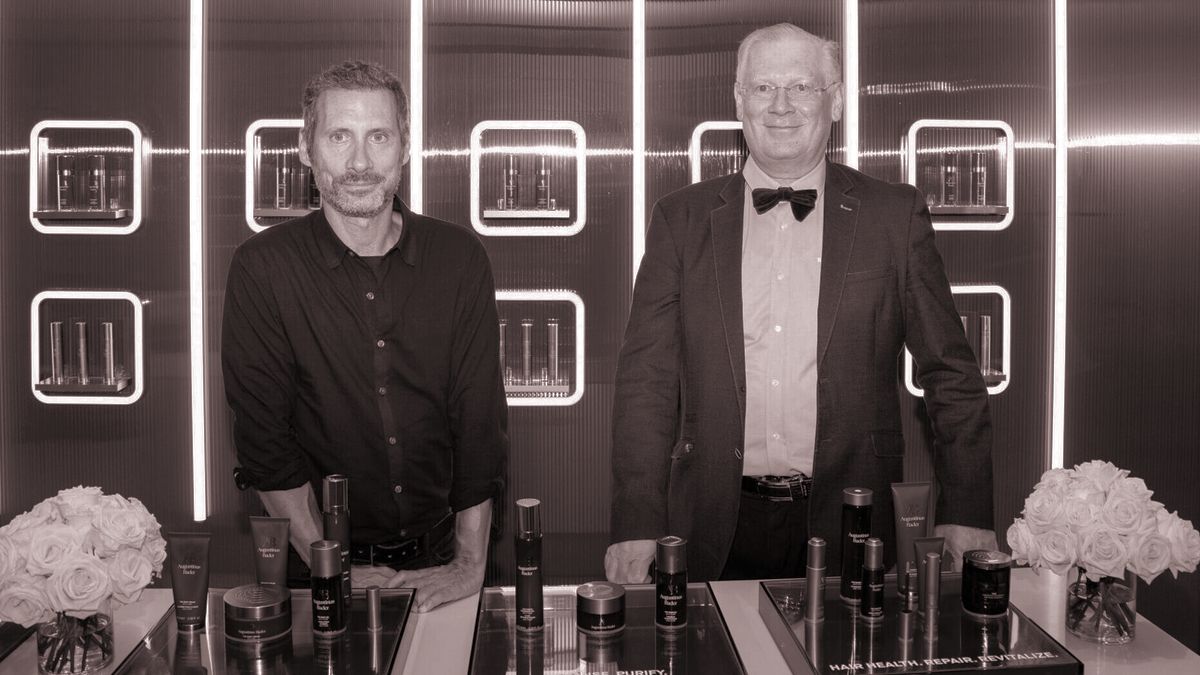
In early February, Deepak Chopra, the ubiquitous self-help
guru, and Charles Rosier, the co-founder and C.E.O. of Augustinus Bader, were scheduled to host a swanky cocktail party on the Upper East Side in advance of the launch of AB Chopra Epigenetics, an A.I.-based wellness platform. But about two hours before call time, the event was nixed after Chopra’s name appeared dozens of times in the latest batch of Epstein files. (Chopra has said that the emails “reflect poor judgment” and that he was never
involved in “criminal or exploitative conduct.”) The partnership has since ended, the site has been taken down, and Augustinus Bader has announced that its longevity programs will continue without Chopra. There’s no word yet on when the wellness platform might launch.
Alas, this isn’t the only recent investment that hasn’t panned out for Augustinus Bader. Before the Chopra misfire, there was last fall’s approachably priced Dua Lipa diffusion
line, which multiple insiders characterized as a flop. (First-day sales were apparently in the mid-five-figure range, I’m told.) And before that, there was a proliferation of new products that were barely differentiated (serums, moisturizers) or a distraction (haircare). The original premise of Augustinus Bader, after all, was that its two hero products—“The Cream” and “The Rich Cream”—could replace nearly all of a customer’s skincare routine. (A representative for Augustinus Bader declined to
comment for this story.) |
|
|
A MESSAGE FROM OUR SPONSOR |
Sharing its name with the French term for the liminal moment linking late afternoon and early evening, Cinq à Sept
brings the intriguing tension between day and night to an advanced contemporary collection. Inspired by the hours between 5 and 7 p.m., when city streets are awash in the warm glow of the vanishing sun and office desks are abandoned for cocktails and as-yet unknown possibilities, Cinq à Sept embodies a deliberate balance between sophistication and ease, youthful daring, and confident allure. |
|
|
Of course, the business is still healthy, and growing. Revenue was about $150 million in 2025, up from around
$100 million in 2022—a 50 percent increase over a three-year period. Augustinus Bader’s collaboration with Victoria Beckham Beauty has been widely popular. But overall sales have decelerated, I’m told, leading to questions about whether the brand has missed its optimal moment for a big exit. In the beauty M&A market, 30 to 40 percent year-over-year growth is often the minimum rate for a top-tier acquisition target. And timing is everything when it comes to beauty M&A since strategic
investors’ needs and preferences change by the quarter, and it can be difficult to generate meaningful deal heat once growth slows. That’s why you almost never hear founders complain that they sold too early; instead, you only hear from founders and executives who admit they held on too long. |
Augustinus Bader’s early years were nothing short of remarkable. When the brand was founded by Rosier and
Professor Bader, in 2018, it seemed like every fashion- and beauty-industry person was talking about their almost $300 cream. Victoria Beckham was an early supporter, along with tons of other celebrities. Rosier’s strategy—seeding product to makeup artists and aestheticians rather than their famous clients—was remarkably prescient, and, for the first time, the “Big Three” legacy luxury-skincare players (La Mer, Sisley, La Prairie) seemed to have
real competition from a startup.
Within a few years, however, the brand abandoned its minimalist-skincare thesis. Maureen Case, the veteran beauty executive who served as C.E.O. from 2019 to 2021, left the company to pursue another opportunity and was replaced by Rosier, who remains the chief executive. A person with knowledge of the business described the years that followed as “cacophonous.” “It was cluttered, illogical, and whenever the product was ready, they
would launch it—even if it was at the wrong time or if another product was launching a few weeks after,” this person told me.
Another person familiar with the company told me that, with the exception of the brand’s earliest days, there’s never been real pressure to fundraise. In late 2022, however, Augustinus Bader raised $25 million at a $1 billion valuation—a round of financing that many felt was unnecessary, even if it got Antoine Arnault on the cap table. The largest
shareholder besides Rosier and Bader himself is Jacques Veyrat, the billionaire founder of Impala, a French private equity firm. According to the person with knowledge of the business, Veyrat, who has a seat on the board, has essentially acted as the brand’s benefactor, providing reassurance that it can tap “additional resources.”
The company has remained a target for strategics. As recently as last year, Business of Fashion
reported that The Estée Lauder Companies was one of several interested parties, also including Beiersdorf and Puig, willing to pay around $1 billion for the brand—the valuation of the 2022 round. Later, an insider told me that Lauder had also been sniffing around the brand, even signing a letter of intent detailing a multistep transaction.
Assuming Augustinus Bader hit certain targets, the deal would have exceeded $1 billion. Another source told me that L’Oréal had expressed interest in purchasing the company outright, for somewhere in the $800 million range, with a performance-based earnout that also could have topped out at over $1 billion. But no deal materialized. |
|
|
The industry sentiment is that the brand likely missed its moment, but the decision to stay the course has
been deliberate and personal. According to one of these insiders, the decision to forgo a deal can be traced back to the fact that Rosier “truly believes” that Augustinus Bader’s scientific platform has room to grow, and that it was “not the right time to sell.” I’m also told that Rosier couldn’t countenance the brand being acquired for less than $1 billion, even if future earnouts would surpass that sum. Meanwhile, others close to the company have pointed out that Veyrat remains patient,
particularly given that the brand is still a small investment for Impala. |
EBay just acquired Depop, which was owned by Etsy, for $1.2 billion in cash. The gross value of the
merchandise Depop sold in 2025 was $1 billion. I’m surprised the peer-to-peer secondhand market hasn’t consolidated further. [Inbox]
Puig beat analyst estimates with nearly 8 percent sales growth in 2025 and a significant widening of its EBITDA margin. The group called out Charlotte Tilbury as a house brand that performed exceptionally well. [Inbox]
Jonathan Saunders’ first collection for & Other Stories is out and about.
[British Vogue]
Five great shrimp cocktails in New York City [The Angel]
The story of a streamer who made it work in Sephora, too.
[Bloomberg Businessweek]
Meta’s longtime head of partnerships (and minor Line Sheet celebrity) Charles Porch got poached by OpenAI. [Vanity Fair]
|
Until tomorrow,
Lauren
P.S.: We use affiliate links because we are a business. We may make
a couple bucks off them. |
|
|
Puck fashion correspondent Lauren Sherman and a rotating cast of industry insiders take you deep behind the scenes of this
multitrillion-dollar biz, from creative director switcheroos to M&A drama, D.T.C. downfalls, and magazine mishaps. Fashion People is an extension of Line Sheet, Lauren’s private email for Puck, where she tracks what’s happening beyond the press releases in fashion, beauty, and media. New episodes publish every Tuesday and Friday. |
|
|
Puck’s daily art market email, anchored by industry expert Marion Maneker, offers unparalleled access to the mega-auctions and
galleries, elite buyers and sellers, and the power players who run this opaque world. |
|
|
Need help? Review our
FAQ page or contact us for assistance. For brand partnerships, email ads@puck.news.
You received this email because you signed up to receive emails from Puck, or as part of your Puck account associated with {{customer.email}}. To stop receiving this newsletter and/or manage all your email preferences, click here. |
Puck is published by Heat Media LLC. 107 Greenwich St., New York, NY 10006 |
|
|
|