{{ 'now' | timezone: 'America/New_York' | date: '%b %d, %Y' }} |
|
|
|
Hi, and welcome back to Line Sheet. Today’s issue is all about desire. What
people are admiring, what people are loving, and, perhaps most importantly for our purposes, what people are buying.
Up top, Sarah Shapiro is here with a ranking of the top five most successful fashion brands at Coachella Weekend One, just in time for Weekend Two. She’s also got intel on what accessories are popping on the resale market, and a report from the front lines of adolescence: What do the kids think about
WYouth?
Finally, you’ll find a conversation between Bryan “Bryanboy” Yambao and myself about Chanel, sweet Chanel. It’s what the world needs right now. I’ll be back on Monday reporting live from Milan Design Week.
Also mentioned in this issue: Matthieu Blazy, Hailey Bieber, Sabrina Carpenter, WYouth, Alessandro Michele, Sofia
Coppola, Chloé, Bruno Pavlovsky, Delia’s catalogue, John Galliano, Sassy, Marc Jacobs, Gabrielle Chanel, Balenciaga, Tanner Leatherstein, Chanel, Sara Moonves, Romy Mars, Ethel Cain, Ava Nirui, Hermès, Justin Bieber, Dani Michelle, Michael Rider, and more… |
|
|
|
A MESSAGE FROM OUR SPONSOR |
Once just another sales channel, wholesale has become a strategic engine for sustainable growth. The 7th
edition of NuORDER’s State of B2B eCommerce Report shows why 2026 is a turning point from reactive uncertainty to operational discipline. According to a survey of 200 brands, the shift is real. They are focusing on margin protection, tighter distribution, and more intentional partnerships, with 67% now using sell-through data and 78% doubling down on wholesale as their top investment.
Download the full report. |
|
|
|

| Sarah Shapiro
|
|
Three Things You Should Know…
|
- Dior’s big
win in the desert: Coachella still works as a brand marketing platform, despite the skepticism. The designers and brands that focused on dressing celebrities, rather than attendees, won the first weekend of the music festival, generating an estimated $870 million in social media value, according to Launchmetrics. Dior led with $10.9 million, followed closely by Rhode at $10 million, then Guess at $3.8 million, Justin Bieber’s Skylrk at $2.3 million,
and Gap at $1.9 million, rounding out the top five.
Dior’s performance was driven by its decision to dress Sabrina Carpenter and Ethel Cain, along with the added benefit of Hailey Bieber appearing in vintage. (Her John Galliano slip dress was sourced by stylist Dani Michelle from Tab Vintage.) Carpenter, in particular, proved especially
valuable—her Instagram recap of the performance generated $3.6 million in social media value, the highest-value placement tracked by the firm. McQueen, Loewe, and Valentino also landed in the top 10, suggesting that designer brands are not out of reach for Coachella. This time, Dior simply executed best. - Resale report: The Balenciaga Rodeo handbag and Chloé jelly shoes were among the strongest performers in March’s ShopMy luxury report,
published exclusively in Line Sheet. But are they gaining traction on the secondhand market as well? To find out, I culled data from The RealReal and Poshmark.
On Poshmark, orders for jelly shoes are up 81 percent month over month. Obviously, that could have something to do with the weather change—however, searches for jelly shoes on
Poshmark and The RealReal are also up 58 and 77 percent year over year, respectively, so I think it’s fair to credit Chloé fever on this one. As for the Rodeo, searches for the bag on The RealReal are up 2,000 percent year over year, while orders on Poshmark have increased 167 percent.
Silk scarves are also performing strongly on the resale market, mostly thanks to Michael Rider and Celine. Of course, it (almost) always comes back to Hermès. After years
of stagnation in the category, the company reported on Wednesday that its silk and textile division grew 8 percent in Q1 2026 compared with a year ago. The great thing about scarves—especially Hermès scarves—is that there are thousands available via resale. On The RealReal, searches for silk scarves are up 20 percent year over year. On Poshmark, sales of silk scarves are up 41 percent year over year. Hermès silk scarves specifically are up 45 percent year over year. Buy one; you will look
cute.
- What normal teenagers think about WYouth: With my daughter’s bat mitzvah this weekend, I took the opportunity to do a little reporting on what the youths are up to—specifically, their thoughts on WYouth, the new biannual print title from W magazine launching this fall. Obviously, no one believes that
W mastermind Sara Moonves is positioning WYouth as a scale play. (It’s more likely to appeal to nostalgic Millennials and Gen Xers who learned how to apply blush by reading YM.) But while there is certainly a segment of teens hungry for physical media—and who think Sofia Coppola is cool—most are figuring out their style via Pinterest boards, Romy Mars TikToks, and
podcasts like The LOL, which has almost 3 million subscribers.
Most of the kids and parents I spoke with were primarily interested in which brands would be represented. They want to see Edikted, PacSun, Hollister, and Aritzia. (Less Sassy, more Seventeen—which still exists, by the way.) My hunch is that, for the most part, those brands will be represented via advertising, not editorials, but let’s see what Moonves and editor Ava
Nirui—who proved her authority with young people as the creative director of Marc Jacobs’s hit brand Heaven—conjure. I’m thinking Delia’s catalogue vibes.
|
|
|
|
The open question hanging over every analyst call and drinks huddle is whether
Blazy’s first ready-to-wear collection is signaling a broader reset for luxury—or just purring along in its own rarefied lane. |
|
|
|
This past week, the Q1 2026 results of the big luxury groups didn’t do a whole lot to
assuage concerns that the industry is in trouble. Of course, most companies missed analyst projections because of the war in the Middle East, not fundamental changes in consumer tastes or behavior. And yet, those also exist. Pretty much all anyone is talking about right now—on analyst calls, at Kering’s Capital Markets Day, over late lunches, and after work drinks—is the success of Matthieu Blazy’s first ready-to-wear collection for Chanel, which we
know is real but won’t be able to measure until June 2027, when the privately held company releases its 2026 annual results. |
|
|
|
A MESSAGE FROM OUR SPONSOR |
Wholesale growth isn’t the goal anymore. Profit is. According to 200 senior brand leaders, chasing
volume is out. Control is in. In fact, 54% are focused on cost reduction and protecting margins, tightening distribution and choosing partners more deliberately. This disciplined approach to growth protects brand equity as much as revenue. It’s why 78% now rank wholesale as their top investment.
Download the 2026 State of B2B eCommerce Report: Wholesale Reengineered. |
|
|
|
Until then, I attribute the fervor to smart marketing (i.e., using the debut of
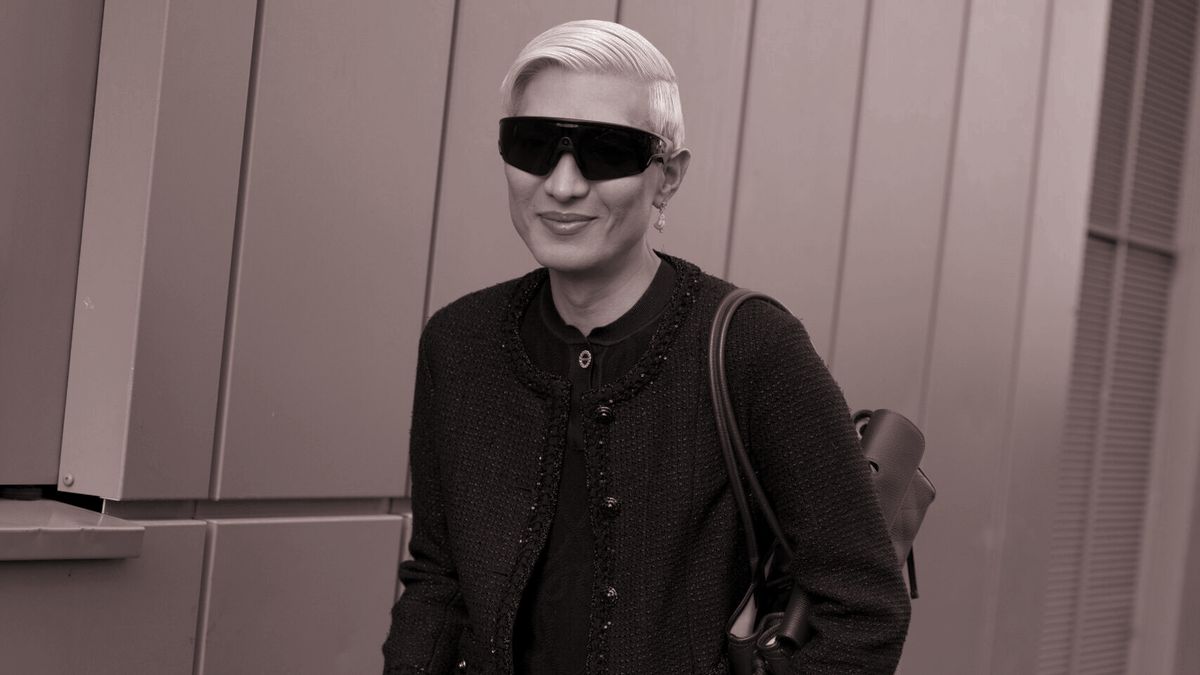
the second collection to sell the first), flawless product, and Blazy’s ability to not only meet, but make, the moment. Whether or not Chanel’s rising tide will lift all ships remains to be seen, but I don’t think it will be that simple. If anyone has more to say on this subject, it’s Bryan Yambao, a.k.a. Bryanboy, the uber-influencer who has earned his place as an authoritative industry voice. Bryan and I have had dozens of conversations about why
Chanel is working, but we recently went super deep on an episode of Fashion People. For those of you who hate the sound of my voice or would simply rather listen to music, we’ve edited and condensed the conversation here. |
Lauren Sherman: Let’s
start with Matthieu’s first ready-to-wear collection. What was your initial reaction?
Bryanboy: Well, the thing about when you watch a show is you don’t have an idea of how it’s going to look at the boutique. Whenever we watch fashion shows, we’re kind of blinded by the whole aura, by the whole atmosphere. You go there, the set is incredible, you watch the show, you’re 6 feet away from models. Then you go to the re-see, you see all the stuff—it’s wonderful. But when you
go to the boutiques five months later and see everything up close? The show was beautiful, but it was even more enchanting in real life. I went to the boutique on March 4, the day before it launched, for a special preview. They weren’t even selling it, they wouldn’t even let us buy anything, but they were able to place some things on hold. What I saw was so different from what I felt at the show. It was incredibly modern.
As a fashion editor, what do you think about the
silhouette he’s proposing? Broad shoulder, double-breasted in many cases, very boxy, and so much drop-waist. A drop waist hasn’t been popular since the 1990s.
Chanel will never be that conceptual brand, never. Directional, yes. But everything Matthieu does is tangible, it’s real, it’s deliberate. What I love about all the silhouettes he’s put out there is that they’re freeing. He really captured the essence of what Gabrielle did to free women. These are clothes
you can wear day-to-day. You can eat, you can drink, you can party, you can dance. Even the way those silhouettes move, everything under the knee has a certain flow and movement. It’s going to work. There’s always discussion online that only tall people can do that, but you don’t know how it’s going to translate at the boutique, when they do it commercially. From an editorial perspective, he does push things a little, you can tell. But it’s not extreme. He’s not creating and selling only ideas,
which a lot of designers do now. When they design collections, it’s all about pushing ideas.
We don’t want to sound completely deranged, but the pricing was more… “reasonable” is not the right word.
The right word might be “justified.”
In M.B.A. terms, the price-value equation was there. If you looked at a Chanel jacket from 1990 and adjusted for inflation, the price we paid for our jackets was roughly the price they cost in 1990. And I’m okay with
that.
I was really pleasantly surprised with the pricing, especially having been buying Chanel jackets for 15 years. With Matthieu, the mens-y blazers, the cropped blazers, are like, $6,400–$7,000, and they’ve really improved the quality. The fabric is incredible, the chains, the little buttons, the details, the lining—compared to what’s out there in the market, you’re getting so much.
I was thinking about what Bruno Pavlovsky, Chanel’s president of fashion, said a
couple of years ago about bags. He admitted that some of the bags got too expensive and they needed to be more careful about pricing. How do you feel about all these people online who are constantly going on about bag quality, clothing quality?
I’d find it more credible if it comes from actual consumers with experience with a product. I love, for example, Tanner Leatherstein. He dissects product, and most of the time he’s valid. But where I disagree is that value
and worth are subjective. I have bags that are 13 euros from a flea market in Thailand, that are probably like 25 years old, and still around. I have Prada bags and Gucci bags I don’t use, and the quality is also incredible. My Louis Vuitton Speedy from 1997 is still in great condition. There are so many factors at play when it comes to so-called quality. It’s how you treat your item, how you use your
item. |
|
|
|
Of course, if you use your Birkin every single day for 40 years, it’s going to show wear
and tear. Does that mean it’s poorly made? It’s very subjective, and I tend to take all these online comments and discourse with a grain of salt, unless they come from personal experience. All the Chanel bags I’ve bought are still around, still in perfect condition. I use them all the time and they’re fine! |
The thing that drives me the most crazy is when people are talking about high street
fashion quality going downhill—because it’s actually really improved. Zara is incredibly high-quality, and especially for what you get for your money.
I also have a lot of designer pieces where, after two washes, it’s like, questionable. It all depends on the item, and you’re right, nothing is perfect.
What did you think of the way the shoes and bags came together? Shoes are such a great growth business for so many luxury brands.
What he
did is definitely genius. You already have the core classics of Chanel: the slingbacks, the cap toe, all these codes, the loafers. What he did was broaden them without doing anything radical. For example, the square-toed shoes, just change the cap toe from round and pointy into a square shape. A simple design element, upgraded. How come no one thought of that?
What I love about Matthieu is that he’s super brainy, but he also understands he needs to be really clear about it, and it
needs to be emotional. Ending the shows with these very nostalgic songs is such a clear example. When we look back on his career, a lot of it’s going to be about meditations on childhood and growing up and coming of age. There’s something so simple about what he does, and then also so deep. That’s why we’re all hooked.
When I was growing up, I would watch Galliano’s Dior shows, and they were so meaningful to me. I’d know the music, the models, you really connect
to the show and to the collection because of all these factors at play. With Matthieu, he’s only had four shows in the past six months, and I sometimes watch the Chanel shows in the background just to listen to the music, to feel it. You really feel connected to the shows. There are very few shows today that really make you feel emotionally invested and connected.
I talked to some people who work in the stores in the U.S. who were worried. Then, he blew it out of the water. They
had so much demand, they all underbought because they weren’t sure. Now, the old client is totally on board.
We all underestimated the impact of that first show. It’s unprecedented. We really did. Even the clients both new and old underestimated that. But with the ready-to-wear second show, the Autumn/Winter collection, it felt like he expanded on his first show and brought in even more propositions. There are so many new things for Chanel: the blousons, the bomber jackets, the chain mail jackets, the overshorts. I can’t even imagine the sampling that he did, there must have been thousands of fabrics. It’s going to be a success.
The other day, you said to me, I haven’t seen a frenzy like this since Alessandro at Gucci. Do you think Chanel is an anomaly, or is it an indication that luxury as a whole is moving in the right direction? Is Chanel an island, Hermès an island, and everyone else is on the
mainland?
People buy fashion because they want to be happy. They want to look good, feel good, feel better about themselves. It’s therapy. Chanel somehow found the recipe: great technician, great designer, fabulous shows, incredible casting of all ages and all races, the narratives behind it, the campaigns of joy and happiness. All of these factors come into play, well thought-out, well researched. I don’t think it’s deliberate, I don’t think it’s forced. The amount of
user-generated content that money can never buy. A big brand can throw millions and billions into marketing and never pay for this, because at the end of the day, Chanel did what a lot of brands couldn’t do: They connected to people’s hearts.
Bryan, they really did. |
Until Monday,
Lauren
P.S.: We use affiliate links because we are a business. We
may make a couple bucks off them. |
|
|
|
Need help? Review our FAQ page or contact us for assistance. For brand partnerships, email ads@puck.news. You received this email because you
signed up to receive emails from Puck, or as part of your Puck account associated with {{customer.email}}. To stop receiving this newsletter and/or manage all your email preferences, click here. |
Puck is published by Heat Media LLC. 107 Greenwich St., New York, NY 10006 |
|
|
|
|