Hello, and welcome back to The Best & The Brightest. I’m Leigh
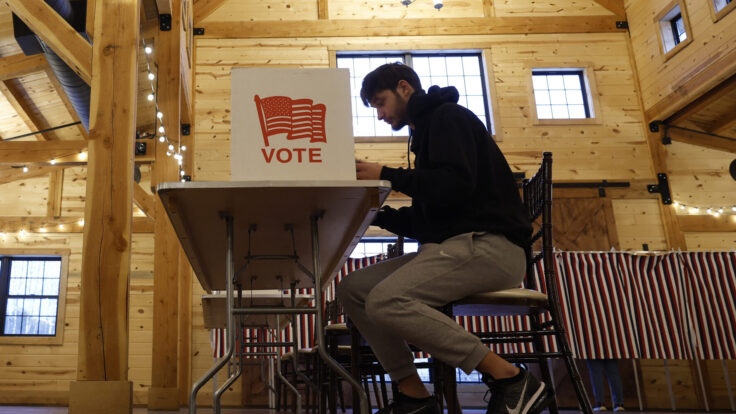
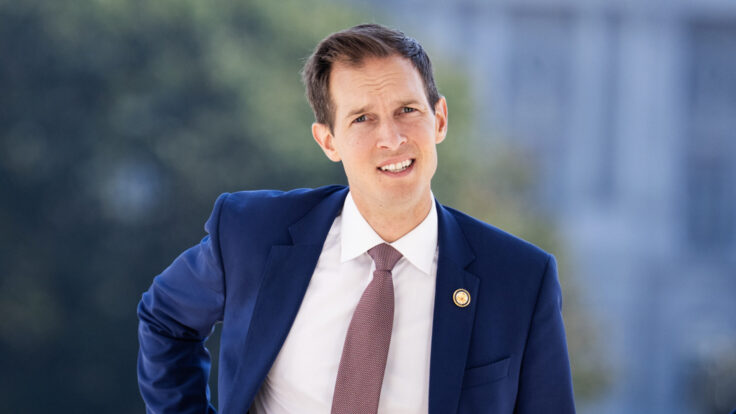
Ann Caldwell, writing on a very busy Tuesday, as primaries unfold in California, Iowa, New Jersey, South Dakota, Montana, and New Mexico. When I asked California Sen. Alex Padilla today whether he regretted not running for governor, given the uninspiring field of candidates in his state, he rejected the question. “I can’t imagine not putting my full attention here for the past nine months,” he said. “And at some point
that guy [Trump] is going to be gone, and there’s going to be a lot to rebuild.” Peter Hamby will be in your inbox with more on the results tomorrow.
Meanwhile, embattled Maine Senate candidate Graham Platner met with Democratic senators today, though I’m told the “meet-and-greet” was scheduled before news of his sexting controversy emerged. Unlucky timing for Platner. I wonder if the senators gave the novice candidate any
advice.
I’m also looking forward to tomorrow’s Puck Power Breakfast with Rep. French Hill, presented by the Solana Policy Institute. The Arkansas Republican is chairman of the House Financial Services Committee and has had a successful year, passing two major crypto bills and a housing bill. We’ll talk about all of that and more. Watch this space for our conversation later this week.
In tonight’s issue, my colleague John
Heilemann spoke with the ambitious Democratic Sen. Chris Murphy, who is not-so-subtly contemplating a 2028 bid and just released the perfunctory book (though John swears it’s actually good). Plus, I’ve got details on the latest political grenade that Trump has lobbed at the beleaguered senators of his party; Marianna reports that the Senate’s YOLO caucus may soon get a House counterpart; and Peter has some intel on Spencer
Pratt’s L.A. afterparty.
Also mentioned in this issue: Randy Feenstra, Bill Pulte, Tulsi Gabbard, Letitia James, Adam Schiff, Lisa Cook, Jerome Powell, John Thune, Tom Cotton, Thomas Massie, Chip Roy, Mike Johnson, Jimmy
Carter, and more. |
-
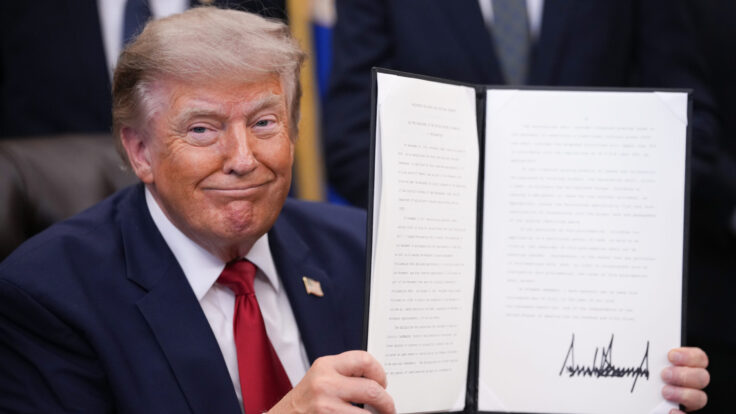
Trump’s short-term good behavior: For a moment, it seemed like President Donald Trump was trying to make amends with Congress after a string of his decisions angered Republicans and jeopardized their majorities. He
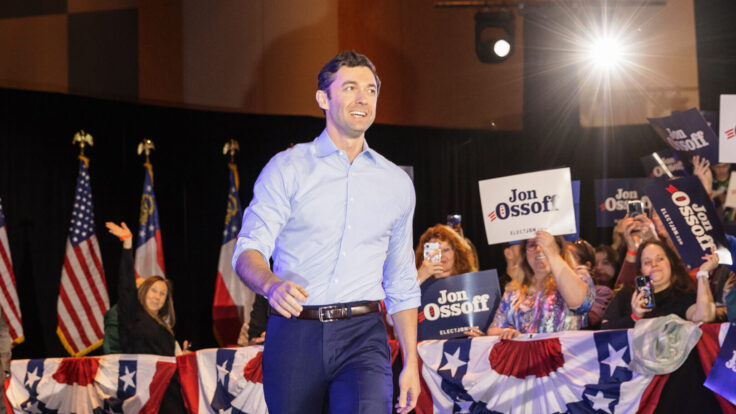
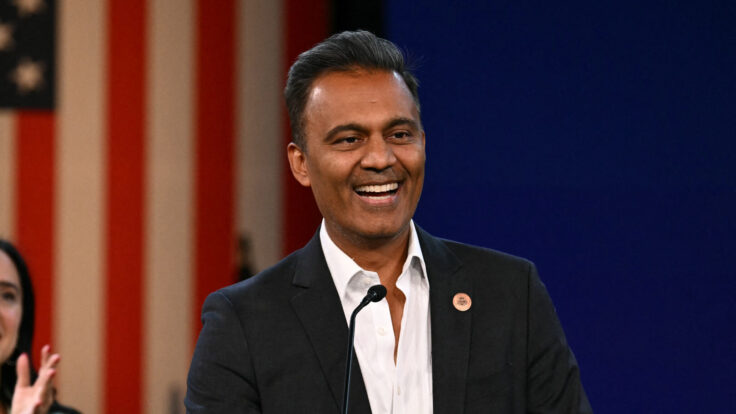
reluctantly endorsed Rep. Randy Feenstra in his gubernatorial run in Iowa—a race that Republicans believe could help the party win the state’s competitive House and Senate races. Trump also signaled that the Justice Department will drop his $1.8 billion “anti-weaponization” fund along with his demand that Congress pass $1 billion for his ballroom, both of which caused Republican mini-revolts.
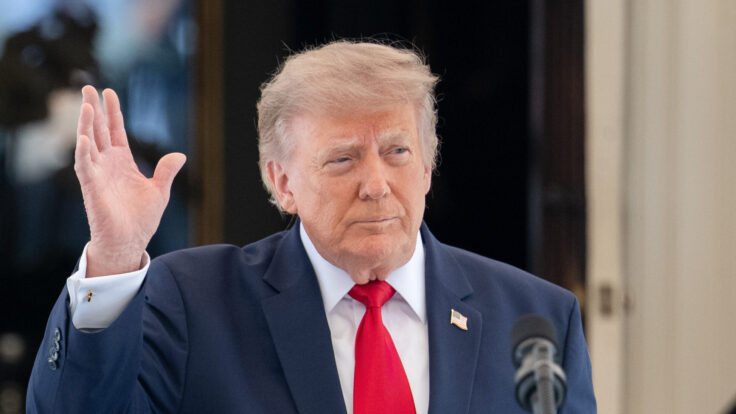
The bonhomie lasted about 18 hours—then Trump named Bill Pulte
as acting director of national intelligence to replace Tulsi Gabbard. Pulte, the hyper-partisan Federal Housing Finance Agency director, has used his position to target Trump’s perceived political enemies by opening criminal probes into New York Attorney General Letitia James for alleged insurance fraud (the initial indictment was dismissed) and Sen. Adam Schiff for mortgage fraud. He had also alleged that Federal Reserve governor Lisa
Cook committed mortgage fraud, and he was central to the Trump administration’s seemingly baseless investigation into former Fed chair Jerome Powell.
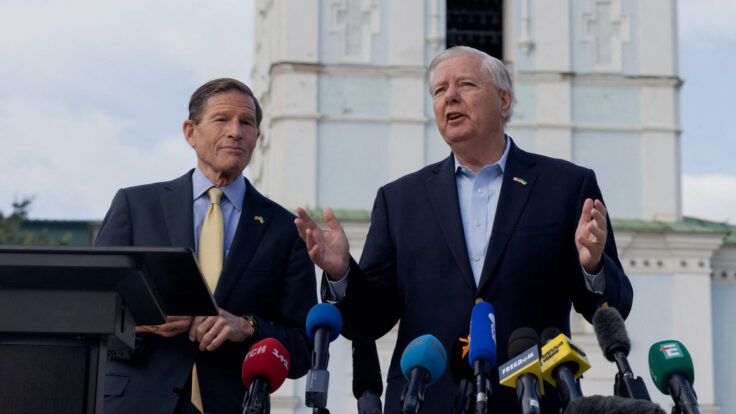
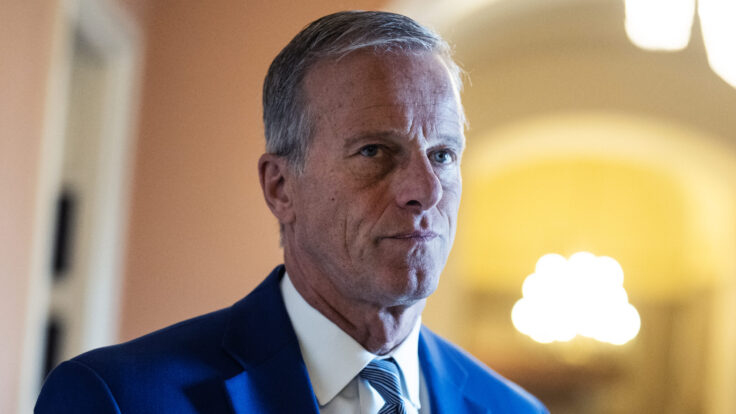
Republican senators are not amused. “We don’t need a weaponized D.N.I., we need professionals there. I just heard about it, trying to get more information,” Majority Leader John Thune told reporters today. Sen. Tom Cotton, the chair of the Intelligence Committee, said, “I have no
observations on that.”
|
|
|
|

| Marianna Sotomayor
|
|
- Will the YOLO caucus extend
to the House?: House Republican leaders are anticipating an unpredictable week as they brace for the return of Reps. Thomas Massie and Chip Roy, who may come back as total renegades after losing their primaries. More Republicans could fall tonight, and several are expected to lose without Trump’s endorsement,
which has many on the Hill wondering whether the House may soon have their own G.O.P. YOLO (You Only Lose Once) caucus, like the one that’s sprung up in the Senate.
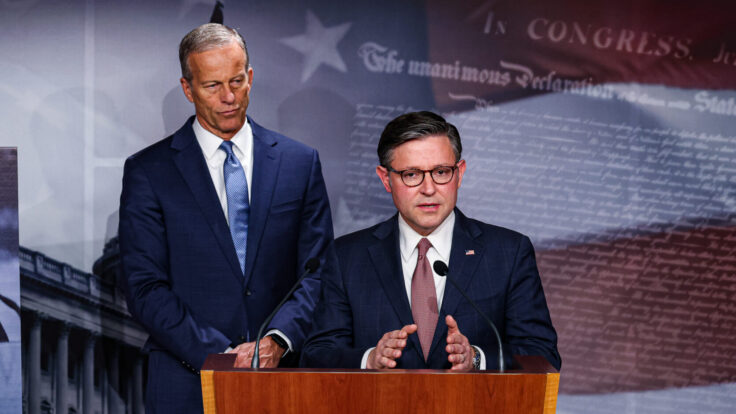
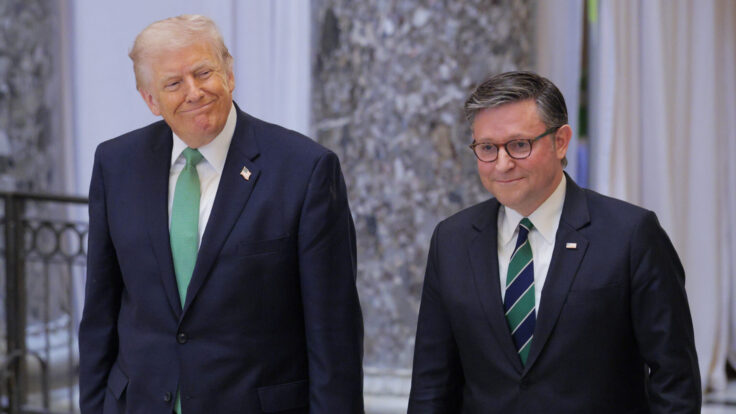
Even if lawmakers win their primaries, their voting incentives could now be different through November—and that’s especially true of swing-district reps and aspiring swing-state senators. The unpredictability, coupled with numerous absences, explains why Speaker Mike Johnson told reporters that his message to
Trump in the Oval Office yesterday was that gathering support for his anti-weaponization fund remained “a difficult prospect right now … given our vote tallies.”
In short, this week could be the dawn of a permanent headache for leaders. I’m told the leadership suite is discussing the real possibility that forced votes by Democrats—on a war powers resolution prohibiting further involvement in Iran without congressional authorization, and a separate bill that would sanction Russia and send
billions to Ukraine—could very well pass the House. Asked whether he’s expecting to lose the war powers vote, Johnson said simply, “We’ll see what happens.”
|
|
|
|

| Peter Hamby
|
|
- The Pratt pack:
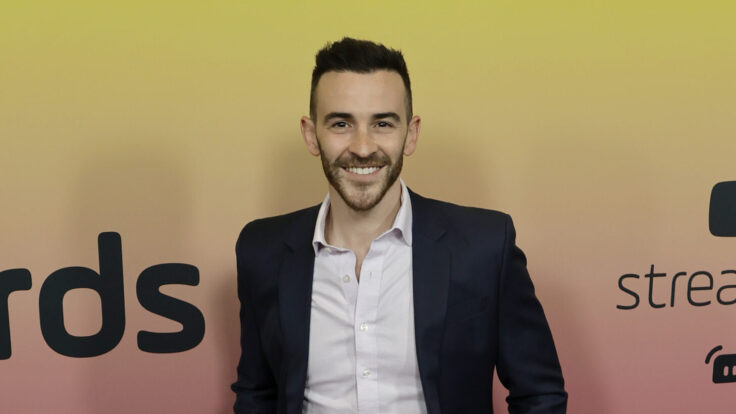
Spencer Pratt hasn’t exactly been dodging the mainstream press—but throughout his upstart L.A. mayoral campaign, his team hasn’t really bothered to alert the local press when he holds events around the city. The same is true tonight, and plenty of reporters out in California are chasing down where Pratt will be after the polls close to celebrate his first-, second-, or third-place finish in tonight’s primary—results that may not be known for several days. I’m told Pratt’s
wealthier supporters are being directed to Brentwood for a private election-night event hosted by award-winning record producer David Foster and erstwhile TV and digital host Billy Bush. Both men have been open about their support for Pratt, and apparently this afterparty is supposed to go late—just like the ballot counting in Los Angeles.
|
|
|
|
And now, here’s John and Sen. Murphy… |
|
|
|
A candid conversation with the junior senator from Connecticut, Chris Murphy, about the
president’s slate of terrible Iran options and the blatant corruption that has marked his return to office. |
|
|
|
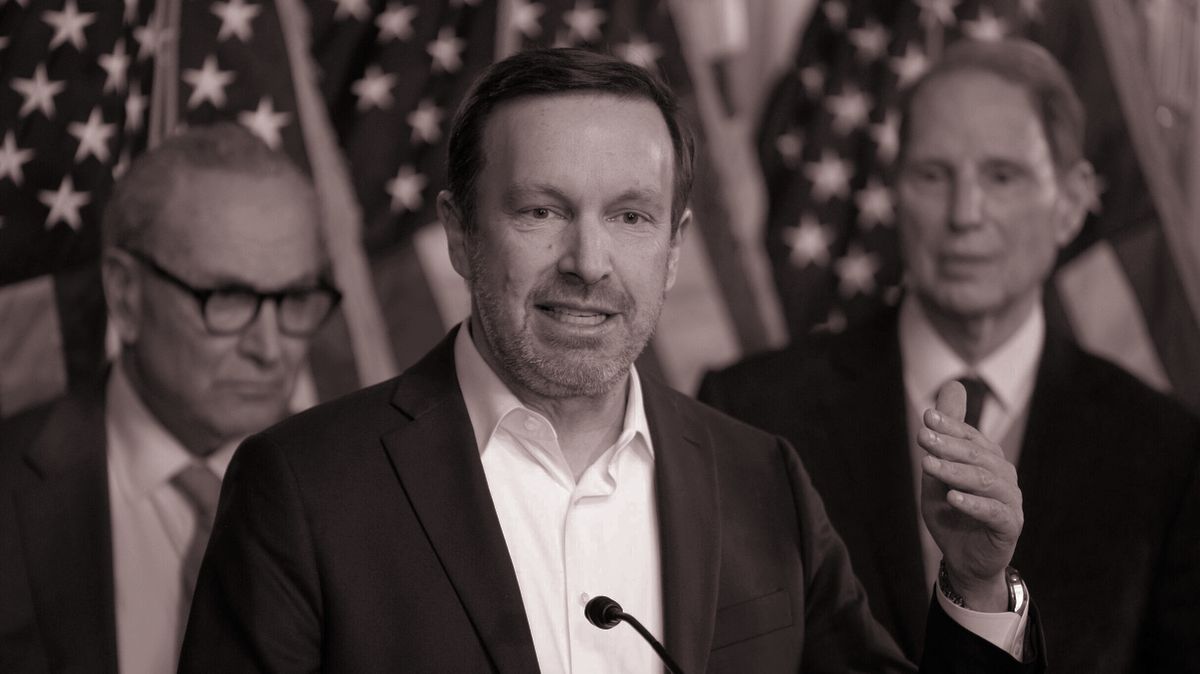
Chris Murphy, the junior senator from Connecticut, has made no secret of the fact that he’s
mulling a presidential bid in 2028—and in traditional fashion, he’s got a new book out as a possible prelude. But whereas most tomes in this genre tend toward the soporific and self-serving, Murphy’s Crisis of the Common Good defies the rules of senatorial publishing in that it’s actually pretty damn good. It’s not a policy tract or meandering memoir, but instead tries to grapple with the larger issues that make this moment in our national life so fraught: how capitalism has gone awry,
how technology is messing with our culture, how so many people feel lost and unmoored.
At bottom, the book is about the crisis of meaning in our public life, and it’s all the better for not proposing quick fixes. Plus, its publication allowed me the opportunity to talk to Murphy for my Impolitic podcast about its themes as well as the more headline-driving stuff: Donald Trump’s war in Iran and the nightmare of finding a way out, the blatant corruption that’s
marked the president’s return to office, and the extraordinary spate of Trump’s stock trades that came to light last week. As always, this conversation has been edited and condensed for clarity, but you can listen to the whole thing here. |
John Heilemann: On Friday, Trump was supposedly
considering a deal to reopen the Strait of Hormuz and extend the ceasefire to begin negotiating on the nuclear issue. The Iranians have since said they’ve suspended negotiations with the U.S., though Trump says talks are continuing “at a rapid pace.” If the purported deal does get done in the end, what’s your take?
Chris Murphy: First of all, we have no idea whether a deal even exists. They’ve been telling us that they’re on the precipice of a deal for 30 days, and this
might all be total fiction, and there is no agreement—or they’re going to do what [Trump] often does, which is announce a diplomatic agreement that doesn’t exist in principle and on paper. So let’s just admit that this whole thing might be a fiction. Here’s my analysis: Whatever the deal is, he should sign it, because the deal is not going to get better, it’s going to get worse.
The war is a disaster for the United States. Every single day it goes on, we get more humiliated, we get
weaker, our economy gets worse, and Iran gets stronger. So, the terms of this deal are likely bad, but continuing this war for an additional day is worse. We basically fought this whole war to beg them to get back to the place we were before the war, when the strait was open. We haven’t done anything really about their military capabilities: They still have 70 percent of their missiles, they still have a full nuclear program. We spent $25 billion, over a dozen Americans got killed, we humiliated
ourselves all around the globe, and we got nothing out of it. It’s just the most incompetent management of American national security in probably our lifetime.
Even if there was a deal tomorrow, it will take months before you get back to a normal supply chain, and we’re going to have high prices all the way through the midterms. The political consequences seem pretty dire for Republicans. They’ve missed the window here for a deal that will save their bacon on this
front.
If you believe that the political consequences are downstream of the economic misery, then I would actually argue that it’s not totally baked, because even if the war ends, the economic consequences are likely to get worse before they get better. Why is that? Because so much of the supply chains that have relied on products coming out of the Middle East—not just petroleum, but helium, for instance—have been badly damaged. So you saw a big increase in grocery prices in
April—the biggest in years, in one month.
Those increases are likely to continue through the summer and the fall, and you’re going to see all sorts of other things, from medical devices to fabrics that need that petroleum, putting price increases in as we go through the rest of the year. It wasn’t an immediate shock to those systems, because they had contracts that were still good. I think the price impact of this gets worse, even if the war ends, and thus the political impact on
Republicans probably gets worse. It doesn’t just stand still. |
Trump has dropped plans for a $1.8 billion slush fund for supposed victims of Biden-era “lawfare,”
including convicted insurrectionists. Granted he did this under pressure, but that fund was just one of many examples of something you’ve been talking about lately: the extraordinary level of corruption that we’ve seen so far in Trump 2.0, from the crypto scams and the memecoins to the White House ballroom. Have we reached a tipping point where this corruption issue is finally breaking through with ordinary voters?
I spent a lot of time talking about his corruption last year,
because I did worry that people were becoming anesthetized to it, and I wasn’t hearing that kind of daily outrage. I’m hearing a lot more today—still not as much volume as I’d like. That’s probably happening for two reasons. One is, there is likely a tipping-point phenomenon where the sheer weight of it now has become unavoidable, and the last few scandals have been, frankly, easier to understand as pure corruption than some of the earlier ones. I’m not sure everybody understood how the crypto
scheme worked, but they definitely understand grabbing $1.8 billion out of the Treasury and using it to pay cop beaters.
I think the other thing that’s happening is that the economy is going off the cliff. He got away, for the first year, by saying, “This is Biden’s economy, I didn’t do this.” Well, everybody knows that the gas prices and the grocery prices are now directly connected to his policies. So that makes the corruption even harder to bear and understand, because my life is
getting worse, your life is definitely getting better, and you seem to be spending all of your time enriching yourself instead of ending the war.
To stick with this corruption issue, Trump bought between $1 million and $5 million worth of Dell stock back in February. Last Wednesday, the D.O.D. announced a $10 billion deal with Dell Federal Systems—and Dell stock soared 40 percent in after-hours trading, putting a ton of money directly in Trump’s pocket. And it turns out that’s not
an anomaly: Trump made 3,711 stock trades worth between $220 million and $750 million in the first quarter of this year alone—40 trades per market day on average. He bought stock in Nvidia, Apple, and Oracle, all of which skyrocketed after things happened that Trump either knew about or the government did. Are these stories breaking through, or do people just shrug and say the whole system is rotten?
There’s definitely a storyline here about people already pricing in his
corruption. I just think we have to admit that. But people priced in his corruption and were willing to live with that because they really did think he was going to cause a revolution in the way power works in our democracy, in our economy. So these stories matter, because what you see is him getting deeply in bed with the companies that you thought he was going to take on. So it flips on its head people’s conception of him, and frankly, the reason that they were willing to live with his lack of
general morals and ethics.
We have to do a better job of telling the easy-to-understand stories. Nvidia is really easy to understand. Nobody knew, other than him and a handful of people, that he was about to allow Nvidia to sell these microchips to China, which was going to dramatically inflate their value. Days before he announces this, he personally—remember, he signs all these trades, this is not a blind trust—buys a bunch of Nvidia stock and makes a shitload of money. We have to
tell those simple stories to people. But it does upset the entire conception of why people originally were willing to live with his moral lapses. He’s not doing any of the good stuff you thought you were gonna get.
Reading your book put me in mind of Jimmy Carter’s 1979 “Malaise” speech—his warning about a crisis of confidence, a growing disrespect for institutions, a nation that had turned away from community and toward self-indulgence and consumption. The themes in your book are
very similar, and I guess we didn’t really heed that warning 50 years ago.
Arguably, we made a decision in 1980 to double down—we elected a president who essentially concretized this turn away from communitarianism and toward market fundamentalism. It’s in the 1980s that this idea really built into our mainstream—that our economy should measure worth only by how much profit companies make. It’s during that time that the institutions start to fail even more deeply. It is eerie
that a lot of the things Carter is talking about in that speech are things I’m talking about today. Arguably it’s two to three times as bad today.
But this book is intended to be both a warning and a reminder that our politics aren’t as permanently cast in political gelatin as you may think. Right and left aren’t going to agree anytime soon on guns and abortion and climate, but on the things necessary to create a softer capitalism that cares more about the common good, to
regulate the technologies that are spiraling us into isolation, and to help people lead lives of citizenship rather than just lives of participation in the market—I actually think there’s a lot more opportunity for alignment than people believe. Maybe not until Trump is gone, but there’s some hope. |
|
|
|
Join Emmy Award-winning journalist Peter Hamby, along with the team of expert journalists at Puck, as they let you in on the
conversations insiders are having across the four corners of power in America: Wall Street, Washington, Silicon Valley, and Hollywood. Presented in partnership with Audacy, new episodes publish daily, Monday through Friday. |
|
|
|
Puck’s daily art market email, anchored by industry expert Marion Maneker, offers unparalleled access to the mega-auctions and
galleries, elite buyers and sellers, and the power players who run this opaque world. |
|
|
|
Need help? Review our
FAQ page or contact us for assistance. For brand partnerships, email ads@puck.news.
You received this email because you signed up to receive emails from Puck, or as part of your Puck account associated with {{customer.email}}. To stop receiving this newsletter and/or manage all your email preferences, click here.
|
Puck is published by Heat Media LLC. 107 Greenwich St., New York, NY 10006 |
|
|
|
|