 |
|
Welcome back to The Best & The Brightest, I’m Tina Nguyen. Frequently, this column covers the biggest storylines in Washington: Trump’s indictments (plural), the House G.O.P.’s impeachment inquiries (plural), and the painfully awkward presidential primaries. But today, I wanted to mix it up a bit, and write about the least controversial topic in politics: Christianity.
A few weeks ago, I watched Mike Pence get jeered out of the Family Leadership Summit in Iowa by an audience of roughly 2,000 evangelical activists—a bizarre occurrence given the former V.P.’s long-established faith-based politics. Later, I learned that Frank Luntz, one of the G.O.P.’s top messaging gurus, was also there, conducting a focus group with Christian voters as part of a larger project he’s been working on for several weeks. And I figured: I wonder if he’s picking up the same vibes as I am? So I texted him, and we set up an hour to chat. The things that Frank has been hearing from voters will truly surprise you and change how you’re thinking about 2024.
But first…
- DeSantis, Reloaded: By now, the DeSantis campaign has been rebooted more times than a computer running Windows Vista. Perhaps aware of the optics of the word “reboot,” their recent announcement that campaign manager Generra Peck would be replaced—the third major personnel upheaval in a month—was described as a “campaign reload.” Very macho. Nevertheless, the “reload” follows months of fretting among DeSantis operatives and donors over the campaign’s overspending, amateurish messaging, and inability to make more than symbolic gains against Trump in Iowa and New Hampshire.
One of the criticisms I’d heard about Peck, who will remain with DeSantis as chief strategist, was that the campaign was fairly disorganized under her watch: spending had ballooned, campaign messaging was disorganized, and key fundraising numbers were bungled. (The New York Times recently reported that the campaign had misreported its fundraising haul by $2.6 million, mistakenly earmarking those donations for the primary.) The news that DeSantis is replacing her with his former gubernatorial chief of staff James Uthmeier, as well as installing Never Back Down super PAC advisor David Polyansky as deputy manager, was greeted with relief from people outside the campaign. But neither is likely a silver bullet for a campaign that has struggled with more than just strategy and operations.
Uthmeier, after all, has never run a campaign before, much less worked on a presidential. And it remains to be seen whether being a competent manager—or, more importantly, trusted by Ron and Casey—is enough to pull off the upset of the century. Polyansky, meanwhile, is reasonably seen as a proxy for Jeff Roe, his former boss at Never Back Down. “I at least respect Polyansky, but he’s all Roe,” one Iowa insider told me.
|
| Plus, before the main event, a few words from Puck’s congressional correspondent, Abby Livingston… |
| The Capitol Hill Cafeteria Report |
|
| An utterly indispensable, high-minded, and, yes, occasionally dishy readout of what our lawmakers are really legislating behind closed doors.
By Abby Livingston
- Ohio Signals: Democrats are high-fiving after Ohio voters overwhelmingly defeated a ballot measure that would have blocked an effort to codify abortion rights, suggesting the state is not quite as red as it has seemed in recent cycles, that the Dobbs decision may yet supercharge their election odds in 2024, and that Senator Sherrod Brown may not be as vulnerable as he seems. But Republican consultants I spoke with mostly shrugged. That turnout was impressive, a strategist told me, and he conceded that Democrats have cracked how to turn out abortion rights activists. But, this Republican argued, the presidential race won’t be a binary choice on abortion, and more Republican-friendly issues (inflation and crime) will come into play.
Fair enough. But as Connie Schultz, the influential newspaper columnist and wife of Senator Brown, noted on MSNBC the other night, much of the Democratic organizing in Ohio was “organic.” That sort of activism makes it all the more difficult to predict the outcome of races and has, since the 2016 election of Donald Trump, mostly benefited Democrats.
- The Lake Effect: All signals point toward Kari Lake, Arizona’s unsuccessful 2022 Republican gubernatorial, announcing her Senate campaign in October, per Axios. This is the single wildest Senate race on the map this year, and Lake’s power within the state has effectively frozen G.O.P. primary recruiting. One plugged-in Republican strategist characterized her nascent campaign as a source of immense frustration within the party’s professional class because Lake will box out other political talent that’s going unused.
The Arizona Senate race should be Republicans’ easiest pickup opportunity, due to an anticipated vote split between independent incumbent Kyrsten Sinema and Democrat Ruben Gallego. But Lake has already lost statewide once, coming up short to the politically weak Democratic nominee, Katie Hobbs, last year. A G.O.P. strategist plugged into the race said the anticipated Gallego-Sinema brawl made this a near-assured G.O.P. pickup, in the Republican worldview. But even in that context, candidate quality does still matter, and Lake’s likely entrance throws those assumptions into question.
- Mississippi Burning: The third time was not the charm for Chris McDaniel, the Republican attorney and talk radio host who very nearly became a Senator in 2014, until the politically powerful Barbour Republican family joined forces with Black Democrats who were alarmed by McDaniel’s racially coded comments to stop him in that year’s G.O.P. primary against Republican Thad Cochran. (McDaniel ran again in a Senate special election in 2018 and placed a distant third.)
On Tuesday, McDaniel lost again after challenging incumbent Delbert Hosemann in the Republican primary for Mississippi lieutenant governor. Austin Barbour, who was on the sidelines this time around, spoke with me the morning after McDaniel’s freshest defeat. “I don’t know if it’s the end of the road for Chris, but he has an immense following in Mississippi that’s not going to go away because he lost last night,” Barbour said. “[But] it certainly makes it more difficult for him to mount another statewide challenge.”
|
 |
| The Passion of the Luntz |
| The legendary G.O.P. pollster apostate discusses the party’s latest apocalyptic turns: the martyrdom of Mike Pence, why voters are souring on DeSantis, and whether Tim Scott (or Joe Manchin!) can win Iowa. |
|
|
|
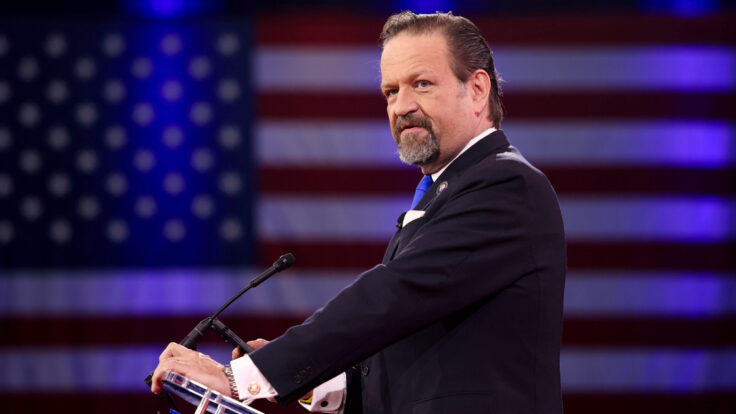
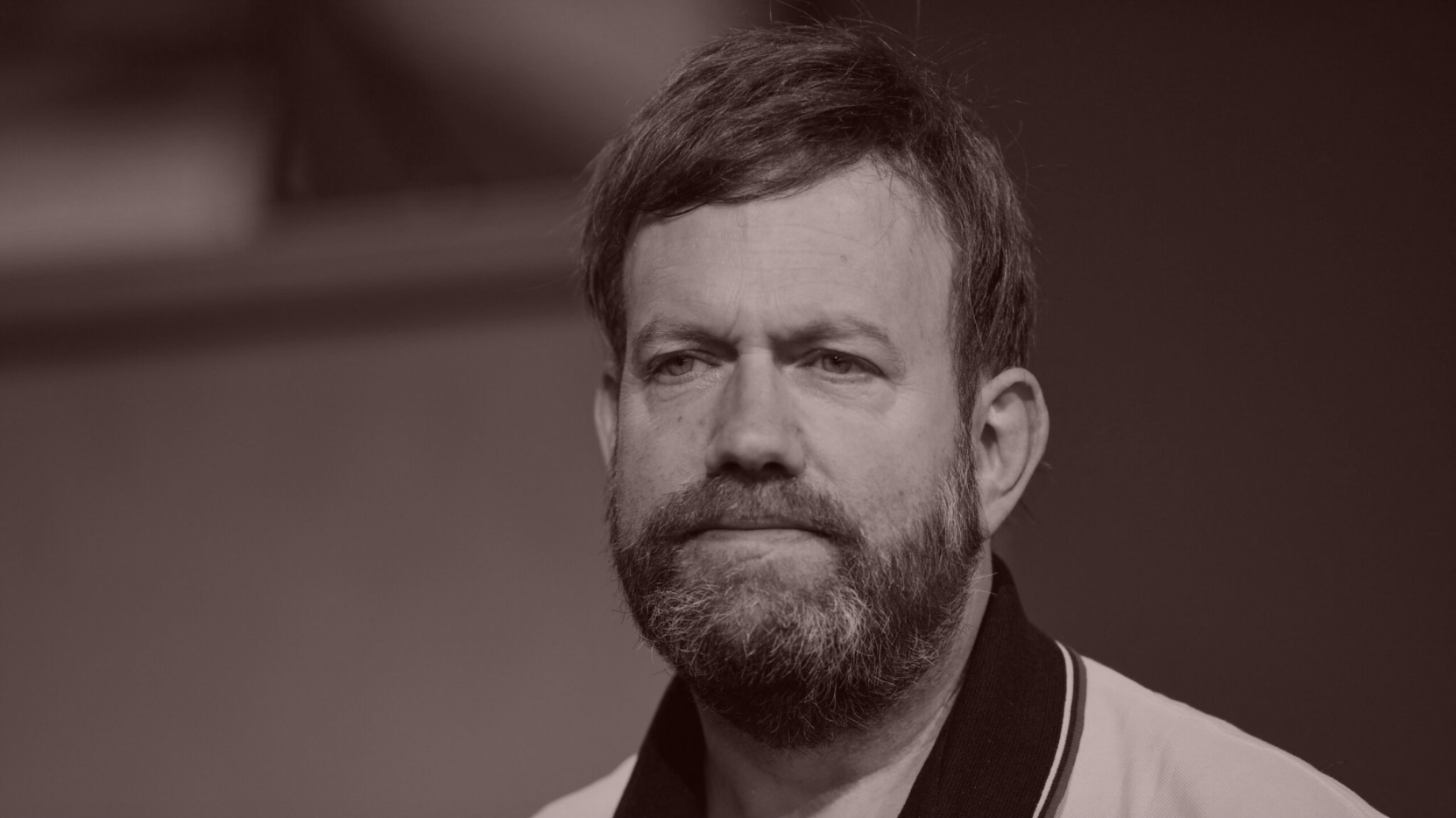
| Frank Luntz was backstage at the Family Leadership Summit in Des Moines last month, poring over the results of a focus group he’d just conducted with religious voters, when he heard a shocking sound: Mike Pence, a born-again evangelical Christian, getting loudly booed by his fellow believers. “I poked my head through the curtain because I couldn’t believe it,” the renowned and devilishly effective Republican pollster and messaging guru told me recently. “And it had nothing to do with his positions on values or on religion or on social issues. It had to do with Ukraine.”
The moment was going viral as they spoke, possibly for the sheer irony of the situation: Pence, the guy Donald Trump recruited to placate evangelicals, was getting reamed by evangelicals. But Luntz, whose work in G.O.P. politics has spanned nearly three decades, had never seen anything like it. “No one better represented the values of that crowd than Mike Pence… He’s everything they are, and they’re booing him,” he exclaimed. Trump was not in attendance, he noted, but every mention of his name earned applause. Meanwhile Pence, a lifetime man of faith, was treated like a heretic. “Frankly,” Luntz said, “I still haven’t gotten over it.”
In the modern, MAGA-fied G.O.P., Luntz has also found himself on the outside for criticizing Trump and Trumpism, as well as for trying to prop up the conservative principles that once defined the party: limited government, lower taxes, strong family values, etcetera. So he recently decided to start conducting one of his famous focus groups with white Christian voters, to determine what had changed in the past eight years. This demographic will continue to hold an outsized influence on the outcome of the G.O.P. primary: According to a recent survey from the Public Religion Research Institute, 68 percent of G.O.P. voters identify as white Christians, and 30 percent identify specifically as white evangelicals.
But a separate PRRI survey, conducted in 2022, found that 63 percent of those voters supported Trump—a thrice married, thrice indicted sinner if ever there was one. So an ideological paradox seemed afoot. What was the part of Trump’s message that resonated with religious voters, Luntz wondered, and how could other candidates, presidential or otherwise, harness it? “Obviously, Trump’s behavior is antithetical to how they live their lives, and yet they’re so passionately in favor of him,” he told me. “And the reason is because they see him as standing up for their values, even if he doesn’t practice it himself.”
A few weeks later, I reconnected with Luntz to discuss the early results of his most recent focus groups, why the religious right turned on Pence, what DeSantis could learn from Trump, and whether Tim Scott could win the evangelical lane where Pence failed. The following has been edited for length and clarity. |
|
|
| Tina Nguyen: Was there anything you heard in the focus group you conducted beforehand that indicated the crowd would treat Pence that way?
Frank Luntz: No, not at all. But I’ve seen the polling. There’s been a change on Ukraine. It used to be a matter of faith that the Republican Party was pro-military, pro-national security, would do more, and do it more loudly than the Democrats. And now, because Joe Biden is president, all of that is reversed. And I see some Republican support eroding for the administration’s position on Ukraine.
I did a session last night: I wanted to understand where the electorate was. And once again, the people most hostile to the Biden administration on Ukraine are the far left and the far right. The people most supportive of those are in the center. This is one of those issues where it doesn’t really matter whether you’re Republican or Democrat, but it does matter whether you’re very conservative or very progressive.
What do you think explains conservative antipathy towards Ukraine, especially among religious voters?
I don’t think it’s just religious voters. I think it’s voters who have a Trump intensity. And they have bought the line that to support Ukraine is to oppose America First—not understanding what happens in Ukraine is going to have an immediate, meaningful, measurable impact on what happens to the U.S.
Meanwhile, every single person on that stage took a very strong anti-abortion stance. Governor Kim Reynolds signed her heartbeat bill there. But Trump has remained waffle-y on abortion. Is that going to impact his appeal with Christian voters?
No, because Trump’s appointments to the Supreme Court gave them what they were looking for, which was to overturn Roe v. Wade. So Trump has proven his bonafides among Christian voters, and I expect them to back Trump by an even greater percentage in the Republican primary this time than they did eight years ago.
Well, certainly the political landscape has changed since then, especially in terms of the rhetoric on the campaign trail. It’s almost all culture war now, hardly any policy. Have you noticed any recent changes in the language that’s resonating with the religious right?
Yes, it’s called “the Truth,” and it’s capital T. And it’s not “the Truth” as most people interpret it, which is factual. It’s the Truth as in, “what is in Scripture.” And you either know it, or you don’t. You either embrace it, or you don’t. And this is why I would never write off Tim Scott, because Tim Scott not only understands the language, but he lives that life every single day. Mike Pence is trapped in this Trump phenomenon, and that makes it more difficult for him.
Tim comes at this in a very different way. And I know that it’s not that way now, but I think Tim Scott comes in second in Iowa. I really do. Because not only does he understand the language, but he lives the life and he’s willing to fight for the values that these people live every single day.
I don’t know if you’ve ever heard of the ReAwaken Tour or the Patriot Church. But there is this group of pastors who are gaining steam in the fringe right, saying that America is under spiritual attack by the left. Have you come across those guys?
No, but that’s exactly what the focus group said. That is exactly what they said. And they feel like they’re going to win in the end, because God is on their side. But these individual skirmishes—the skirmishes that are happening over faith, over sexuality, over Hollywood—all these various issues come into play in a place like Iowa. They feel like they’re under attack. So I understand that mindset, because it’s definitely how they feel. I’m not particularly religious. But I really respect those who are. They have better relationships with their children. They have better relationships with their parents. They’re happier at work, and are more likely to be engaged in the community, and more likely to donate to charity.
Are they also more likely to vote in this next cycle?
Yes, and more likely to participate, and more likely to have stronger points of view. I asked them a question: who’s the most trustworthy person? And I believe Tim Scott won. Trump still has support there. But they recognize who he is and what he’s about, and Tim Scott, they see him differently. |
|
|
| Is there a longer term policy agenda for these voters in 2024, or is it just the short term goal of getting Trump back in office?
I don’t want to misquote them or misdefine them, but it’s almost an eternal issue for them. Life doesn’t end when you die. And for them, it’s absolutely the long term. So you can lose the battle, you can lose a lot of battles, but they believe in the end that they will win the war. They believe, in the end, that faith will triumph. And I wish I could be that optimistic. And in fact, several of them said to me: “If you share our faith, you would share our optimism.”
What does that mean in terms of what they actually want from Trump?
Make no mistake, they don’t appreciate his behavior, and they don’t support his language. They cringe at his approach. And they just feel so differently about Tim Scott. But Tim Scott has to prove that he’s viable, that he can pick up the mantle, and it’s gonna take a while for that to happen. I don’t believe that we’ll know anything about where we are headed until after the August 23 debate. I think that debate is so important. It matters so much.
But I will tell you with confidence that Scott is getting a second look in Iowa, that Chris Christie is getting a second look in New Hampshire. Eventually there will be a likely third party candidate, whether that’s Kyrsten Sinema or Joe Manchin or Chris Sununu or Tulsi Gabbard. But I believe that there’s going to be a third candidate in this race if things continue as they are with Biden getting the Democratic nomination and Trump getting the Republican nomination. And that third party candidate will be instantly viable.
How much do culture war issues play into this choice?
It’s significant, but I can now define it much better. It’s not generic culture wars, it’s not society overall, it’s what’s happening in the schools that upset them so much. The discussion of gender identity, critical race theory and other areas of “woke” so frighten them, because it runs counter to their philosophy, and it runs counter to how they want to raise their children. That, to them, I’d argue, is the number one issue.
They hate wasteful Washington spending much more than they want to lower taxes. Why? Because they live a life of frugality. And they resent that the government doesn’t. But they care much more about education than any other issue, because that’s their children.
You wrote an op-ed for the Times back in April arguing that the path to defeating Trump was to adopt his agenda but condemn his personality. Given everything you’ve uncovered, would you revisit that premise?
Not really, but I would simply add to it. And I’ll give you two examples. Number one is the weaponization of government, because those on the right believe that that’s exactly what’s happening to Donald Trump. And that will make it more difficult for somebody like Ron DeSantis. Even though he’s attempting to be the anti-woke candidate—when it looks like he’s using the government to play favorites in the corporate world, that kills him. They don’t like it when the Democrats do it. They don’t like it when the Republicans do it. So the weaponization of government is clearly at a higher profile now than it was a couple of months ago.
And then the other thing is that it’s not just that Donald Trump couldn’t get it done. It’s that he didn’t get it done. And if you can show that you share his intensity, his passion, but you can deliver results, they’ll give you a second look. And that’s even more so now as we move into the phase where we’re actually beginning to distinguish between the different candidates.
In the event that Trump runs away with this, does he have to do the same thing that he did back in 2016, where he picks a candidate of faith as a running mate? Or does that not matter anymore?
I don’t think it matters. Donald Trump is Donald Trump. He’s going to behave in a way that is unacceptable to tens of millions of Americans and it isn’t hurting him. Or at least he’s still in this. It’s amazing. Think of what he’s done. Think of what he’s been indicted for. Think of how he left office. Think of this typhoon of wreckage. And yet he’s dead even with Joe Biden [in polling]. He’s going to do it his way, and who knows? And this is my warning to people. We’ve come to tolerate him. He may be returning. And people need to consider the consequences of that. He may be back.
It sounds like you’re really pessimistic about the idea of another challenger coming in and being the unity ticket guy.
No, I’m very pessimistic about where we are right now as a society. I have to listen to it. And my friends really want me to snap out of it. They want me to go to Florida, to take a vacation, to stop watching cable news, stop doing focus groups, and I’ll be happier. The problem is, I listen to this stuff every single day. I listen to the language that they use.
Yesterday on one network, they talked about the revenge Trump is going to get in the opening days if there is another Trump administration. The consequences to the F.B.I. and the C.I.A. and the Justice Department and other people and agencies that tried to hold Trump accountable—they’re all going to be punished. That’s upsetting to me.
Equally upsetting is the guy who comes on a different cable network and compares Donald Trump to Osama bin Laden. The hyperbole that is out there now is so destructive to any hope for effective engagement. And every week it gets worse and worse. The stuff that happens on the floor of Congress. The stuff that people say on cable news, what happens in these rallies. At some point, you do kill the goose that laid the golden egg. At some point the country is just broken. |
|
|
|
| FOUR STORIES WE’RE TALKING ABOUT |
|
|
|

|
 |
|
|
|
Need help? Review our FAQs
page or contact
us for assistance. For brand partnerships, email ads@puck.news.
|
|
You received this email because you signed up to receive emails from Puck, or as part of your Puck account associated with . To stop receiving this newsletter and/or manage all your email preferences, click here.
|
|
Puck is published by Heat Media LLC. 227 W 17th St New York, NY 10011.
|
|
|
|