{{ 'now' | timezone: 'America/New_York' | date: '%b %d, %Y' }} |
|
|
Hi, and welcome to Line Sheet. R.I.P. Valentino Garavani. The news of his death
at 93 emerged as I was recording tomorrow’s episode of Fashion People with Climax Books founder Isabella Burley, so we got into it right then and there. We also discuss men’s fashion week, the legacy of stylist Melanie Ward, the most anticipated shows of this Couture season, and, of course, what exactly Isabella is up to with Climax. She’s really great, and so is
the episode. You can listen here and here.
Meanwhile, I’m writing to you from the High Desert. It’s Martin Luther King Jr. Day here in America, so I hope you are taking some time away from the computer to reflect—maybe on the state of our society?
For those still on the clock (it’s always Fashion Week somewhere), we’ve got a very Euro issue.
Up top, you’ll find a peek at Perfect’s zine dedicated to the late Melanie Ward, a peptide update (what are you taking?), and a temp check on the state of men’s fashion week in Milan now that everyone is moving on to Paris. (Someday I’ll make it to an Auralee show.) For the main event, an analysis of how the Class of 2025 is faring, from Jonathan Anderson’s Dior to
Pierpaolo Piccioli’s Balenciaga.
A shopping P.S.A.: A few weeks back, Rachel Strugatz wrote about the rise of peel-off lip stains, and how this gimmicky-seeming TikTok invention became a legitimate business. I hate anything that reeks of infomercial, so I actively avoided these products until
Rachel, knowing my love of lipstick and lack of natural lip color, recommended I try them. I bought a natural-looking pink shade (Romance, a “cool rose”) from Wonderskin, and I have to say: It’s legit. If you, like me, have been thinking of trying lip blushing but balked at the price, this offers a similar effect that lasts for about a day and is, obviously, a fraction of the cost. It’s dumb, but not
as dumb as spending hundreds of dollars on a permanent lip tattoo. Go ahead, try it.
Also mentioned in this issue: Anthony Vaccarello, Demna, Clare Waight Keller, Riccardo Tisci, Louise Trotter, Bottega Veneta, Maria Grazia Chiuri, Delphine Arnault, Katie Grand, Alastair McKimm, Lotta Volkova, Jo-Ann
Furniss, Kate Moss, Kim Jones, David Sims, Corinne Day, Inez van Lamsweerde and Vinoodh Matadin, Nigel Shafran, Ronnie Cooke Newhouse, Nadège Vanhee, Jacob Gallagher, Susanna Venegas, John Galliano, Hedi Slimane, and… Tag Heuer after Antoine Pin.
|
Three Things You Should Know…
|
-
Tribute to the artist: U.K. stylist and fashion media person Katie Grand and Perfect have released a zine dedicated to seminal stylist Melanie Ward, who died last year of cancer at 64. Ward, of course, was the first proper super-stylist: Her work with Calvin Klein in the 1990s paved the way for Grand, Alastair McKimm, Lotta Volkova, and many others who continue to play a pivotal role shaping runway collections.
Grand
wasn’t close to Ward, but was hugely influenced by her work, and commissioned the writer Jo-Ann Furniss to interview many of Ward’s greatest collaborators, including Kate Moss, Kim Jones, David Sims, and others. The result is an affecting retrospective that showcases many of her most powerful images created in collaboration with Sims, Corinne Day, Inez and Vinoodh, and
Nigel Shafran. The conversations with those who worked with Ward over the past decade—Ronnie Cooke Newhouse, Kim Jones, and Hermès’s Nadège Vanhee—were the most interesting to me.
Creative direction today heavily references the past, in part because of the ability to instantly access the work of people like Ward, whose lack of a blueprint made her own output so good. As Furniss notes, Ward “did not like looking back and refused to bow at
the altar of nostalgia.” Perhaps this economical Perfect project—one essay, a few sharp quotes, a collection of essential images—will inspire some budding stylist of this easy-access generation to do the same. (Perfect’s tribute to Melanie Ward is available here, as well as Casa Magazines, Bookmarc, Idea Books, and other places you can still buy magazines.)
|
|
|
A MESSAGE FROM OUR SPONSOR |
|
|
-
Peptides forever?: For the past few years, the fun game to play at any fashion week has been to guess who is taking a GLP-1 and who is simply not eating because they’re getting a divorce. (There’s always the chance that the answer is both, and I support everyone’s journey.) I suspect the conversation will be more nuanced this season, given what feels like the sudden, widespread use of peptides far beyond Tirzepy, as the skinny kids like to call it.
At a party I stopped
by this weekend, every conversation seemed to involve who was injecting the short chains of amino acids that proprietors claim can do everything from reduce inflammation to improve sleep. The benefits of BPC-157 and TB-500 (muscle repair) or NAD+ (not actually a peptide, but…) are often less obvious than the weight loss associated with semaglutides and tirzepatides, but people are also way more excited to discuss their use of them. As Fiorella Valdesolo recently reported in
Vogue, those with needle aversions are turning to nasal spray alternatives. Anyway, unlike actual weight loss peptides, most of this stuff is not F.D.A.-approved. But that is not stopping anyone who wants to look younger and maybe stave off death. Tell me what you’re on! - Maybe we need more menswear-only fashion shows: This men’s fashion
week in Milan felt particularly emaciated. Not as dire as the women’s shows in New York, of course, but there just wasn’t much going on: Prada, Zegna, Dolce & Gabbana, Armani, Ralph Lauren, and… anything else, aside from Umit Benan and Setchu for the enthusiasts? (Jacob Gallagher first mentioned this in The New York Times’s fashion week newsletter, which you can subscribe to here.)
The state of the week reflects an inescapable reality: Fashion shows long ago became marketing tools (at best), and if you don’t have a budget to do something big or the talent to execute something notable, it all feels a bit pointless. I wonder if some of the bigger Italian brands—Fendi, Gucci, Jil Sander, Versace (when things are sorted), etcetera—will see an opportunity here and split their shows up once again. Sure, gender is a construct, but Anthony
Vaccarello’s off-piste menswear shows for Saint Laurent have influenced both men’s and women’s fashion. The extra cost may be worthwhile given how many marketing moments brands need to create throughout the calendar year. Just a thought.
|
|
|
As Pierpaolo Piccioli, Jonathan Anderson, and other designers who figured in last year’s
epochal game of fashion industry musical chairs settle into their roles, a new reality has beckoned: They have their work cut out for them. |
|
|
On January 15, I woke up to a textless WhatsApp message from a friend in Paris, featuring images
screenshotted from Business of Fashion’s Instagram page—most notably, a maroon bodysuit cut out in the style of Julia Roberts’s Hunza hooker dress in Pretty Woman. The captions were cut off and I had no idea what I was looking at, and I wondered if the account had been hacked.
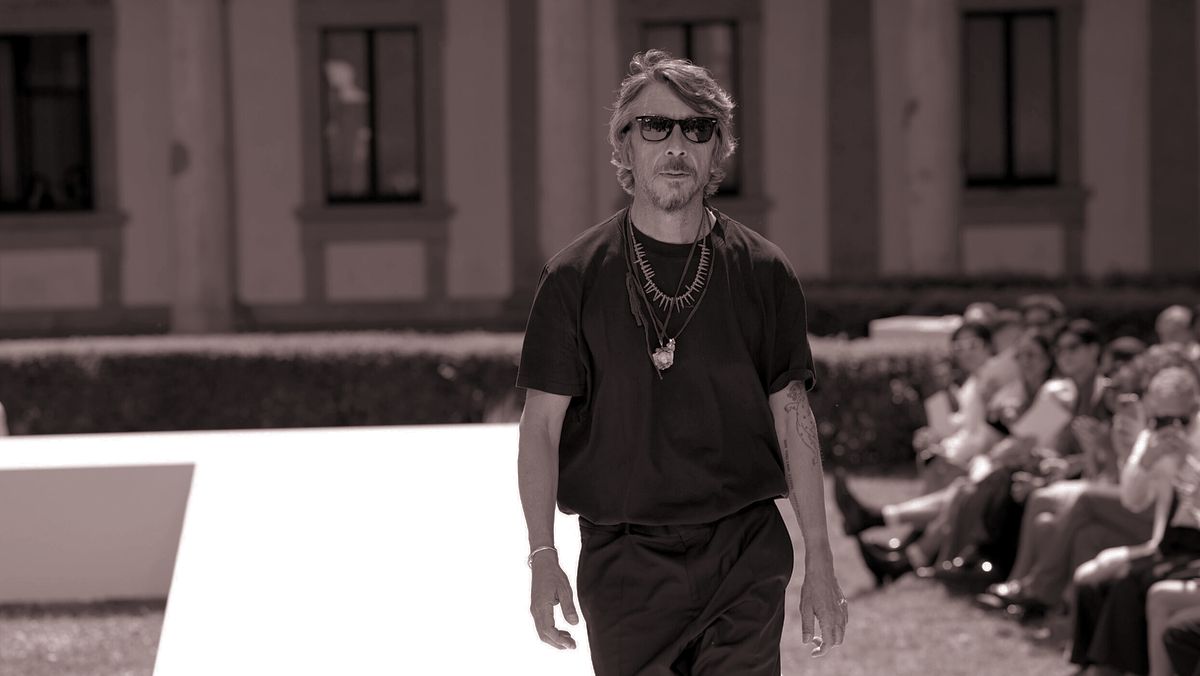
Soon enough, I realized it was from Balenciaga’s Pre-Fall 2026 collection, shot in tandem with Pierpaolo Piccioli’s first menswear collection for the brand.
Piccioli joined the label last year as part of the Class of 2025 designer shake-up, when more than a dozen creative directors made debuts at fashion houses looking to win back customers who have been abandoning luxury in droves. |
|
|
A MESSAGE FROM OUR SPONSOR |
|
|
Publicly, people have been relatively supportive of Piccioli’s vision. Behind the scenes, I’ve heard many
scathing reviews. I didn’t like it personally, but I understand the business logic of his more casual Balenciaga. Piccioli’s predecessor, Demna, deeply understood (and understands) fashion as a reflection of social mores, and was able to comment on the casualization of culture through his Couture designs. That’s why he could charge four figures for a sweatshirt. I’m not sure us laymen understand how difficult that is.
Piccioli’s talent, however, is not in designing
athleisure or menswear, but rather elegant dresses and separates. You can see the conundrum: Balenciaga had a big menswear business under Demna, and also sold a lot of merch. They need to keep doing that. The situation reminds me somewhat of Clare Waight Keller’s brief run at Givenchy in the wake of Riccardo Tisci’s merch-as-fashion-inflected run at the house. She was not a menswear designer, per se, and definitely not a
merch designer, and left after three years.
It seems that Piccioli is attempting to avoid some of the same mistakes. As you could see in Demna’s own excellent Pre-Fall collection for Gucci, fashion is dressier than it was even a year ago; consumers are seeking something finer, even if they end up buying the t-shirt in the end anyway. When I heard Piccioli got this job, I was hoping the messaging would be about the magic of couture, not leggings. |
Perhaps it sells and everything works out. But there’s no denying that this class of designers is under a
microscope. Everyone has an opinion; every campaign is dissected; every garment is picked apart in videos online. I’m constantly being fed TikToks and Reels of clients trying the new product, even though much of the Spring collections hasn’t even hit stores.
Last week’s deference to Piccioli might result from the fact that he is something of an underdog, and people want to give him room to work, at least at the start. The same goes for Louise Trotter at Bottega Veneta,
whose first campaign, shot by Juergen Teller, may have felt referential, but at least made the clothes look good. (I thought it was tender, and preferred it over Teller’s other campaign this season for Rick Owens.)
In terms of online criticism, Jonathan Anderson has not been as lucky as Piccioli. His predecessor at Dior, Maria Grazia Chiuri, experienced her fair share of vitriol from
armchair critics due to the extreme commerciality of her designs. But consumers bought it—until they didn’t. Anderson is not only cleaning up the mess at Dior women’s, but also reckoning with a menswear customer who was loyal to Kim Jones, while also reimagining the celebrity and advertising strategy in an effort to unite the sprawling Dior business under one vision. His every move is documented online, which will only intensify after this week: He shows his second menswear
collection on Tuesday, and his first Couture designs next Monday. (Meanwhile, his boss, Delphine Arnault, has had to restructure management as good people left and mediocre people were removed.) |
|
|
The toughest critics have come for Anderson’s red carpet looks, and I’d agree that the brand has yet to
really nail a dress. (Here’s hoping that happens during the Oscars.) You could blame Anderson’s relative inexperience in this context, but I don’t think that’s it. After talking to many people involved, both tangentially and not, it feels like communication issues exist between various teams. Anderson knows what he wants—he just needs the right person to help him execute it. Chiuri’s team often contracted outside specialists to work on custom garments, and perhaps Anderson needs to lean into
that approach more.
For all the negativity online around Anderson’s first Dior products, I’ve also talked to potential customers who love it—in particular, the clover and bow bags. I’ve already seen the book bags out in the wild, carried by the sort of ladies who receive the preorder line sheet. And if Anderson impresses the market with his debut Couture collection next week, the haters might go somewhat silent. (One person reminded me that he hired Susanna Venegas, one
of John Galliano’s longtime designers, for reinforcement.)
The first truly significant evidence will come with the Q1 results. But maybe that’s expecting too much, too soon. After all, it could take up to five years to get Dior back on track. Remember that it took a long time for Hedi Slimane’s Celine to come together—during a boom time for luxury. Anderson’s Dior is going to require patience, something increasingly lacking in this world. |
Tim on Valentino.
[BoF]
Prada men’s was really good. [Vogue]
You could really see the Celine–Michael Rider effect in the pile-on styling at Ralph Lauren’s fabulous menswear runway show in
Milan. Obviously, Rider ran Polo for years. I’m getting that chicken or egg feeling. [N.Y. Times]
Antoine Pin, the C.E.O. of Tag Heuer, has left LVMH after just a little over a year in the role, but more than 20 years in the watch division of the group. It’s not a small deal, and the challenges of the watch group probably deserve more
examination. In early January, Pin gave an interview that was pretty revealing about the macro struggles of the watch industry, and how he believed they should be addressed. [BoF and WatchPro]
This
is a revealing look at the struggles of the director of the Louvre post-jewelry heist. [Air Mail]
A prediction: Everyone is going to start selling a cropped, militarish field jacket. Feels like the next iteration of the leather bomber trend. Loewe has a good one, but
Becky Malinsky made a convincing case for the A.Presse take. [5 Things You Should Buy] |
Until tomorrow,
Lauren
P.S.: We use affiliate links because we are a business. We may make
a couple bucks off them. |
|
|
Puck’s daily art market email, anchored by industry expert Marion Maneker, offers unparalleled access to the mega-auctions and
galleries, elite buyers and sellers, and the power players who run this opaque world. |
|
|
Puck founding partner Matt Belloni takes you inside the business of Hollywood, using exclusive reporting and insight to explain
the backstories on everything from Marvel movies to the streaming wars. |
|
|
Need help? Review our
FAQ page or contact us for assistance. For brand partnerships, email ads@puck.news.
You received this email because you signed up to receive emails from Puck, or as part of your Puck account associated with {{customer.email}}. To stop receiving this newsletter and/or manage all your email preferences, click here. |
Puck is published by Heat Media LLC. 107 Greenwich St., New York, NY 10006 |
|
|
|