 |
|
Happy Sunday, and welcome back to Dry Powder.
|
|
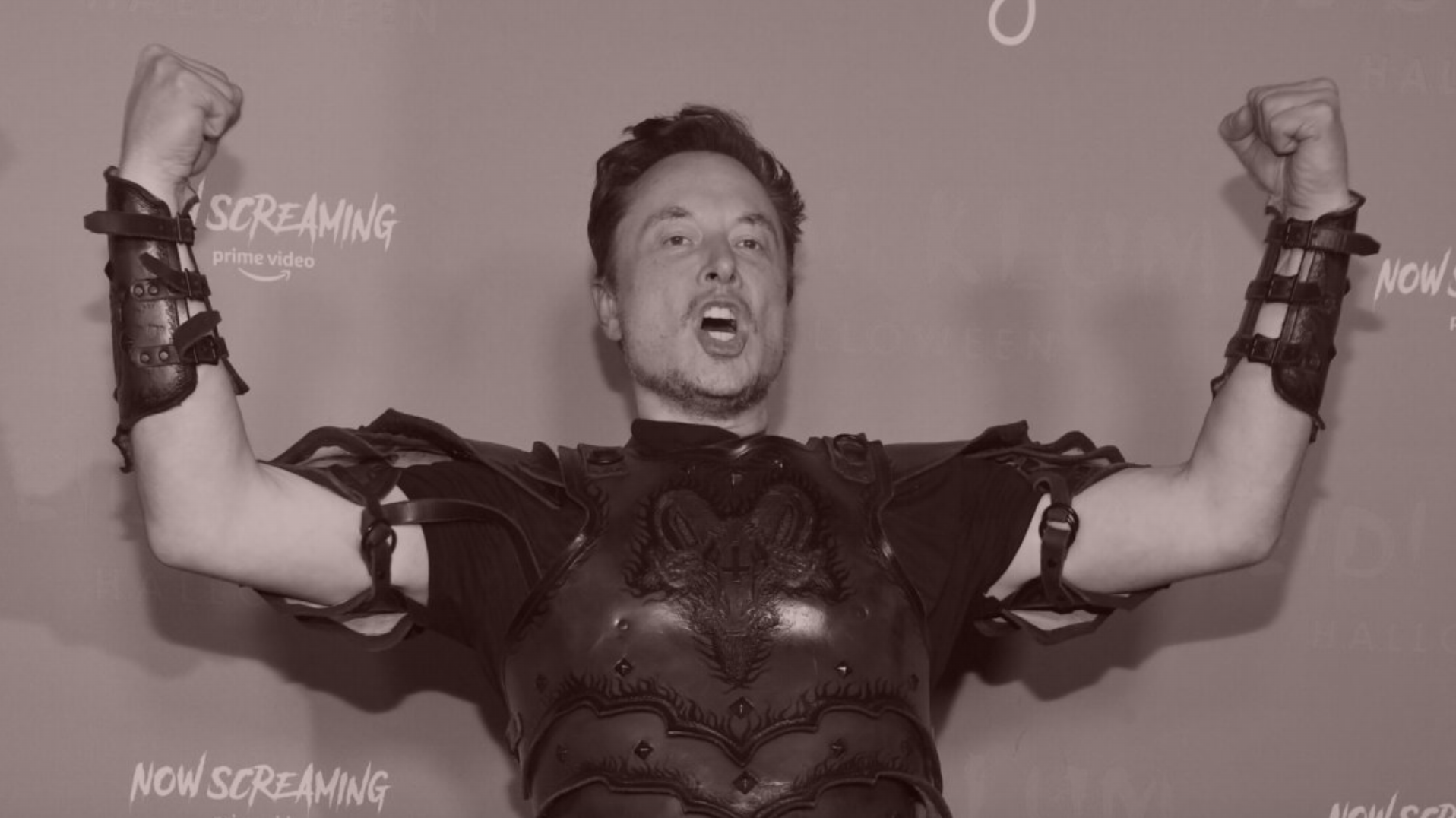
Not to put too fine a point on it, but the opening act of Elon’s Twitter Regime has been an absolute cluster-you-know-what. It’s hard to see how his baffling decisions—firing some 50 percent of the workforce; naming and shaming apprehensive advertisers; bullying “blue check” power users—might salvage the business, but in today’s issue, I try to make sense of it all, or at least his predicament. Plus, some notes on JayPow’s latest round of inflation management and thoughts on WBD’s dismal Q3 earnings report.
|
|
|
| It’s high beta time at Twitter, where Elon Musk seems to be taking the approach that to save the village square you have to first blow it up. And he certainly is free to do literally whatever he wants at Twitter. He owns something like 75 percent of the company now, has no board of directors, at least as far as we know, and has no one running the operation as his C.E.O. So it’s all Elon, all the time, now at Twitter.
And he’s just going for it, for better or worse. I mean, who in their right mind would fire 50 percent of the workforce in his first week of ownership while threatening to “name and shame” companies that have pulled their advertising and bully “blue check” power users off the platform? These are precisely the customers that Elon needs to make Twitter financially viable, and he’s treating them like enemy combatants in a culture war. “Twitter has had a massive drop in revenue, due to activist groups pressuring advertisers, even though nothing has changed with content moderation and we did everything we could to appease the activists,” Elon tweeted on November 4. He further elaborated that Twitter was losing $4 million a day, or $1.5 billion a year. Hmmm, that’s a new fact, and a profoundly disturbing one, at least for Elon and his merry band of investors and creditors.
Twitter is rapidly becoming a theater of the absurd, worthy of an Ionesco drama. Here’s Elon’s dilemma, and it’s a financial doozy. He’s got $13 billion of debt. Assuming the interest rate on the debt is capped at an annual rate of 7.5 percent, Twitter has to pay nearly $1 billion in interest to its banks each year. That’s basically the same amount of EBITDA that Twitter had in 2021. Heavy cake. Alas, that’s probably no longer an attainable level of EBITDA in 2022, based on Elon’s Friday tweet alone. It’s hard to see how Elon can go from losing $1.5 billion a year, if that’s true, to generating the cash flow he needs to keep his creditors off his back, even after firing half the company, and especially if users and advertisers continue to leave.
It’s a financial mindfuck, as I’ve written before. If Twitter can’t make its interest payments on the $13 billion of debt—something that may occur as soon as April, given that interest payments are made semi-annually—then there are a couple of possible courses of action. One is that Elon and his wealthy equity investors could personally make up the shortfall in order to prevent a payment default. Another is that Twitter fails to pay the required interest, suffers a payment default, and then tries to negotiate a debt restructuring with the banks. If that doesn’t work, the banks could put Twitter into an involuntary bankruptcy.
Let’s face it: neither of these options are any good. I seriously doubt that after Larry Ellison pumped $1 billion of his own money into the Twitter buyout, where the equity was already pretty much underwater, he’s going to be all that thrilled about putting in his pro-rata share of the interest payment shortfall. And if a firm such as a16z, which is a fiduciary for its limited partners, participates further in making the banks whole, Marc Andreessen should have his head examined.
The truth is that if there is an interest payment shortfall as early as April 2023, that will be Elon’s problem to remedy. And he easily could. I mean, what’s another $500 million payment to the banks for a guy who has already plunked down $24 billion of his own money and is still somehow worth $200 billion? If, on the other hand, Elon decides to let the banks suffer by not making the full interest payment, then all hell will probably break out. I suppose at that point the banks could try to cut a new deal with Elon, at a lower interest rate, or convert some of Twitter’s debt to equity. But that will of course make the banks’ losses even larger than they already are.
In truth, the banks’ better option would be to file an involuntary bankruptcy on Twitter and take control of the company away from Elon and his buddies. At least that way they could install a new management team, and a competent C.E.O., with the hopes of rebuilding enough value in Twitter to make it worth the $13 billion needed to make them whole. It’s not a far-fetched scenario. On the contrary, unless Elon steps up and makes the interest payments in 2023, this could all unravel quickly.
I predicted a few weeks back that this could be the second worst deal in M&A history, following only the AOL/TimeWarner fiasco, and it sure looks like we’re well on our way to achieving that rather ignominious goal. The good news is that flushing $31 billion of equity down the toilet in less than a year won’t really hurt the people who will probably lose it. They are richer than they could have ever hoped to be, anyway. Other than the embarrassment of having participated in one of the stupidest M&A deals of all time, they will all probably be just fine. |
| Powell’s Inflation Riddle |
|
| It looks like an early winter in Silicon Valley: Microsoft, Meta, Amazon, and Apple have effectively paused hiring; Lyft and Stripe both announced this week they would lay off about a seventh of their workforces; Snap has already cut headcount by some 20 percent; Twitter has just fired thousands more.
This is, of course, the very financial climate that Jay Powell and his buddies at the Federal Reserve were hoping to engineer when they began raising rates last March to tame rising inflation—an effort that he redoubled with another 75-point hike this week. So, none of this is coming as a surprise to Wall Streeters, who have seen the day coming for a while when the Fed would take the punch bowl away instead of pouring more tequila in it, and are busy trying to figure out how to make monkey in the changing interest rate environment.
And don’t you worry, the smart ones on Wall Street will figure it out. When the investment banking business hits the skids, as it has for most of 2022, other divisions of the Big Banks pick up the slack, particularly the trading business. After all, there’s nothing like a little bad economic news to get market volatility cooking and the Wall Street trading desks buzzing. For instance, at Goldman Sachs—generally viewed as one of the best Wall Street trading desks—revenues in FICC (Goldman’s euphemism for trading) were nearly $12 billion for the first nine months of 2022, ending September, up a whopping 36 percent from 2021, which of course was a record year on Wall Street for investment banking, including at Goldman Sachs. Ever since Gus Levy introduced Goldman in the 1970s to the importance of trading to balance out its other businesses, this is exactly how the machinery was designed to work: When investment banking is down, trading tends to be up.
So yes, I.P.O.s and other deal flows were early casualties JayPow’s deep freeze. But asset management and wealth management are steady, evergreen businesses, generating fees year after year. The icing on the Goldman cake is the profits, often lumpy, that come from its massive private-equity and principal investing business. Anyway, a firm like Goldman Sachs can figure out how to make money in good times and in bad times. There’s a reason the firm has been around since 1869, longer than any of its major competitors. It’s a survivor, with a culture and a business plan perfectly designed to figure out how to make money regardless of the macroeconomic waves crashing down around it.
Goldman’s take on the Fed’s guidance is that while JayPow “signaled” this past week that the interest rate hike next month might be only 50 basis points, “the funds rate is likely to rise to a higher peak than policymakers had previously projected,” according to a note from David Mericle, who heads a team of economists at the firm. He predicted the Fed Funds rate will “top out” at between 4.75 percent and 5 percent in 2023, or 100 basis points higher than where it is now, with “some risk” that rates could go even higher. That may be enough to trigger another mild recession (we already had a brief technical recession earlier this year), but paradoxically that’s precisely what investors are looking for to start buying again. Since the equity markets tend to discount future events, with a forward horizon of six to nine months, it’s quite possible that with the end in sight for the Fed’s tightening—assuming inflation cooperates, at least directionally—momentum could be building for an end to the slide in the equity markets.
Of course it’s impossible to know for sure, and this is not investment advice. But with the Dow Jones Industrial Average down 11.5 percent so far in 2022 and the Nasdaq down 33 percent, it’s quite possible that the 2022 bloodletting may ease up sometime in 2023. On Friday, the equity markets rallied; it’s been a see-saw all year of course. But I suspect that by November 2024, just in time for the sadly inevitable Biden-Trump rematch, the financial markets, anyway, should be looking better than they do right now. |
|
|
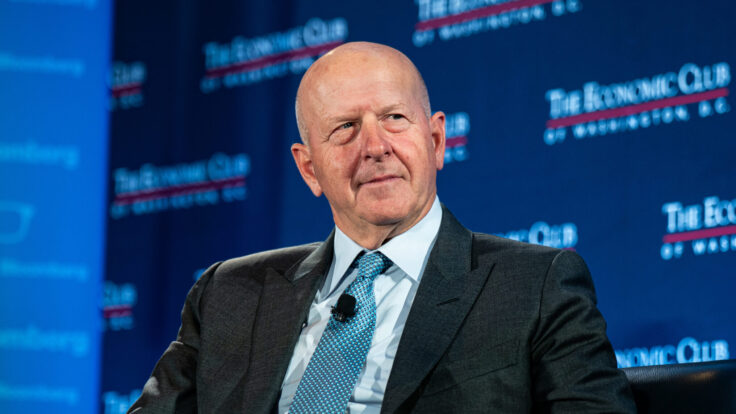
| Lastly, a few thoughts on Warner Bros. Discovery’s dismal Q3 earnings report: net losses of $2.4 billion, declining film and television revenues, adjusted EBITDA down 8 percent. I’m still a true believer in David Zaslav. With his combination of financial discipline, managerial skills and entrepreneurial acumen, if anyone can tame the diverse set of assets that WBD has, it’s him. But despite my enthusiasm for Zaz and his team, I am also a firm believer in the reality presented by a company’s income statement and balance sheet. And this is where Zaz and his crew will face their biggest challenge.
Let’s start first with the balance sheet. You will recall that the price of admission for Zaz to get his hands on the old TimeWarner was to agree that the combined WBD would have $55 billion in debt. No matter how you cut it, that’s a shit-load of debt for any company, let alone one in the increasingly volatile entertainment industry. Since the deal closed, in April, that mountain of $55 billion in debt has been whittled down to something around $48 billion of net debt (debt less than the cash on WBD’s balance sheet).
That’s the relatively good news for Zaz. The tougher news is that $48 billion of debt is still 5.1x WBD’s last 12 months “adjusted” EBITDA of $9.3 billion. (I hate the “adjusted” EBITDA metric, as readers know.) While that’s not Elon/Twitter leverage—more than 13x EBITDA—that’s still a fair amount of leverage for a company struggling to find meaningful growth. Back in April, at the time of the deal’s close, Zaz & Co. predicted that “adjusted” EBITDA for 2022 would be $1.1 billion higher than it is turning out to be, or $10.4 billion. Alas. Zaz & Co. have also already adjusted down its “adjusted” EBITDA expectations for 2023 to $12 billion, from $14 billion. 2022 will be a miss, and 2023 may also miss the already lowered projection. Hmmm.
So, no matter how you slice it, Zaz is on a knife’s edge financially these days. If his prediction for 2023 “adjusted” EBITDA slips below $12 billion—which, no offense, seems likely given that we are heading into rougher economic waters these days—then that debt will loom larger and larger. If it gets downgraded into junk territory—it’s already on the BBB ledge—then a whole new group of aggressive debt investors enters the WBD picture, with the potential to make life even more complicated for Zaz than it already is. No wonder he has no choice but to cut, cut, cut. I know my partner Matt Belloni has correctly pointed out that the bloom may be off the rose between Zaz and the content creators in Hollywood (they are upset that he’s been canceling projects) and that, as my partner Dylan Byers has been reporting, CNN is also a bit of a mess, but I’m not sure what choice Zaz has at the moment. He has to generate “adjusted” EBITDA and free cash flow in order to reduce the WBD debt if he has any hope of reversing the ongoing slide in WBD’s equity value.
Everything is related for Zaz at the moment. He may be incurring the wrath of the talent in both Los Angeles and New York, but the unfortunate reality here is that he doesn’t have any other choice. This is the mess he signed on for with that debt load, and the one that his fellow executives, managers, and underlings did, too, whether they like it or not.
Since its creation in the late 1980s, TimeWarner has always been a bloated behemoth. Few remember these days the 343-page report that hedge fund manager Carl Icahn commissioned my old friend Bruce Wasserstein and his colleagues at Lazard (one of my alma maters) to write about the years of excess at TimeWarner. That report—dubbed The Lazard Report—came out in February 2006, a lifetime ago. AT&T was unable to curb TimeWarner’s enthusiasm for spending, either. But thanks to the punishing relentlessness of that $48 billion in debt, Zaz has no choice but to be disciplined and keep cutting, at least for the time being, until the content pipelines can get rebooted and the economics of streaming start improving again.
The content providers may be pissed, and I get that. I’m a content provider myself. But it’s all about the equity now for Zaz. And that has been a dire picture, I’m sorry to say. The WBD stock is down some 55 percent since it started trading in April. That’s got to be troubling not only for Zaz but also for WBD’s two largest shareholders, John Malone and Steven Newhouse, neither of whom is exactly the strong, silent type.
Sadly, this will probably get worse before it gets better. I know Zaz reiterated this week that WBD is not for sale, and it’s clearly not at the moment because of pesky rules related to the Reverse Morris Trust structure under which he bought it in April. But as I’ve suggested before, those limitations expire after two years—in April 2024—and given how long it will take for a deal between, say, NBCU and WBD to come to fruition, I’m still not ruling out that combination as a real possibility, especially as long as heat-seeking dealmakers like Aryeh Bourkoff are hanging around the hoop. |
|
|
|
| FOUR STORIES WE’RE TALKING ABOUT |
 |
|
 |
|
 |
| Schmidt vs. Gates |
| A first look at Eric Schmidt’s new high-dollar charitable network. |
| TEDDY SCHLEIFER |
|
 |
| The Greene Party |
| A bracing conversation with Robert Draper, author of “Weapons of Mass Delusion.” |
| JULIA IOFFE |
|
|
|
|
|
 |
|
|
|
Need help? Review our FAQs page or contact us for assistance. For brand partnerships, email ads@puck.news.
|
|
|
|
Puck is published by Heat Media LLC. 227 W 17th St New York, NY 10011.
|
|
|
|