 |
| Hi, and welcome back to Line Sheet. I hope you are resting during the quietest week of the year. Besides introducing the concept of Santa to my almost-3-year-old, I’ve completed a few channel checks, hitting up the luxury outlets near Palm Springs—the parking lots were overflowing at 5 p.m. on Christmas Eve—and scouting vintage Wranglers in Joshua Tree. (Copped the perfect pair for $32. Skipped the leather vest from Contempo Casuals, though. It was… $98?!). The work never stops, because it’s very fun.
This is the last Line Sheet before 2024, which means I must take this chance to thank you for all your kind words and encouragement this year. I can comfortably declare that I am in the top 0.5 percent of right-job choosers—save for a torturous stint at Condé Nast circa 2011 (although I did manage to escape before the two-year mark). Still, Puck is special, and I’m glad you all see that, too. Big thanks to my editors, the absolute best in the biz, for making Line Sheet far better than I could on my own. And thanks to Alex Bigler, Puck’s VP of brand, who is everyone’s favorite person at our company. Email her with your event and partnership ideas: alexandra@puck.news.
P.S., a programming note: I’m taking New Year’s Day off, but will be back Tuesday, January 2, with a special edition.
Mentioned in this issue: Hailey Bieber, Aaron Levine, Adrienne Lazarus, John Galliano’s vanishing act, Dani Michelle, Karla Welch, Britt Aboutaleb, Rag & Bone, Bill Gaytten, Whit Stillman, Emily Oberg, Luna Luna, Ashley Merrill, Madewell, Jenna Lyons, Scott Rogowsky, The Bar, Princes Diana, Bridget Bahl, Lars Fruergaard Jørgensen, Kaelen Haworth, and many, many more. |
|
|
- It always comes back to clothes: Remember the insanity around HQ Trivia? Remember host Scott Rogowsky? Well, along with growing his closely cropped hair into a TV-unfriendly mop, he’s apparently been operating a vintage shop in Santa Monica for the past year and change called, you guessed it, Quiz Daddy’s. (Hat tip to GQ’s Cam Wolf, who unearthed this a while back.)Alas, Rogowsky announced this week via Instagram that he is closing up shop. So if you’re planning to stay at the Gjelina “hotel” in Venice on your next trip to Los Angeles, or anywhere west of the 405, there is going to be one less thing to occupy your time. Another L for the Westside. The lesson: Nothing good happens over there, and if you live in that part of Los Angeles, you should consider moving to Larchmont… or at least Beverly Hills.
- For those who know the difference between Lunya and Luna Luna: Thanks to the Line Sheet reader who alerted me to the fact that Lunya—the sleepwear brand founded and owned by entrepreneur and current Outdoor Voices C.E.O. Ashley Merrill—actually filed for Chapter 11 bankruptcy protection in June. I really don’t know how I missed this important detail… sorry guys.As most of you know, Chapter 11 is not liquidation, but rather a debt restructuring—giving a company time to get everything in order, while downgrading its credit rating. If the company can’t comply, and some can’t, then liquidation may follow. According to Lunya’s most recent operating report, filed in December, the company had more than $500,000 in unpaid bills, but was owed more than $800,000. You can read through the company’s monthly bank statements of credits and debits if you wish to do so. It’s kind of interesting.
- What the “good” holiday season in the U.S. actually means: The sentiment right now is that American shoppers are still happily spending. Retail sales—excluding cars—were up 3 percent during the crucial holiday period, according to reliable data released by Mastercard, with apparel up more than 2 percent. (Jewelry was down 2 percent, an indication of a slowdown in the luxury market of which we’re all very well aware.) However, much of the bump came from restaurants, which were up 7.8 percent.It’s important to remember that a lot of this was driven by heavy pre-Christmas discounts and promotions. Numbers like this can create a false narrative that everything is okay: The U.S. economy right now is pretty stable, with inflation rising at an almost-normal rate and unemployment on the low side. (Right now, the unemployment rate is 3.7 percent—4 percent is a good rate.) But everyone has a ton more debt than they did a few years ago, and it’s harder than ever to buy a house or a car. All I’m saying is: Don’t let these numbers get you all excited—it’s a microcosm of the economic story that Biden is having a hard time telling. (Okay, enough politics…) In the meantime, just focus on what’s working for you, and adjust accordingly.
|
|
|
| Thank you for joining me for Line Sheet’s year-end mailbag. For this issue, I endeavored to answer questions about the complicated world of celebrity styling and the fate of exiting creative directors, while unraveling the mystery disappearance of a once well-regarded LVMH brand. I’ve also shared my controversial take on the quality-clothing debate, a story of mood-board brands, middling and major, and a quest to find a replacement for a standby pair of Rag & Bone jeans, which turned into a broader examination of the brand itself, and its place in the market. Let’s get started… |
|
|
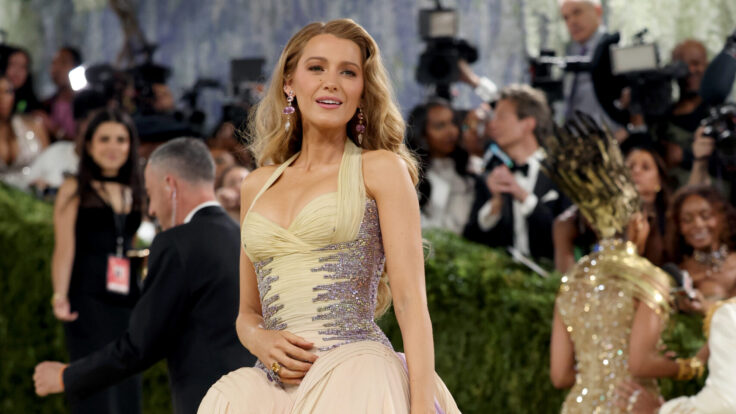
| I’ve been fascinated for ages with Hailey Bieber’s stylist setup. It seems like she uses both Karla Welch and Dani Michelle, sometimes in the same week. It doesn’t even seem like she uses one for red carpet and the other for street looks. How does something like that work contractually?I love this question! When it comes to Hailey, she mostly works with Dani Michelle for her street looks and Karla Welch (who also styles her husband, Justin) for red carpet, although occasionally there is crossover, as mentioned. In this case, I would say that the dual-stylist approach works well because the stylists have different, specific skills.
Why does Hailey need a stylist for daytime? Well, fashion helps to explain who you are to people, and she became very famous, very fast, because of her husband. She clearly has her own ideas about clothes, but having someone there to consult can’t hurt. (It’s like texting a picture of an outfit to a friend, but the friend is compelled to respond, and respond thoughtfully, because you are paying them.)
As for how it works in the contract, I can’t say for sure in this case, but what I can tell you is that most stylists don’t have formal contracts with their clients—that’s why you see some celebrities switching up stylists quite a lot. P.S. Did you know Hailey’s sister’s name is Alaia? That’s all.
What happened to the John Galliano brand?
Love a mystery. LVMH still owns John Galliano, 91 percent of which the eponymous designer sold to the group when he joined in 1995 to lead Givenchy. (In less than a year, he moved over to Dior. If you want more info on Galliano, Alexander McQueen, and that marvelous time in fashion, I recommend Dana Thomas’s Gods and Kings.)
When Galliano was fired from LVMH in 2011 after he was caught on video going on a drunken antisemitic rant at Café La Perle in Le Marais, the group kept the label alive, promoting his longtime right-hand Bill Gaytten into the creative director position. (I went to one of the shows. It was strange.) Gaytten, who was quite talented but perhaps better as a second-in-command, was working at LVMH as recently as 2018. Today, however, John Galliano is not listed on LVMH’s site as one of its 75 maisons. (Stella McCartney, Phoebe Philo, and J.W. Anderson aren’t listed, either, but LVMH owns a minority stake in these entities.) If you do a Google search for John Galliano clothing, it’s all secondhand. And yet, the John Galliano Instagram account is active and there is a live website, updated as recently as 2022. (I reached out to LVMH to get more clarity on the state of the business, but did not receive a response.)
Galliano, himself, is now the creative director of OTB-owned Maison Margiela, where he consistently receives runway raves. Commercially, the brand is a modern success story, thanks in no small part to the company's effort to normalize the “tabi” split-toe shoe. (Martin Margiela, the namesake designer who retired in the 2000s, certainly didn’t invent the tabi—it’s from Japan, first created in the 1600s—but he turned it into fashion, and OTB has made it into an everyday style. I knew it was mainstream when I saw a mom at HomeState tacos in Pasadena wearing a pair of Margiela tabi ballet flats.)
Galliano has said in the past that losing his namesake label was like losing a child, and I wonder if he’d want to reclaim it someday. Regardless, the devolution of the John Galliano brand teaches a very clear lesson. Galliano surely put a great deal of effort into the brand while simultaneously designing Dior, but the big name was prioritized in every way, and by the time he was ousted, his own brand had not grown at the same rate. Alexander McQueen, on the other hand, chose to leave LVMH (and Givenchy, where he replaced Galliano in 1996) to build his namesake brand with the group’s major rival, now known as Kering. McQueen, the brand, is by no means as big as most of the others in the Kering portfolio, but it has the potential to be.
What does a design director or creative director for a mass brand like Madewell do after they depart? They both just left, not drawing any conclusions about anything there, but they both kind of elevated the brand, and now what?
Probably time to do a little dive on Madewell and new boss Adrienne Lazarus, because, yes, there was a major restructuring a few weeks back, which resulted in the exit of several senior people, including designer Joyce Lee, who was with the company for more than 15 years. But to answer your question, I’m going to broaden this out to creative directors and designers in general, not just those leaving mass brands.
What happens? Well, they consult on projects for other brands; you can make a ton of money doing that. Former Abercrombie & Fitch designer Aaron Levine is working on a bunch of different projects at a time, including Madewell, Aimé Leon Dore, and brands that might get annoyed if I mentioned them and I don’t want to do that to Aaron. Scott Sternberg of Band of Outsiders and Entireworld fame, a skilled art director on top of being a great designer, consults for fashion and non-fashion brands.
Sometimes, designers take second-in-command jobs at bigger brands. Sometimes, they launch, or relaunch, their own brands. (That’s what Paul Andrew did when he left Ferragamo.) If you’re super savvy, like Jenna Lyons, you can become a Real Housewife and score consulting gigs that have very little to do with designing clothes: She has consulted for retail real estate developers and private equity firms, alike. Kaelen Haworth, who once ran her namesake brand out of New York, moved back to her hometown of Toronto, started styling people, and this past September, opened a store there, Absolutely Fabrics. It’s a lot like what happens to editors-in-chief when they leave, I guess.
The good news for most of these people is that their former top-dog jobs paid well, and so hopefully they saved some money—or bought a vacation property that they can sell or at least rent out most of the year. Remember, a big title cannot define your value as a person! For the talented and hardworking, another good-paying gig always comes along. Once you’ve learned how to make money, it only gets easier to do again.
Do you think the quality gap between nice things and cheap things is closer than it’s ever been?
I do. I would argue that the narrative about clothes “falling apart” more than they used to is kinda B.S. As a friend said, “The floor has come up a lot and the general ceiling has come down a lot.” At the lower end—I’m talking a step above Primark and Shein—clothes are often made with cheap fabrics in areas of the world where labor is also cheap. But manufacturing in those regions is often also terribly sophisticated. Zara, for instance, is pretty good quality. Arket is also pretty good quality.
I just wrote a book about Victoria’s Secret that goes deep into the evolution of apparel manufacturing in Asia, and I promise you, stuff is nicer than it used to be in many cases. Is it tremendous? No. But people don’t want to spend money on clothes, so that’s what they get. At the high end, certain brands upcharge by developing their product in Italy and manufacturing in less-sophisticated regions, which is where my friend’s observation that “the general ceiling has come down a lot” enters the equation. That approach feels stupid and greedy. But again, consumers expect everything to eventually be marked down, so these brands are pricing items with the assumption that the consumer expects a discount.
Also, just an F.Y.I., if you buy something that is handmade or whatever, it may last longer, but it will be imperfect in one way or another. That’s fine, but it’s not what we’re used to anymore, so just be prepared. Also, if you really believe the quality of modern clothes is crap, just buy vintage! It’s so easy to do that these days. I just bought a beautiful Phoebe Philo-era Chloé blazer for under $200 on The RealReal.
What is The Bar and why have I heard of it?
I would describe The Bar as Brandy Melville meets Sporty & Rich. It was started by an Instagram influencer, Bridget Bahl, who sells collegiate sweatshirts with the word “Fiance” screen-printed across the front. They are popular.
And they are not the only of their ilk. Emily Sundberg’s recent piece for New York mag on Paige Lorenze, a minor, if strangely compelling, Connecticut-based influencer and Armie Hammer accuser, introduced me to Dairy Boy, her line of denim and merch. It also reminded me a lot of Sporty & Rich, as many of these mood-board brands do, with their T-shirt logos inspired by old sporting club and outdoor-brand fonts, designed to look like something Princess Diana would have worn with a pair of bike shorts and yes, a tennis bracelet, skin toasted by a tanning bed.
I’m sure Emily Oberg is annoyed by all these influenced influencers (she has said as much), but whatever. They serve an audience that would never be in-the-know enough to land on Sporty & Rich, even with their $30 million a year in sales. And I don’t think they’re a problem for her at $300 million a year in sales, either. To me, the good mood board brands—like JJJJound, which Oberg has cited as an inspiration—are so much more sophisticated and visually ahead of the game. They continue to evolve, while the watered-down versions never move forward, and eventually sputter out. Oberg should be proud of her grip on these uber-followers. The only thing she needs to do is think bigger, and more strategically, than they ever could.
What’s a good alternative to Rag & Bone’s “Fit 2” denim jeans for guys?
Okay, so let’s talk about Rag & Bone first. This was the year I learned that a lot of men still wear Rag & Bone jeans. I’m pretty sensitive to where most brands stand with consumers, but in this case, my own reporting, combined with my insular existence living among men who wear Levi’s, chinos, or corduroys, failed me. From my fashion-world perch, Rag & Bone has seen better days. Most of its sales are made in the off-price market, it’s not growing like it once was, and, as I wrote this past summer, one of its big investors wants out. The graffiti once blanketing the side of its store on the corner of Elizabeth Street and Houston, “Rage and Boner,” captured its malaise.
And yet, if you ask a guy between 35 and 50 what brand of jeans he wears, and that guy works in media or advertising, or an adjacent industry, many of them would say that Rag & Bone is their go-to. One of my friends told me that a male colleague recently bragged that he “discovered” Rag & Bone just a few months ago while shopping. This is a guy who lives in New York City, and advises brands of all kinds for a living. How had he never heard of Rag & Bone?
I truly do not know, but brands die much more slowly than we’d like to admit, and also: Just because a brand is dying doesn’t mean there isn’t an audience for it. We know that if men find something they like, they tend to stick with it and buy multiples. So I guess it’s no surprise Rag & Bone jeans remain a staple. Good for Rag & Bone.
Now, for the answer to the actual question. “Fit 2” is a very skinny jean, and if you want to keep wearing skinny jeans, my advice would be to… perhaps just stick with it? That being said, I urge you to consider opening your mind, and your hem, just a little. I’ve been saying for years that anything goes in denim—skinny, wide-leg, tapered, cropped, straight-leg, whatever you like—but it’s also nice to be aware of what’s going on around you, and to adapt your own style and preferences to what feels current. For instance, many cool young people wear super wide-leg jeans. What you wear conveys quite a bit about who you are, and wearing clothes that are right for the given moment can make you feel more at ease in that moment.
I asked my good friend and former colleague Britt Aboutaleb, who recently started a styling service for guys, to come up with a list of “Fit 2” alternatives. (If you’re interested in hiring her, she’s based in New York and her email is Britt@thefit.co.) I also asked a few male fashion-literate friends what they thought. One final thing: Try not to let price guide you in this case, because you’ll wear these at least four times a week. |
- Todd Snyder Slim Fit Selvedge Jean in Indigo Rinse, $198. “This is a baby step, but one in the right direction.” —Britt
- Levi’s 501 Original Fit, $56. Don’t let how these look on the model freak you out. This is not reflective of how they fit most guys. What you should do is go to a Levi’s store and try a bunch of jeans on. And if you can handle it, just buy a vintage pair from Alex Mill. You have to go visit their store in Soho, and they cost between $125 and $198. But nothing beats vintage Levi’s; every other cool jean is based on them.
- Orslow 105—lol—Straight Leg Jeans, $355. Okay, so I know this price is worrying you. (Probably the untraditional sizing, too.) However, every person I asked—four straight dudes who could be characterized as fashion journalists, plus my friend Britt—said that they were the best jeans around. If you buy these, I’ll be extremely impressed.
|
| What I’m Reading… and Listening To |
|
| I’m on The Powers That Be today with my editor Ben Landy, talking about some of the biggest fashion stories of 2023. [TPTB]Novo Nordisk C.E.O. Lars Fruergaard Jørgensen was named Person of the Year by the Financial Times, and I’m quoted in the profile talking about how weight loss drugs, including Novo Nordisk-produced Ozempic and Wegovy, are changing culture. I urge you to read this, as these drugs are going to be an even bigger story in 2024. [FT]
“Skiing hasn't been this cheap in decades!” [Lefsetz]
The hardened among you may find this a teensy bit precious, but… If you, too, watch Metropolitan every Christmas, you may enjoy what could be described as a Whit Stillman B Magazine, composed of critical essays, interviews, and articles written by Stillman himself. Did you know he directed an episode of Homicide: Life on the Street? [Amazon]
Coupang, Farfetch’s new owner, was sued in a U.S. court for firing an employee for whistleblowing. [Bloomberg Law]
Unilever is buying K18, a range of science-y, superhero hair products.[Drug Store News]
I’ve found most of the writing on 2023 being the “year of the girl,” or the “year of the doll,” lacking, to say the least, but this conversation is very good. [Critics at Large]
And finally… if you’re on the hunt for ladies’ jeans that are not vintage, my No. 1 recommendation is Reformation. They’re designed by the incredible Benjamin Talley Smith. They have zero branding, fit perfectly, and are under $200. As they say, treat yourself. |
|
|
| Until next year,
Lauren |
|
|
|
| FOUR STORIES WE’RE TALKING ABOUT |
 |
|
 |
|
 |
| Ukraine Diaries |
| A harrowing conversation about Putin’s siege of Mariupol. |
| JULIA IOFFE |
|
 |
|
|
|
|
|
 |
|
|
| Need help? Review our FAQs
page or contact
us for assistance. For brand partnerships, email ads@puck.news. |
| You received this email because you signed up to receive emails from Puck, or as part of your Puck account associated with . To stop receiving this newsletter and/or manage all your email preferences, click here. |
| Puck is published by Heat Media LLC. 227 W 17th St New York, NY 10011. |
|
|
|