Hi, and welcome to Line Sheet. There’s a lot happening. In today’s issue, I examine the strategies
of Zegna and Hermès, which showed in Malibu and Bel Air, respectively, last week. Plus, we’ve got news of a critical behind-the-scenes designer switcheroo, a Japanese pop-up in Paris, former Gucci designer Frida Giannini’s social media rampage, the Bryanboy-Chanel discourse, and a long, luxurious reading list.
Tomorrow on Fashion People, my guest is New York Times reporter (and
The Fashions author) Jacob Gallagher. He’s back! We chat about our week in Los Angeles, what it was like for Jacob to risk his life by getting in a car with me at the wheel, the future of shopping in America, and plenty more. Listen here
and here.
Also mentioned in this issue: Gabriele Semeraro, Axel Dumas, Dua Lipa, Louise Trotter, Sarah Burton, the Traina sisters, Morris Goldfarb, Grace Wales Bonner, Gildo Zegna, The
Director, Nadège Vanhee, Luca Solca, Cathy Horyn, Villa Zegna, James Franco, Maybe Paris, Julia Louis-Dreyfus, Ryan McGinley, Emily Oberg, and more. |
Five Things You Should Know…
|
- Bottega
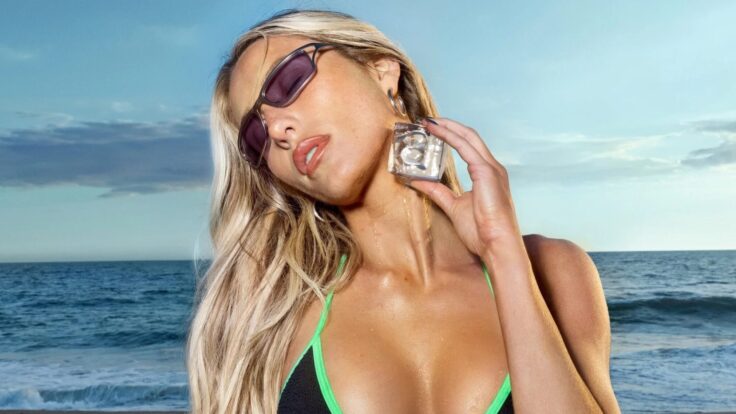
Veneta’s red carpet win: Dua Lipa’s trio of wedding looks—Schiaparelli for the ceremony, Bottega Veneta for the preparty, and Chloé’s sheer overlay to a brunch—have garnered plenty of attention, and we haven’t even seen the actual dress yet. But so far, the woven, feather-trimmed Bottega gown is the best of the lot. The piece was the work of Gabriele Semeraro, whom Bottega creative director Louise
Trotter hired from Givenchy a few months ago as her head of tailoring and outerwear for women’s.
Semeraro became a known
quantity when he designed a dress under his own name for the Oscar-nominated costume designer Miyako Bellizzi to wear to the Governors Awards, but he’s been toiling behind the scenes for years, many of them at Versace. His recent collaboration with Sarah Burton at Givenchy certainly got him the Bottega job. The best thing about Givenchy during Burton’s run has been the red carpet, where her designs are really striking; the
great thing about Lipa’s look was that it felt in conversation with Trotter’s runway work, but tailored to her tastes.
It was smart of Bottega to snag Semeraro. Brands of that size are competing against far larger budgets on the celebrity front—the sharper the designs, the more impact they have. - Bryanboy’s turn as unofficial Chanel spokesperson: I don’t follow Boring Not Com, the anonymous, cynical Instagram account spoofing the incredibly
earnest Style Not Com. It’s generally too mean, even for me. However, if the account (I truly don’t know who it is… do you?) says something important, and honest, it usually gets surfaced to me anyway. That’s what happened this past week, when Boring decided to call out Bryanboy as a Chanel sycophant. “BRYAN IF I SEE ONE MORE F*CKING CHANEL POST,” wrote Green Guy.
Ever the good sport, Bryan jabbed back in the comments, but it raised a question I’ve been thinking about as
he shopped the Métiers d’art collection in recent weeks. The influencer-editor-V.I.C. is certainly a boon to Chanel: He’s inspiring random people (including straight men) to buy Matthieu Blazy pieces, and his knowledge and understanding of the house, and what they’re trying to achieve, is evident. (He discussed it on Fashion
People.) However, it’s a lot, and I wonder if it stresses out other fashion houses. I’ve never seen an editor or influencer with so much experience go so hard on one designer. Not even Cathy Horyn with Raf.
One of the reasons Bryan is so valued by designers is that he does drive sales. But to be all-in on one brand risks alienating others. My assumption is that Bryan’s Chanel-Blazy fanboying will eventually soften. By the time the shows
come around, he’ll be back to posting about the work of his myriad designer friends. Meanwhile, smart brands will engage in a way that convinces him to post glowingly about them, too. He doesn’t need to pander at this point, so it’ll have to be genuine. - Frida Giannini’s Instagram awakening: The former Gucci designer Frida Giannini, who joined Instagram less than a year ago, has been quite… spirited on the platform of late,
first dragging the Gucci show in New York—then, this past week, posting about Hermès, praising Nadège Vanhee’s Bel Air collection while miscrediting Grace Wales Bonner, who is the company’s new menswear designer and
doesn’t show her first collection until January 2027. She has since removed the mention.
Anyway, she’s a fun follow. Giannini came up in a different time, when her job was to essentially make clothes that reminded people of Tom Ford. That sort of lukewarm fashion wouldn’t work now, but it was once pretty chic. If you’re a Giannini fan, you might want to check out The
Director, the James Franco–produced propaganda film showcasing her time at the house. - Tokyo Sense and sensibility: Earlier this year, I got the chance to visit Andreas Murkudis’s shop in Berlin, nearly a quarter-century after he opened his first store in Mitte in 2003. As many of you know, Murkudis is deeply influential; what he carries informs what you find in independent retailers around the world. Looking
around his current space—part store, part showcase for his interior design prowess—I kept thinking about how there are ever fewer brands for him to buy as it becomes tougher to run an independent fashion label. Their website says they carry more than 200 brands, but the range is so editorialized it feels like fewer than that. (In the fall, inventory will include Bare, Murkudis’s own line, launched in partnership with brand strategist Benoit Duverger.)
Anyway, many of
Murkudis’s selects are from Japan, and starting this Sunday, June 14, he’s launching Tokyo Sense, a pop-up at 16 Rue des Minimes in Paris, which will run through July 7 and feature 30 independent labels “across fashion, jewelry, object design, and independent publishing,” according to the release. The shop is also backed by Lumine, a Japanese shopping mall chain. In many ways, Murkudis’s whole
career has been a meditation on consumption, and how our patterns are constantly changing. It’s probably worth checking out if you’re in town for the men’s shows or Couture.
|
- Material-ism:
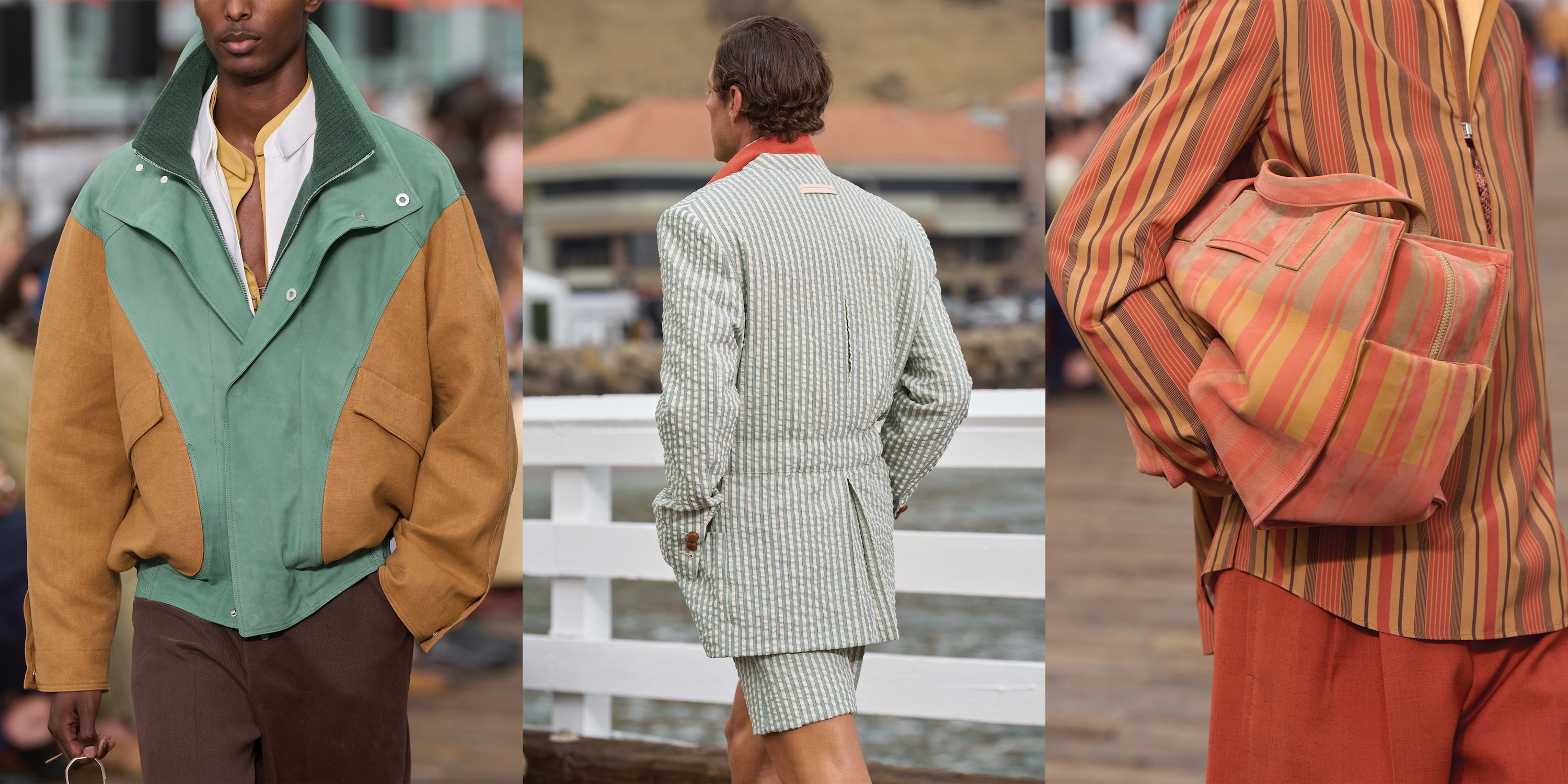
Last week in Los Angeles, I spent a lot of time with the Zegna family, blood relations and beyond. First, I recorded Fashion People with artistic director Alessandro Sartori a few days before he showed his latest collection on the Malibu Pier. Later, I spent an afternoon at the Chateau Marmont with Gildo Zegna and his wife, Elena, who looked fresh in a floral Thom Browne blazer. Gildo gave me a preview
of the brand’s multiday takeover of the Chateau cottages, where V.I.C. wardrobe dreams are hopefully in the midst of coming true. The sixth iteration of Villa Zegna—a sort of makeshift private members’ club—was inspired by the namesake family’s travels in the 1970s. You could see how Sartori’s collection nodded to images from TOP, the brand’s in-house magazine, which was published from the mid-1960s until 1980. (Zegna reproduced several issues for clients to peruse during their Villa
appointments.)
|
- I’ve
been thinking a lot about what makes a luxury customer happy these days (other than pure, unadulterated fashion), and the throughline is fabric. Sartori has made material the center of his collections: The silhouettes, from the safari jacket to the bomber, and the colors (clay red, seaglass green) are simply in service of showcasing all that hemp gabardine and French velvet. Gildo, a third-generation steward of the brand, was particularly proud of the vicuña offerings, noting that some
clients make full suits from the stuff.
Unlike most public fashion companies, Zegna has seen its stock price increase steadily—up more than 40 percent year-to-date and 70 percent over the past 12 months, and nearing its 2023 peak. How are they doing it? Well, maybe just ask the guy I ran into at the show in a full Zegna look, accented with a Bulgari necklace and ring, who certainly made his way to Villa Zegna afterward.
|
And now, a look at Hermès… |
|
|
|
Decades of ultra-exclusivity have helped Hermès transcend many of the crises bedeviling the
rest of the luxury industry. But staying above the fray may require tinkering with its generational playbook. |
|
|
|
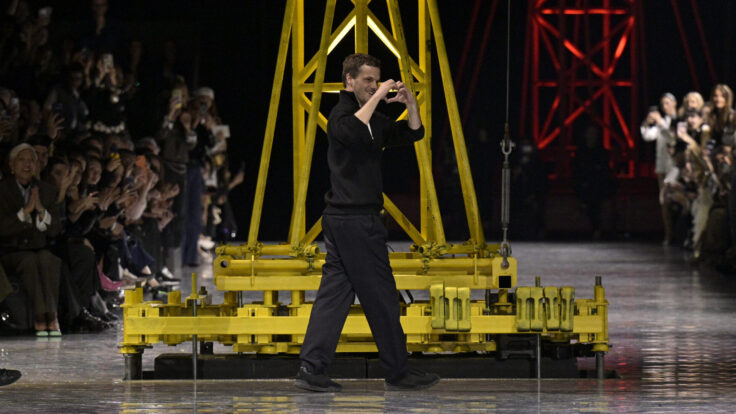
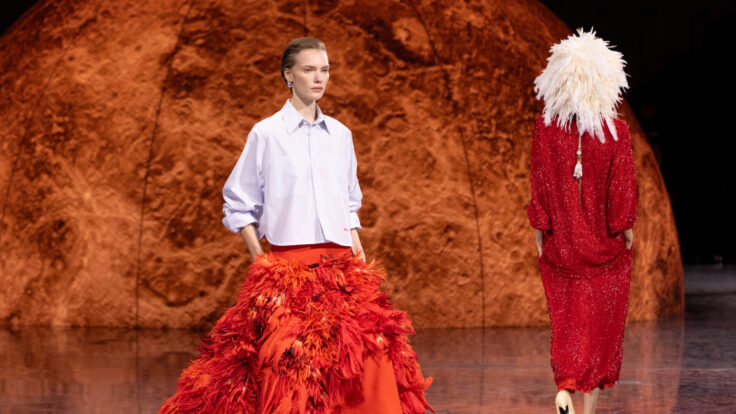
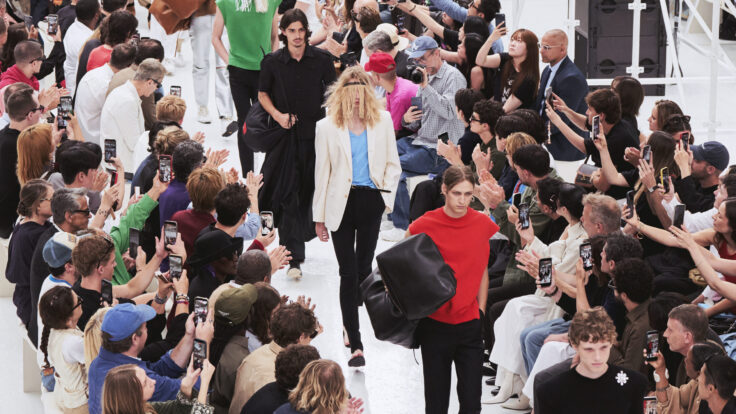
Of all the countless fashion show spaces that I’ve found myself in over the years, I’m not sure any has been
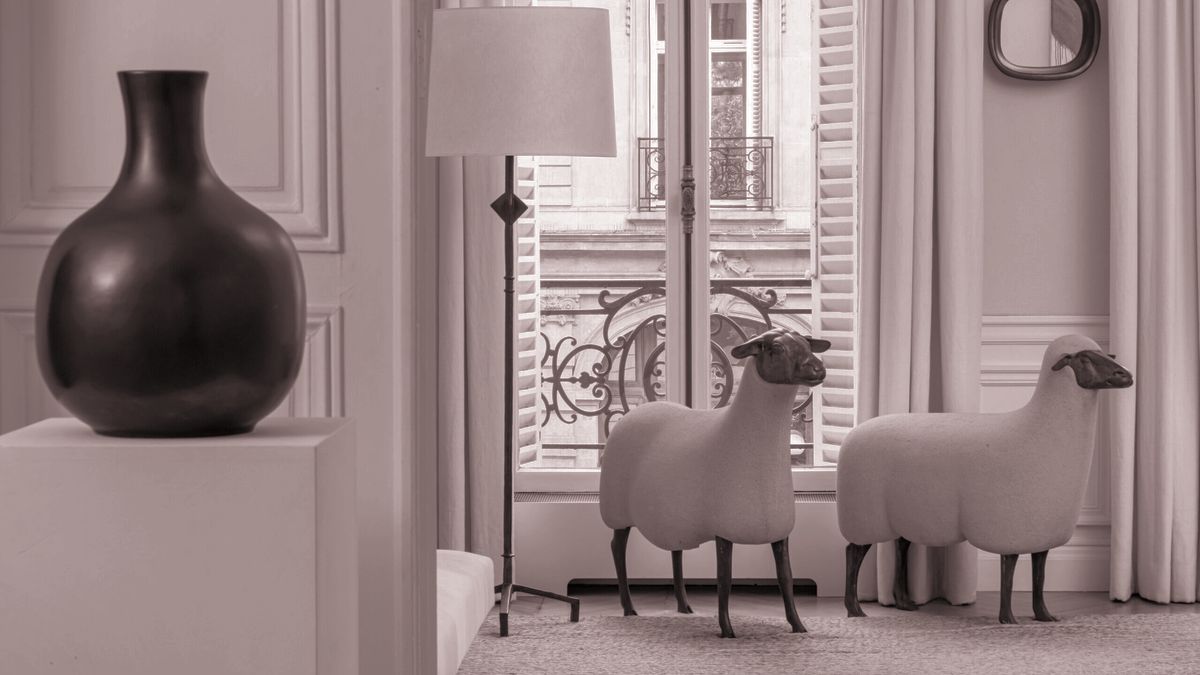
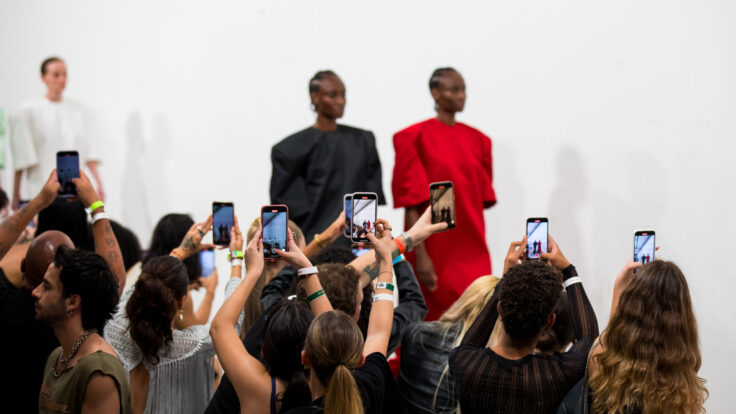
chicer than the butter yellow pavilion built for Hermès womenswear designer Nadège Vanhee’s ready-to-wear show, which took place last Thursday on a hill high above Bel Air and was designed by Maybe Paris’s Charles Levai and Kevin Tekinel—with feedback from the designer herself, and built from scratch by architect Georgi Stanishev. The next day, someone asked me how much I thought it cost to
create the structure. It had to be well into the seven figures. After all, Hermès spares no expense when it comes to client-facing events, where two-thirds of the family-controlled company’s communications spend is lavished. (The rest goes to traditional advertising, although Hermès famously doesn’t have an official marketing department.)
Most importantly, the production was incredibly tasteful, down to the gorgeous invitation rendered in an even lighter yellow with
green lettering—more beautiful than any wedding invite I’ve ever received. The whole affair exemplified the singular essence of the Hermès brand, which could be seen as a decades-long exercise in restraint. The Dumas family, which has run the business for six generations, is better known for holding back than almost any other attribute. Not only has the family famously restricted the amount of product—waitlisted handbags, etcetera—but it has also managed collections, comms,
celebrities, merch, trend-hopping, and so on with unprecedented discipline.
As Bernstein analyst Luca Solca recently noted, company executives believe that Hermès is protected from the crisis facing Big Luxury because it is not a fashion brand—yes, the company makes clothes, and beauty products, and everything else, but only in a decidedly Hermès-first manner. Indeed, the fashion discourse around what’s happening at Chanel, and how it’s affecting other brands,
seems to be running in parallel to Hermès’s own narrative. It might sound highfalutin, but it’s largely true: There is Hermès, and then there is everyone else.
Still, staying above the fray has never been harder. While none of us were naive enough to think that everyone who buys Hermès is as tasteful as the Traina sisters, social media has inevitably punctured some of the mystery surrounding actual Hermès customers and the in-store experience by revealing
unvarnished truths: While it can still be difficult to secure a rare bag, that’s not always the case. Combined with the proliferation of unfurnished bags on the secondhand market, the brand has at least marginally been brought back down to earth.
To quote a recent podcast appearance by Sporty & Rich founder (and Hermès collector) Emily Oberg, “Carrying a leather Birkin is like carrying a Coach bag. The only way to feel okay is to have an exotic.” Of
course, she was joking—but only sort of. Hermès remains untouchable in many ways. But the company is also at an inflection point. There’s a desire to be in the mix that didn’t really exist before, evidenced by the rising cadence of these off-piste shows and the presence of celebrities from Julia Louis-Dreyfus (more expected) to Miley Cyrus (less so) and even Ina Garten (a great idea). Then, there’s everything on the
near-horizon: the launch of Couture under Vanhee in January 2027, and the arrival of Grace Wales Bonner next year to lead menswear. The company’s beauty offerings are expanding as well, with skincare launching in 2028. |
Hermès may not be a fashion brand, per se, but it sometimes acts like one. In that regard, Wales Bonner
should prove valuable: She is something of a classicist, but she also understands how to create “It” items. Meanwhile, with Vanhee’s trendier offerings—such as the peak-pandemic clogs that I hired an online personal shopper to scout for me, or the cowboy boots—the company has exercised restraint, sometimes even too much. As Solca noted, there was not enough inventory of women’s novelty shoes in Q1 to make up for the slight retraction of the more traditional Middle Eastern customer.
Then
there’s the matter of cost. For years, Hermès promised that their pricing structure was based on the cost of raw materials and other operational expenses, without a vig added for marketing. As it turns out, they were being honest: Despite steady, inflation-related price increases, their products are often less expensive than those from brands with perceived lower quality. Does that make their products a steal? Of course not, but it changes the narrative—and raises the question of how to
communicate the perception of value.
One approach could be increasing the focus on certain customer profiles, like the fashion enthusiast. For instance (as I’ve mentioned before), Hermès could create store experiences where the ready-to-wear collections are more fully represented, especially after Wales Bonner joins. As a fan of the brand, I’d be more likely to shop
collection pieces if there was some sort of retail experience where I could truly get a sense of the vision.
But in any case, the V.I.C.s, who are the most resilient customers, will remain the driver of Hermès’s business—not fashion lovers who buy one or two items a year. In a forthcoming episode of Fashion People, Solca wondered whether Hermès should create an even higher tier of product to remind the top customers of its specialness. Perhaps the company’s curiosity
about getting into Couture reflects the same insight.
For Hermès C.E.O. Axel Dumas and his executives, the test over these next few years is going to be whether they can play more in these other areas, from fashion and celebrity to beauty, without losing the purity they have so doggedly protected. No company is flawless, but in the decade since
that infamous takeover attempt by LVMH, Hermès has come close to it. Let’s see what the next decade brings. |
Saks’s exit from Chapter 11 bankruptcy protection has been approved by a Texas judge. C.E.O. Geoffroy
van Raemdonck is hoping to end 2026 with $85 million in EBITDA and aiming for $9 billion gross merchandising value by 2030. [WWD]
This column argues that the American middle class has not hollowed out; rather, everyone is getting richer. What the research doesn’t account for, however, is the ballooning cost of living.
Everyone might be better off, but everything is also a lot more expensive. [N.Y. Times Opinion]
The new design director of Carven is Kai Nesselrath, who designed
women’s ready-to-wear at Saint Laurent and worked under Karl Lagerfeld at Chanel. The ICCF Group–owned Carven isn’t a major fashion player, but the gig could still change his life if he does a good job. [Inbox]
I am obsessed with Flores, fashion designer Giovanna Flores’s sculptural notepads, created with her sister,
Janelle. Jessica Iredale spotlights Giovanna’s celebrity dressing. [N.Y.
Times]
Another Chloë closet purge, just for you! [Instagram]
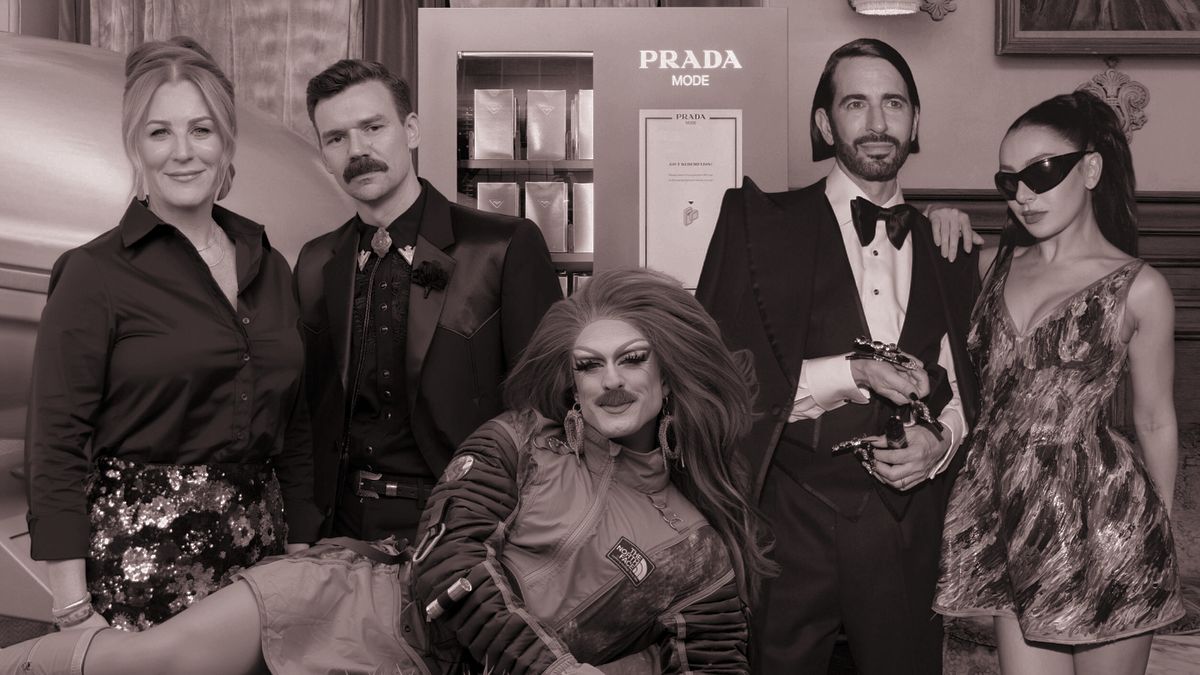
Prada space suits! It’s too good. [Reuters]
G-III boss Morris Goldfarb discusses what he wants
to do with Marc Jacobs. [WWD]
If you have time (I don’t), it’s worth sifting through Bonhams’ Diane Keaton collection, which includes fashion and letters.
[Live Auctioneers]
Last week I was just asking a friend, “Whatever happened to Ryan McGinley?” And behold, here he is!
[New York] |
Until tomorrow,
Lauren
P.S.: We use affiliate links because we are a business. We may make
a couple bucks off them. |
|
|
|
Puck’s daily art market email, anchored by industry expert Marion Maneker, offers unparalleled access to the mega-auctions and
galleries, elite buyers and sellers, and the power players who run this opaque world. |
|
|
|
Join Emmy Award-winning journalist Peter Hamby, along with the team of expert journalists at Puck, as they let you in on the
conversations insiders are having across the four corners of power in America: Wall Street, Washington, Silicon Valley, and Hollywood. Presented in partnership with Audacy, new episodes publish daily, Monday through Friday. |
|
|
|
Need help? Review our
FAQ page or contact us for assistance. For brand partnerships, email ads@puck.news.
You received this email because you signed up to receive emails from Puck, or as part of your Puck account associated with {{customer.email}}. To stop receiving this newsletter and/or manage all your email preferences, click here. |
Puck is published by Heat Media LLC. 107 Greenwich St., New York, NY 10006 |
|
|
|
|