 |
|
Welcome back to The Stratosphere.
|
|
Tonight, an inside look at why Ryan Salame, the suave, loafer-wearing, token Republican in Sam Bankman-Fried’s employ at FTX finally folded to federal prosecutors.
But first…
- Some presidential fundraising scoops: The end-of-quarter stampede of presidential fundraising is now upon us, at least based on the number of invitations being passed my way. On the Democratic side, I can reveal that Joe Biden is returning to the Bay Area for a pair of fundraising events: On the 26th, he’ll appear at an event hosted by billionaire couple Liz Simons and Mark Heising in Atherton (tickets range from $5,000 to attend to $100,000 to join the clutch), followed by an event in San Francisco the next day, hosted by top Democratic fundraiser Gretchen Sisson and her husband, tech executive (and Facebook co-founder) Andrew McCollum.
On the Republican side, both Ron DeSantis and Tim Scott will return to the Bay Area to pass the hat among tech execs at the same time later this month. In addition to fundraising events in Salinas and Fresno, DeSantis will be fêted in the East Bay’s tony Piedmont enclave for a reception and dinner on September 28, hosted by David Sacks and his wife Jacqueline; Joe Lonsdale; and Katie Biber, according to an invitation I’ve seen. Sacks, of course, is the PayPal Mafia member who has become a political power player with his All-In podcast and super PAC; Lonsdale, a few years younger but with the same Stanford Review pedigree, and has been raising for DeSantis since the outset of the campaign. Biber, the general counsel for Mitt Romney’s 2012 race, is now the head of legal at the crypto investment shop Paradigm, but she’s come into the DeSantis fold because they’re personal friends from their years at Harvard Law School.
Speaking of crypto lawyers, there’s an interesting Silicon Valley personality raising money for Scott, I’ve learned: Katie Haun, the former D.O.J. prosecutor and Andreessen Horowitz partner who has had a growing media profile over the last two or three years. Haun is one of only three hosts for the dinner reception in San Francisco at the same time, the evening of the 28th, as the DeSantis event. (The other two are Scott bundling mainstays, Greg Wendt and Alex Slusky. The cheapest tickets are $2,500 a pop.) Haun isn’t someone who does a lot of big-money fundraising, but I’m told that she is generally drawn to younger candidates, and she thinks that Scott could play a key role on technology and crypto issues, even if he’s just in the Senate.
|
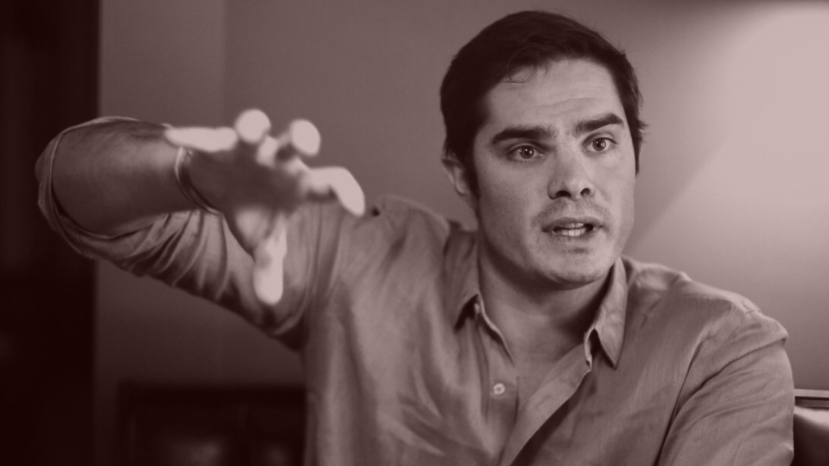 |
| Inside the Fall of S.B.F.’s Big Cool Buddy |
| The backstory to the yearlong back-and-forth between prosecutors and Ryan Salame, the Berkshires restaurateur and Republican mega-donor who fought the feds for as long as he could—before folding. |
|
|
|
| By last summer, the twenty-something billionaire crypto executive and emerging man-about-Washington, Ryan Salame, had been looking for a way out as a top executive at FTX. He felt exhausted by the long days, was anxious to spend more time in the U.S., and was continually butting heads with other FTX executives. In October, Salame finally pulled the trigger. His decision to resign was never announced, or reported, but it was more than a year in the making: He had been somewhat withdrawn ever since moving to the Bahamas in late 2021, in what was intended to be a “retirement” for one of Sam Bankman-Fried’s key deputies after amassing a miraculous fortune, before S.B.F. moved the entire company there.
Salame always stood out as the linen-and-loafered bro among the Math Camp crowd that surrounded S.B.F. He wasn’t exactly an effective altruist, the prevailing ideology among the core FTX set, but he was drawn to power and had a taste for nice things. Salame, as I’ve reported over the years, was personally a Romney Republican, and someone who wouldn’t be caught dead at some lame G.O.P. fundraising event. But his infatuation with Sam was undeniable. And so when S.B.F. and the rest of the E.A.s, including Sam’s brother Gabe, and the top Bankman-Fried aide Michael Sadowsky, saw an opportunity for the movement to influence conservative thought leadership—namely, by electing Republicans who would counter Trump, stave off nuclear war, and yeah, who were crypto-friendly, too—Salame played ball.
He embraced the task of becoming the Republican advance man for S.B.F., discovering that the game of politics could be genuinely fun, especially for the wealthy. Salame put some $15 million into a super PAC during the 2022 G.O.P. primaries with the intention of electing more moderate Republicans. But toward the middle of the year, he started dreaming bigger. He hired a strategist, Tyler Deaton, to serve as his donor-advisor, and to help acquaint him with the big fish like Mitch McConnell. People at Jeff Roe’s firm talked openly about him as the next big thing. Meanwhile, his girlfriend Michelle Bond’s unsuccessful congressional run exposed him to a whole gamut of MAGA types, like Donald Trump Jr. and George Santos. Although she lost badly, Bond was being cultivated by G.O.P. fundraisers as a player, too.
Life was good: Salame, who grew up washing dishes at a diner in a middle-class town in western Massachusetts, now flew private, owned a burgeoning restaurant empire in the Berkshires, and was a top executive at a company worth $32 billion. When he quietly signed the paperwork to resign from his role as co-C.E.O. of FTX’s Bahamian subsidiary, in October 2022, he was ready for that fabled late-20’s retirement. Within weeks, of course, everything changed: FTX went bankrupt, Bankman-Fried was arrested and then extradited.
Last Thursday, Salame, wearing Bitcoin socks, walked into Judge Lewis Kaplan’s courtroom in New York and admitted to operating a money-transmitting business without a license, as well as to participating in a straw-donor scheme, a ploy to make political contributions in his name on someone else’s behalf. Salame “knew” that it was illegal to make those contributions based on funny loans, he told the judge. He pleaded guilty to two federal charges. “Ryan looks forward to putting this chapter behind him and moving forward with his life,” his lawyer, Jason Linder, said in a statement, his team’s first public comment about the case over the last year. |
|
|
| You should notice that Salame didn’t plead guilty to the fraud charges at the core of the S.B.F. indictment. He was, without a doubt, fiercely loyal to the boss. But was he really an insider? On any given night, Salame was more likely to be found enjoying the Bahamian party scene than reading Peter Singer or an effective-altruism tome. Certainly he wasn’t as intimate with him as the handful of former FTX executives who lived in S.B.F.’s penthouse, and who have since cut plea deals with the Justice Department: Gary Wang, Nishad Singh, and Caroline Ellison, S.B.F’s former girlfriend. Still, Salame will presumably meet their same fate, destined for some years in prison, though presumably fewer years than he would have otherwise.
So why did Salame plead guilty? I’ve spent the last year talking with Salame’s friends, and others with insight into his political life, and even more sources over this past week. The reality, I’ve learned, is complicated, and says a lot about the fog of war that surrounds targets of criminal prosecution.
In the first half of the year, Salame and Linder, the co-chief of Mayer Brown’s white collar practice, labored to convince prosecutors that he had no role in the alleged fraud. Sure, he was part of the FTX C-suite, but he was not at the Wang or Ellison level. Salame’s posture toward the Southern District of New York could be described as calculated hardball: He made himself available to prosecutors, but he wasn’t exactly running to them, as Wang or Ellison clearly had. He and Linder would answer questions, to provide context or try to shape a narrative, but he was in no rush to make a deal.
Salame might have thought he was being cooperative enough, but prosecutors clearly didn’t. In April, authorities sent 20 to 30 armed F.B.I. agents to the suburban Maryland home that Salame shared with his Bond, to seize their cell phones. It was then that Team Salame began to appreciate the extraordinary pressure that was about to befall them.
Over the following months, Salame came to realize that his quest to reframe his involvement in the FTX affair was falling on deaf ears. Around June or July, prosecutors informed him and his lawyers about areas where they believed he had criminal exposure. Whether Salame himself agreed was irrelevant. In general, at that point in criminal investigations, defendants and prosecutors are effectively trying to calculate an Expected Value for whether to cop to a plea deal. Prosecutors are trying to convince a defendant that they’ve got them dead to rights and that they should de-risk the outcome. Defendants, meanwhile, are trying to poke holes in the prosecutors’ bravado, and assess whether there is enough of a possibility that a jury, even a single juror, might find a reason to acquit. Neither side, of course, has certainty of anything: Negotiations often reflect each side’s ego as much as the merits of the case. The decision matrix is more than a simple binary of guilt or innocence.
Plus, Salame had made himself something of an easy target, with some skeletons in his closet: The guy partied a lot. Were all of his taxes, already a nightmare for crypto execs and investors, in order? Who knows. His love of the finer things made him an ostensibly less sympathetic character than the vegans in the S.B.F. penthouse. And then there was Bond’s failed congressional campaign, which had also come under the microscope, at least according to a conveniently-timed leak… it would be a shame if something happened to the young mother, no?
Salame knew all of that. And so over the course of the summer, he tried to find an off-ramp to decrease his punishment, penal and otherwise, and eventually struck a somewhat novel deal with prosecutors: He would plead guilty to a small number of crimes, but would not testify against S.B.F. himself from the witness stand. That remains the plan today. (Perhaps prosecutors wouldn’t like what he had to say?) It is notable to some onlookers that the plea agreement between Salame and the feds isn’t public, unlike Ellison’s and Wang’s, and inquiring minds might wonder what other terms are being kept under seal. |
|
|
| Pop psychology plays an irresistible role in the FTX saga. Was S.B.F., as it seems, an ostracized dork who lavished money upon people and causes in order to win their affection and validation? Maybe. Salame was also shaped by his origin story. He grew up doing Taekwondo in Sandisfield, on the edge of the Berkshires. Today he garners Kochs-in-Wichita like status in tony Lenox, where he has bought about half of the quaint downtown’s restaurants over the last few years. Judged by the volume of FTX coverage in the Berkshire Eagle, it can feel almost like the fate of the town hinges on what happens in The Bahamas, in Delaware bankruptcy courts, or in the Moynihan courthouse in Lower Manhattan.
As part of the plea deal struck on Thursday, Salame has to give up two properties in the town, including the Olde Heritage Tavern, on Housatonic Street, to meet restitution requirements. Some in town are just glad to have clarity. That includes Tucker McNinch, whose family bought the tavern when it was just a dive bar, 20 years ago. In late 2020, the family was approached out of the blue by Salame, who wanted to buy the restaurant—which wasn’t for sale, but nevertheless sold for the asking price of $1.5 million in cash, an “exorbitant” amount.
“We thought it was good for the restaurant. It was definitely good for our family,” McNinch told me. “But if we had hindsight, it probably wouldn’t have played out how it did,” he said with a chuckle. McNinch’s family is now trying to put together an investor group to raise what they think would be up to $6 million to buy as many of the restaurants back from Salame. “If everything becomes available, we have some investors that are interested in going after everything if it's possible.”
I’ll admit that I have found the Lenox subplot a bit amusing for reasons beyond that I spend a few weeks a year there these days: In a sprawling scandal such as this, I appreciate how the small stories—like the one I wrote a few weeks ago about a political startup called Deck—keep the S.B.F. saga grounded in real people and relatable stakes. (Let’s not forget about the thousands of FTX customers who lost money when the company went bankrupt, or when the market for digital play money like FTT evaporated overnight.)
And I can’t help but think that what happens to Lenox matters to Salame, perhaps more than it should. Salame is 30, and thanks to his obstinance and lawyering, there can be life for him on the other side of all of this. There are comebacks in crypto, as in politics, and sometimes even in the restaurant business, too. |
|
|
|
| FOUR STORIES WE’RE TALKING ABOUT |
|
|
|
|
|
 |
|
|
|
Need help? Review our FAQs
page or contact
us for assistance. For brand partnerships, email ads@puck.news.
|
|
You received this email because you signed up to receive emails from Puck, or as part of your Puck account associated with . To stop receiving this newsletter and/or manage all your email preferences, click here.
|
|
Puck is published by Heat Media LLC. 227 W 17th St New York, NY 10011.
|
|
|
|