Welcome back to The Varsity. I am happily skipping upfronts this year, which means I’m spending
all week in D.C.—home of the top pick in the NBA Draft. AJ Dybantsa is going to love it here!
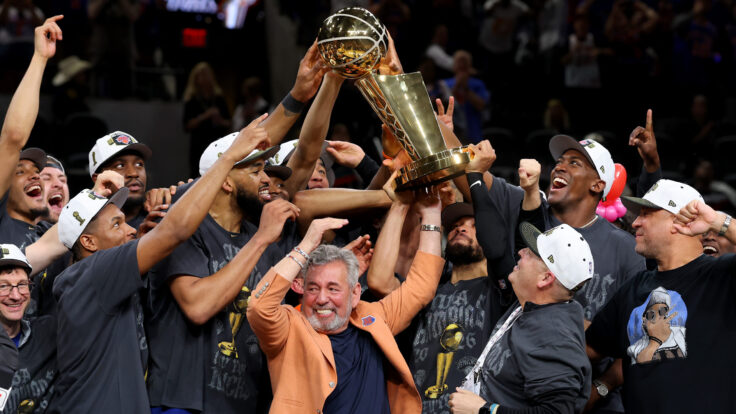
Reading list: Wes Edens, who owns both the Milwaukee Bucks and Aston Villa, has had a rough fortnight—from trying to restructure an energy company to dealing with a sexual extortion plot. My Puck partner, and newly minted granddad, Bill Cohan has
the goods. Also, don’t wait on this Harriet Ryan story about how Florida’s school-choice laws have upended high-school sports in the state amid the
N.I.L. gold rush.
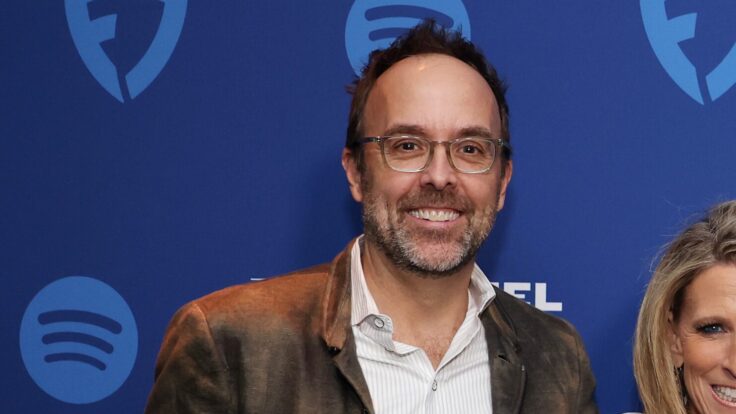
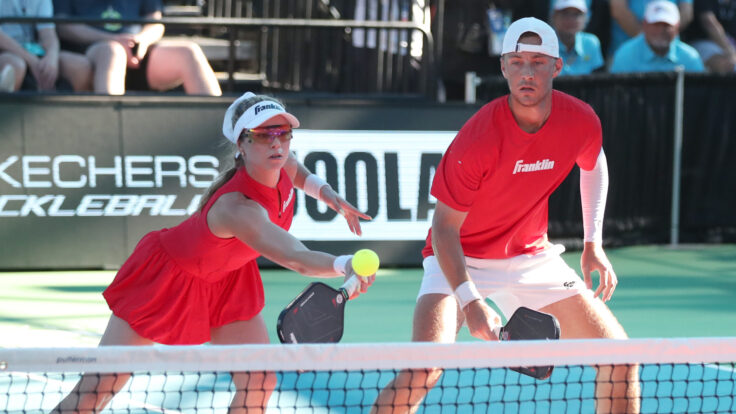
Pod alert: Jason Stein was in the headlines a week ago after his Major League Pickleball announced $225 million in financing, led by Apollo Sports Capital. Stein, co-founder and managing partner of SC Holdings, joins The Varsity this week to talk about private equity’s irreversible encroachment into the sports business. Also, make sure to listen to yesterday’s episode: Business Insider’s Peter Kafka and I dished on the future of ESPN, the strategy behind the NFL’s media negotiations, and the rise of the creator economy. More on that below.
Also mentioned in this issue: Jeffrey Kessler, Lachlan Murdoch, Pablo Torre, Donald Trump, Ryan Ruocco, Rebecca Lobo, Holly
Rowe, Malika Andrews, Emily Sundberg, Caitlin Clark, Dave Portnoy, Nathanael Cousins, and more… |
The Brady Meter
Wings 107–Fever 104
Grade: B
|
ESPN treated the opening game of the WNBA season like a big event, producing its pregame and halftime shows
from Gainbridge Fieldhouse with as many as seven on-air analysts, including vets like Ryan Ruocco, Rebecca Lobo, and Holly Rowe calling the game. Even Malika Andrews was on site.
Ruocco and Lobo were fine, I guess, but they didn’t meet the moment on a couple of important occasions. Ruocco noted that Caitlin Clark went to the locker room at least two times, and viewers didn’t know why. The announcers
speculated that Clark was experiencing problems with her hip and groin, which made sense given her injury problems last year. But it wasn’t true. It turns out that the star was getting her back readjusted. Rule number one of announcing: Don’t speculate. |
- The
NFL’s broadcast bet: From an F.C.C. inquiry to a Justice Department investigation, regulators have spent the past several months making a ton of noise about the migration of NFL games from broadcast TV to streaming platforms. Over the weekend, even Donald Trump entered the fray, saying that the league has to be careful about putting too many games behind a paywall. “I don’t like it,” Trump said on the Sinclair show Full Measure.
The NFL has
been steadfast in its desire to toe the line. League sources have said that more games will air on broadcast next season than this season. (Yes, dear reader, we recognize that most of these distinctions between cable and broadcast and streaming are increasingly made by lobbyists and irrelevant to the average viewer. After all, most broadcasters have their own streaming services, and consumers are already spending tons of money across all platforms—a feature of the market that the NFL
would like to preserve as long as possible.)
Anyway, Trump has gotten his blood sacrifice. Today, on the first day of upfronts, the NFL announced that two games will shift from cable to broadcast, while two more will move from regional broadcast windows into national ones. On Fox’s third-quarter earnings call this morning, Lachlan Murdoch said the network will receive two extra national games next season: a Week 10 international game from Munich—a keepsake from the ESPN
tranche of games that the NFL clawed back as part of a bigger deal that included the league picking up a 10 percent stake in the network—and a Week 15 Saturday game that last season aired as a regionalized Sunday afternoon game. NBC will also pick up an extra game—a Week 17 matchup on January 2—drawn from the same package of ESPN games. Meanwhile, CBS will add another national game of its own on Week 15, likewise upgraded from a regionalized Sunday game last season.
Still, streaming
continues to gain ground. With Netflix set to carry five NFL games next season, it increasingly looks like YouTube will remain shut out of live NFL rights outside of its Sunday Ticket deal. YouTube had aggressively pursued the same five-game package before Netflix swooped in. - The Sundberg ultimatum: The future of media in the age of the creator economy formed the centerpiece of my conversation on Sunday with Business Insider’s Peter Kafka
on The Varsity. Ironically, for legacy media executives, the most dynamic and coveted corners of the industry now exist beyond the walls of traditional media itself—inhabited instead by independent operators like Emily Sundberg and recent Pulitzer Prize winner Pablo Torre.
Kafka told me that, in his conversations around town, nothing fired up executives more than the rush to recruit—and retain—talent that has already proven it
can thrive outside the old institutional system. He said that executives are asking, “‘How do we get those people to work with us? And if we have those kinds of people who are already working for us, how do we get them to stay working for us, instead of leaving and going off on their own?’”
The problem may be structural. “There’s a real mismatch in terms of what those name-brand people want, and what the big-time publishers and media companies can offer them,” Kafka observed. “We’re on
this weird planet now where people like a Pablo Torre or an Emily Sundberg can credibly talk to The New York Times or ESPN and say, ‘It’s very flattering that you want to work with me, but really, what can you do for me?’ They can always pile up cash for them, but they can get cash in lots of places. … In some cases, The New York Timeses of the world are hard-pressed to make an argument.”
Of course, we all know that these talent profiles are actually anomalous.
Kafka said that he has cautioned media executives that few digital personalities can actually import their followers. While everyone points to Pat McAfee, the reality is that Dave Portnoy is a more illustrative example of a digital influencer who seemed out of place with a foot in legacy media and never quite pulled his weight. “If you are a big media company, if you’re saying, ‘Oh, if we bring X, Y, or Z to our platform, we’ll bring their audience,’ you are
mistaken,” he warned.
|
|
|
|
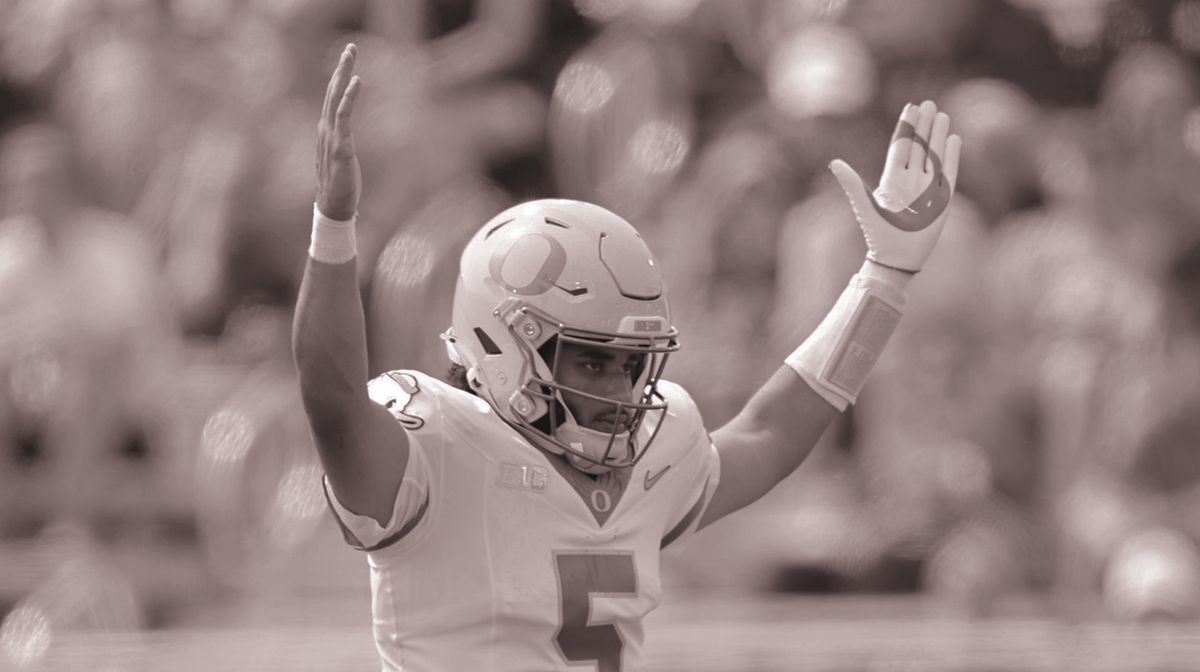
The future of the N.I.L. gold rush may hinge on a looming federal court fight over whether
the College Sports Commission can police what is increasingly becoming a leveraged media-rights marketplace. |
|
|
|
When the Supreme Court blew open the doors to college athletes getting paid, in June 2021, plenty of people
pictured a financing model akin to Buddy Garrity peeling off bills for some blue-chip halfback in Friday Night Lights. Instead, the new college sports economy has turned out to be less small-town boosterism than corporate intermediation, with Learfield, Playfly, JMI Sports, and a handful of other multimedia-rights companies—MMRs, in the parlance of the industry—having inserted themselves between schools, brands, and athletes’ name, image, and likeness rights. That shift crystallized
last month, when private equity firm TPG agreed to acquire Learfield in a deal reportedly valuing the “monetization engine” at nearly $2 billion. (Standard disclosure: TPG is an investor in Puck.)
College sports, in short, are getting fully financialized. Whether this new N.I.L. architecture can endure,
however, may turn on a critical upcoming hearing overseen by Magistrate Judge Nathanael Cousins, the special master adjudicating disputes arising from last June’s landmark $2.8 billion House v. NCAA antitrust settlement. On May 27, Cousins will evaluate whether the College Sports Commission—the newly empowered enforcement arm of the post-House era—gets a green light to aggressively police athletes’ outside N.I.L. deals, subjecting them to invasive
scrutiny.
Established by the Power Four conferences and staffed largely by conference and NCAA insiders, the CSC is concerned that these MMRs are buying up athletes’ N.I.L. rights prematurely, without concrete sponsor deliverables, and engineering the brand activation later. To the commission, this warehousing of N.I.L. rights resembles pay-for-play in more sophisticated attire—a way for schools to funnel money to athletes while sidestepping the House-established revenue-share
cap, currently around $20.5 million per Division I school. (The number is primed to reach about a third of revenue from media rights, ticket sales, and sponsorships, or $33 million, by 2034-35.) The CSC has already begun cracking down, rejecting more than $1 million in N.I.L. deals involving Nebraska football players, per
Yahoo Sports.
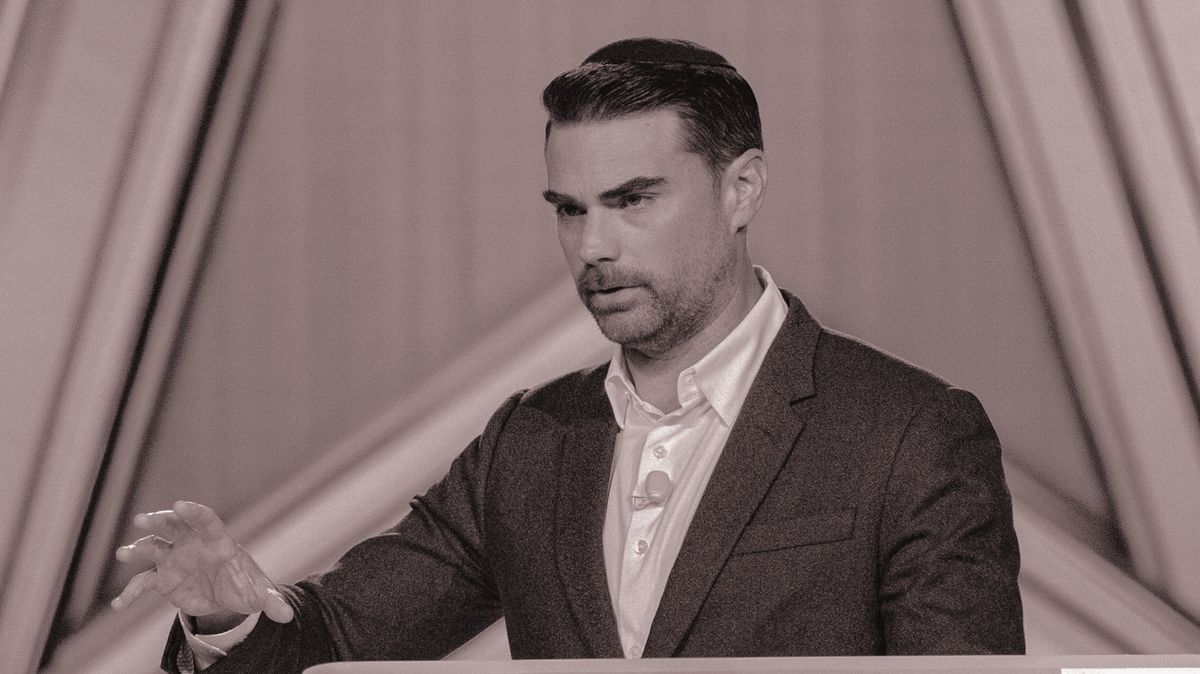
Now Jeffrey Kessler, the star plaintiffs’ lawyer behind the House settlement, is taking aim at the commission’s theory that MMRs are effectively doing the schools’ dirty work. At the upcoming hearing, Kessler will argue
that MMRs and ordinary brand sponsors should not be swept into the category of “associated entities”—the settlement’s term for boosters and N.I.L. collectives whose deals may be subjected to greater oversight. In Kessler’s telling, the CSC has converted a narrow anti-circumvention tool into a roving N.I.L. surveillance squad, delaying and investigating third-party deals that the settlement was supposed to leave alone. |
Kessler’s textual argument is that associated entities are supposed to exist, in significant part, to benefit
a particular school’s athletic program. MMRs, he contended, may have school clients, but they are fundamentally commercial enterprises—“agnostic” about which team wins on Saturdays or who enters the transfer portal. In other words, they are free agents in the college-sports economy, capable of serving many constituencies at once. Kessler is seeking a sweeping declaration placing MMRs and brand sponsors outside the CSC’s regulatory authority.
That effort has forced the NCAA and
the conferences to defend the CSC’s enforcement powers in federal court. Their response was blunt—Kessler isn’t enforcing the settlement, he’s trying to rewrite it after the fact by carving out categorical exemptions for the middlemen now reshaping the N.I.L. marketplace. To rebut his charge of regulatory overreach, they provided data showing 21,025 N.I.L. deals approved against just 711 rejected—a clearance rate north of 95 percent. But their main argument was procedural—that the settlement
already established an arbitration mechanism precisely for disputes of this kind.
Which means the threshold issue may have less to do with Learfield or Playfly than with who gets to draw the first enforceable boundary lines in this emerging market. The CSC argued that Kessler is trying to short-circuit the House arbitration process before it can establish meaningful precedent—which matters, since those Nebraska deals will hardly be the final point of contention.
If Judge
Cousins grants the sweeping declaration that Kessler is seeking, he could effectively federalize every definitional fight over the CSC’s authority, imposing limits on regulatory architecture still under construction. If he sends the parties back to arbitration, the system will mature case by case—messily, privately, and far less satisfactorily for anyone hoping for bright-line rules. Either way, the money is not waiting. |
Thanks, Eriq. See you all tomorrow.
John |
|
|
|
Join Puck’s chief political columnist, John Heilemann, as he roams the corridors of power and influence in America on this
twice-weekly interview show, taking you beyond the headlines with the people who shape our culture: icons and up-and-comers, incumbents and insurgents, moguls and machers in the overlapping worlds of politics, entertainment, tech, business, sports, media, and beyond. The conversations are rich and revealing, unrehearsed and unexpected… and reliably impolitic. A Puck-Audacy joint, new episodes drop every Wednesday and Friday. |
|
|
|
An essential, insider-friendly Hollywood tip sheet from Matthew Belloni, who spent 14 years in the trenches at The
Hollywood Reporter and five before that practicing entertainment law. What I’m Hearing also features veteran Hollywood journalist Kim Masters, as well as a special companion email from Eriq Gardner, focused on entertainment law, and weekly box office analysis from Scott Mendelson. |
|
|
|
Need help? Review our
FAQ page or contact us for assistance. For brand partnerships, email ads@puck.news.
You received this email because you signed up to receive emails from Puck, or as part of your Puck account associated with {{customer.email}}. To stop receiving this newsletter and/or manage all your email preferences, click here. |
Puck is published by Heat Media LLC. 107 Greenwich St., New York, NY 10006 |
|
|
|
|