 |
 |
|
Welcome back to The Best & The Brightest. I’m Tina Nguyen.
|
|
Hello from Planet Hollywood in Las Vegas, where I’ve been reporting from the Restoring National Confidence meeting, the far-right counterprogramming to the Republican National Committee’s winter meeting down the Strip. I’ve enjoyed spending quality time with operatives trying to make life hell for Ronna McDaniel and the good people at the R.N.C. (More on that below.)
Two cool things: On Monday, I achieved a lifelong goal and appeared on The View to talk about my new book, The MAGA Diaries (and border security fights!), with Alyssa Farah, whose own background in conservative activism made for one of my favorite interviews so far. And on Tuesday, Puck’s newest author, John Ourand, broke a giant story about David Rubenstein’s deal to purchase the Baltimore Orioles. Frankly, I am absolutely giddy that John is now a Peerless Colleague who will bring Puck subscribers inside the business of sports, and I urge you to subscribe to The Varsity posthaste.
Tonight, we have a jam-packed edition. Everyone knows we have a border crisis, and everyone knows that Donald Trump is trying to turn it into a political issue. But I have a piece focusing on how this latest bit of party choreography underplays the true animosities over the issue on the right. Also, Teddy Schleifer has an excellent piece on the final leg of the megadonor circuit war between Trump and Haley.
But first…
- Barbarians at the R.N.C. Gates: One of the features of Trump’s technical vacancy as the G.O.P.’s figurehead is that the party establishment and base keep breaking out into internecine conflict. Case in point: The Restoring National Confidence convention, hosted by the Trump-allied group Turning Point Action, was a well-publicized assault on Ronna McDaniel’s efficacy as R.N.C. chair, replete with speeches criticizing her win-loss record and the committee’s lack of help in turning out potential Republican voters. (For a thorough picture of McDaniel’s woes, I’ll point you toward my Puck partner Tara Palmeri’s excellent reporting from last week.)
Judging by the mood at this event—which was attended by numerous R.N.C. committee members, local county chairs, activists, Steve Bannon, and Donald Trump Jr.—the MAGA wing is champing at the bit to bash rip out the current leadership, root and branch. Will they actually succeed? While Turning Point officials told me that they estimated about 50 R.N.C. members (the very members who vote for their chair) attended the similarly acronymed Restoring National Confidence, McDaniel already fended off a previous MAGA-aligned challenger for her seat, Harmeet Dhillon, last year, with 111 votes to Dhillon’s 51. Whatever the case, the animosity between the MAGA upstarts and the R.N.C. will only grow as a result of this stunt.
|
| And now, Abby Livingston’s essential dispatch from the Capitol… |
|
A MESSAGE FROM INSTAGRAM
|
| |
 |
| Parents should be able to decide which apps are right for their teens.
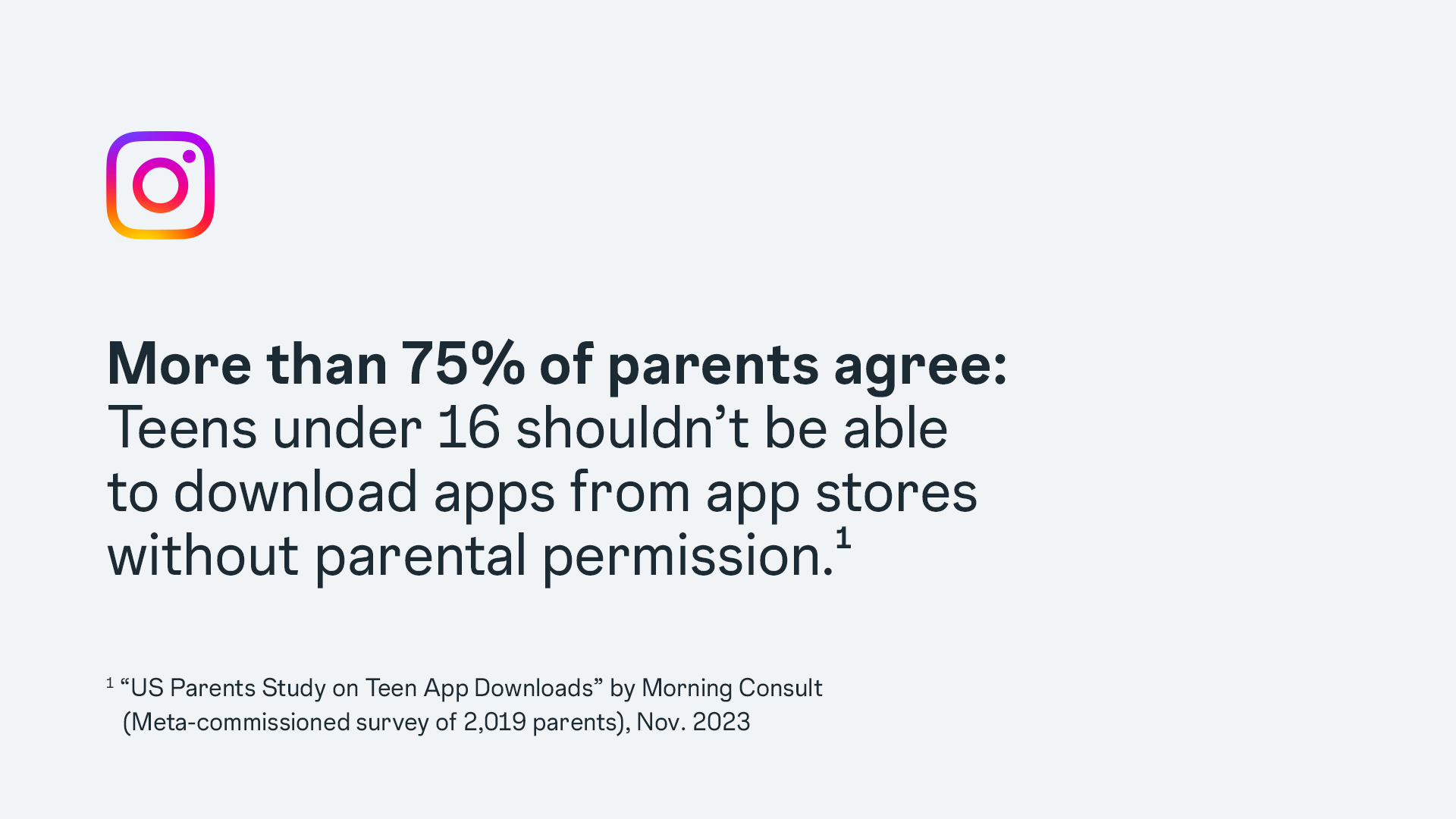
According to a new poll by Morning Consult conducted in November 2023, more than 75% of parents believe teens under 16 shouldn’t be able to download apps without parental permission.1
Instagram wants to work with Congress to pass federal legislation that gets it done.
Learn more. |
|
|
| F.E.C. Plot Twists & Thune’s War Chest |
|
Campaign finance reports are finally trickling into the F.E.C. website, giving us a better sense of what’s been going on behind the scenes since Speakerless October in races across the country. The deadline is not until midnight, but early-bird filers have offered a preview of what to expect from the fourth quarter…
- The big fundraising news of the day: A few days ago, the N.R.C.C. announced it raised $7.2 million, and D.C.C.C.’s lack of an immediate response seemed to foreshadow bad news coming around the midnight deadline. But this morning, the D.C.C.C. announced it had collected $12 million in December—almost $5 million more than Republicans. This is a monthly fundraising grudge match, one in which both House committees yearn for bragging rights. It’s also serious business: Much of this money is allocated toward the ad wars in the fall campaign. (The Senate campaign committees put less emphasis on this metric because candidate fundraising and super PAC spending have more impact on those races.)
- Dues Diligence: Speaker Mike Johnson’s strong fundraising since late October has largely been thanks to the goodwill of Republican members who contributed to the committee from their own campaign accounts, also known as “dues.” This October-November rally was necessary after the general fundraising paralysis that followed Kevin McCarthy’s mid-fall defenestration. Once the committees’ itemized reports are filed, we’ll better understand why Democrats had such a surge—but we know at least two House members who helped out their teams last quarter: Appropriations ranking member Rosa DeLauro gave $75,000 to the D.C.C.C., while Energy and Commerce member Morgan Griffith kicked in about $50,000 to the N.R.C.C.
- Thune’s War Chest: Out-of-cycle Sen. John Thune reported $17 million in cash on hand. Sure, it’s not Adam Schiff-level money—the Senate hopeful recently announced that he has $35 million on hand—but it’s nothing to dismiss ahead of a Republican Senate leadership race. As previously reported here and elsewhere, Thune’s fresh campaign report showed that the Senate Republican whip kicked in $250,000 to the N.R.S.C. in November.
- Aguilar’s Largesse: Finally, California Democrat Pete Aguilar’s report also caught my eye. As expected from the third-ranking member of the caucus, he cut many checks to many colleagues. One member who got a boost? Jamaal Bowman, who received $2,000, had a rough fall after pulling a fire alarm during a House vote. The New York Democrat likely has a tough primary ahead, too, in which he’ll have to defend his criticism of Israel. Lizzie Pannill Fletcher also picked up a $2,000 Aguilar contribution. The AIPAC-endorsed Houston Democrat has faced a lively primary challenge from the pro-Palestinian Democrat Pervez Agwan. Earlier in the fall, Nancy Pelosi’s political antennae also seemed tuned to Houston, as the former speaker also cut Fletcher a check. But since Aguilar and Pelosi made these contributions, Agwan has employed the curious campaign tactic of self-immolation, and is probably fading as a threat.
|
| And before we get to my piece, check out Teddy Schleifer’s excellent story on the front lines of the G.O.P. megadonor wars…… |
| Haley Donors in Mar-a-Lago Country |
|
| On Tuesday afternoon, at around 2:00 p.m., a small army of G.O.P. officials, billionaires, and their attachés gathered at the Four Seasons in Palm Beach to hear from the two masterminds behind the last Republican presidential candidates standing. There was Betsy Ankney, the crafty campaign manager for Nikki Haley, who is racing to secure more money to continue her fight with Donald Trump. But the more surprising attendee preceded her: It was Trump’s own venerated campaign chief, Susie Wiles, who presumably drove the four miles down Ocean Boulevard from Mar-a-Lago to walk them through her slideshow.
The dueling, back-to-back presentations were the highlight of the semiannual meeting of the American Opportunity Alliance, a vigorously low-profile, highly influential network of Wall Street-aligned donors and their handlers, full of cocktail receptions, pitch sessions and, most importantly, poolside gossiping. In an age when so many billionaires are inclined to send their surrogates to do their dirty work, the A.O.A.—as it’s universally known in big-money politics—is one of the few summits to actually merit the time of its bold-faced members. On Monday night, Paul Singer, Ken Griffin, Warren Stephens, and Chuck Schwab had a fireside chat in a private room at a nearby high-end restaurant, I’m told, where they regaled guests with their perspectives on everything from Ukraine to inflation to “wokeness” in higher education. The words “Donald Trump” were barely uttered, if at all, sources tell me.
But the decision to invite Wiles was rather telling. Both mega-donors and the Trump campaign know they can no longer afford to play chicken. The A.O.A. is a diverse group—its members do not move in lockstep like the Koch network does—but it largely funded the anti-Trump barrage late into the 2016 primary and has been somewhat anti-Trump for this entire campaign cycle. Alas, in private conversations, the alliance’s stance has appeared to be softening as it braces for the inevitable. (What are billionaires if not practical?)...
Click here to continue reading Teddy’s story online… |
 |
| Law & Border |
| The real inside conversation in the House about the G.O.P.’s nihilistic decision to convert the border crisis from a legislative matter into a stump issue (and convenient Trump talking point). |
|
|
|
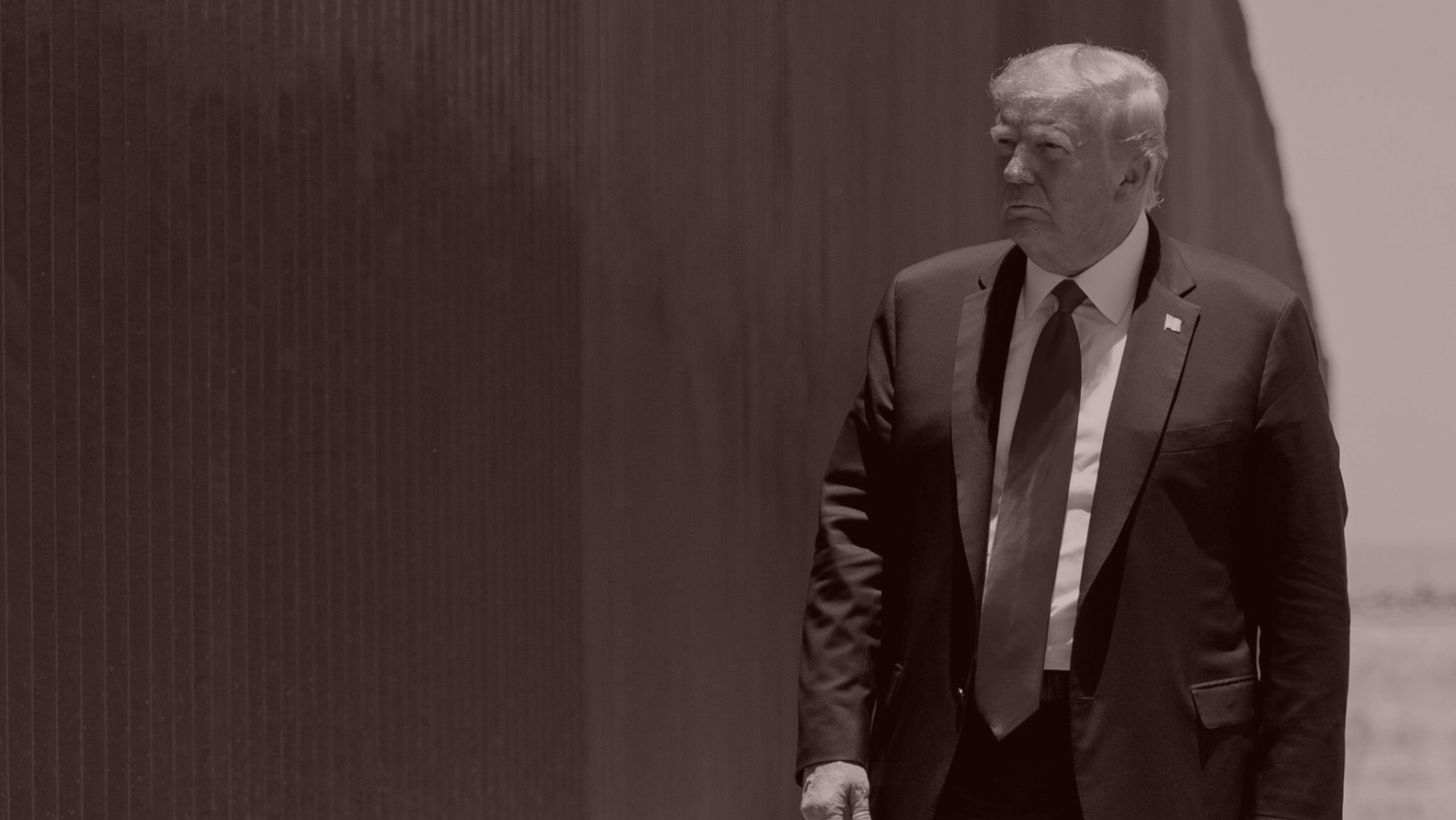
| Once again, Donald Trump is taking credit for driving a nail into the coffin of the Senate immigration deal, the technically-still-in-the-works bipartisan effort dreamed up by Mitch McConnell and Chuck Schumer as a way to address the border crisis while approving more funding for Ukraine. “It’s not going to happen,” Trump declared on Saturday at an event in Las Vegas. And once again, Republican voters are quickly coalescing around the notion that only Trump can fix the border crisis—an alarming and pressing issue, with nearly 10,000 migrants crossing from Mexico into the U.S. in a single day last month, a record high—effectively transforming a legislative debate into a political cudgel for Trump to pummel Biden over the next 10 months of this forever election.
Trump’s comments echoed the sentiments of House Speaker Mike Johnson, who declared a day earlier that any Senate bill was “dead on arrival.” McConnell, too, has apparently changed his tune on a legislative fix, bowing to the emerging election-year logic that it might be better to keep the crisis alive than to compromise with Democrats. “Politics on this have changed,” McConnell acknowledged during a private Senate Republican meeting last Wednesday night, according to Punchbowl. “We don’t want to do anything to undermine him.” (Texas Rep. Troy Nehls offered an even more cynical take on Wednesday, telling a reporter, “Why would I help Joe Biden improve his dismal 33 percent [approval rating]?”)
But in truth, animosity toward the upper chamber’s negotiations has been building for a while. And, notably, members and aides are pissed that they’ve been portrayed as kowtowing to Trump. Instead, many want to make clear that they were pissed about the border issue before Trump dive bombed into the discussion. There’s some evidence to support their protest: Back in December, Johnson issued a letter demanding that Biden immediately take “executive actions available under existing immigration laws to stem the record tide of illegal immigration,” along with a list of action items. And their support for Trump’s reelection bid aside, they have long felt that the border crisis could not be resolved as long as Biden was in the White House.
My conversations with House Republican aides and allies, over the past several months, have often descended into full-blown grievance sessions about Biden’s permissive policy approach on immigration, his unwillingness to use the executive powers he has available to slow the crisis, and even whether they’re getting the honest truth from D.H.S. about the scope of the problem. This deep-seated distrust among the conservative contingent in the House extends to nearly everyone involved in brokering the border deal, from the president to Homeland Security chief Alejandro Mayorkas to Senate Republicans like McConnell and James Lankford, the G.O.P.’s chief negotiator.
On some level, these conversations suggest that Trump didn’t need to cherry-pick this topic for his own political exploitation. Indeed, the Senate deal was going to be toast regardless. “The Senate deal is a non-starter. D.O.A. It never had a chance. None of us ever heard about it. It’s well out of any political mainstream. I doubt it has one G.O.P. vote,” a senior G.O.P. aide to a border state member told me, adding that Trump’s recent opinion would never have mattered to them: If they’d seen the current deal in 2022, “before Trump was indicted or raided by the FBI,” it still would have been D.O.A.
The distrust, a Republican close to House leadership explained, stems from multiple factors—which dovetail with Trump’s wishes but precede his involvement. “People feel on the Republican side that Biden hasn’t been honest with them,” he said. “It doesn’t help when [the administration’s] said things like, ‘The border is secure,’ whether [they’re] fitting a legal definition or not. There’s two factors: First, you have just the sheer numbers of people that are coming in. And secondly, there’s no doubt that there has been a change in policy. I mean, Biden got rid of Trump’s Remain in Mexico [policy]. The parole program is just wider, and there’s [more] people [in it].” |
|
A MESSAGE FROM INSTAGRAM
|
| |
 |
| More than 75% of parents want to approve the apps teens under 16 download.
According to a new poll from Morning Consult, more than 75% of parents agree: Teens under 16 shouldn’t be able to download apps from app stores without parental permission.1
Instagram wants to work with Congress to pass federal legislation that gets it done.
Learn more. |
|
|
|
|
| One prevailing frustration among the House crowd is that existing law, as it stands, has granted previous presidents broad executive powers to unilaterally dictate border policy. During his administration, they argue, Trump used them to some effect: Title 42, Remain in Mexico, and the investment into border barriers had, technically, slowed the pace of illegal border crossings. (Monthly migrant encounters—a different metric—hit a nadir in April 2020, according to Pew research, after climbing throughout much of Trump’s presidency to a 13-year peak in 2019, but “perception is reality,” as one G.O.P. operative noted to me.)
The fact that Biden is not using those same powers to stem the crisis—whether due to his own unwillingness, or due to pressure from progressives—ticks them off even further. “[W]hen Biden said, Okay, well, give me more money to secure the border, then it became clear to the hawks on the Republican side that what he was saying was, Give me more money to process people quickly and efficiently,” the Republican close to leadership continued. “And Republicans are like, ‘That's not what we want! We want you to not let people in. And if they are going to seek asylum, then they have to wait on the other side.’”
Furthermore, any argument that the Senate border deal was a bipartisan negotiation has fallen flat with hardliners in the House. While Lankford has an “R” next to his name, that designation alone barely engenders trust with them—in fact, they’ve publicly and privately called him a McConnell puppet, and his reelection in 2028 will soon make it onto the dartboard. “There are harder-line Republicans on immigration that were not present in any of those talks,” said the operative, listing several senators that the House’s hawks would have trusted to represent their interests at the negotiating table: J.D. Vance, Tom Cotton, Marsha Blackburn, or Josh Hawley. Lankford, on the other hand, does not share their reputation as border-control firebrands.
Another underappreciated factor is the power of alternative conservative media to shape the border narrative for these members’ constituents—so powerful, in fact, that most of their voters’ alarm around the severity of the border crisis is driven primarily by online MAGA media figures like Tucker Carlson, commentary on channels like OAN and Newsmax, and, surprisingly, local and national radio programs across the country covering the migrant crisis more in depth. “When they go home, their constituents aren’t gonna be saying, Oh, you should have taken the deal. Their constituents are saying, Hell no, don’t take the deal,” observed the Republican close to leadership. “The only peer pressure they’re getting is from here in D.C.”
Interestingly, the pro-deal opinions from more Murdochian outlets like The Wall Street Journal and the New York Post are hardly convincing these members—and, in fact, have done the opposite. “A major part of this bill is to increase the number of green cards for work, which is a major component of the Republican business lobby,” fumed the G.O.P. operative, arguing that a 30-day process to grant asylum seekers work permits would incentivize more migrants to cross the border. “There’s never a time when they don’t want more cheap workers.”
Democrats, understandably frustrated, are rolling their eyes at what they see as post-hoc rationalizations from Republicans abandoning their legislative responsibility the moment it became politically convenient. But many Republicans I talk to on the Hill, especially among the hardliner bloc, sound more nihilistic than cynical. “What are we negotiating?” the G.O.P. operative asked me rhetorically after reading leaked details of the emerging Senate deal. “We’re negotiating that the federal bureaucracy will do the job the president won’t do on their own? And how is Mexico agreeing to their side of the deal? A new law where they’re going to detain and hold hundreds of thousands of people at the border shut down for months on end, as it would be in this stopgap motion, without an executive to negotiate the treaty, or whatever? None of this is gonna work. None of this makes any sense.” |
|
|
|
|
| Unfortunately, despite all the anger over the issue within the House G.O.P., there’s very little anyone can do, legislatively speaking, to change the situation now. Democrats have vowed to oppose any attempt by their Republican counterparts to change the contours of the Senate deal. The progressive left will not be assuaged by a compromise that pairs a stricter border policy with funding for Ukraine or Taiwan or Israel—issues that matter more to mainline Democrats. (Apathy or even antipathy to military funding for U.S. allies is one of the few issues that unite the far left and far right.) And Republicans of all stripes—except perhaps endangered institutionalists like McConnell and Lankford—won’t be appeased by what they view as half-measures by the White House.
Indeed, even if Biden sacrificed Mayorkas now, firing him before he risks impeachment in the House, and signed a bill codifying all their demands in H.R. 2, House Republicans say they don’t have faith in the president to enforce the new law. In their view, he’s not even enforcing the current law. “[Biden] has current authority to detain people at the border. He has current authority to tighten parole and asylum standards. He has current authority to negotiate a deal with Mexico to keep people crossing from Mexico to the United States, in Mexico,” a Johnson ally told me. “So what is the [Senate] bill supposed to do? I mean, there are ways to compel him to do certain things, but the reality is, he has to have some will to do it.”
Even behind closed doors, these Republicans insist that their hardening refusal to compromise with Biden is rooted in principles, not political expediency—no matter what Trump or Troy Nehls are saying publicly. But that hasn’t stopped them from messaging the hell out of their discontent. “There is no specific plan other than to gin up the media [and] hope the polls show Biden losing support,” said the Republican close to House leadership.
It’s played well with their own constituents, but the migrant crisis is also starting to strain the resources and budgets of blue states and cities. And given the sheer visibility of the issue to even Democratic and independent voters, many Republicans are anticipating the wedge issue will lead to a narrative shift. “The Dems know the border is hurting them, and especially Biden,” said the senior G.O.P. staffer. “So if they can get us to sign on to anything, it would be a massive win and take our strongest chess piece off the board.”
Indeed, the vaunted independent swing voter that helped Biden in 2020 has soured on his immigration policy: A recent poll found that a whopping 71 percent of independents, and a concerning 30 percent of Democrats, disapproved of how the president is handling the border. Another poll released this week found that 52 percent of Hispanic voters believe that Trump would be better on immigration, while only 29 percent trusted Biden more—just one example of a broader demographic shift among minority voters overall. “If [minority voters] go from being 89-11 Obama/Romney to 75-25 Biden/Trump,” the operative asked rhetorically, “who gives a shit what a suburban voter does?” |
|
|
|
| FOUR STORIES WE’RE TALKING ABOUT |
 |
|
 |
|
 |
|
 |
| Leather Heads |
| On the unassailable fashion dominance of Hermès. |
| LAUREN SHERMAN |
|
|
|

|
 |
|
|
|
Need help? Review our FAQs
page or contact
us for assistance. For brand partnerships, email ads@puck.news.
|
|
You received this email because you signed up to receive emails from Puck, or as part of your Puck account associated with . To stop receiving this newsletter and/or manage all your email preferences, click here.
|
|
Puck is published by Heat Media LLC. 227 W 17th St New York, NY 10011.
|
|
|
|