{{ 'now' | timezone: 'America/New_York' | date: '%b %d, %Y' }} |
|
|
Hi, and welcome back to Line Sheet. R.I.P. Melanie Ward, one of the
truly great stylists. She helped shape the way we look—and the way we look at things. “You can’t build the future by looking back,” she once said.
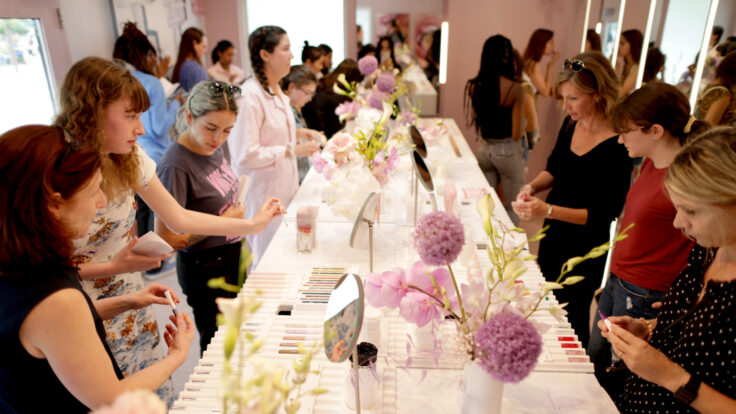
Thanks to everyone who came out to Etta last night (and to the Eastside, no less) to celebrate Lyst for the latest installment of our Puck Private Dinner series. We ate food (really), we drank wine,
we talked biz, and smoked a few cigarettes. (Outside, of course, and not me!) As you all know, I love these off-the-record dinners because they generate heated discussions and allow people who normally don’t go event-hopping to come away with something real: a new friend, a work project, etcetera. (So many attendees said to me, “I never go out, but…” which is a big compliment.)
Huge thanks to the team at Lyst—Emma McFerran, Jenny Cossons, and Katy
Lubin—for trekking all the way from London for what felt like an impromptu get-together of really smart and fun people from such distinct corners of the fashion universe: Tory Burch, Armani, Dôen, Buck Mason, Schiaparelli, Moschino, High Sport, Fear of God, Nordstrom, Printemps, Eckhaus Latta, UTA, CAA, DBA… not to mention all the stylists and creative types and even one very special New York Times reporter. Kudos to Puck’s very own Eric Van Gelder for always
making these feel so easy.
If you’re interested in co-hosting one of these with me, email Alexandra@puck.news and we can brainstorm. And do it soon: We’re selling out.
I’ll be back tomorrow with a big M&A report and an update on earnings season—Kering beat expectations, Hermès stayed the course, etcetera. Today, though, it’s all about beauty. Rachel
“Rachel@puck.news” Strugatz is here with intel on Fenty Beauty’s performance amid speculation that LVMH might try to sell its stake in Rihanna’s groundbreaking brand, plus a whole big thing on the state of affairs now that Kering is selling its beauty unit to L’Oréal for $4.7 billion.
Rachel has info and analysis you can’t get anywhere else, obviously, and I
can tell this is a thread she’s going to be pulling at for months.
In other news, Sarah Shapiro tells you what you need to know about ShopMy’s new funding round, which values the disruptive affiliate marketer at $1.5 billion. She also has an update on the proliferation of skirts on a runway and whether it’s translating to retail sales. (As soon as I declared that I am not a skirt girl, Tory Burch, Alaïa, and Chanel made that a lie.)
Mentioned in this
issue: LVMH, Rihanna, Fenty Beauty, ShopMy, Matthieu Blazy, Anthony Vaccarello, Jonathan Anderson, Tory Burch, Kering, Luca de Meo, L’Oréal, Raffaella Cornaggia, Alexandre Choueiri, King George III, and many, many more… |
|
|
A MESSAGE FROM OUR SPONSOR |
With new tariffs, shifting trade routes, and rising costs, resilience is the new growth strategy.
Swap’s Resilient
Commerce Report reveals how leading brands are strengthening global operations through agentic planning, smarter returns, and adaptive pricing — turning volatility into opportunity.
Inside, you’ll learn:
🌍 How tariff changes are reshaping supply chains
📦 Why returns strategy = margin strategy
🧠 Where AI is driving peak-season readiness
💡 What resilient leaders are doing differently
👉
Download the full report
|
|
|
Three Things You Should Know…
|
|
|

| Rachel Strugatz
|
|
- LVMH to sell its
stake in Fenty: Sure, it might seem like big news that LVMH is looking to offload its 50 percent stake in Rihanna’s Fenty Beauty—but it’s not all that surprising. After all, the conglomerate has all but dismantled Kendo, its challenged beauty incubation arm, which launched Fenty in 2017. Marc Jacobs and Bite Beauty both shut down operations a few years ago, and no amount of rebranding could have saved Kat Von D, which Kendo finally sold last month. Even
Fenty, Kendo’s signature success story, has lost momentum: Swing by any Sephora and it’s clear that Fenty has lost its prime merchandising space.
Indeed, an LVMH insider told me that Fenty’s revenue peaked several years ago, and a person close to Sephora said that the brand’s sales in North America are “down double digits.” These days, anyway, Fenty’s business is negligible compared to LVMH’s real beauty priorities: Sephora (the most important retailer in the space) and Dior (one of the
biggest beauty lines in the world). “Fenty’s not a core asset,” said a person with knowledge of LVMH’s business. “They decided not to buy the other half.” Sephora did not respond to a request for comment.
|
|
|

| Sarah Shapiro
|
|
- ShopMy’s $1.5B
valuation: Earlier today, the affiliate platform ShopMy announced a $70 million raise at a $1.5 billion valuation—impressive for a platform still considered a startup. A release also noted that the company had generated more than $1 billion in brand revenue through influencer recommendations, achieved 200 percent year-over-year growth, and has been profitable since 2024.
Of course, this shouldn’t be much of a surprise. Brands, retailers, and influencers all love
ShopMy, which is probably why they have a New York Times profile on the way. The platform basically transformed how influencers promote products, with a platform that offers low-click shopping for sales-driving brands like Staud, Khaite, J.Crew, and even Gucci. This higher-end mix sets it apart from other affiliate players, like LTK, which essentially created the affiliate platform industry. While LTK raised $300 million from SoftBank in 2021 at a $2 billion valuation, ShopMy’s
momentum seems to confirm a changing of the guard. - Skirt revival gap: If the Spring 2026 runways are any indication, the skirt is having a major comeback. From Matthieu Blazy’s casual Chanel tweeds to Anthony Vaccarello’s sleek Saint Laurent
leather, and Jonathan Anderson’s pleated Dior minis to Tory Burch’s
uptown pencils, designers were actually styling with skirts, and not defaulting to dresses. It’s a subtle but meaningful shift in silhouette, and a very specific choice.
Retail data, however, shows a disconnect with the consumer. This fall, skirt deliveries are down 7 percent compared to last year, according to Edited, a business intelligence
firm. (This might turn around in the spring when retail catches up with the runway.) But despite the sales dip, there’s at least one emerging trend: 32 percent of the new skirt arrivals have “mini” in the description. Sales for Zara’s pleated midi skirts were up 38 percent over last year, and the only skirt categories currently listed in the navigation of Hollister’s website are
“mini skirts” and “skorts,” a category that’s up 3 percent year over year.
|
|
|
Inside C.E.O. Luca de Meo’s decision to abruptly abandon the company’s long-term
beauty strategy—and what it means for the L’Oréal regime. |
|
|
Last Sunday, L’Oréal and Kering announced that they were “entering a long-term strategic
partnership in luxury beauty and wellness,” with L’Oréal paying nearly $4.7 billion for House of Creed and 50-year licenses to create beauty products for Balenciaga and Bottega Veneta, as well as Gucci, once its current license with Coty expires in 2028. The two companies also entered into a joint venture to explore future opportunities in yet-to-determined adjacent categories.
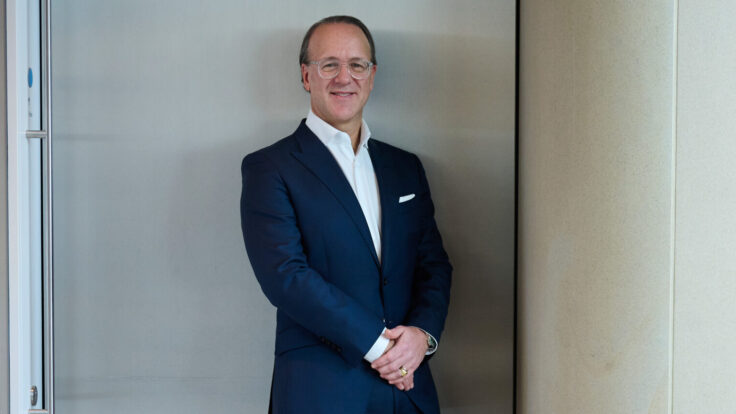
Kering’s new C.E.O., Luca de Meo, should be commended for the sheer speed at which he was able
to offload its beauty interests. Less than six weeks into his tenure, de Meo has significantly improved cashflow, brought the focus back to Kering’s key businesses, and eradicated the risk that comes with outright ownership of its beauty brands. Both Kering and L’Oréal’s stocks rose incrementally on Monday. |
|
|
A MESSAGE FROM OUR SPONSOR |
The rise of agentic AI is transforming how people discover, decide, and buy — and most brands aren’t ready for what’s
next.
Swap’s latest report breaks down how AI agents will reshape product visibility, payments, and consumer trust across the entire shopping journey.
Inside, you’ll learn:
🤖 What agentic AI actually means for commerce
🔍 How to optimize for GEO (Generative Engine Optimization)
💳 Why payments are going agent-native
📈 10 reasons to act now
👉
Download the full
report
|
|
|
Historically, fashion conglomerates have preferred to own their beauty
brands, which provides them with higher margins, as well as more control over quality and distribution. And Kering’s plans for its beauty arm were once quite ambitious. In early 2023, the luxury giant announced the creation of Kering Beauté, a new in-house beauty division to be headed up by Raffaella Cornaggia, a former executive from The Estée Lauder Companies. Eight months later, the company made one of the most expensive beauty acquisitions ever when it paid around
$3.8 billion for House of Creed.
The deal thesis was predicated on the notion that Creed, a storied fragrance house with alleged ties to the House of Hanover’s King George III, would round out their designer portfolio. Sure, Kering probably grossly overpaid for a brand doing around $270 million in revenue, but after missing out on two other marquee fragrance deals a year
earlier—Puig got Byredo, while ELC officially acquired Tom Ford—the company was desperate to own a luxury fragrance property of its own, according to a person with knowledge of the deal. After all, Creed has some of the most rabid fans in the space and is said to have a very profitable business. (Kering declined to comment.)
Originally, Kering expected to spend five or so years—basically, until Gucci’s beauty business would return to Kering—building a beauty
division to compete against Coty, L’Oréal, LVMH, and Puig. Cornaggia would be integral to reestablishing the fragrance businesses of Balenciaga and Bottega Veneta, which they’d recently acquired. But Creed turned out to be rudderless: Its first year at Kering was especially tough, according to one insider, because there was no real transition plan in place at the time Kering bought the business from BlackRock. Another person with knowledge of the business once told me that it wasn’t until the
arrival of L’Oréal veteran Alexandre Choueiri in April 2024 that Creed started “seeing some decisions [being made] because he’s the one with the global experience.”
In any case, it seems the division didn’t blossom as planned. Meanwhile, Kering’s core businesses were facing headwinds that required full prioritization, so de Meo made a decisive pivot. “Kering Beauté could have had success,” a person with intimate knowledge of the situation told me. “There was a high
probability. But right now, why would Luca keep it? He needs cash.” And a licensing deal seemed like an obvious alternative. “This was a relatively low-hanging fruit,” said a high-level industry insider with knowledge of Kering’s business. “Beauty would continue to hemorrhage, and it’s not like there’s an immediate payoff in sight. Kering is in a hole, and the new C.E.O. can undo decisions that he doesn’t own.”
Really, the only thing that surprised industry executives was the speed at
which it all unfolded. “The idea of reconsidering beauty or rebalancing it predates Luca,” said the industry insider with knowledge of Kering’s business. “The convos with L’Oréal probably did not.” |
“L’Oréal
Will Have a Total Monopoly”
|
Despite the executive churn and the whiplash at Kering Beauté, the deal was almost unanimously
viewed as a win-win for Kering and L’Oréal—although obviously better for the latter. Yes, the fragrance businesses of Chanel, Dior, and increasingly, Carolina Herrera, are in a class of their own due to being wholly owned by their respective parent companies, but L’Oréal will soon have practically an iron grip on the designer beauty license market. Already, L’Oréal develops, manufactures, distributes, and markets the beauty for Saint Laurent, Valentino (which makes some of the bestselling
women’s fragrances in the world), Armani, Miu Miu, Prada, and Ralph Lauren. Soon, it gets to add Gucci. |
|
|
Initially, I thought the real loser here was Coty, which has not only lost the
license to Gucci, estimated to be about a half-billion-dollar business, but lost it to its archrival. Still, insiders say the Kering and L’Oréal deal doesn’t matter that much to Coty. It’s no secret that JAB Holding Company, Coty’s controlling shareholder, wants to sell the business imminently. Following months of rumors, Coty finally announced in September that it had kicked off a strategic review of its consumer beauty division. “The sale to L’Oréal makes no difference,” said
a veteran beauty executive. “JAB wants to get out––it’s been their poorest-performing investment.”
If this were another time, an industry executive familiar with both companies pointed out, ELC would have come to the table and outbid L’Oréal for Kering Beauté. Fragrance, after all, is Lauder’s only growth engine right now, and it would totally make sense to have a Creed store in the vicinity of a Le Labo, or slotted right next to Tom Ford Beauty and Jo Malone on Prince Street, where four
of ELC’s brands just opened locations next door to each other.
Instead, the Kering Beauté transaction makes L’Oréal even more powerful, if that’s possible. In addition to its hold on mass market beauty (Maybelline, L’Oréal, CeraVe, etcetera) and fragrance, L’Oréal also has a 10 percent stake in Galderma, the multibillion-dollar pharmaceutical company that makes Botox rival Dysport and a filler called Restylane. “Companies need to make some big moves, or
else L’Oréal will have a total monopoly,” said the veteran beauty executive. |
Until tomorrow,
Lauren
P.S.: We use affiliate links because we are a business.
We may make a couple bucks off them. |
|
|
Puck fashion correspondent Lauren Sherman and a rotating cast of industry insiders take you deep behind the scenes of
this multitrillion-dollar biz, from creative director switcheroos to M&A drama, D.T.C. downfalls, and magazine mishaps. Fashion People is an extension of Line Sheet, Lauren’s private email for Puck, where she tracks what’s happening beyond the press releases in fashion, beauty, and media. New episodes publish every Tuesday and Friday. |
|
|
Puck’s daily art market email, anchored by industry expert Marion Maneker, offers unparalleled access to the
mega-auctions and galleries, elite buyers and sellers, and the power players who run this opaque world. Wall Power also features Julie Brener Davich, a veteran of Christie’s and Sotheby’s, who provides unique insights into how the business really works. |
|
|
Need help? Review our FAQ page or contact us for assistance. For brand partnerships, email ads@puck.news. You received this email because you signed up to receive emails from Puck, or as part of your Puck account associated with {{customer.email}}. To stop receiving this newsletter and/or manage all your email preferences, click here. |
Puck is published by Heat Media LLC. 107 Greenwich St, New York, NY 10006 |
|
|
|