 |
|
Welcome back to The Stratosphere.
|
|
In tonight’s issue, a Silicon Valley saga for the ages: the inside story behind how a former Goldman Sachs banker raked in a cohort of tech billionaires, with legendary investor Mike Moritz as the project’s linchpin, to build a brand new city from scratch. Of course, the best laid plans of mice and men…
|
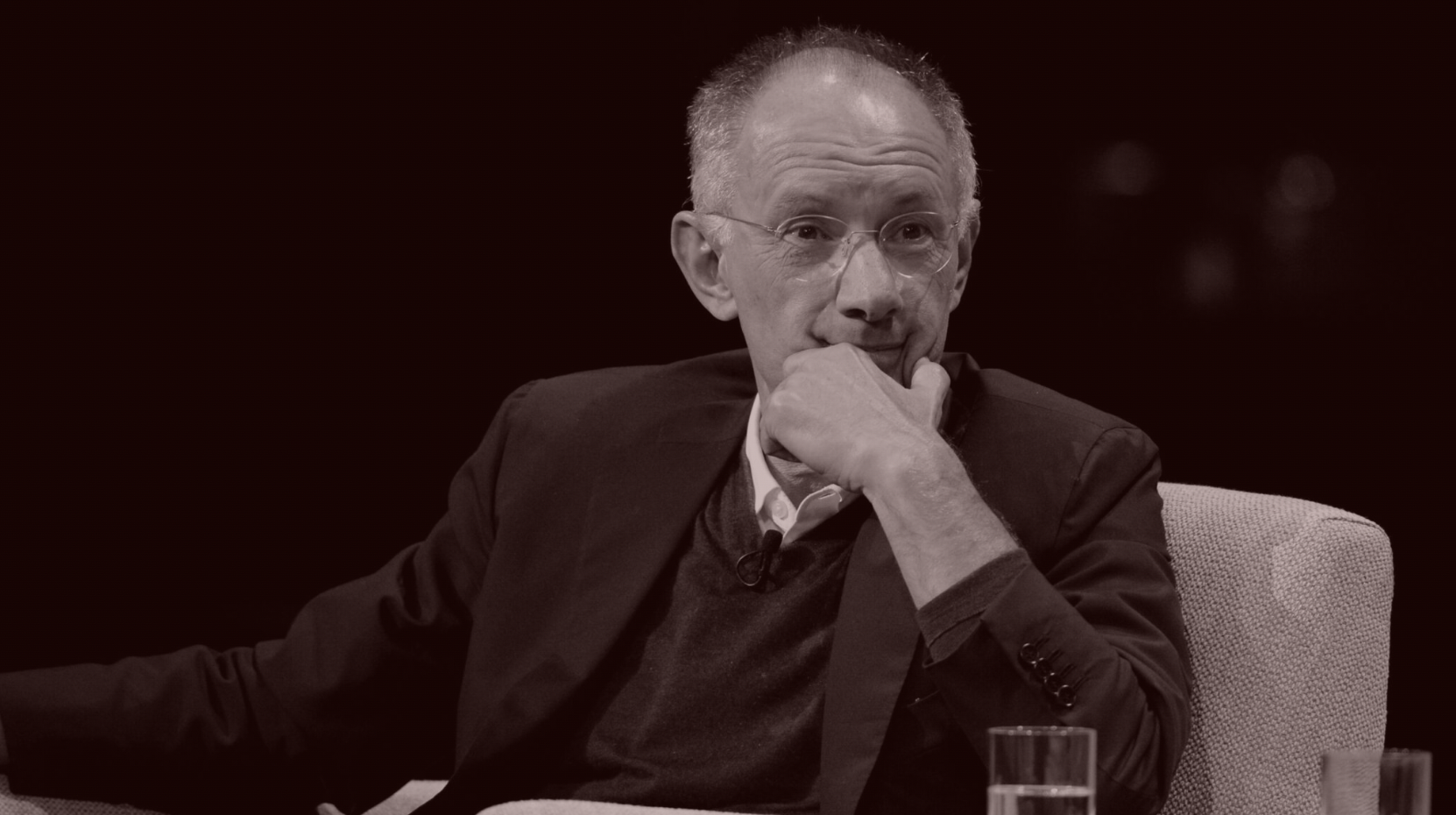 |
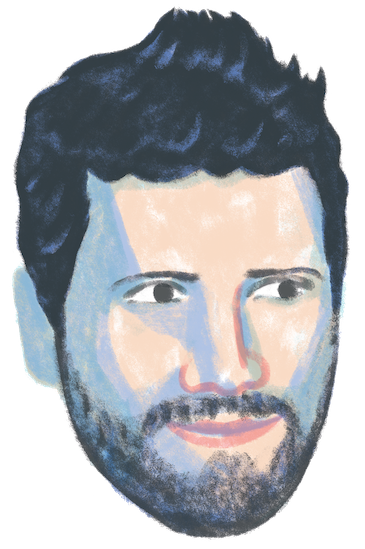
| Mike Moritzopolis |
| The legendary investor is knee-deep in an epic third act that combines being a modern Ron Conway, a civic-minded political organizer, mega-philanthropist, and the full-blown Robert Moses of Northern California. |
|
|
|
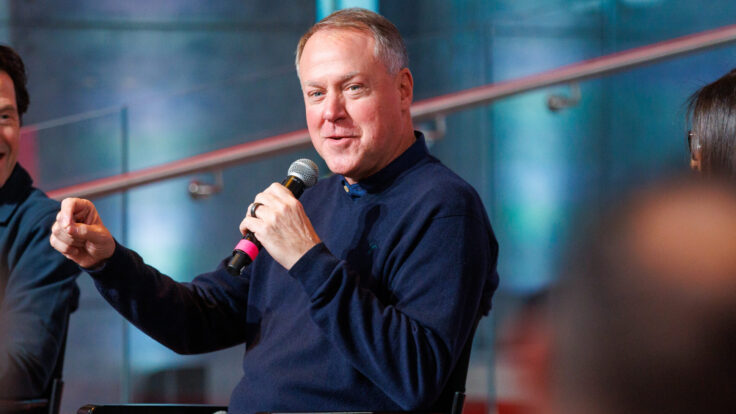
| In October 2017, at Sequoia Capital’s offices in Menlo Park, the legendary investor Mike Moritz found himself scrutinizing a group of unusual mid-20th century maps. Moritz, an avid painter, has been known to walk around with a sketchbook and draw when the mood strikes him. That day, however, he was looking at some sketches of Solano County, a largely agricultural area some 100 miles northeast from Sand Hill Road. The maps had been unfurled on the table by Nat Friedman, an entrepreneur who had come to feel out Moritz on a friend’s moonshot idea: building a new city from scratch.
Moritz, a one-time Time journalist turned early Google investor, was immediately intrigued. And so, a few email introductions later, he decided to make his most ambitious personal investment to date: a campaign to raise close to $1 billion to buy 50,000 acres, mostly from farmers, to build a city for tens of thousands of people in Eastern Solano County. With high enough density and first-in-class transit, Moritz and Friedman hoped to relieve Bay Area housing costs and revitalize the poorest county in the region.
Pulling off a project of this scale, though, would require complete and utter secrecy—and for a very very long time. That was the task of the actual man behind the project, Jan Sramek, a precocious, Czech-born Goldman Sachs alum who originally conceived of the city and had given Friedman the maps in the first place. Sramek was described by associates as almost maniacal about keeping a lid on things, given the legitimate fear that any public disclosure would lead to land speculation in Solano County, or create holdouts that would drive up costs, risking the integrity of the project altogether. “Jan had the most unbelievably good OpSec I’ve ever seen,” said a person involved.
Over the next six years, Sramek assembled an elite roster of center-left, pro-growth donors in Silicon Valley, including Reid Hoffman, Marc Andreessen, and Laurene Powell Jobs; and a younger wave of billionaire policy wonks, like Friedman, most recently the C.E.O. of Github, and Stripe founder Patrick Collison, who met Sramek as a Stripe consultant and eventually cut the project’s first check. Each billionaire became a passive limited partner in Sramek’s real estate fund, Flannery Associates.
This was Sramek’s brainchild, but he probably couldn’t have done it without Moritz, who validated the concept for other backers. Dapper, bespectacled, unfailingly polite, and witty, Sir Michael Moritz—the Welchman was knighted by Queen Elizabeth in 2013, as everyone knows—casts a long shadow in San Francisco (though he now mostly lives in Bolinas). Like Ron Conway in an earlier era, Moritz seems to come up in every conversation nowadays with Silicon Valley strategists, fundraisers and donor-advisers about the kings of local affairs. He and Conway couldn’t be more different—Conway is a relentless all-caps emailer, Moritz is a voracious intellect, “a learning machine” one friend said—but Moritz has essentially eclipsed Conway as the region’s top political mover-and-shaker du jour.
This is all pretty new for the 68 year-old. It wasn’t until the Trump presidency that Moritz went deep into politics, largely allying himself with more brass-knuckles advocacy campaigns like the American Bridge and ACRONYM. He became enamored with the Lincoln Project and pitched it to other donors. In 2021, Moritz also launched two organizations that have, very quickly, become centers of gravity in city affairs: TogetherSF, a center-left political organizing outfit, and The San Francisco Standard, a Chronicle competitor. Meanwhile, Moritz’s family office and locally-focused foundation, Crankstart, has also transformed itself. Five or so years ago, the group was giving away about $50 million a year, according to tax filings. Nowadays, it gives away five times that. “He’s not just a random tech V.C. He understands how civic institutions work,” said one tech-politico who travels in similar circles.
And, of course, this being San Francisco politics, Moritz, like Conway has recently become a bogeyman for the far left, who view him as an avatar of the city’s blinkered technorati. Almost everyone says Moritz is in this for the right reasons, but critics clearly have Moritz in their sights—so much so that it wasn’t hard to guess the reaction when news emerged in The New York Times last week, six year after that meeting in Sequoia’s offices, about his involvement in a planned secret city in Solano County. |
|
|
| With a massive, secretive project like this, conspiracy theories come with the territory. Sure, startups go through stealth phases all the time, but it’s pretty impressive to see a project this big go stealth for six years. Several people who worked daily with the Flannery Associates investors told me they were totally in the dark on their bosses’ work until learning about the project in the Times. I know that some donors to Flannery Associates weren’t even aware of who the other donors were until the list was disclosed. Other donors didn’t even tell their kids. Even “California Forever”—the parent group behind Flannery—was not incorporated, according to a filing, as a state LLC until Thursday, the day that the marketing website for the company went live. Sramek was so paranoid about leaks that he originally was negotiating some land deals himself, but I’m told he stopped when he came to realize that a Goldman Sachs banker doing this would almost certainly get attention.
The secrecy was intentional, but it had costs. Concerns about land purchases close to Travis Air Force Base fueled spurious allegations that it was some incursion by the Chinese. (Earlier this summer, I’m told, the Committee on Foreign Investment in the United States began to probe the purchases.) “Two weeks ago we were one thing,” said a person involved in the project, ruminating on all the different conspiracy theories. “Now we’re something different.”
The group, of course, reaped what it sowed: The consensus among both outsiders and insiders seems to be that the big reveal was botched. The media response has been unsurprisingly skeptical, caricaturing Solano City (or whatever it will be called) as a Silicon Valley billionaire-funded utopia—a superfluous commuter city founded to serve the needs of tech oligarchs while making everyone involved even wealthier in the process.
Granted, that narrative, regardless of its merits, is somewhat irresistible. But those involved in the project have written it off as simply the hive-mind fantasy of Twitter and media elites. Far more important has been the political reaction within Solano County, but that’s not exactly going swimmingly, either. “The big tech billionaires should be held to account as financial backers for Flannery Associates, who are using secrecy, bullying, and mobster tactics to force generational farm families to sell their land,” said John Garamendi, the Democratic congressman for the region, the other day. (Flannery has since unveiled a website with much more info.) |
|
|
| If secrecy brought the project to this point, taking a dose of tough medicine upon the reveal was always an inevitability, insiders acknowledge. Alas, the CFIUS review made them nervous that their plan was being leaked to government officials, I’m told, which then encouraged them to field a poll surveying Solano County voters in preparation for an announcement. That poll alerted more residents to the group’s ambitions and probably led to the Times leak. The idea had always been to launch around this time—these renderings of the city weren’t made overnight—but now the charm campaign is starting on the back foot.
Among the professionals brought on to help sell the city are Andrew Acosta, a Democratic operative who grew up nearby and knows the region’s politics and the world of ballot measures as well as anyone. Another strategist, Brian Brokaw, who has advised Gavin Newsom and Kamala Harris over the years, has his eye on the public perception, as does Brokaw’s business partner Dan Newman. Part of their job is to try to message this as not just another rich-tech-guy thing. Case in point: It was revealing to see Sramek’s first interviews about the project, which was not given to the Times, but to a local broadcast station. The group is planning to open three field offices across the county, too, and is trying their best to frame this as a homespun effort from Sramek, who lives there now.
Backers expect that there will probably be a ballot initiative in 2024 to decide whether to rezone the county’s farmland. Discussions about how to win, exactly, are preliminary: the facile theory, of course, would be to take the combined net worth of the dozen or so disclosed investors and smother Solano County voters, as Sam Bankman-Fried did for Carrick Flynn in an Oregon congressional race last year. “Imagine you spent $900 million or whatever buying land. How much are you willing to spend to increase your chance of winning at the ballot?” mused one person involved. “We’ll definitely spend the money to make sure everyone hears the message. And then they’ll decide if they like it or not.” But the S.B.F.-Flynn campaign failed, and this group strikes me as ultra-sensitive about being perceived as carpetbagging San Franciscans who have given up on the city.
The backlash to San Francisco-style liberalism from tech leaders is real, of course—Moritz wrote a Times column about how “Even Democrats Like Me Are Fed Up With San Francisco”—and this strain of Silicon Valley thought manifests itself in vessels ranging from Elon Musk’s acquisition of Twitter to the expected mayoral campaign this year of Daniel Lurie, the exceedingly well-connected founder of San Francisco’s leading anti-homelessness nonprofit, who is certain to rake in tons of cash from the tech elite.
But remember that Moritz looked at the maps in 2017—well before Chesa Boudin was elected San Francisco’s District Attorney, well before the fentanyl crisis, and well before the pandemic radicalized the industry’s most contrarian voices. The project strikes me as, fundamentally, not about a utopia with flying cars for gazillionaires, but about optimism. |
|
|
|
| FOUR STORIES WE’RE TALKING ABOUT |
 |
| Summer Strike Finale |
| Fran’s whereabouts, the studios' strategy, and more. |
| MATTHEW BELLONI & JONATHAN HANDEL |
|
 |
|
 |
|
 |
|
|
|
|
|
 |
|
|
|
Need help? Review our FAQs
page or contact
us for assistance. For brand partnerships, email ads@puck.news.
|
|
You received this email because you signed up to receive emails from Puck, or as part of your Puck account associated with . To stop receiving this newsletter and/or manage all your email preferences, click here.
|
|
Puck is published by Heat Media LLC. 227 W 17th St New York, NY 10011.
|
|
|
|