Welcome back to The Varsity. I’m a bit bleary-eyed after a late night at the White House hanging
out with Mark Zuckerberg, David Ellison, and the ear-to-ear grinning Jim Dolan, among others. TKO’s might was on full display. It was a UFC event, sure, but I spotted WWE’s Paul “Triple H” Levesque and Roman Reigns sitting close to the octagon (and taking selfies with whoever asked). Tyson Fury hasn’t yet committed to TKO’s Zuffa Boxing, but he was also a big presence on the South Lawn. And, of
course, TKO brass Mark Shapiro, Ari Emanuel, Nick Khan, Dana White, et al. were in full force…
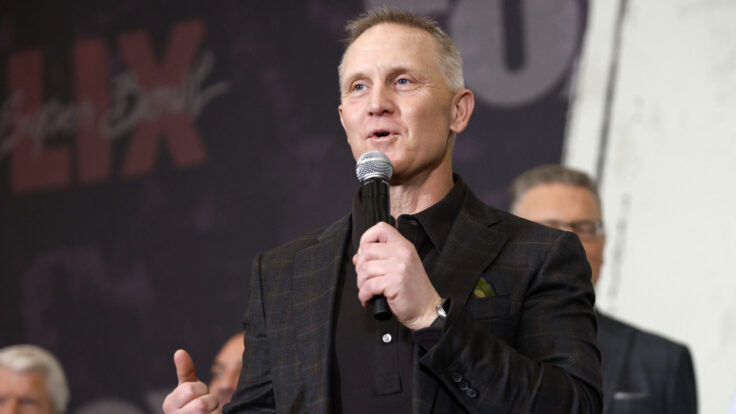
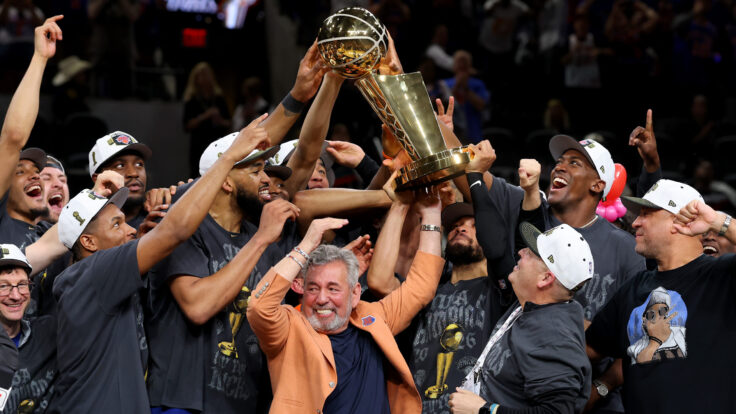
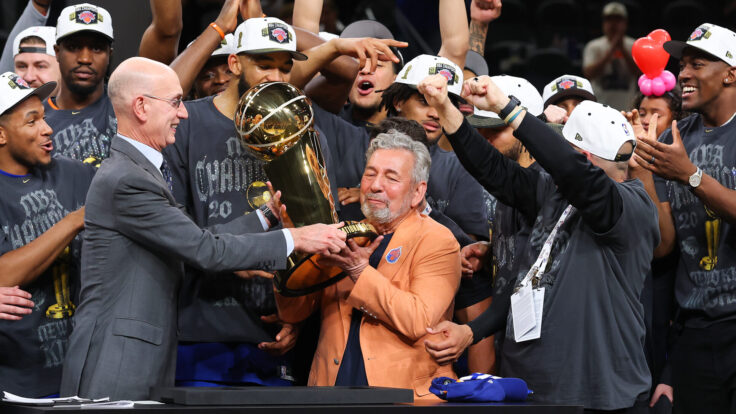
Pod alert: With the Knicks winning their first title since 1973 (not including this season’s NBA Cup, of course!), I made sure to get the voice of the team, Mike Breen, to join The Varsity on Wednesday. I asked Breen and ESPN’s Brian Windhorst what—and who—has been
responsible for the new culture over at MSG. Also, make sure to listen to yesterday’s Varsity: Axios’s Sara Fischer and I dove into all sorts of topics across the industry.
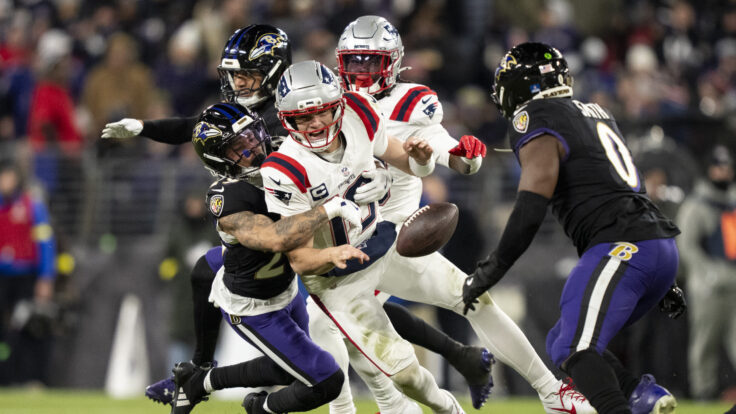
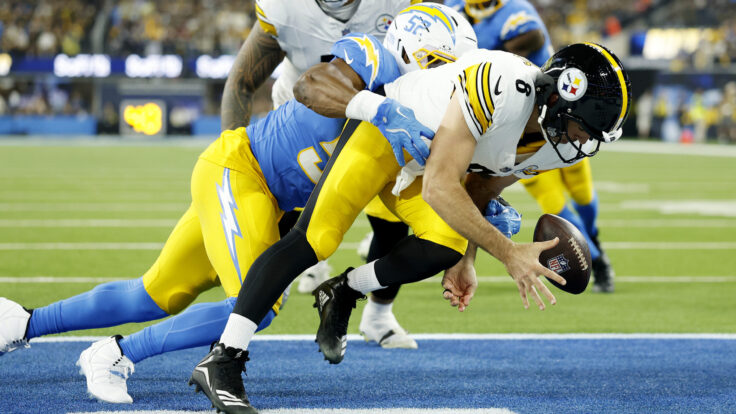
In tonight’s issue, my partner Eriq Gardner is here to dispel the growing body of misconceptions around the Sports Broadcasting Act, which is at the center of the NFL’s antitrust-exemption micro-crisis. As I wrote last week, the 1961 legislation has been a hot topic of late,
as Washington scrutinizes the NFL’s push further into streaming. But, as Eriq lays out in detail, it’s not exactly the lever many presumed or hoped that it might become.
Also mentioned in this issue: Thierry Henry, Alexi Lalas, Zlatan Ibrahimović, Lachlan Murdoch, Mike Morris, Peter Supino, Rich Greenfield, Rupert Murdoch, Darrell
Issa, Brett Kavanaugh, Curtis LeGeyt, Cruz, Cantwell, and many more. |
Brady Meter: World Cup
USA vs. Paraguay 4–1
Grade: B
|
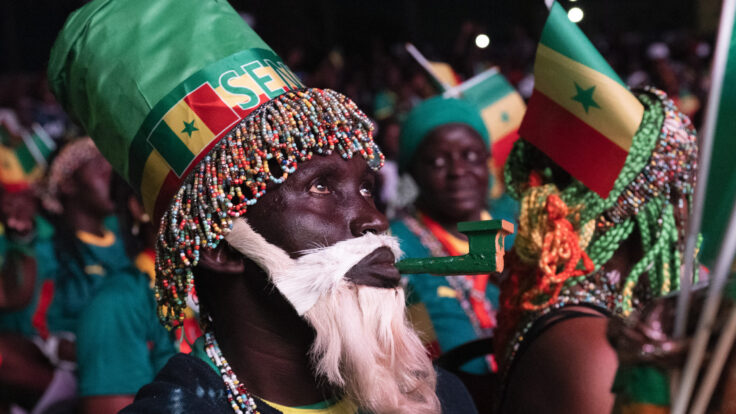
There was a moment before the USA’s first World Cup match on Friday when Thierry Henry noted
that his booth partner Alexi Lalas had shed a tear as the national anthem played. After starting his story, Henry caught himself, looked at Lalas, and asked, “Can I share?” The moderately awkward moment demonstrated that Fox’s studio show is very much a work in progress.
By next week, I’m sure, Henry won’t be following any sort of on-air broadcaster permission structure—instead, he’ll realize that the first rule of sports media is to say whatever is on your mind
and apologize (or don’t) later. I expect this grade to improve as the tournament progresses, provided the chemistry continues to develop. It’s already been laugh-out-loud funny to watch Henry and Zlatan Ibrahimović, a true talent, tease Lalas on set. |
- Fox’s
streaming push: Fox shares dropped more than 15 percent today on news that the company was buying Roku for $22 billion in cash and stock in the first major acquisition of the Lachlan Murdoch era. It appears that the market was punishing Fox for making such an expensive deal in the streaming space—especially after many financial analysts had championed the company’s discipline, largely sitting out the streaming arms race to focus on traditional pay
television.
But several analysts I trust see the deal as a good one for Fox. “While Fox remains in a strong position to monetize its existing portfolio within the evolving Pay TV ecosystem, we see this Roku deal as a way to ensure the company’s future as streaming overtakes traditional distribution in the years ahead,” concluded today’s report from MoffettNathanson. Guggenheim’s Mike Morris noted that “the combination of content and distribution assets will likely raise
questions as to the balance of owned media growth and partner promotion, though we see this as typical within the industry which includes vertically integrated technology companies Alphabet and Amazon, and content studios that distribute their productions on owned and competitor streaming services.”
It’s also interesting to note a couple of reports that were released just days before anyone knew about Fox’s plan. Last week, LightShed’s Rich Greenfield described
Roku’s operating system as a “gateway to streaming” and suggested 10 potential buyers. Fox was first on the list. Over the weekend, Wolfe Research’s Peter Supino speculated on a Roku acquisition, highlighting its position as the leading operating system for connected television and the potential of its advertising business for the right acquirer.
Meanwhile, Fox said it expects the transaction to close in the first half of next year. Morris pointed out that the
purchase would catapult Fox to become the third-largest player in U.S. television by share of viewing, as defined by the Nielsen Gauge.
|
|
|
|
As Congress tries to prevent streamers from taking NFL market share, they’ve increasingly
homed in on the anachronistic Sports Broadcasting Act of 1961, which includes the antitrust exemption that allows the league’s teams to collectively market their games. But as the recent House Judiciary Committee hearing made clear, no one knows what they are talking about. |
|
|
|
Perhaps it’s no surprise that the two largest institutions in American life, the U.S. government and the NFL,
would eventually meet at the crossroads of media disruption. Indeed, amid the NFL’s attempt to bid up its existing media partners in exchange for extending their distribution contracts by a few years, Rupert Murdoch allegedly met with President Trump to raise his concerns over the flight of NFL games away from traditional broadcasters, like his Fox, to streamers—a sentiment echoed in the mogul’s own paper, The Wall Street Journal. Soon enough,
members of Congress were kicking up a fuss over whether the Sports Broadcasting Act of 1961, an antitrust exemption that allows NFL teams to collectively pool and market their games, needed to be revisited.
But watching last week’s House Judiciary Committee hearing on the S.B.A. was, frankly, a little painful. As someone who closely follows the NFL’s legal battles—and who has spent plenty of money trying to watch my beloved Rams from the D.C. area—I found myself increasingly frustrated.
Republicans played populist chords; Democrats used the occasion to take shots at Murdoch and the Paramount–Warner Bros. Discovery merger. But almost no one appeared to have a firm grasp on the actual law. The closest anyone came to an uncomfortable truth was Rep. Darrell Issa, who acknowledged that Congress has remarkably little leverage over the NFL through the S.B.A. itself.
The hearing left me thinking this story needs a bit of a rewrite. So I put together a list of
five hard truths about what the S.B.A.’s exemption actually means for the NFL, broadcasters, and fans. These aren’t the points that politicians or witnesses spent much time discussing. But they’re the ones that belong at the center of the conversation. |
I. The S.B.A.
Doesn’t Prohibit NFL Streamer Deals
|
A surprising number of people talk as though the S.B.A. requires NFL games to remain on broadcast
television. It doesn’t. The S.B.A.’s core function is to provide antitrust protection for the NFL’s collective sale of television rights. But granting immunity from certain antitrust challenges is not the same as dictating where those rights can be sold. There is nothing in the statute that requires the league to do business with broadcasters rather than streamers.
Sure, defenders of the traditional model have a point. Before Congress enacted the S.B.A., the Justice Department
had begun making headway against the NFL’s practice of pooling television rights. Congress responded by creating a safe harbor, in part because lawmakers believed broad public access to games through free, over-the-air television—what the statute calls sponsored telecasting—served an important public interest. That’s the historical justification, and the reason the exemption is limited to broadcasting. But it doesn’t actually address the ultimate legality of the NFL’s partnerships with
Amazon, Netflix, YouTube, or whoever comes next. At its core, the S.B.A. merely invites a review of whether pooling rights for nonbroadcast dealmaking is somehow anticompetitive. |
II. The NFL
Doesn’t Really Need the S.B.A.
|
Obviously, the legal landscape has changed dramatically since Congress enacted the S.B.A. Conduct that drew
intense antitrust scrutiny in the mid-20th century, when the Justice Department aggressively pursued cartels in entertainment markets, isn’t necessarily viewed the same way today. The NFL has long argued—and would surely continue to argue without the S.B.A.—that some degree of collective action is necessary to produce the product itself. After all, professional football works only because 32 independently owned teams agree on schedules, rules, revenue sharing, competitive balance, and a host of
other coordinated activities. Courts have increasingly recognized that reality—which may be one big reason we haven’t seen a wave of lawsuits directly challenging the NFL’s streaming deals as unlawful under the antitrust laws.
The closest thing is the long-running Sunday Ticket litigation. In that case, plaintiffs persuaded a jury that the NFL’s out-of-market package inflated prices and restricted competition, producing a blockbuster verdict worth billions of dollars. Then the trial judge
threw it out. Now the plaintiffs’ lawyers are trying to revive the case on appeal and salvage years of litigation and tens of millions in upfront costs.
As I’ve written before, the Ninth Circuit could bring the case back to life. If that happens, the NFL may have a genuine problem. The Justice Department could also enter the picture, though there is little evidence that this administration is eager to bring such a case—despite a Wall Street Journal article a few months back about
a federal investigation. Even then, the league would hardly be out of options. A revived Sunday Ticket case could ultimately reach the Supreme Court; if so, Justice Brett Kavanaugh has already suggested sympathy for the view that sports leagues are unique joint ventures that require coordination among competitors to function.
None of this means the NFL would want to repeal the S.B.A. But there’s a credible argument that it could survive just fine without it.
|
III. Local
Broadcasters Benefit From the S.B.A. as Much as Viewers
|
The public case for the S.B.A. is usually framed as protecting access to games. But how many consumers are
actually watching games through antennas? Research I’ve seen suggests it’s about 15 percent of households. Most viewers instead access CBS, Fox, NBC, and other broadcast networks through a paid service—whether that’s cable, satellite, YouTube TV, Fubo, Hulu+Live TV, or something similar—raising the question of the increasingly negligible difference between streaming and cable.
There may be sound policy reasons to favor broadcasters. Local stations are more likely to invest in
local news and community programming, and Congress may reasonably decide that preserving over-the-air television serves a broader public interest. But those are arguments for supporting local broadcasting, not necessarily arguments for protecting sports fans. If the goal is maximizing consumer choice, innovation, and access, the answer is far less obvious.
Many younger viewers have already voted with their wallets. They prefer streaming and expect content to
be available on demand and across devices, and accessible without a traditional cable package. From their perspective, a policy that advantages broadcasters may look less like consumer protection than incumbent protection—and, simply, a pain in the ass. I’m surprised that streamers haven’t articulated this point more forcefully. It highlights one of the real oddities of this whole S.B.A. dynamic: At a moment when Congress is openly questioning whether streamers should have
access to the NFL’s most valuable rights, Netflix, Amazon, YouTube, and others have largely stayed on the sidelines. |
IV. Broadcasters
Need the S.B.A.
|
If you listened closely to last week’s hearing, you may have noticed National Association of Broadcasters
president Curtis LeGeyt explicitly disclaim the need for repeal of the S.B.A. He instead asked Congress to “reaffirm” that the statute’s antitrust protection applies only to traditional broadcasting. Whatever one thinks of that argument, it reveals something important: Broadcasters understand that eliminating the S.B.A. altogether could create problems for them, too.
If Congress repealed the statute, one of two things would happen: Either NFL teams would begin
negotiating television deals independently, or the league would continue largely with business as usual and dare plaintiffs to challenge its collective rights model in court. If it’s the latter, why wouldn’t broadcasters find themselves in the crosshairs alongside the NFL? Without an antitrust exemption, broadcasters wouldn’t merely be passive observers. They would be counterparties to the very arrangements being challenged. Plaintiffs could argue that the networks participated in a structure
that suppressed competition for rights, foreclosed rival bidders, and prevented the sort of innovation that might emerge in a more open marketplace. At that point, the broadcasters could find themselves in a position not unlike the one occupied by DirecTV during portions of the Sunday Ticket litigation: defending their role in an allegedly anticompetitive system. (Remember, broadcasters are currently supporting the NFL in the ongoing appeal at the Ninth Circuit. So keep that in mind when you
hear talk of the need to enforce the S.B.A.)
Alas, Democrats may have spent too much time talking about Rupert Murdoch pulling strings and not enough time calling the bluff. If Murdoch is indeed behind this effort, he’s playing a far riskier game than many seem to appreciate. And not merely because, as John Ourand noted the other day, NFL
officials aren’t exactly thrilled by the discussion. |
V. No One Knows
How to Placate the Fans
|
Everyone agrees that fans are frustrated—but not on what the problem actually is. Is it rising subscription
costs? Fragmentation across platforms? The decline of free over-the-air television? Broadband access? Blackouts? Different critics offer different diagnoses, yet often speak as though they’re discussing the same problem. I’m not convinced they are. That’s one huge reason I’m skeptical that Congress is anywhere close to a solution.
In conversations I’ve had, some broadcasters appear hopeful that lawmakers might pursue a more aggressive version of
what’s contemplated in the Cruz–Cantwell college sports bill: If a game is carried by a streamer, the rights-holder would have to make it available on free TV in the local market. That’s certainly one approach. But even if that were politically viable, it would address only a narrow slice of consumer frustration. It doesn’t solve the fans’
complaint that following the NFL increasingly requires a stack of subscriptions, only to discover that the Christmas game—or the playoff game, or the international game—requires yet another service.
There’s also a deeper philosophical question lurking beneath the debate. Are lawmakers really prepared to dictate how sports rights must be distributed, complete with ongoing government oversight of who can show what and where? Many of the same people celebrating competition when it lowers
prices or expands choice seem remarkably comfortable with rules that would limit how buyers and sellers can structure deals.
And that brings me to perhaps the strangest thing about last week’s hearing: For a discussion ostensibly focused on an antitrust exemption, there was remarkably little discussion of the world without one. What would happen if the exemption disappeared? What would a genuinely competitive market for NFL rights look like? Would teams strike their own deals? Would new
entrants emerge? Would consumers be better off—or worse? Those are the questions that should have dominated the hearing. Instead, much of the conversation revolved around preserving or reallocating the current system. For a debate about competition, there was surprisingly little interest in imagining what actual competition might look like. |
Thanks, Eriq. See you all tomorrow.
John |
|
|
|
Finally, a media podcast about what’s actually happening in the media—not the oversanitized, legal-and-standards-approved
version you read online. Join Dylan Byers, Puck’s veteran media reporter, and Julia Alexander, a longtime media analyst, as they sit down with TV personalities, moguls, pundits, and industry executives for raw, honest, sometimes salacious conversations about the business of media and its biggest egos. New episodes publish every Tuesday and Friday. |
|
|
|
An essential, insider-friendly Hollywood tip sheet from Matthew Belloni, who spent 14 years in the trenches at The
Hollywood Reporter and five before that practicing entertainment law. What I’m Hearing also features veteran Hollywood journalist Kim Masters, as well as a special companion email from Eriq Gardner, focused on entertainment law, and weekly box office analysis from Scott Mendelson. |
|
|
|
Need help? Review our
FAQ page or contact us for assistance. For brand partnerships, email ads@puck.news.
You received this email because you signed up to receive emails from Puck, or as part of your Puck account associated with {{customer.email}}. To stop receiving this newsletter and/or manage all your email preferences, click here. |
Puck is published by Heat Media LLC. 107 Greenwich St., New York, NY 10006 |
|
|
|
|