{{ 'now' | timezone: 'America/New_York' | date: '%b %d, %Y' }} |
|
|
Welcome to The Hidden Layer. I’m Ian Krietzberg, coming to you from the frozen
tundra of Alaska, where I’m in pursuit of the northern lights (and hoping to avoid polar bears)—and where it still seems much warmer than Manhattan.
While I’m away, I wanted to share a piece that I’ve been reporting for several months, inspired by a simple curiosity of mine: What does all this data center demand mean for the companies that build them? The answer is a fascinating reminder of how much society has changed—and how much it remains tethered to some immovable
truths.
Mentioned in this issue: Matt Mahan, Greg Brockman, Alex Bores, Jan Leike, Sam Altman, Dario Amodei, Sam Holden, Chris Gorthy, Brian Kennedy, Austin Davis, Greg Matson, Robb Jones, and more… |
Three Things You
Should Know…
|
-
A RunRaise: Runway, one of the more prominent A.I. video-generation startups, today announced the closure of a $315 million Series E funding round led by General Atlantic, with participation from Nvidia, Fidelity, Adobe, AMD, AllianceBernstein, Emphatic Capital, Felicis, Premji, and Mirae. According to a source familiar with the matter, the raise granted the company a $5.3 billion post-money valuation. Runway said the investment will help it scale up and further
productize its research, specifically into world models. As it has grown, Runway has signed partnerships across more traditional tech and media ecosystems, including a deal with Lionsgate and a more recent partnership with Adobe.
-
The A.I.-enabled Valley: As part of its effort to, in the words of Mayor Matt Mahan, “really solidify San Jose as the A.I. capital of the world,” the city has been running about a dozen pilot programs, each targeting a different area of municipal operations. One involves using machine learning algorithms to detect potholes and other street hazards. Another deploys similar algorithms alongside vehicle sensors to optimize traffic lights for bus routes—which the city says
increased bus speeds by 20 percent and cut red-light wait times in half. On Friday, the city announced it would bring the program to all of its bus routes.
The next question, Mahan told me, is whether more people start taking the bus as service gets better. “We think there’s a broad public value in this,” he said, “because the more people use the bus system, the less congestion, traffic, commute time, and pollution for everybody else.” - The
OAI–Anthropic proxy war: Leading the Future, the extremely well-funded pro-A.I. super PAC backed by OpenAI co-founder Greg Brockman and Andreessen Horowitz, is getting some competition from… Anthropic. As I’ve previously reported, Leading the Future and an associated PAC have spent hundreds of thousands of dollars
opposing Alex Bores, a New York state assemblyman who is running for Congress. Bores, of course, was the co-author of one of the first major A.I. safety laws to be enacted at the state level.
But Bores is also getting plenty of support from the A.I. industry, with his congressional campaign becoming a sort of proxy for the larger rivalry between OpenAI and Anthropic. According to recent F.E.C. filings, in 2025 Bores raised a total of $168,500 from 28 Anthropic employees, including Jan Leike, an alignment researcher who left OpenAI in 2024 over safety concerns. Thirty-five donations, totaling over $100,000, came from 17 employees of Open Philanthropy (now known as Coefficient Giving)—an effective altruist group that has
advocated for A.I. safety policy. Bores also received donations from eight OpenAI employees, in addition to researchers at the A.I. safety evaluation company Metr and A.I. safety lab Redwood Research.
|
Quote of the Week:
Shots Fired
|
“Anthropic serves an expensive product to rich people. We are glad they do that, and we are doing that too,
but we also feel strongly that we need to bring A.I. to billions of people who can’t pay for subscriptions. One authoritarian company won’t get us there on their own, to say nothing of the other obvious risks. It is a dark path.”
—Sam Altman, firing back at Dario Amodei (who, you’ll recall, left OpenAI to launch Anthropic) in response to Anthropic’s Super Bowl ad campaign, which made fun of OpenAI’s decision to get into advertising.
And now for the
main event… |
|
|
The A.I. gold rush is spreading the wealth far beyond the pick-and-shovel providers like
Nvidia and other chipmakers. But the industries supporting the infrastructure build-out have a different challenge: too much demand. |
|
|
If artificial intelligence is the treasure in our modern-day gold rush, and chipmakers are selling the picks
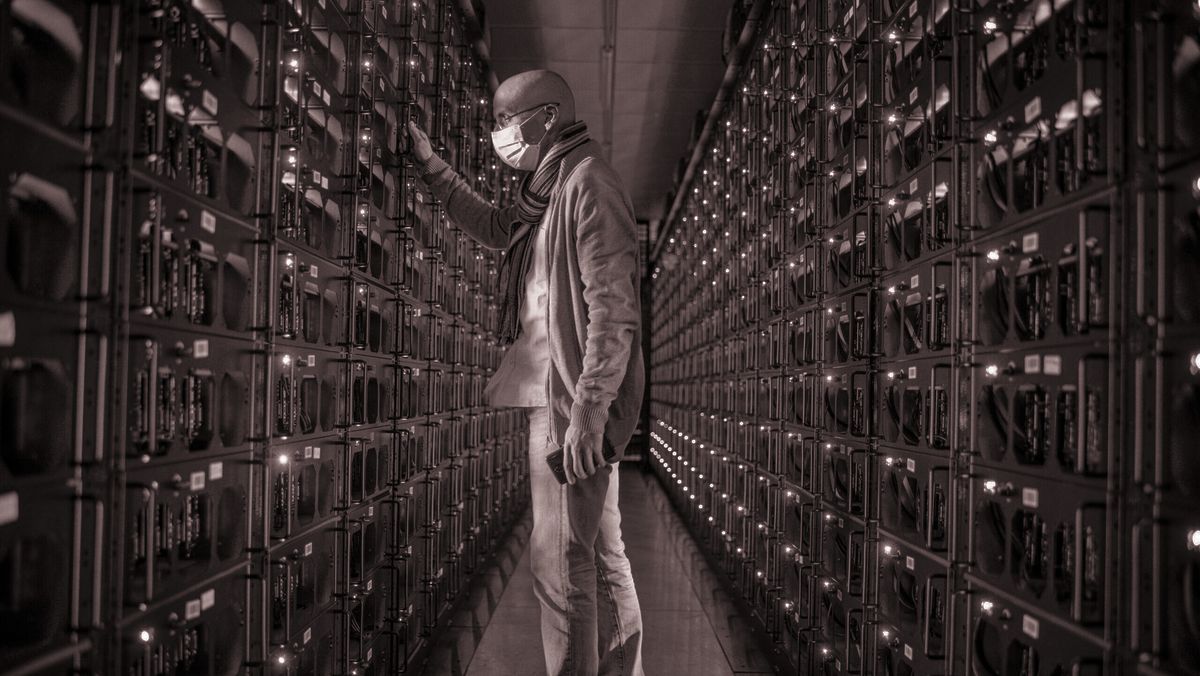
and shovels, then data centers—and all the infrastructure they represent—are the modern-day boomtowns in this increasingly strained metaphor. As of late last year, nearly 3,000 new data centers were under construction or planned in the United States alone. The resources being committed to this project are unlike almost anything in American history, with the exception of
railroad construction in the 19th century.
Of course, in many ways, it’s actually far more complicated to build a data center than to dynamite-blast tunnels through the Rockies. It’s not just the hassle of locating the land, or winning over locals and lawmakers—it’s also finding the electrical capacity to power data centers (nuclear plants, gas generators); connecting them to local utilities without overloading the grid; and sourcing rare earths for servers and data storage,
equipment for cooling, and copper for thousands of miles of electronic wiring. Then there are the human costs: architects, construction workers, engineers, plumbers and electricians, etcetera.
Naturally, as the Big Four hyperscalers
commit more and more capital to A.I. infrastructure—to the tune of over $200 billion in 2024, $400 billion in 2025, and a projected $600 billion or more in
2026—chipmakers like Nvidia are far from the only parties reaping the rewards. We’re looking at an ecosystem spanning construction companies and contractors, memory providers, cabinet builders, equipment designers, trade unions, and network providers all dealing with a level of demand they’ve never experienced. The scale is almost unimaginable: Roughly 100 gigawatts of new data center capacity are
expected to be added between now and 2030 worldwide, which would just about double the current global capacity, and half of that will be devoted to A.I. workloads.
So what exactly is involved in building all this? Over the past several months, I’ve been talking to a number of companies that provide the various layers of infrastructure required to make these
data centers hum, in order to better understand the inputs, regulatory challenges, and resource constraints involved. Herewith, a step-by-step guide to getting into the data center business. |
Phase One: If You Build It…
|
For a company looking to build a data center, “It all starts with site selection,” said Sam
Holden, an executive at Skanska, one of the world’s largest construction companies. This is much more difficult than simply identifying and purchasing a big, open slice of land. The site needs to not only be close to a power source but, ideally, located where the local utility has capacity to absorb the anticipated power needs.
Then there’s the NIMBY issue. A suitable location doesn’t guarantee the local municipality will be friendly to data centers, whether for environmental or
other reasons. Indeed, a growing local backlash to this kind of construction has coincided with reports of a spike in canceled data center projects: Economic research firm MacroEdge noted recently that 25 data center projects had already been scrapped in January, compared to the 31 that had been canceled over the preceding six months (half of which occurred in December
alone).
Assuming you overcome those hurdles, the data center building itself is “not too exotic,” according to Holden—it’s typically a large, pre-engineered metal structure. The internal power and cooling requirements, however, require highly specialized electrical and construction work in compact spaces and on aggressive timelines. This is where about 80 percent of the work happens for any given data center project. “These clients and customers live in a speed-to-market environment and
want to have them done as quickly as possible,” Holden said. It’s a challenge for the contractors, too. Robb Jones, a V.P. of sales at Chatsworth, which builds and services data centers, told me his company picks their projects carefully to ensure they can actually complete the deals they sign—and that it’s become common to have multiple manufacturers on a single construction site to account for skyrocketing demand.
Here we run into another constraint on the hyperscalers’
plans for feverish data center development: labor shortages. The Associated Builders and Contractors union said last month that the construction industry will need to attract some 350,000 net new workers in 2026 in order to keep up with demand—and that number is expected to spike to 465,000 in 2027.
There’s also a massive, growing shortage of electricians capable of the work required to wire up data centers: The Bureau of Labor Statistics expects 81,000 electrician job openings each year through at least 2034.
The labor requirements have also become more specialized as hyperscalers push for greater density—that is, watts per square foot—in data center
construction, said Chris Gorthy, the advanced tech leader for DPR Construction. Two years ago, that figure ranged between 300 and 400 watts per square foot. Now, with A.I. data centers, DPR is looking at densities ranging between 600 and 1,000 watts per square foot—“or more.” The speed at which the requirements have changed, Gorthy told me, has forced a “tremendous shift” in the mechanical systems required to keep these centers running.
The demand, too, is insatiable.
“There’s just more demand than capacity to deliver,” Holden told me. “It’s almost unprecedented.” The trend is so explosive that it’s offsetting declines in residential and commercial building, according to a recent report from construction technology firm ConstructConnect. And these mega-projects keep
getting bigger: Where a $100 million data center was once considered very large, it’s now considered average to small: “Some of our biggest projects are over a billion dollars,” Gorthy said.
Between the insane demand and the shortage of construction workers, delays are inevitable. Gorthy told me that some of DPR’s backlog now stretches to 2029. “We’ve turned down a significant amount of work over the last couple of years because we want to be able to deliver on the projects that we take
on,” he added. Holden is in the same boat. “There’s so much demand that we have to look at the clients we most align with, and make sure we can commit and deliver,” he said. “It can be easy to overcommit.” |
Phase Two:
Wait, How Much?
|
The outsize demand naturally spills over to the equipment manufacturers. Belden, which sells the fiber cables
that enable data center network connectivity, reported record revenue in the third quarter of last year. Brian Kennedy, Belden’s revenue management officer, told me that data center operators used to think about buying cable only toward the end of the construction process. Now they need to plan ahead to
keep up with capacity constraints. “The worst thing for a manufacturer,” Kennedy said, “is to get an opportunity to quote a project that literally exceeds your capacity because you just can’t deliver.”
Chatsworth, which custom-builds the cabinets that house the G.P.U.-lined racks inside a data center, cited the same challenge. Austin Davis, a senior master planner at Chatsworth, said the company had to staff up by 23 percent in just over two years. Clients, he said, want
bigger cabinets, and more of them, faster. “The orders are coming in sizes we’ve never really had before,” he said. But meeting the demand can be complicated by supply chain restrictions for materials like copper. “I get calls daily—hourly—saying, ‘Hey, this competitor gave this ship date. If you can beat it, it’s yours,’” Davis said. “Whoever can react the quickest is going to win this war of the data center world right now.” |
We’re already a few years into the data center boom, and yet, somehow, it feels like it’s just
beginning. Greg Matson, a senior V.P. at Solidigm, a memory storage company, told me that his firm’s revenue began surging in 2023. But it’s continued at such a clip that the company is now practically sold out through “this year, next year, and potentially even the following year.” G.P.U.s, he said, can’t ship without adequate memory storage—creating a remarkable shortage of memory across the board and putting Solidigm in an enviable position. “The demand for our products is basically unprecedented,” he added.
I asked Matson how he’s navigating what appears to be an increasingly frothy market environment: The cost of infrastructure keeps soaring; more and more debt is required to fund it; and the return-on-investment gap, once estimated at a paltry $200 billion, has transformed into a yawning, multitrillion-dollar
chasm. “Right now,” he said, “even if demand were cut in half for the next three years, we’re probably 2x short.” So he’s not worried. He added that while Solidigm’s business today could be entirely generated by A.I. customers, the company’s continuing to serve preexisting customers, too; A.I.-related business probably makes up around 60 percent of the total.
There’s always the risk that the music stops. But in each of my conversations, nearly everyone involved in the data center gold
rush expressed a consensus view that the build-out is just beginning. After all, the next phase of the A.I. revolution—which will involve more aggressive monetization of large language models, and a shift from training to inference—will require even more data, and data processing. “We see a market that will continue to stay strong for several years to come,” Gorthy said. “Are there going to be some companies that fall out and fade away? Yes. But the last time I checked, every time I get
an iPhone update, it needs more data. My healthcare records are stored electronically. Everything my son’s doing in high school is now on the internet and a computer, and not on paper. As a society, we keep requiring a demand for data, and even though efficiency is exponentially growing, I don’t see that outpacing the demand for data. That’s what makes it a pretty exciting space.” |
That’s all for today. I’ll see you on Thursday.
Ian |
|
|
Join Emmy Award-winning journalist Peter Hamby, along with the team of expert journalists at Puck, as they let you in on the
conversations insiders are having across the four corners of power in America: Wall Street, Washington, Silicon Valley, and Hollywood. Presented in partnership with Audacy, new episodes publish daily, Monday through Friday. |
|
|
A professional-grade rundown on the business of sports from John Ourand, the industry’s preeminent journalist, covering the
leagues, players, agencies, media deals, and the egos fueling it all. |
|
|
Need help? Review our
FAQ page or contact us for assistance. For brand partnerships, email ads@puck.news.
You received this email because you signed up to receive emails from Puck, or as part of your Puck account associated with {{customer.email}}. To stop receiving this newsletter and/or manage all your email preferences, click here. |
Puck is published by Heat Media LLC. 107 Greenwich St., New York, NY 10006 |
|
|
|