{{ 'now' | timezone: 'America/New_York' | date: '%b %d, %Y' }} |
|
|
Hi, and welcome back to Line Sheet. Happy Boxing Day. We have officially entered the season of
overexercising.
In today’s issue, you’ll find a super-duper, end-of-year mailbag from yours truly. This edition’s questions—which cover everything from Labubu to Emma Grede—were truly stellar. Up top, the requisite Saks Global update.
Also, some big news: For the first time in history, Line Sheet is taking the week off. As in, you will not receive an email between December 29 and January 2. Obviously, this means some major news will break. I’ll be
back on January 5 to address whatever goes down and offer a look ahead at 2026.
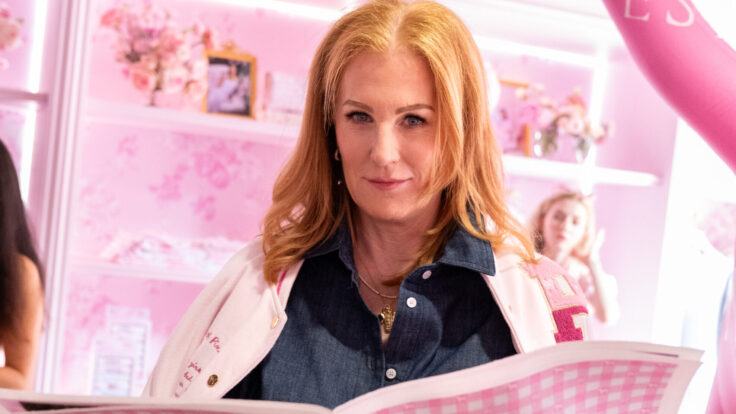
In the meantime, there will be plenty of Fashion People episodes to keep you busy. Next Monday, my buds Jacob Gallagher and Becky Malinsky join me for a supersize end-of-year recap, and then, on Friday, my guest is Stacey Battat, the costume designer behind a ton of Sofia
Coppola movies, including Somewhere, The Beguiled, Priscilla, and On the Rocks. (For my Basic-B readership: She also did costumes on the Amazon Prime series The Better Sister.) Listen here and here.
Enjoy
the great break, and I look forward to writing to you in 2026. This is still the best job ever and you make it possible. Don’t forget to send tips!
A final, New Year’s Eve–themed Shoppies: If you are a one-percenter or a shopaholic comfortable with debt, Celine is shilling two fabulous black dresses right now. They are perfect for December 31 and beyond. Shop them
here and here.
Mentioned in this issue: Becky Malinsky, Jacob Gallagher, The RealReal, Levi’s, Flamingo
Estate, bad wine, Richard Christiansen, Aesop, Emma Grede, Skims, Jonathan Anderson, LVMH, Dior, Matches, Natalie Kingham, Labubu, Saks Global, Marc Metrick, and many more… |
One Thing You Should Know…
|
- Cash
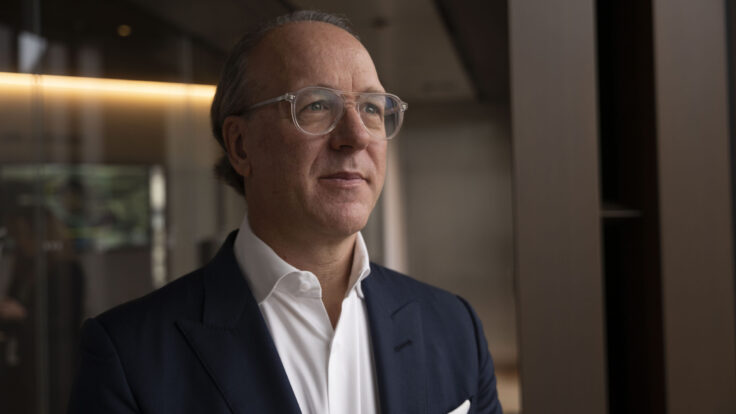
matters: Saks Global has sold the land beneath the Neiman Marcus Beverly Hills flagship to real estate developer and distressed asset specialist Ben Ashkenazy. The deal came together in just seven days, so after Saks Global C.E.O. Marc Metrick was in Los Angeles earlier this month.
Market sources estimate Ashkenazy probably paid north of $100 million, but not much more. (Coincidentally, Saks has a
similar-size interest payment due at the end of the month.) To be fair, this is the kind of hard decision that most of us expected after the Neiman-Saks merger, although in this case, the store will remain open. (Ashkenazy will now be Saks Global’s landlord, so while this frees up money in the short term, there’s rent to be paid.) “This opportunistic real estate transaction does not impact our day-to-day operations,” a Saks Global rep noted. “We remain committed to serving our loyal Beverly
Hills customers.”
Saks Global uses three different buildings on Wilshire Boulevard: the old Saks Fifth Avenue, the old Barneys New York (where Saks’ women’s store now resides), and the Neiman Marcus building. Of the two retailers that remain, Neiman Marcus is the better store in terms of product offering and vibe. (Barneys obviously was the best, but R.I.P.) Saks Global’s original plan was to redevelop the area—make it more walkable, add restaurants, etcetera—but who knows if that’ll
happen now. There are just too many stores, and this one is in a particularly depressing, low-traffic strip of town that a restaurant or two likely could not revive—even L’Avenue.
|
Now, the answers to all your most pressing fashion questions… |
|
|
With 2025 all but a wrap, we field reader questions on whether anyone’s going to get really
rich on the secondhand market, what the hell is next for Flamingo Estate, and when/if our national Labubu nightmare will ever end. |
|
|
It’s fair to say that 2025 was an absolutely wild year for the fashion industry, and your questions reflected
that. It was the year that resale went mainstream, tariffs terrorized, and half the brands on the fashion calendar started fresh with new designers. Herewith, I answer reader questions on all of the above—and even acknowledge the existence of Labubu. |
Did more American shoppers actually buy secondhand clothes in 2025? The RealReal reported 17 percent
year-over-year revenue growth last quarter, but a way smaller increase in total customers. I skimmed a few blogs-slash-“white papers” that want investors (and maybe even little ole me) to believe that the answer is a definitive “yes,” but they’re mostly authored by resellers themselves, like Vestiaire
or ThredUp.
I agree that the reports by the resellers are mostly self-serving B.S. that you should use as a guide, not gospel. And yet, when we have access to broader resell market numbers from NPD or another research firm next year, I’m sure they will corroborate that sales are up—even if it’s
actually impossible to measure whether a wholly unregulated market such as resale is growing as quickly as we believe. After all, almost every store sells secondhand clothes now in small and big ways, from Levi’s to Urban Outfitters, and there are simply many more vintage stores than there used to be. (See: the Lower East Side.) The rise of online secondhanders like The RealReal and Vestiaire has definitely, definitely changed fashion enthusiast/luxury consumer shopping patterns in
particular. (Becky Malinsky and Jacob Gallagher and I get into this on a future episode of Fashion People.) |
|
|
A MESSAGE FROM OUR SPONSOR |
Fashion's full-funnel future is here 🚀 Amazon Ads is revolutionizing fashion advertising with AI-powered full-funnel campaigns that launch themselves. Our AI-powered tools help you: • Understand your brand and craft your story automatically • Optimize across awareness, consideration, and
conversion in real-time • Reach over 300M U.S. ad-supported audiences where they shop and stream With 90% of fashion audiences already engaging with Amazon Ads, you're not just reaching customers. You're reaching customers ready to discover and buy. LEARN MORE |
|
|
Does that mean it’s a good idea to invest in one of these companies? Unfortunately, the unit economics are
pretty unforgiving because shipping and logistics eat up so much of the margin. So while the secondhand market has affected full-price sales in the past couple of years (and diminished the value of luxury brands), it’s not necessarily making investors rich. The stock price of The RealReal, which is approaching profitability, is up about 50 percent this year, but down almost 50 percent since the I.P.O. The hope, I guess, is that the free market will eventually figure it all out. (As my
Puck partner, the great Bill Cohan, always counsels: This is not investment advice.)
Will Flamingo Estate sell, and should Puig buy it?
That’s an interesting idea. It could be the Aesop of the Puig portfolio, and my guess is that they could get it for pretty cheap. My issue with Flamingo Estate—other than the Friday marketing emails being about 8,000 words too long—is that there are just
too many things going on at Richard Christiansen’s omnibus lifestyle brand. They should not sell crappy wine (we have Avaline for that) and negative-margin farm boxes. They should just sell candles and hand soap and a few ridiculous food items: olive oil, jammy strawberries, etcetera. Aesop meets Il Pelicano. Whatever company buys Flamingo Estate will surely get rid of the more unconventional items that were good marketing tools in the early days, but are just money suckers
now.
What do you think about Emma Grede’s sudden push for a bigger personal brand? She was already a known person in the fashion business. The podcast and book only stretches her further away from core businesses. Unclear what she gains?
For the uninitiated, this reader’s message refers to the forthcoming self-help book Start With Yourself: A New
Vision for Work & Life, which fashion entrepreneur Emma Grede is publishing next April. I hope to have Emma on Fashion People to discuss this very topic, but let me project for a minute. Emma is a serial entrepreneur: She ran a successful endorsement agency before launching Good American, Skims, and some other less successful ventures, like Safely. (They’ll say it’s doing well, but I don’t believe it.) Though I don’t know Emma super well, she is incredibly
smart, capable, and well-liked. She also does not believe in the concept of work-life balance. (Her husband, Jens Grede, is the C.E.O. of Skims, and they are constant collaborators on all the businesses they own.) Why would she want to do this? Well, she probably wants to inspire other people who don’t come from a rich-and-privileged background to become rich and privileged. Who knows where the book will take her? Maybe nowhere, but she’s a striver, and a person
to bet on if you’re the betting type. |
Can we discuss the real impact of tariffs? You kind of brush it off most of the time, probably
because it’s sensitive to talk politics. How is the whole industry handling it? And what’s next? Thank you for your excellent work.
I brush off the tariffs question because anyone who tells you they have the answer is lying. The impact of tariffs is different for every single company that we write about, and this is a topic where I believe sweeping generalizations can be damaging. Still, let me set down a few big ideas. I
believe in a free market and that the overuse of tariffs could set the American economy back 30 years. But I also believe that, in some limited cases, they could work as a negotiation tool. There are some big, important fashion executives working with the U.S. government to sort this on a product-by-product basis, and I suspect there will be some positive narratives that come out of this truly stupid storyline in 2026.
In your
article from January, you mentioned that J.W. Anderson was “ramping up distribution,” but recently I read Vogue’s interview with C.E.O. Jenny Galimberti, where she said the brand now
sells through roughly a third of the wholesale accounts it used to.
Additionally, I noticed that the brand currently has three stores and plans to open more in New York and Paris next year. I’m curious—what is happening
behind the scenes?
So, when I said “ramping up distribution,” I meant retail distribution. What’s happening behind the scenes? When Jonathan Anderson got the Dior job, LVMH essentially wiped his J.W. Anderson debt clean, and let him and Jenny start over and try to reimagine J.W. Anderson as something other than an entry-designer brand overdistributed in the unprofitable wholesale market. The stores they’re
opening still sell plenty of handbags and shoes (and some clothes), but the draw is the limited-edition scissors and Wedgwood tea cups. It could work, if they move carefully. Fundamentally, people say they want to go shopping in stores, but they’re doing it far less frequently, so you’ve got to make it worth it. If it doesn’t work, that’s also fine. But they have a good decade or so to figure it out.
Who should be the fashion director of the new Matches?
Multibrand
retail is such a trash fire right now that I wouldn’t wish that job on anyone. I am highly skeptical of the Matches relaunch, although I do think it’s smart to relaunch in-house label Raey. It was minimalist, but more original and less affected than many comparable bridge lines around. The dream, of course, would be to bring back O.G. fashion director Natalie Kingham, who, along with Tom and Ruth Chapman, made
Matches so great. But what I really want is for everyone to start new things, from scratch. |
|
|
A MESSAGE FROM OUR SPONSOR |
Fashion's full-funnel future is here 🚀 Amazon Ads is revolutionizing fashion advertising with AI-powered full-funnel campaigns that launch themselves. Our AI-powered tools help you: • Understand your brand and craft your story automatically • Optimize across awareness, consideration, and
conversion in real-time • Reach over 300M U.S. ad-supported audiences where they shop and stream With 90% of fashion audiences already engaging with Amazon Ads, you're not just reaching customers. You're reaching customers ready to discover and buy. LEARN MORE |
|
|
What do you think is going to happen now that all the designer changes are
done?
Well, they’re never over over. (See: Versace.) I suspect there will be more turnover at companies where the recent appointments are duds that have no chance of taking off. Gone are the days where weak creative directors get three years to make it work. More like one… especially if sales keep dipping. Everyone learned a lesson with
Sabato. The test begins this spring, when the product lands in stores. We’ll know then whether the industry is totally screwed.
Will the fashion Substack bubble burst in 2026?
Nah, it won’t be like that. Remember that fashion people are hangers-on, which means the fashion Substack economy will continue chugging for a few years before the affiliate money starts to dry up. However, I do think the Substackers who are clearly this generation’s version
of the Instagram influencers buying followers will begin to fade away. A word of advice: Do not claim you are making $1 million in income off of your Substack when you are not, because I am smart, and I know you are lying.
But when will the Labubu bubble burst?
When kids and tacky people get sick of Labubu? I don’t know why people are so obsessed with these next-gen troll dolls.
Where does New York Fashion Week go from
here?
Who cares!? I’m moving to Paris. |
What I’m Reading… and
Watching…
|
Bryanboy wrote a smart rebuttal to his
Villain of the Year award. Naturally, it’s great. “Clients are not merely consumers anymore. They are distribution.” [Screenshots]
I’m increasingly disillusioned-slash-bored with The Cut, but these photos of Rama
Duwaji are gorgeous and it’s impressive that they landed this interview. [New York mag]
“My longtime policy for beauty treatments is, the crazier the better.” —Linda Wells on the rise of phony-plasma products, and real-plasma treatments.
[Air Mail]
My queen Morgan Stewart in one of my favorite magazines. [Interview]
It’s cool that Laura Burdese is going to be the next
C.E.O. of Bulgari. [Centurion Jewelry]
This is the best Christmas movie if you love fashion and being awkward! [Metropolitan]
Daphne
Zuniga in The Sure Thing represents one of my many aesthetic ideals. [YouTube]
Marty Supreme is the closest thing we have to monoculture right now. [The Hollywood
Reporter]
This spread from the latest issue of 72 is gorgeous and what we want from Edward Enninful. [Instagram] |
Until next year,
Lauren
P.S.: We use affiliate links because we are a business. We may
make a couple bucks off them. |
|
|
Puck founding partner Matt Belloni takes you inside the business of Hollywood, using exclusive reporting and insight to explain
the backstories on everything from Marvel movies to the streaming wars. |
|
|
Ace media reporter Dylan Byers brings readers into the C-suite as he chronicles the biggest stories in the industry: the future
of cable news in the streaming era, the transformation of legacy publishers, the tech giants remaking the market, and all the egos involved. |
|
|
Need help? Review our
FAQ page or contact us for assistance. For brand partnerships, email ads@puck.news.
You received this email because you signed up to receive emails from Puck, or as part of your Puck account associated with {{customer.email}}. To stop receiving this newsletter and/or manage all your email preferences, click here. |
Puck is published by Heat Media LLC. 107 Greenwich St., New York, NY 10006 |
|
|
|