Welcome back to The Varsity. I’m in Los Angeles, where the NBA All-Star Game festivities
are about to enter full swing. The league is hitting its annual break with a ton of financial momentum on account of its fresh $76 billion TV deals, but Adam Silver still has plenty of thorny issues to navigate: load management, gambling scandals, tanking (my Wizards have the worst record in the Eastern Conference, again), you name it. Much more on that below.
Pod alert: With the NASCAR season kicking off on Sunday at the Daytona 500, the racing series’
president, Steve O’Donnell, will join the Varsity podcast this weekend. After the resignation of commissioner Steve Phelps last month, O’Donnell is now left to guide the sport. We’ll have plenty to talk about, including NASCAR’s settlement with Michael Jordan. Also, make sure to listen to yesterday’s pod with former Washington Post sports media reporter Ben Strauss, who candidly discussed being laid off while
covering the Super Bowl, among other topics.
Before we begin, a quick note of congratulations to Syracuse A.D. John Wildhack and Charter vice president Steve Raymond, both former ESPNers, who announced their retirements today. Wildhack will be best remembered for a nearly four decade stint in Bristol that started in 1980, when he joined as a production assistant, and ended with him serving as the network’s top content executive. Raymond
started his 25-year ESPN run in 1988, in the affiliate sales office, before moving over to Charter.
Also mentioned in this issue: LeBron, Luka, Wemby, Chappell Roan, Mike Tirico, Abby Wambach, Adam Silver, Scott Van Pelt, Casey Wasserman, Stephen A., Bill Simmons, Kobe
Bufkin, and more…
This issue was created with contributions from Curtis Rowser.
Let’s get to it… |
Player of the Week: Mike Tirico
|
He called the Super Bowl from San Francisco then hopped a P.J. to Milan, where he was
back on air the next morning hosting the Olympics for NBC. In the span of 24 hours and two huge events, Tirico showed himself to be the best play-by-play announcer in the business. |
Down to the J.V.: Casey Wasserman
|
Last week, following his appearance in the Epstein files, my sources were focused
on whether Casey Wasserman’s position atop LA28 was in jeopardy. They should have been more focused on whether he’ll even be able to stay in charge of the company that bears his name. On the same afternoon that the LA28 board released its statement of support, former USWNT star Abby Wambach followed pop star Chappell Roan in leaving the agency. The L.A. Times
reported that Wasserman will “step down from the music agency and spin it off into a separate company with a new name.” (Neither Wasserman reps nor one of their biggest investors, Providence Equity Partners, responded to the Times.) He’s currently expected to keep the sports agency. But now that Wambach’s
made a move, will more athletes follow? |
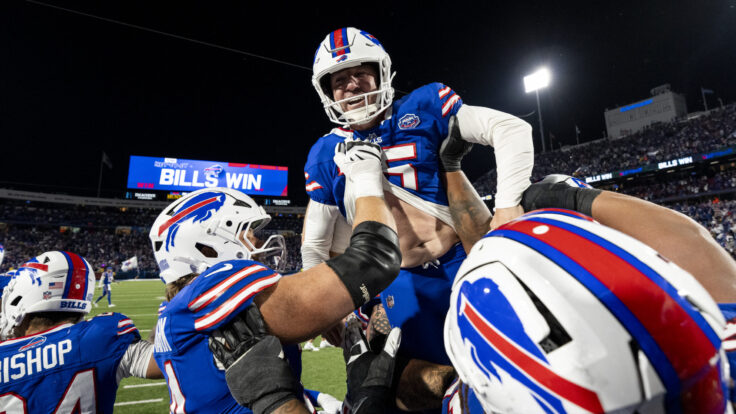
- The NFL Down Under: There’s a growing possibility that the NFL could open its 2026 season in Melbourne, according to a bunch of executives who spent last week in San Francisco. The league still hasn’t settled on the exact day that the Rams will play the 49ers in Oz, but my sources say it will occur during the opening week of the season, either on Wednesday or Thursday. If the NFL decides to hold the Melbourne game on Wednesday, NBC would carry the Super Bowl
champion Seahawks’ opening night game from Seattle on Thursday. But if the NFL decides to hold that Melbourne game on Thursday, NBC would carry the Seahawks on Wednesday.
The league is negotiating with streaming companies to carry the Melbourne game, which could mark the first time that the league opens its season in an international market—a serious escalation in its ongoing global moon
shot. - ESPN is on the clock: As soon as ESPN wrapped its NFL Live postgame show on Sunday, producers cut to Scott Van Pelt standing outside next year’s Super Bowl venue, SoFi Stadium in Los Angeles. Disney is going to carry that game—its first Super Bowl production since 2006—and its ad sales team has already held informal talks with buyers, of course. And on Monday, the day after the Super Bowl, they put proposals
in front of the NFL’s 46 official sponsors—from Pepsi and Anheuser-Busch InBev to Jersey Mike’s and Applebee’s. Those companies have seven days to decide whether they’re in or out. Then, on Monday, ad sales open to the entire market.
Super Bowl ads typically start to move during the upfront selling season in the spring, but the ad market is so frothy right now that buyers expect Disney to hold back a bunch of inventory for the premium-priced “scatter” market in early fall. NBC ad sales
chief Mark Marshall sold Sunday’s game for an average of $8 million per 30 seconds, a record high. But as the kickoff loomed and advertisers clamored to get in, prices for at least two spots jumped to $10 million per 30. - One reporter’s story: Just before last week’s bloodletting at The Washington Post, I ran into Ben Strauss in San Francisco. It turns out, I was the last person he spoke to face-to-face
before learning that his eight-year run at the paper was over. On yesterday’s episode of The Varsity, Ben walked me through how it unfolded.
On a company-wide Zoom, management announced the complete elimination of the sports section. They added that a handful of journalists might move into features to cover the cultural impact of sports—Ben’s wheelhouse, and something he was known for internally. For a moment, there was hope. But sitting in his hotel room in San Francisco’s
Tenderloin, he eventually received the email: He was out.
“There was a real vibe change inside the Post,” he said, recalling the last few months. “It went from, ‘There are going to be layoffs,’ to, ‘There are going to be decimating layoffs, especially in sports.’ … I wish we’d had the chance to try something more radical in how we think about sports and what we could do within sports, and could’ve gone out fighting. I’ll probably always have a little regret about
that.”
Still, he left on a note of what counts for optimism these days, “I worry about what happens even further if more people unsubscribe, because there are still people there who are going to do important and good journalism.”
|
Now, on to the main event… |
|
|
With a number of teams tanking and the usual load-management mishegas, the NBA
regular season is veering into spring training territory just as the league is trying to justify its multibillion-dollar value to media partners. As one executive recently put it, “The majority of the value of these media deals is centered around the postseason.” |
|
|
I was in an Uber on my way to watch the Lakers play the Spurs at Crypto.com Arena on Tuesday when I
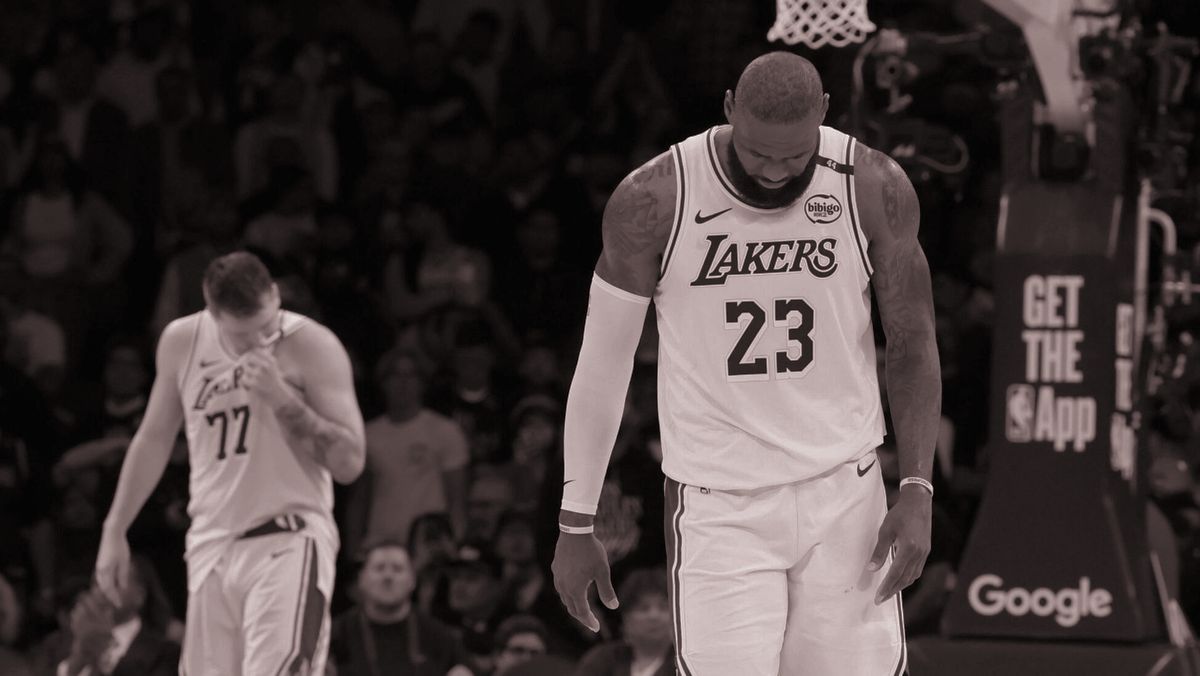
received a text alerting me that none of the Lakers’ five starters—LeBron James, Luka Dončić, even Austin Reaves—would be playing that night. Five days before the NBA All-Star Game, which is coincidentally also going to be held in L.A., the Lakers ran out a team that might not win a G League all-star game. Jake LaRavia and Kobe Bufkin started; Jaxson Hayes drew
the short straw and had to guard the Spurs’ second-year, all-universe center, Victor Wembanyama. I mean, even Bronny James put up 12 points in 25 minutes. The game went pretty much as you’d expect. Wemby dropped 40 in 26 minutes, and San Antonio coasted to a 28-point win.
Just a few days earlier, the Jazz had a seven-point lead on the Magic heading into the fourth quarter. Instead of playing to win, Utah kept three of its starters—Jaren
Jackson Jr., Lauri Markkanen, and Jusuf Nurkić—on the bench for the entire final quarter. Orlando won the game by three. And just this morning, the team announced that Jackson, their splashy trade-deadline acquisition, was going to have season-ending knee surgery.
Alas, these are the twin hemorrhoids of the NBA. The Lakers were employing the dreaded load management in order to keep a franchise guard and 40-something legend fresh for a
playoff push in the spring. The Jazz are tanking harder than an M1 Abrams for a shot at a better draft position. Not that fans, who are increasingly alienated by both strategies, see much of a distinction. The Lakers mess put Stephen A. in “think of the working man” mode. And on his podcast this week, Bill Simmons put the issue in a more thoughtful context:
“The regular season has real issues. It’s too long. Guys are getting hurt too much. … They’re not serving the larger picture of what fans want. How do we keep our players healthy? How do we have a competitive season from start to finish?”
League and media executives aren’t deaf to these complaints. NBA commissioner Adam Silver has taken several steps to try to keep teams from losing on purpose, including levying fines for holding players
out of games. But those penalties pale in comparison to the economic value on the other side of the equation—with modern sports science, players are incentivized to extend their careers much further into their 30s; and in a star-centric league, management generally has to accommodate their talent’s proclivities. Last season, the NBA fined the Jazz $100,000 for sitting Markkanen in several games, even though he was the team’s leading scorer. This year, the Jazz found a loophole by starting
Markkanen and not playing him in the fourth quarter. Either way, it’s hard to imagine that this overly irked owner Ryan Smith, whose club has already appreciated in value since he bought it for $1.6 billion in 2020.
The real problem is that the media companies that carry the NBA are making their own Faustian bargain—willing to swallow a regular-season game without LeBron, Luka, and Reaves if it means they’ll be healthy for the playoffs. In reality, this dynamic was fully
realized well before Amazon, ESPN, and NBC signed $76 billion worth of rights deals. “Our eyes were wide open,” one media executive said. And many have long ago made peace with tankonomics. “Regular season is nice-to-have,” another media executive told me. “It’s important because you get a lot of games and decent-size audiences. But the majority of the value of these media deals is centered around the postseason.”
Meanwhile, Silver is considering further steps to remediate tanking,
potentially even banning teams from the lottery for two years running, or locking in draft positions a month before the regular season ends. Load management is a different case, and more difficult to police—the association doesn’t want to dictate how teams and coaches use their players, which would inevitably inflame the union. The league’s recently enacted minimum threshold on games played for postseason award consideration hasn’t done much. Simmons raised the idea of cutting the number of
regular-season games from 82 to 70, but that would mean lost revenue—12 fewer gates, 12 fewer broadcasts, etcetera. Good luck getting that past the owners and the union. |
Once the basketball elite tackle the NBA oversupply issue in Los Angeles this weekend, they’ll have
other puzzles to solve. As regular Varsity readers know by now, Main Street Sports, home to 13 of the league’s local broadcast deals, will wind down operations after the regular season, putting those markets in limbo. The NBA has already initiated talks with streaming companies that have expressed interest in picking up a package of local rights. As I reported a couple of weeks ago, the league has taken meetings with Google/YouTube, Amazon Prime, Apple, ESPN, and DAZN.
Now, with less than
30 games left in the season, the post-Main Street future is coming into view, and it will indeed involve the streamers. The goal, according to sources, is to create a package of local streaming rights by next season. There’s little chance that such a package would include the rights to all 30 teams by opening tip in the fall, but most of the teams that have/had Main Street deals would likely be part of the package, including the Hawks, Hornets, Heat, Thunder, Cavs, Pacers, Pistons,
Timberwolves, Magic, Bucks, Spurs, Clippers, and Grizzlies.
Streaming executives have told the leagues that they’re more interested in buying an incomplete package of rights than negotiating local deals one team at a time. Within the next two years, all NBA teams could be part of that package—ensuring that fans everywhere will have continued, unfettered access to the Kobe Bufkin Regular-Season Starter Experience. |
On NFL media negotiations: “I can’t wait for the bidding war to begin! I think Fox and CBS
are in the most trouble with their packages because they are afternoon games and YouTube, Amazon, and Netflix will want them. I’m curious if Apple will be interested in buying anything from them. I think both Comcast and Disney will be able to keep their packages, but scripted will be impacted greatly by the price increase.” —A Varsity subscriber
On the NFL’s opening night: “Looking at the Seahawks’ 2026 home opponents, the Chicago Bears stand out as the clear
NFL Kickoff pairing. You can’t bank on Patrick Mahomes being available given the timing of his A.C.L./L.C.L. injury. The league won’t make the Cowboys open on the road in the Kickoff game two years running, nor schedule a Super Bowl rematch that early. And with the Rams and 49ers committed to Melbourne, you’re not slotting the Giants, Cardinals, or Chargers into that spotlight over the Bears.” —A sports executive
On media layoffs: “That was a great
Varsity chat with Ben Strauss, with refreshingly candid insight into the Washington Post debacle. I was recently impacted in a similar fashion, so it was interesting to hear how these things develop on an individual level.” —A Varsity subscriber |
We’re off on Monday for the federal holiday. Have a great long weekend, everybody. See you
Tuesday.
John |
|
|
Ace media reporter Dylan Byers brings readers into the C-suite as he chronicles the biggest stories in the industry:
the future of cable news in the streaming era, the transformation of legacy publishers, the tech giants remaking the market, and all the egos involved. |
|
|
Puck fashion correspondent Lauren Sherman and a rotating cast of industry insiders take you deep behind the scenes of
this multitrillion-dollar biz, from creative director switcheroos to M&A drama, D.T.C. downfalls, and magazine mishaps. Fashion People is an extension of Line Sheet, Lauren’s private email for Puck, where she tracks what’s happening beyond the press releases in fashion, beauty, and media. New episodes publish every Tuesday and Friday. |
|
|
Need help? Review our FAQ page or contact us for assistance. For brand partnerships, email ads@puck.news. You received this email because you
signed up to receive emails from Puck, or as part of your Puck account associated with {{customer.email}}. To stop receiving this newsletter and/or manage all your email preferences, click here. |
Puck is published by Heat Media LLC. 107 Greenwich St., New York, NY 10006 |
|
|
|