{{ 'now' | timezone: 'America/New_York' | date: '%b %d, %Y' }} |
|
|
|
Welcome back to The Best & The Brightest. I’m Leigh Ann Caldwell.
Lots of
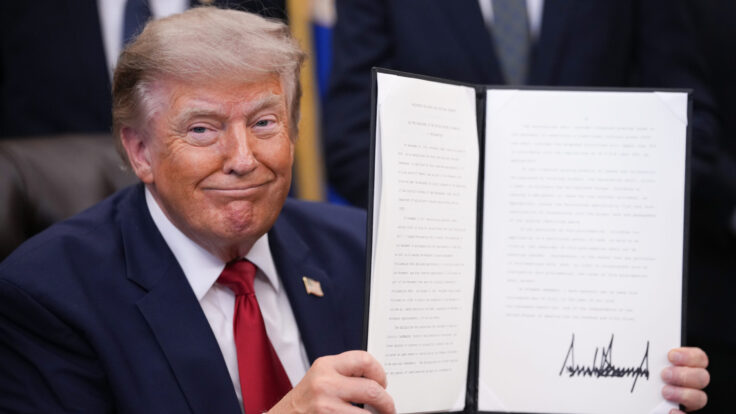
news today out of the Supreme Court, which gave President Trump a couple big wins (bans on transgender athletes, loosened campaign finance restrictions) and one big loss (birthright citizenship). Of course, the biggest SCOTUS news turned out not to be news at all: Earlier today, NPR quickly pulled down and retracted a report from longtime court reporter Nina Totenberg claiming that Justice Samuel Alito was retiring.
It turns out
that Totenberg had misheard an announcement by Chief Justice John Roberts. But there have been unfounded rumors on the Hill that Alito would retire at the end of this term, and the time is ripe under a Republican trifecta that may disappear after the midterms. Plus, a Supreme Court confirmation battle would certainly motivate the Republican base. (Not that the justices are thinking about politics, of course…)
If Alito does retire before the new term in
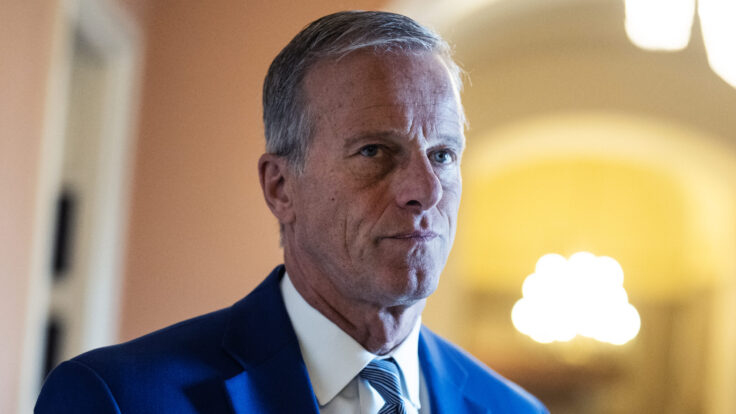
the fall, a senior Republican leadership aide told me that the Senate has “proven we can move quickly.” Brett Kavanaugh was confirmed just one month before the 2018 midterms, and Amy Coney Barrett was confirmed less than two weeks before the 2020 election. Get those shortlists ready!
In tonight’s issue, Ian Krietzberg returns with a close look at the White House’s constantly shifting, slightly schizophrenic approach to A.I. regulation.
(David Sacks is not a fan.) Plus, up top, my notes on the court’s campaign finance ruling, and Marianna’s inside reporting on the return of missing congressman Tom Kean.
Also mentioned in this issue: Rebecca Bennett, Mikie Sherrill, Sam Altman, Arthur Tellis, Anthony Aguirre, Elon Musk, Peter Harrell,
Chris McGuire, Michael Horowitz, and more. |
-
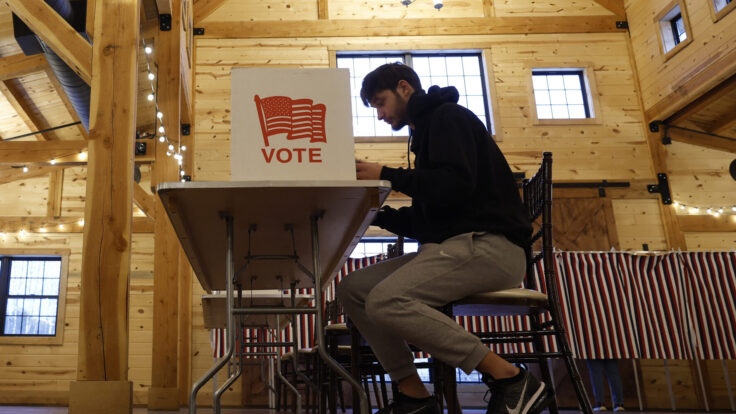
The G.O.P. campaign bonanza: Republicans on the Hill were practically giddy today after the Supreme Court’s ruling in National Republican Senatorial Committee v. Federal Election Commission, which lifted coordination limits on campaign committees, allowing party orgs like the D.S.C.C. and N.R.S.C. to freely coordinate spending with candidates. Historically, Republican Party committees have raised more money than their Democratic counterparts, but Democratic candidates’
fundraising prowess, driven by small-dollar donations and cheaper ad rates, have given them the financial edge. Now that advantage is slipping away. “This is a good day for Republicans,” one Democratic strategist admitted. “No denying that.”
The disparity is particularly striking between the D.N.C. and R.N.C. The D.N.C.’s donors checked out after the Biden reelection debacle, and the committee has since spent down its funds, allocating resources to state parties—a move
that has frustrated national Democrats who saw this SCOTUS decision coming and who don’t understand why the D.N.C. didn’t hold on to its cash to help candidates in the midterms. The result: The D.N.C. has hardly any money in the bank, while the R.N.C. now has a $100 million-plus cash-on-hand advantage and can deploy its war chest freely. Republicans I spoke to today haven’t been this excited about a SCOTUS decision since Citizens United.
|
|
|
|

| Marianna Sotomayor
|
|
- Tom Kean’s curious
return: The mystery of Rep. Tom Kean’s whereabouts was finally resolved today, when the New Jersey Republican returned to Congress following a previously unexplained four-month disappearance. In his brief remarks, Kean revealed that he had entered the hospital for testing several months ago and was diagnosed with severe depression. “As the over 48 million of my fellow Americans being treated for this illness have come to discover,” he said, “there is no
timeline for healing. There is no timeline for recovery.”
Even so, many of his fellow House Republicans wonder why Kean, who represents a tossup district in New Jersey, wasn’t a little more forthcoming about his diagnosis. His office didn’t disclose his absence until the press began asking questions, and the mystery only deepened after his aides began offering cryptic answers. Last month, his chief of staff told
reporters, “There’s no cameras where Tom is.”
Of course, given the party’s narrow majority, Kean’s absence made it harder for Republicans to pass legislation. But leadership staff was particularly irate over his lack of transparency. The notoriously silent congressman has since refused to answer any questions from Hill reporters, including why he didn’t
disclose his diagnosis sooner. (The D.C.C.C. launched a six-figure digital ad buy attacking Kean for trading stocks while in rehab.)
Democrats, for their part, smell blood in the water. “This is the self-serving culture in Washington that New Jerseyans are rejecting, and the kind of behavior they are sick and tired of from career politicians,” said Rebecca Bennett, a Mikie Sherrill–style moderate who is challenging Kean in November. Some Republicans are
worried that Kean is vulnerable, although others are practically daring Democrats to attack him after his announcement.
|
|
|
|
In the wake of a new federal review process for frontier model deployments, some in the
industry are worried that Trump & Co. might be handing the A.I. race to the Chinese. Can an administration known for chaos provide a sufficient vetting framework and process—stat? |
|
|
|
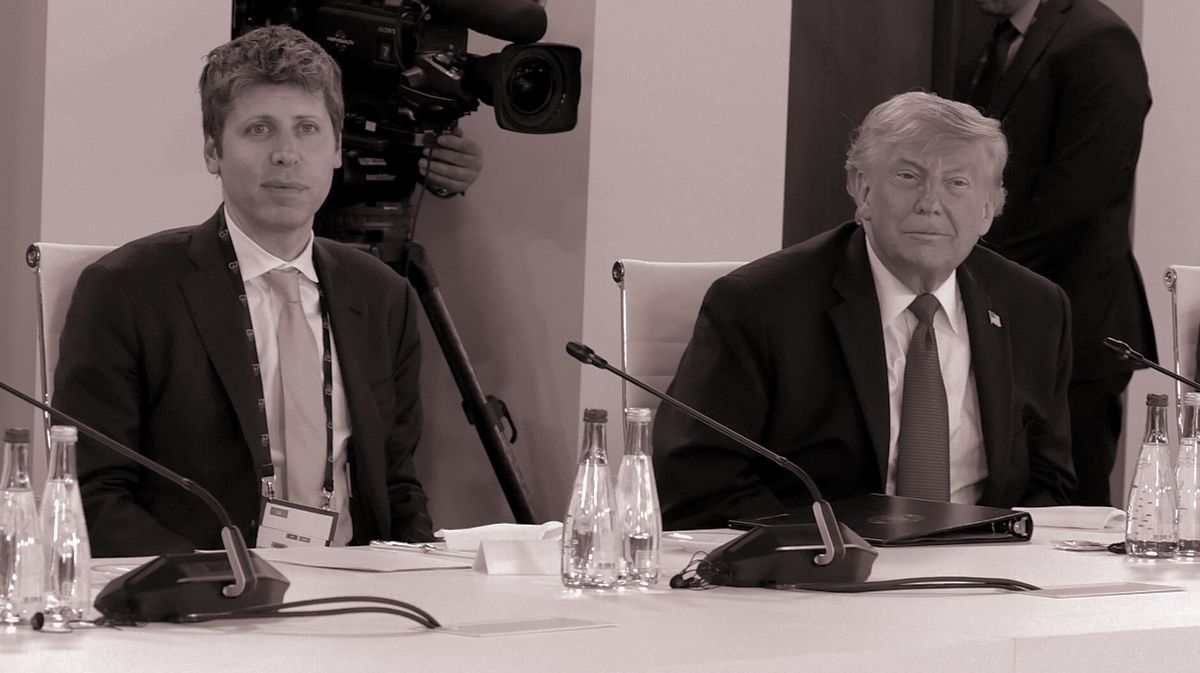
Last week, OpenAI announced its latest model release with slightly less fanfare than usual. Sure,
the industry is excited about GPT-5.6 Sol, Terra, and Luna. But, in a twist, the new model family is launching only as a limited preview “for a small group of trusted partners” vetted by the U.S. government. According to a company blog post, the staggered rollout is a “short-term step” while OpenAI works with the Trump administration to comport with the White House’s
suddenly very hands-on approach to A.I. regulation: “We don’t believe this kind of government access process should become the long-term default. It keeps the best tools from users, developers, enterprises, cyber defenders, and global partners who need them.”
It’s all somewhat head-spinning. Until recently, the administration was ostensibly gung ho about removing bureaucratic obstacles to A.I. adoption. But everything changed after Anthropic previewed Mythos, which
demonstrated advanced cybersecurity capabilities. Earlier this month, the government leveraged export controls to force Anthropic to essentially shut down its most advanced models—an outcome that was surely lingering in Sam Altman’s mind when he struck this latest agreement. (On Friday, Anthropic said it was
permitted to redeploy Mythos “to a set of U.S. organizations that operate and defend critical infrastructure.” Meanwhile, Fable, the publicly available version of Mythos, remains offline.)
For industry observers, the administration’s focus on GPT-5.6 signaled that its newish regulatory posture was not simply designed to punish Anthropic. On the contrary, said Arthur
Tellis, a senior technology fellow at the Institute for Progress, this “improvised pseudo-regulatory regime” is clearly the result of a growing recognition of “the very real security risks posed by broad access to general intelligence”—risks, he said, that were “anticipable” a year ago or longer. Interestingly, Tellis added, “the national security enterprise now appears to be driving more of the government’s policy response,” largely by controlling access to these tools rather
than trying to shape the technology itself. (OpenAI did not return a request for comment, and neither Google nor Meta commented on whether the latest moves have affected their approach to frontier model deployment.)
The volte-face has been particularly galling for former White House A.I. czar David Sacks, who had been instrumental in Trump’s original
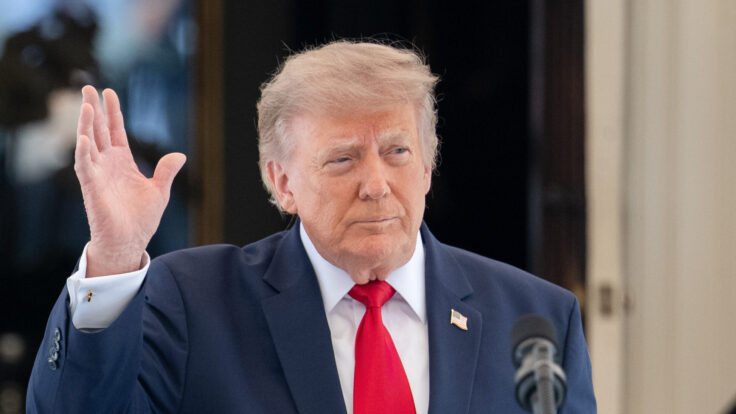
A.I. Action Plan. “A year ago, President Trump declared that America was in a global A.I. race and that the way to win it was to be pro-innovation, pro-infrastructure, pro-energy, and pro-export,” Sacks wrote on X over the weekend.
“President Trump was exactly right; we deviate from that strategy at our peril.”
Others have voiced more-nuanced criticism. Anthony Aguirre, the executive director of the Future of Life Institute—which authored the famous 2023 letter calling for a six-month pause on A.I. development, signed by Elon Musk and 33,000 others—told me
that the policy shift is “hugely good news” for the world. At the same time, he said, the lack of clarity surrounding A.I. governance and policy is understandably frustrating for the industry. “I’m not someone who tends to go through life having a huge amount of sympathy for the A.I. companies, but I do a little bit here,” he said. “They have no idea what they’re supposed to do. Everyone will be better off if we have a well-thought-through structure for this.” |
Indeed, there’s a feeling in the industry that the government is essentially making up new rules in real
time. Trump’s early June executive order had described a voluntary procedure for A.I. labs to work with the government on predeployment. Even at the time, I was cautioned by well-wired sources that the process was not, in fact, truly voluntary—which is exactly what appears to be playing out now. “We’re seeing the Anthropic action
probably have one of its intended effects—of bringing the other A.I. frontier labs to heel,” Peter Harrell, a former White House economics advisor, told me.
But this state of affairs may also be temporary. As Harrell pointed out, a process in which the U.S. government essentially handpicks the customers that labs are allowed to serve will ultimately “gum up U.S. and global deployment of U.S. models in a way that even folks in the administration who are pro-regulatory
would realize will only disadvantage the U.S. vis-à-vis the Chinese.” If the administration doesn’t abandon its approach in favor of a transparent legislative framework within a few weeks, Harrell predicted, thousands of potential customers in allied countries could instead turn toward Chinese models, whose developers have been laser-focused on catching up to the U.S. frontier. Chris McGuire, a senior fellow for China and emerging technology at the Council on Foreign
Relations, put a finer point on it, saying: “This is how we lose.”
Of course, the administration’s customer-review process also threatens cashflow for the so-called hyperscalers, which could lose out on much-needed revenue with a constrained client base. Over the short term, Tellis said, “the flywheel is kind of sustainable” given how well-capitalized these companies
are—but the fear is that the “short term eventually becomes the long run.” Michael Horowitz, a senior fellow for tech and innovation at the Council on Foreign Relations, echoed this sentiment, telling me that “there could be economic and security risks from delaying deployment for too long. This creates an obvious tension that the Trump administration will have to navigate.”
That’s not to say that controlled model releases and risk-mitigation mechanisms are incompatible
with industry growth. “It just requires patience, discipline, expertise, statecraft, and adaptive institutions,” Tellis told me. “It’s not beyond our control or our capacity. But I’m not that optimistic that anyone can really rise above their atavistic urges here.” |
|
|
|
Join Emmy Award-winning journalist Peter Hamby, along with the team of expert journalists at Puck, as they let you in on the
conversations insiders are having across the four corners of power in America: Wall Street, Washington, Silicon Valley, and Hollywood. Presented in partnership with Audacy, new episodes publish daily, Monday through Friday. |
|
|
|
Unique and privileged insight into the private conversations taking place inside boardrooms and corner offices up and down Wall
Street, relayed by best-selling author, journalist, and former M&A senior banker William D. Cohan. |
|
|
|
Need help? Review our
FAQ page or contact us for assistance. For brand partnerships, email ads@puck.news.
You received this email because you signed up to receive emails from Puck, or as part of your Puck account associated with {{customer.email}}. To stop receiving this newsletter and/or manage all your email preferences, click here.
|
Puck is published by Heat Media LLC. 107 Greenwich St., New York, NY 10006 |
|
|
|
|