{{ 'now' | timezone: 'America/New_York' | date: '%b %d, %Y' }} |
|
|
Hi, and welcome back to Line Sheet. I hope you are already off and enjoying time with your
families. We are doing the same and will not publish Wednesday or Thursday. Merry Christmas! I’ll be back on Friday with a super fun end-of-year mailbag, the final issue of the year.
In today’s issue, you’ll find my recent exchange with Lauren Collins about the power of Uniqlo, a company that she recently profiled for
The New Yorker. Lauren, who is based in Paris, is one of the best writers on fashion around, mostly because she is not a fashion writer. Up top, too, the latest on Saks Global, including a Marc Metrick update; plus Sarah Shapiro’s notes on the return-ish of fur and why 2026 is going to be even bigger for resale.
Mentioned in this issue: Uniqlo, Lauren Collins, Tadashi Yanai,
Clare Waight Keller, LifeWear, Jonathan Anderson, Christophe Lemaire, Toray, Saks, Marc Metrick, Richard Baker, The RealReal, Alaïa, Miu Miu, and many, many more… |
Three Things You
Should Know…
|
- As
the Saks turns: As I mentioned yesterday, sources have told me Saks Global C.E.O. Marc Metrick has not been engaging with some vendors and employees in his usual manner during the past few weeks. Yesterday, on his private Instagram account, he reposted a meme of a wheelchair up in flames with the line, “me finally reaching the end of the year,” at the top. I reached out to a rep at Saks Global and to Metrick directly to ask about his current position with the company, and
also about the post, which I viewed myself and is being passed around by employees who still have access to Metrick’s IG account. (A source close to Saks said that Metrick accidentally reposted it.) Saks Global had no comment, and Metrick did not respond.
Meanwhile, on Tuesday, Saks Global chairman Richard Baker sent a note to employees, which I was able to review, addressing recent news coverage indicating that the company has hired advisors with an expertise in debt
restructuring. “I know that seeing headlines like these can be unsettling,” he said. “As the world’s largest multi-brand luxury retailer, our financial position naturally attracts public attention. … We will continue to share updates as appropriate.”
Baker, a consummate dealmaker, is presumably doing everything in his power to resolve the situation. A person familiar with the business told me that Saks Global currently has $500 million to $800 million in vendor payments due and is holding
$100 million to $300 million in customer refund payments. Asked about those numbers, a rep for Saks Global sent me the following statement: “Together with our key financial stakeholders, we are exploring all potential paths to secure a strong and stable future for Saks Global and advance our transformation while delivering exceptional products, elevated experiences and personalized service to our customers. Importantly, opportunities in the luxury market remain strong, and Saks Global continues
to play a distinct and enduring role within it.”
|
|
|
A MESSAGE FROM OUR SPONSOR |
Fashion's full-funnel future is here 🚀 Amazon Ads is revolutionizing fashion advertising with AI-powered full-funnel campaigns that launch themselves. Our AI-powered tools help you: • Understand your brand and craft your story automatically • Optimize across awareness, consideration, and
conversion in real-time • Reach over 300M U.S. ad-supported audiences where they shop and stream With 90% of fashion audiences already engaging with Amazon Ads, you're not just reaching customers. You're reaching customers ready to discover and buy. LEARN MORE |
|
|

| Sarah Shapiro
|
|
- The resale is coming:
While the 2025 holiday shopping season is in its final, frenzied hours, resellers are getting ready for January. Post-holiday, when consumers are looking to make room in their closets to accommodate whatever shiny new items they received, is often the busiest time of the year for The RealReal, Poshmark, Vestiaire, etcetera. The resale market is still surging, as we’ve written about plenty, and the rules of the game have evolved. Increasingly, users looking to resell on such platforms are
forgoing the consignment model. Buyers at a number of these companies tell me that there’s been an increase in requests for payment upon receipt in Q4. Fashionphile, an online secondhand seller that pays upfront, told me it has seen a 9 percent year-over-year increase in offers made from October through December. That could be a warm-up for next month. January 2025 remains Fashionphile’s largest month on record for receiving merchandise.
- The fur surge:
A friend recently sent me a photo that seemed to crystallize a trending cultural reversal on fur: four women at the same holiday party, all wearing nearly identical light-colored fur jackets. It wasn’t so long ago that fur seemed to be headed the way of leaded gas, plastic shopping bags, and cigarettes (although those too seem to be coming back). Retailers and brands were proclaiming bans and pulling back from merchandising and marketing the material. But fur appears to be… uncanceled. Alaïa and
Miu Miu both sent fur looks down the runway for Fall/Winter 2025. And fashion-specific search engine Tagwalk reports that there was a 200-plus percent increase in fur jackets on the runway versus 2024. According to Google Trends, U.S. search interest for “fur” is higher this year relative to previous winter peaks. Perhaps last year’s “mob wife” micro-trend had legs.
|
|
|
The Japanese retail giant has become the fashion staple seller of choice for a large swath
of the discerning, clothes-buying global populace. Now, after a slow start in North America, its ambition to become the biggest fashion seller in the world appears within reach. |
|
|
I always say that Uniqlo is successful despite itself. Yes, the marketing is totally strange and confusing.
And the Japanese retailer’s U.S. presence is still just a fraction of its global footprint. But Uniqlo’s low-priced Heattech turtlenecks and banana boat bags have managed to penetrate several layers of consumer culture, all the way out to the suburbs, even if nobody in America gets LifeWear (and they never will). After a decade on the precipice of a broader U.S. breakthrough, the brand finally seems poised for ubiquity.
What makes it work? Lauren Collins recently
reported on the scale and state of Uniqlo’s ambitions for The New Yorker, and I was thrilled to be able to sit down with her for an episode of Fashion People to
examine how founder Tadashi Yanai, the billionaire chairman of Uniqlo’s parentco, managed to engineer the modern version of Gap, a company he lusted after for years. As usual, this interview has been lightly edited and condensed for clarity. |
Fashion’s Universal Donor
|
Lauren Sherman: Can you walk us through what Uniqlo is to
you, and its current place in the culture?
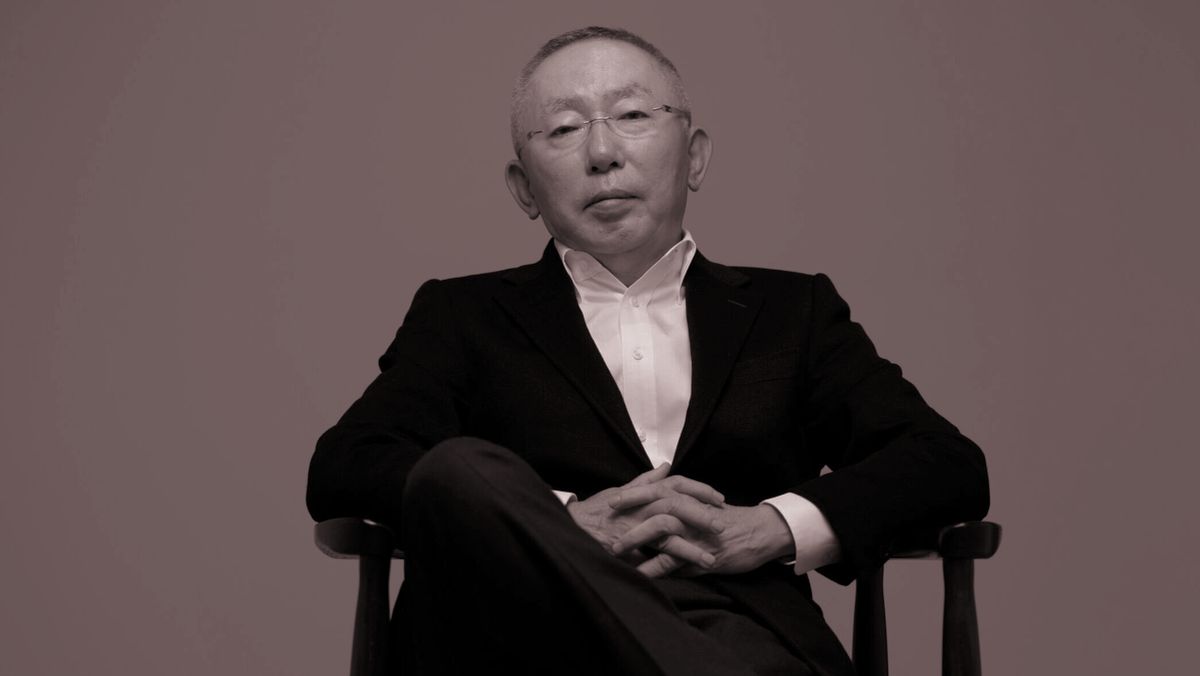
Lauren Collins: Uniqlo was founded in 1984 by Tadashi Yanai, who’s still at the top of the company. He’s made several performative efforts at retiring and turning the reins over to someone else, but he still runs the show, and he is the second-richest man in Japan at this point. The company has more than 2,500 stores in Asia, Europe, and North America. One in four Japanese people is said to own a Uniqlo puffer.
So this is
ubiquitous in Japan, and becoming increasingly so everywhere. This is something that I think is important to home in on. Last year, Fast Retailing, which is the holding company that controls Uniqlo, had its best year ever, generating close to $20 billion in revenue and $3 billion in profit. And this makes it the world’s third-largest apparel manufacturer and retailer. The company’s stated goal is to be the number one fashion company in the world, and they’re really making strides in that
direction.
I see Uniqlo as kind of the universal donor of fashion. Uniqlo can mix unobtrusively with any lifestyle, any aesthetic. I think if you were to think of a brand that almost anyone would have in their closets, at least in places where it’s accessible, Uniqlo would be a really good candidate for that.
It’s fascinating because so much of what has made Uniqlo work globally I find incredibly difficult to access as an American. When they first
launched in the U.S., the fashion industry people got on board because a) they wanted something to replace Gap, and b) Heattech is amazing. Was it that they have access to good textiles? Or do you think it’s more of the Japanese way of doing things?
They have a partnership with a manufacturer called Toray. Basically, it’s a two-way street. When they want to make something, they can go to Toray and be like, What kind of fabric do you have or might you be able to create that
would achieve these technical specifications? But on the other hand, Toray also comes to them and is like, Hey, we’re creating this new thing. How do you think you might be able to incorporate it into fashion? So they have a huge advantage in that way. They’re not outsourcing the technological side of the business.
|
|
|
A MESSAGE FROM OUR SPONSOR |
Fashion's full-funnel future is here 🚀 Amazon Ads is revolutionizing fashion advertising with AI-powered full-funnel campaigns that launch themselves. Our AI-powered tools help you: • Understand your brand and craft your story automatically • Optimize across awareness, consideration, and
conversion in real-time • Reach over 300M U.S. ad-supported audiences where they shop and stream With 90% of fashion audiences already engaging with Amazon Ads, you're not just reaching customers. You're reaching customers ready to discover and buy. LEARN MORE |
|
|
They want to be the biggest apparel retailer in the world, but Uniqlo’s e-commerce
doesn’t really work. Everybody makes the same things they make. They may make it slightly better, but I’m not sure that’s enough.
What’s kind of interesting is, in Japan, Uniqlo is the Walmart/Amazon option. It’s the socks and underwear, and the prices are even cheaper than they are elsewhere. And I learned a word, “Unibare.” It’s a Japanese word for the moment when somebody realizes you’re wearing Uniqlo and not a more expensive brand.
When Fast Retailing was
making their first big push into the U.S., they kind of thought their way in was going to be buying a U.S. brand that was already well-established. Mr. Yanai had this personal attachment to American culture from these East Coast preppy staples that became really big in postwar Japan. So he made a big play for Gap. He even wanted to buy J.Crew at one point. And at the time people were like, Why are you trying to do this? And he said, very flatly, It’s not realistic for us to
establish hundreds or thousands of stores from the ground up. We want to buy a big chain business.
That never came to fruition, and now they’re trying to do exactly what they said would be foolhardy: to try to go in these markets that have Gap and have J.Crew. Obviously, it’s working. Their revenues have been up, their profits have been up, and particularly in the North American market, which they’re now focusing on.
Uniqlo has invested in and
collaborated with high-end designers like Jonathan Anderson, Christophe Lemaire, Jil Sander, and Clare Waight Keller. What do they bring to the Uniqlo brand overall?
I think it’s an attractive proposition for both sides. For Uniqlo, by hiring these designers, they bring a touch of glamour and they elevate the brand. If you can get something that’s Walmart-ish priced but designed by someone who also made Meghan Markle’s wedding dress, which one are you going to
pick? When I talked to Clare Waight Keller, she seemed to be like a kid in a sandbox with this job. I think it’s kind of thrilling, when you’ve been in a very rarefied environment, to be making clothes that you see people wearing. She spent so much of her career making clothes that, in large part, hang in closets. And now she’s kind of dressing the masses. Maybe some people would see that as a step down, but she seemed very excited about the intellectual and professional challenges that it
presents.
Uniqlo has a lot of resources. Clare Waight Keller was also very, very keen to emphasize to me that in a moment where, in European high fashion, women have kind of gone extinct in the highest creative positions. She was like, I’m a female designer, and I’m at the head, creatively, of the third-biggest fashion company in the world. You could see it as a demotion, but you could also see it as a promotion.
|
What We’re Reading…
and Looking At…
|
Merry Christmas from Sofia Coppola.
[Instagram]
What happens after your little brand becomes Instagram famous? Paloma Wool explains. [N.Y. Times]
I have been to Target way too many times over the past few weeks, and the store is in desperate need of a
merchandising overhaul. There were two separate party dress sections, three separate activewear sections, five different places you could buy jeans—this makes zero sense. [WWD]
Don’t wear your tie backward, it’s dumb. [N.Y.
Times]
I really didn’t need to know that Brad Falchuk was this poor of a dresser. [Deuxmoi]
Cafe Gitane is closing! [Eater] |
Until Friday,
Lauren
P.S.: We use affiliate links because we are a business. We may make a
couple bucks off them. |
|
|
Puck’s daily art market email, anchored by industry expert Marion Maneker, offers unparalleled access to the mega-auctions and
galleries, elite buyers and sellers, and the power players who run this opaque world. |
|
|
Puck founding partner Matt Belloni takes you inside the business of Hollywood, using exclusive reporting and insight to explain
the backstories on everything from Marvel movies to the streaming wars. |
|
|
Need help? Review our
FAQ page or contact us for assistance. For brand partnerships, email ads@puck.news.
You received this email because you signed up to receive emails from Puck, or as part of your Puck account associated with {{customer.email}}. To stop receiving this newsletter and/or manage all your email preferences, click here. |
Puck is published by Heat Media LLC. 107 Greenwich St., New York, NY 10006 |
|
|
|