Hi, and welcome back to Line Sheet. In the early 1970s, when Les Wexner was busy building The Limited, and Don and the Doris Fisher were stocking The Gap with Levi’s and records, a guy named Dick Hayne and his then-wife, Judy Wicks, opened Free People in West Philadelphia, where there were lots of college kids. The concept wasn’t so different from The Gap’s at the time: records, jeans, and in this case… plants. That West Philly store eventually became Urban Outfitters, and from that sprung Anthropologie, Terrain, and… Free People (again).
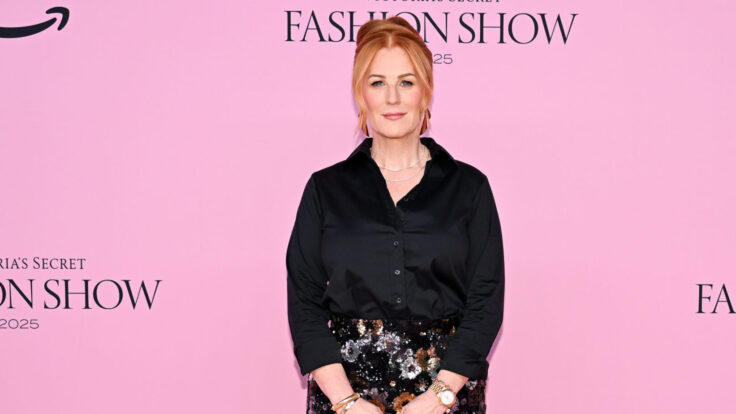
In today’s issue, Sarah Shapiro notes the remarkable resilience of the Urban Outfitters empire and identifies what exactly allowed Hayne & Co. to trudge forward as other so-called mall brands fell out of fashion. (The Limited ceased to exist almost a decade ago.) For those on the luxury beat, Sarah has more thoughts on the tariffs sitch. And for the big-box fans, an insider view of the situation at Target. (Yes, we also thought the Kate Spade New York collaboration was inexcusably lame.) Up top, I’ve got a little bit of H.R. news from Europe and word on an interim E.I.C. appointment at Vanity Fair. Oh, and congrats to former Fenty designer Adam Selman, who was named executive creative director at lingerie incumbent Victoria’s Secret this afternoon. More on the changes at VS in tomorrow’s Line Sheet.
Mentioned in this issue: Vanity Fair, Ramon Ros, Sidney Toledano, Matthieu Blazy, more on tariffs, Target’s Kate Spade collab, David and Richard Hayne, Nuuly, Reclectic on TikTok, Marisa Meltzer, Quince, Simeon Siegel, and many more…
|
|
|
|
A MESSAGE FROM OUR SPONSOR
|
The RealReal is where Real fashion people shop. Why? It’s the world’s most trusted and beloved reseller of authenticated luxury goods. They have everything from vintage Saint Laurent and archival Balenciaga to stuff you practically just saw on the runway. So why buy something new when you can just buy something new-to-you?
Right now, you can get $25 off your first purchase by visiting therealreal.com/fashionpeople or any store.
|
|
|
Four Things You Should Know…
|
- No rush: Word is that Daniel Kile, Vanity Fair’s deputy editor under outgoing editor-in-chief Radhika Jones, will serve as interim editor-in-chief of the title as Condé Nast conducts its search for her successor. A rep for Vanity Fair confirmed the appointment. What else do you want to know?
- New notables in Paris and Milan: On Monday, LVMH dropped some minor, but not insignificant, C.E.O. announcements. As I previously suggested might happen, Ramon Ros, the former C.E.O. of LVMH China, is heading to Fendi as C.E.O. He’ll report to Sidney Toledano (whose title in the press release is “senior advisor to the LVMH Group chairman,” a.k.a. Bernard Arnault, given that Toledano’s return to manning the Fashion Group is only temporary). Some are speculating that Ros’s appointment will be followed by a new designer appointment at Fendi, but there are conflicting reports. Others close to the company say LVMH is committed to keeping Silvia Venturini Fendi in a dual-gender design role through at least the end of the year. (Silvia no longer has a stake in the business, so her arrangement is as an employee.) Given how well her womenswear collection was received, I assume it would take extenuating circumstances to accelerate a change. Replacing Ros in China is Daniel DiCicco, who’s been leading global retail at Apple for the past seven years. I’m not sure which is tougher: ushering Louis Vuitton through the situation in China, or ushering Apple retail through the tariff situation. Elsewhere at LVMH, Charlotte Coupé, who worked with Kim Jones, Virgil Abloh, and Pharrell at Louis Vuitton, is headed to Kenzo. (I’ve long wondered whether LVMH would consider selling Kenzo, but the fragrance business might be successful enough to warrant keeping it.)Meanwhile, over at Chanel, Matthieu Blazy is busy building out the design studio. Andrew Heather, who was once cast to relaunch the French fashion house Revillon, is joining the team, WWD reports. Heather is seasoned: He started his career as an assistant to Princess Diana favorite Bruce Oldfield, then spent time with Alexander McQueen at Givenchy, and most recently worked under John Galliano at Maison Margiela. To me, this indicates that Blazy is quite serious about the work, which… is why they hired him.
- Sarah on tariff math silver linings: As damaging as Trump’s trade wars may be for the fashion industry, there are a few nuances worth keeping in mind about how retailers actually pass on price increases to consumers. For one, as anyone who has worked in the industry will tell you, tariffs are applied to the declared value of imported products, not the price set by wholesalers or the even higher price set by retailers.Consider a 20 percent tariff on a $1,000 bag, which forces a wholesaler to pay a $200 customs duty. That’s a pretty significant price hike. But from the customer’s point of view, that extra $200 equates to a 10 percent increase if the bag retails for $2,000. That’s one reason that Marc Metrick, the C.E.O. of Saks Global, isn’t too nervous about tariffs impacting the price of luxury goods. Tariffs on European imports from the likes of Chanel, Louis Vuitton, and Gucci aren’t calculated based on what those brands charge in the store.
The more intermediaries between importers and customers, the more opportunities for any margin compression to be spread across multiple parties. In theory, bigger retailers should have some leverage to negotiate on pricing with their partners. The landing cost includes the first cost (a.k.a. factory cost), and the total cost of materials, packaging, and labor to produce—plus the shipping and handling and duties before your markup. Different product constructions face varying duty rates, creating opportunities for strategic sourcing and classification.
The ultimate retail equation balances landing costs against consumer price sensitivity and necessary margins to cover overhead while maintaining profitability. So understanding the nuances of tariffs in this context can create meaningful advantages and help calm pricing anxiety. —Sarah Shapiro
- Sarah on Target missing the bull’s-eye: The once beloved big-box retailer is suffering from an identity crisis that’s eroding any competitive advantage it might have once had. Once known for affordable style and innovative collaborations, Target is now caught in a downward spiral of declining traffic, uninspired partnerships, and strategic missteps.The latest evidence: Foot traffic was down 14 percent in February and 9 percent year over year for the same month, and “Target boycott” now pops up as the first result when searching for the retailer on Instagram. (Costco, which resisted the Trump administration’s attacks on its D.E.I. program, has seen its foot traffic increase for a dozen-plus consecutive weeks.) There’s little excitement for Target’s upcoming Kate Spade collab, especially after last year’s Kate Spade x Urban Outfitters collab didn’t revive the brand as hoped. (Ralph Lauren and Coach have captured more of this audience.) Even the once-promising Ulta shop-in-shop partnership has stalled out at 600 locations, leading to chatter about whether the brand partnership—hatched by Target C.E.O. Brian Cornell and then-Ulta C.E.O. Mary Dillon in 2020—will be renewed later this year.
All these various woes are evident in Target’s stock price, which has declined about 50 percent in the last 12 months. (Meanwhile, Costco stock is up nearly 30 percent in the same time frame.) Could delayed Easter sales—the holiday falls on April 20 this year, as opposed to March 31 last year—turn things around? Maybe. Industry-wide, Easter revenue is expected to be up over last year, with the National Retail Federation expecting $23.6 billion versus $22.4 billion in 2024. But Target’s problems aren’t isolated, either. —Sarah Shapiro
|
|
And now for the main event…
|
|
|
|
Urban Outfitters’ parentco is more than the sum of its boho-cheap parts, with an incubator spinning off new, synergistically inclined businesses—like their new secondhand concept, Reclectic—to monetize more of the product life cycle, and of course, capture more customer data.
|
|
|
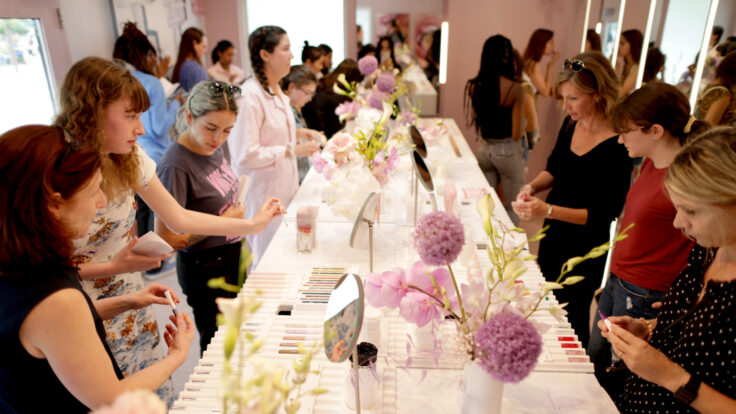
Urban Outfitters’ newest experiment, Reclectic, has been all over TikTok lately, with videos showcasing the chain’s distinctive brown shopping bags stuffed with clothes at tariff-defyingly cheap prices. The secondhand/outlet concept, which has just five locations so far (a sixth is opening in Arlington, Texas, in May), has been a revelation among shoppers looking for deep discounts on merchandise from across Urban’s brand portfolio. In one video, a woman boasts about snagging a Farm Rio sundress, usually $375 (and rentable for far less from Nuuly), at Reclectic for just $15. The warehouse-style spaces are sparse and a little chaotic—there are no dressing rooms—but from a retail business perspective, it’s sorta brilliant.
The Reclectic concept is the latest business to emerge from Urban’s unique incubator model, which spins out potentially complementary businesses for exploratory “test and learn” pilots. It’s a model that allows Urban’s entrepreneurs in residence the flexibility to adapt to shifting consumer preferences and study emerging markets without diluting its established brands. When experiments succeed, Urban integrates them to capture more value across the product life cycle, from full-price retail at Anthropologie to rental at Nuuly and secondhand (or deeply discounted) at Reclectic. If they fail, Urban can deprecate them quickly.
|
|
|
|
A MESSAGE FROM OUR SPONSOR
|
Did you know that your consignment has at least a 33% chance of preventing a shopper from buying something new? That means you’re helping to curb demand for items that create waste and contribute to emissions just by selling what you’re no longer using.
Start selling now by visiting therealreal.com/fashionpeople.
|
|
|
Reclectic is a particularly innovative attempt to solve the garment life cycle problem, generating revenue from what would otherwise become waste—unsold inventory, customer returns, and retired rental garments that would exit Urban’s value chain. To wit: While other retailers rely on T.J.Maxx and Ross to offload old inventory, Reclectic only sells Urban brands. Reclectic, which operates as an independent company, uses color-coded tags for condition assessment and flat pricing at up to 60 percent off retail. (Its online presence is currently managed via a Poshmark page instead of a full e-commerce investment, though I’d venture that will change if Urban decides the Reclectic experiment is worth making permanent.)
It’s also a smart complement to Nuuly, the subscription rental program that fills the space between Urban’s full-price stores and their secondhand/outlet store. (Nuuly achieved profitability last quarter as a rental service after launching in 2019.) Notably, David Hayne, the son of Urban C.E.O. and co-founder Richard Hayne, serves as both president of Nuuly and C.T.O. of Urban Outfitters, suggesting that the parentco views Nuuly not just as another retail channel, but as a technology and data play from which all the company’s brands can benefit. Paired with Reclectic, it’s Urban’s attempt to take multiple bites of the same apple.
|
|
Urban, which started in the early 1970s as Free People, a record and plant store in Philadelphia, now comprises an ever-widening retail ecosystem designed to capture the hearts and disposable income of young people, urban and otherwise. In addition to Reclectic, Nuuly, and of course, the flagship Urban Outfitters, the group also includes Anthropologie, Anthropologie Weddings, Free People, FP Movement, Terrain, and the restaurant/event space concept Menus & Venues. The average Urban consumer is shopping for bridal shower and Easter dresses at Anthropologie, picking up a gym look from FP Movement, and renting a brunch look from Nuuly that they may love enough to buy. Now they can return the rental Nuuly dress but find it later on the racks of Reclectic, slightly worn, and purchase it for $20.
That deep understanding of retail consumer behavior informs the Reclectic experience, too. The decision to model shopping at Reclectic as a sort of treasure hunt emerged from careful observation of what drives both social sharing, on platforms like TikTok, and purchasing behavior across their portfolio of brands. By studying which price points drive conversion, and analyzing what Nuuly customers are willing to pay to rent second-life garments, Urban has created something genuinely new… and distinctly Gen Z shopping. While other retailers treat excess inventory as a liability, Urban recognized it as their next hit, simultaneously solving a business problem and creating a new stand-alone concept.
|
|
|
|
Reclectic is currently managed by an internal team from Urban, with Joanna Matthy as the head of stores and operations. Will it become Urban’s next major rollout? The crowds and social media accounts following Reclectic’s handful of locations certainly suggest it’s a laboratory concept worth watching. As retail analyst Simeon Siegel recently told me, Urban has the ability to test and learn, move forward quickly, and know when to cut their losses.
|
During a recent airport visit I was bummed by the shrinking newsstand, once my favorite part of travel. Maybe they need to rethink their merchandising strategy? Marisa Meltzer tracks the rise of niche magazines and highlights 10 indies worth a look. [ NY Times]
When I last spoke to Emily Holt, owner of Hero Shop at Marin Country Mart, she mentioned that Clarks Wallabees were gaining momentum at the boutique. Of course, the big fashion brands (Loewe) have been on this staple for a couple of years, but now Free People, which has turned out some interesting collaborations as of late, has made their own version. [ Instagram]
Dupe legal action rarely goes anywhere, but since Quince is allegedly scraping e-commerce sites for bestseller data and then re-creating those products, I’m watching what happens in the case of Deckers Outdoor Corp. v. Last Brand Inc., the latter of which was Quince’s pre-rebrand name. [ The Fashion Law]
Remember the accounting error that resulted in Macy’s delaying their quarterly results? That same error also inflated the EBITDA that cash bonuses were based on and caused them to overpay executives to the tune of $600,000 or more, which Macy’s is now clawing back. [ Retail Dive]
|
|
Until tomorrow,
Lauren
P.S.: We are using affiliate links because we are a business. We may make a couple bucks off them.
|
|
|
|
Puck fashion correspondent Lauren Sherman and a rotating cast of industry insiders take you deep behind the scenes of this multitrillion-dollar biz, from creative director switcheroos to M&A drama, D.T.C. downfalls, and magazine mishaps. Fashion People is an extension of Line Sheet, Lauren’s private email for Puck, where she tracks what’s happening beyond the press releases in fashion, beauty, and media. New episodes publish every Tuesday and Friday.
|
|
|
Need help? Review our FAQ page or contact us for assistance. For brand partnerships, email ads@puck.news.
You received this email because you signed up to receive emails from Puck, or as part of your Puck account associated with . To stop receiving this newsletter and/or manage all your email preferences, click here.
|
|
Puck is published by Heat Media LLC. 107 Greenwich St, New York, NY 10006
|
|
|
|