{{ 'now' | timezone: 'America/New_York' | date: '%b %d, %Y' }} |
|
|
Hi, and welcome back to Line Sheet. It’s so so-called cold in Los Angeles that I am
wearing my double-faced cashmere, and hip-length puffer from the early Luke-and-Lucie era of Jil Sander.
In today’s issue, Sarah “SShapiro@puck.news” Shapiro is here with the story of Los Angeles–based Jamie Haller, whose brand became a pandemic era hit thanks to the designer’s ability to make incredibly comfortable,
nice-looking shoes. (Sounds easy, but it’s not.) Now, she’s making a real go of it with ready-to-wear: Sarah has deets on the biz and its potential. Plus, up top, a quick take on Mark Guiducci’s first Vanity Fair cover (as promised, it features boys) and some additional feedback on Emily Weiss’s garage sale. Also, Sarah looks into the return of the Rockstud and the departure of NBA star Steph Curry from Under
Armour.
Mentioned in this issue: Jamie Haller, Megan Strachan, The Row, Gucci, Bergdorf Goodman, Net-a-Porter, bitchy little heels, Steph Curry, Under Armour, Nike, Maria Grazia Chiuri, Pierpaolo Piccioli, The Devil Wears Prada 2, Emily Weiss, Vanity Fair, Mark Guiducci, internet boyfriends, Timothée Chalamet, A$AP
Rocky, and many more… |
Four Things You
Should Know…
|
- Don’t
call it a stoop sale!: I got a message from Emily Weiss last night after Line Sheet featured some reportage on the sale that she staged in front of her Brooklyn Heights brownstone this past weekend. In the piece, I referred to this event as a “stoop sale.” Weiss gently corrected me, noting that the sale actually took place in her garage. “I called it a Garage Sale (not a stoop sale) because it was in our garage
and driveway and I love subverting expectations of a ‘garage sale’ and the slightly punk, slightly suburban elements to ‘garage sale.’ Felt fresh,” she wrote. “We wanted a food and beverage component and so I asked Ferrane (new cool Swedish bakery in the neighborhood) to set up a booth next to the vinyl-spinning DJ to give away free cardamom buns, hot chocolate, and coffee to anyone who got a stamp at checkout. Clara, my three-year-old, was very liberal with the stamps, though.” Noted. My
question: When is Emily Weiss gonna start a new brand?
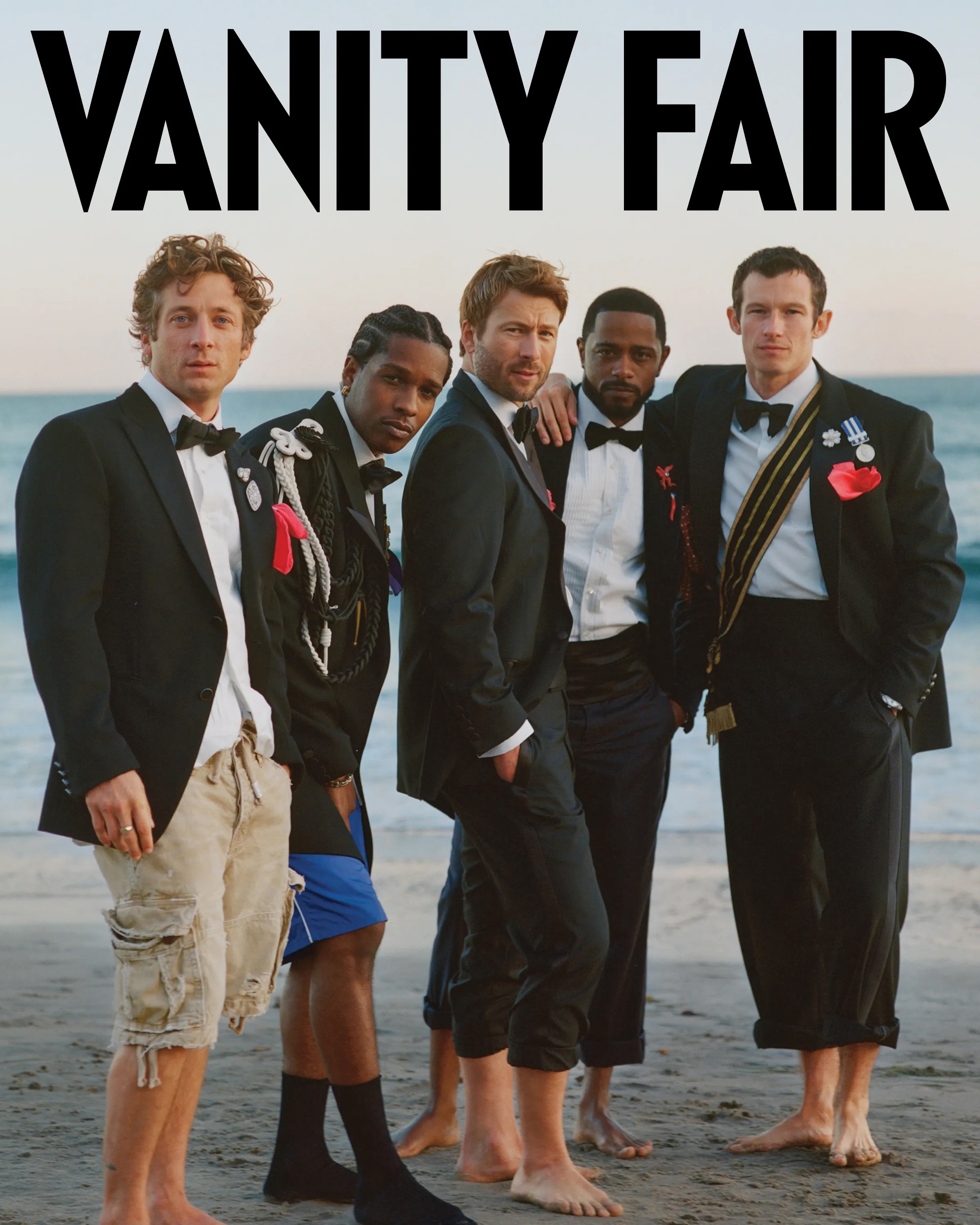
- Let’s hear it for the boys?: Mark Guiducci’s first issue of Vanity Fair, the once ever-important Hollywood Issue, has dropped. As promised, the whole cover is all about men of Hollywood, the death of the leading man, men
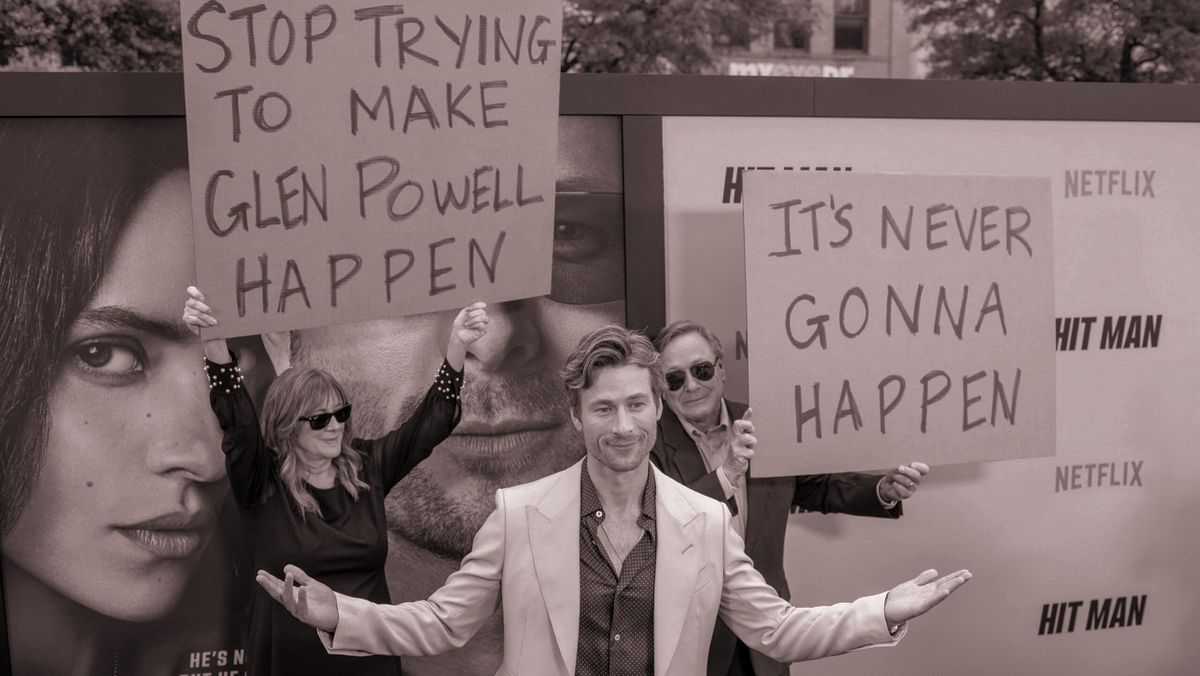
being cute, internet boyfriends, etcetera. Everyone looks so Bruce Weber-y and heart-eyes cute. All the fashion people (women and gays with whom I spoke) loved it. It stars fashion industry–friendly guys Jeremy Allen White (Louis Vuitton), A$AP Rocky (Chanel and Dior), Glen Powell (D.T.C. hot sauce), LaKeith Stanfield (sometimes Prada), and Callum Turner (a.k.a. Dua Lipa’s
fiancé). The second cover is Paul Mescal, Michael B. Jordan, and Austin Butler. (I care less about that, sorry.)
|
- There is
also another cover with Riz Ahmed, Jonathan Bailey, Harris Dickinson, and Andrew Garfield. (I care even less.) Josh O’Connor is missing. Maybe too on the nose? Of course, this generation’s only true leading man, Timothée Chalamet, is not here. He just did Vogue, and probably doesn’t want to be associated with the rest of them.
First, let’s caveat that this issue was produced
before Guiducci hired creative director Jennifer Pastore, so I’m not sure we can say that this is his definitive vision—at least aesthetically—for Vanity Fair, but his strategy is pretty clear to me. For the cover, Guiducci hired Theo Wenner—the photographer and subject of Jonathan Anderson’s first Dior menswear campaign—and Tom Guinness to style. Ottessa Moshfegh, who once wrote Proenza
Schouler’s show notes (and also a book about not being able to get off the couch while being skinny and working at an art gallery), was commissioned for the cover story. Julia Wagner, who did that great Margot Robbie Vogue Barbie spread, designed the set. The gripe I’ve heard thus far from Hollywood people has been that these were all usual suspects, and their movies bombed this fall. Well, didn’t everyone’s film bomb this fall?
Anyway, I will
give you another readout once I actually have the magazine, but my feeling so far is that these are all people and things I’m interested in, and that’s good, given that I am an upper-middle-class white woman who spends too much money on clothes. Alas, this cover reflects the sterilized, banal culture within which we reside, but can we ask anything more of Vanity Fair at this point?
|
|
|
A MESSAGE FROM OUR PARTNER |
|
|

| Sarah Shapiro
|
|
- Rock study:
After the recent returns of Balenciaga’s Le City bag and Chloé’s Paddington, Valentino’s Rockstud pump is the next aughts-era accessory up for revival. Launched in 2010 by then–creative directors Maria Grazia Chiuri and Pierpaolo Piccioli, the shoe popped last week after showing up in the new teaser for The Devil Wears Prada 2. Social media eminences and cranks immediately began debating whether this was smart costuming, paid placement, or
something else entirely.
Regardless, it paid off. Google Trends showed search spikes (pun intended) immediately after the trailer dropped. According to Edited, Net-a-Porter sold out many sizes of this peach lace Rockstud 100mm heel in the 48 hours following the trailer’s debut. Searches on The RealReal increased by 56 percent on the day after the trailer dropped. Cue the closet digging. - “Night, Night” for Curry at UA: On some level, Steph Curry’s departure from Under Armour isn’t all that surprising. The Warriors point guard openly disagreed with C.E.O. Kevin Plank’s semi-endorsement of Donald Trump in 2017. Also, the Curry shoe never approached an exit velocity on par with the star’s historic career. And sports stars often leave brand deals in the later stages of their careers as they begin
to contemplate their equity arrangements, preferable revenue splits, and post-playing days business interests. Roger Federer left Nike for Uniqlo. (He’s now heavily involved with On.) Dwyane Wade left Jordan for a prescient deal with Chinese shoe brand Li-Ning. Still, the wind-down marks the end of a partnership that began in 2013. Earlier this month, Under Armour appointed a new C.F.O., Reza Taleghani, from Samsonite, and I presume the company
is going to revisit contracts.
Curry walks away with complete ownership of his brand—the logo, designs, trademark, and name—and plenty of next-move possibilities. Time will tell if Curry teams up with another company—perhaps Nike C.E.O. Elliott Hill sees an opportunity, maybe even in golf. Or perhaps he’ll launch his own D.T.C. brand and take a page from Tiger Woods’s playbook for Sun Day Red.
|
|
|
Jamie Haller is testing whether the self-funded, Brentwood-to-Bergdorf brand that she
launched with shoes before expanding into women’s ready-to-wear can scale up without selling out or accidentally pricing itself into The Row territory. |
|
|
There’s an archetype of California success that begins in a garage and ends in market-conquering glory.
Usually this trope involves Stanford bros and venture capitalists, not a fashion designer shipping Jutti slippers and penny loafers. But Jamie Haller has been tweaking the script since founding her bootstrapped footwear business with broken-in, logo-free loafers back in 2020.
Haller’s
garage business got a boost when Megan Strachan, the L.A.-based founder of jewelry brand Dorsey, drove over to her house in Echo Park during Covid to try on shoes, and subsequently posted about it. At the time, Haller was creative director of NSF, but she had started making footwear after wearing out a pair of slippers from India. She sold the basic loafer for $525 (now $595)—more than a Zara impulse buy, less than Gucci or Saint Laurent. Ever since, Haller has been building her
namesake brand beyond footwear for customers who might be willing to spend more than The Great but not as much as The Row, and she now dresses a certain segment of the L.A. momscape. (You know who you are.) In 2022, she quit her job to devote herself entirely to the business. |
|
|
A MESSAGE FROM OUR PARTNER |
|
|
According to a source familiar with the business, Jamie Haller now makes between $10 million and $20 million
in annual net revenue, split 65 percent D.T.C. and 35 percent wholesale. (She has one location, at The Post in Montecito.) More than 400 creators have shared Haller’s loafers alone via ShopMy, and her vintage-inspired line includes ballet flats, bitchy little heels and beatnik
booties, as well as R.T.W. mock-neck tees, harem pants, triple pleated pants, leather handbags, and chunky stone signet rings. “I’m not limiting myself by trying to fit into a price point and therefore capping the
materials I can use,” she told me. She’s betting that there is a customer who will pay a premium for the promise of Italian craftsmanship and Japanese French terry, minus the designer label.
Haller has worked as a fashion designer and creative director at corporate brands like Guess and Wet Seal, but scaling this price point in a crowded market is a new challenge. She has to decide if she wants to scale beyond the Brentwood–Santa Barbara ecosystem by raising outside capital, hiring a
professional scale-up C.E.O., and growing her retail footprint. If executed properly, however, there is a ton of upside. Nili Lotan has spent 20 years building in a similar territory. As Rachel Strugatz reported, Julia Hunter helped scale Jenni Kayne from California coastal fashion to a $100 million lifestyle
empire.
Yes, there are some challenges, too. Haller’s price point is in the muddy middle, making it harder to pin down what the brand is and who it is for. At what point does a $595 loafer creep up to $795? And when it does, will the customer instead reach for Saint Laurent at $970 or even The Row at $1,395? When Haller’s PJ Shirt and Tuck Shirt go for $395 and $525, respectively, what prevents the customer from buying Charvet? It probably doesn’t matter in the short term. Bergdorf Goodman recently put in a purchase order, according to Haller, who added that
Net-a-Porter placed a sizable one of its own for Spring 2026. During channel checks this fall, I noticed Haller on the floor at Saks’s flagship location. |
What We’re Reading…
and Looking At…
|
We’ve said it before, we’ll say it again, and now Bloomberg has said it: Chinese consumers are going to
increasingly choose Chinese brands over Western brands, even in luxury. [Bloomberg]
Naturally, there is a GoFundMe for the Fired Four. [GoFundMe]
Alaïa’s new
archetypes campaign conjures the visual magic of Pieter Mulier’s recent shows. [Instagram]
The next Costume Institute exhibit, Costume Art, is essentially about the dressed—and sometimes undressed—body. (Interesting that this is happening after the naked-red-carpet peak.) It’s the first exhibit in the new Condé M. Nast Galleries at the Met and underwritten with
funding from body-forward newlyweds Jeff and Lauren Sánchez Bezos, Saint Laurent, and Condé Nast. [Vogue]
The launch of Rini, Shay Mitchell’s new line of kiddie sheet masks, started a debate worthy of an SNL skit: How young is too young for a
sheet mask? [New York Times]
So long to the penny. Loafers will never be the same. A creative obituary in its honor. [New York Times]
Extremely jealous of the Stissing House Pie Fest, where friend-of-Line Sheet
Jesse Derris and his daughter came in third place in the amateur baking contest, judged by Martha Stewart, Hannah Goldfield, Samin Nosrat, and others. [Clare de Boer’s Substack] |
Until tomorrow,
Lauren
P.S.: We use affiliate links because we are a business. We may make
a couple bucks off them. |
|
|
Puck fashion correspondent Lauren Sherman and a rotating cast of industry insiders take you deep behind the scenes of this
multitrillion-dollar biz, from creative director switcheroos to M&A drama, D.T.C. downfalls, and magazine mishaps. Fashion People is an extension of Line Sheet, Lauren’s private email for Puck, where she tracks what’s happening beyond the press releases in fashion, beauty, and media. New episodes publish every Tuesday and Friday. |
|
|
Puck’s daily art market email, anchored by industry expert Marion Maneker, offers unparalleled access to the mega-auctions and
galleries, elite buyers and sellers, and the power players who run this opaque world. Wall Power also features Julie Brener Davich, a veteran of Christie’s and Sotheby’s, who provides unique insights into how the business really works. |
|
|
Need help? Review our
FAQ page or contact us for assistance. For brand partnerships, email ads@puck.news.
You received this email because you signed up to receive emails from Puck, or as part of your Puck account associated with {{customer.email}}. To stop receiving this newsletter and/or manage all your email preferences, click here. |
Puck is published by Heat Media LLC. 107 Greenwich St., New York, NY 10006 |
|
|
|