{{ 'now' | timezone: 'America/New_York' | date: '%b %d, %Y' }} |
|
|
|
Hello and welcome back to the Tuesday edition of What I’m Hearing, helmed by Eriq
Gardner. One of the great benefits of having a legal expert like Eriq at Puck is that when a huge story like the WarnerMount challenge breaks, he’ll invariably offer the smartest, most level-headed analysis of what’s actually going on. That’s today’s issue, so all yours, Eriq (and send him tips at Eriq@puck.news!).
Not a Puck member yet? Never too late. Just click
here.
Discussed in this issue:
David Zaslav, Rob Bonta, Harvey Levin, Matt Stoller, Graham Platner, David Ellison, Marc Toberoff, Fat Joe, Jeffrey Kessler, Tyrone Blackburn, Ehud Yonay, Jeffrey Lamken, Lina Khan, Makan Delrahim, Paul Clement, Araceli
Martínez-Olguín, P. Casey Pitts, Richard Parker, and more. |
|
|
|

| Eriq Gardner
|
|
- Harvey Levin: I’m a lawyer
(again): Why did the TMZ impresario reactivate his law license? I stumbled across this odd fact while reading a rather bizarre defamation lawsuit recently filed against the gossip site. The plaintiff is Tyrone Blackburn, the New York attorney who claims he was defamed when Joseph Tacopina—his adversary in separate litigation involving Fat Joe—appeared on TMZ Live and declared that Blackburn “took his car and ran into” a process
server. Tacopina omitted one important qualifier: “allegedly.” Blackburn had not been charged at the time, and a grand jury ultimately declined to indict him.
This strikes me as an extraordinarily difficult case for Blackburn to win. Still, one allegation jumped off the page. In attempting to establish “actual malice,” the standard for defamation of a public person, Blackburn points out that Levin reactivated his California law license in late 2024 after nearly three decades on inactive
status. Therefore, in Blackburn’s telling, Harvey was fully aware of the significance of the word “allegedly.”
As for why Levin, now 75, decided to bring his license back from the dead after 29 years (here’s his profile), your theories are as good as mine. Perhaps he was preparing to represent himself in the inevitable lawsuit over who invented modern celebrity
journalism. Maybe he was gearing up for a subpoena fight over TMZ’s hospital sources. Or he simply wanted to be ready for the day Donald Trump asks him to join the Supreme Court. I texted Levin for an explanation. He didn’t respond. - ‘Top Gun’ suit headed for Supremes?: Paramount Skydance may already be gaming out how the Supreme Court could factor into its proposed merger with Warner Bros. Discovery (more on that below), but
David Ellison is already at the high court on another front—courtesy of one of his favorite franchises. On Monday, the heirs of writer Ehud Yonay filed a cert petition asking the justices to weigh in on whether judges can dismiss close copyright infringement cases by deciding for themselves that two works are not substantially similar, without ever letting a jury consider how an ordinary audience would perceive them.
You’ll recall that the Yonay family is
represented by Marc Toberoff, who successfully invoked copyright law’s termination provisions to recapture whatever protectable rights remained in Yonay’s 1983 California magazine article “Top Guns,” the source material that inspired the original Top Gun. The family contends that Top Gun: Maverick infringed those rights. Paramount prevailed, however, with the Ninth Circuit
affirming summary judgment earlier this year after concluding that once unprotectable ideas, facts, and stock elements were filtered out, the similarities were insufficient as a matter of law.
What makes the petition interesting is that it aims far beyond Top Gun. Toberoff has teamed up with Supreme Court veteran Jeffrey Lamken,
and together they argue that the Ninth Circuit has drifted away from the approach used in much of the rest of the country. According to the petition, courts in the Second, Third, Fifth, Seventh, and D.C. Circuits generally evaluate whether an ordinary observer would regard the works, viewed as a whole, as coming from the same creative source, whereas the Ninth Circuit dissects works element by element before a jury ever gets involved.
In that respect, the petition dovetails with another
copyright fight I flagged last week—the Miles Davis tattoo case now headed for en banc review in the Ninth Circuit. Both disputes are really about the same underlying question: Should courts break creative works into their constituent parts and filter aggressively before trial, or should juries be trusted to
assess the overall impression left on ordinary people? The fight has already divided entertainment industry groups. Now, Toberoff is asking the Supreme Court to decide it once and for all.
|
|
|
|
And now for the main event… |
|
|
|
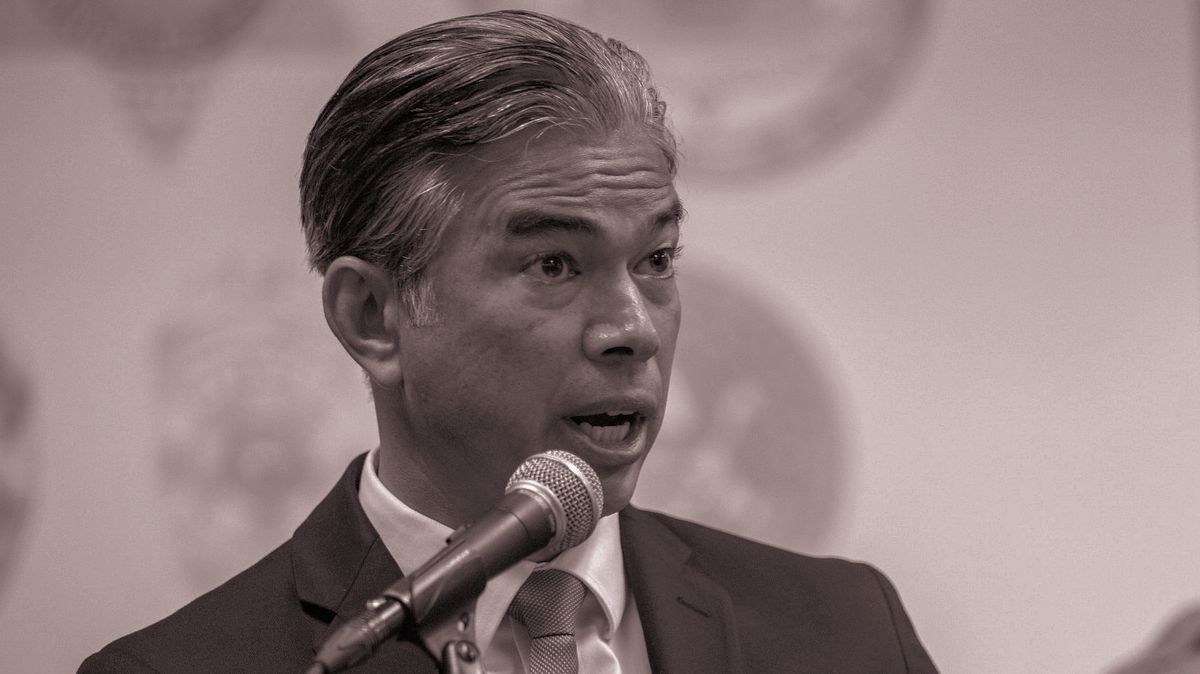
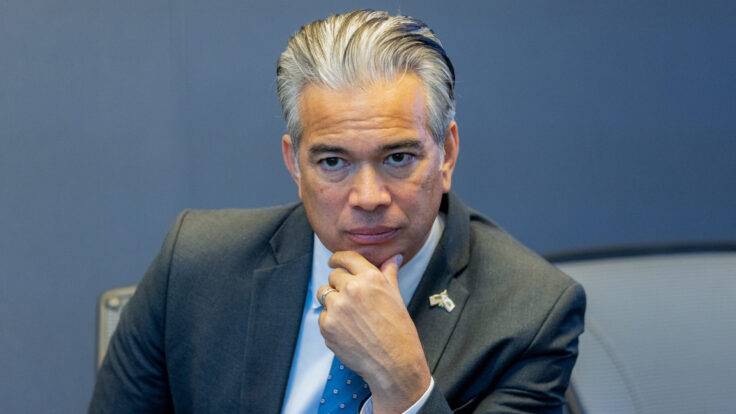
For all the noise around California Attorney General Rob Bonta’s lawsuit to block the
Paramount–Warner Bros. merger, the actual complaint is notable for what it avoids. As both sides prep for the weeks and months ahead, everyone involved is staking their bargaining positions on the consequences of a drawn-out affair. |
|
|
|
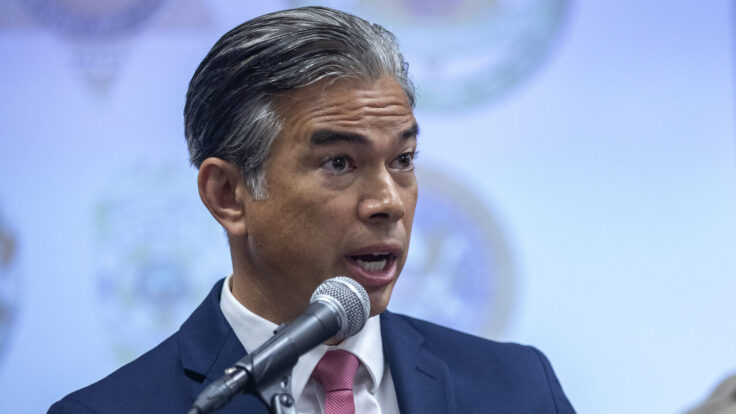
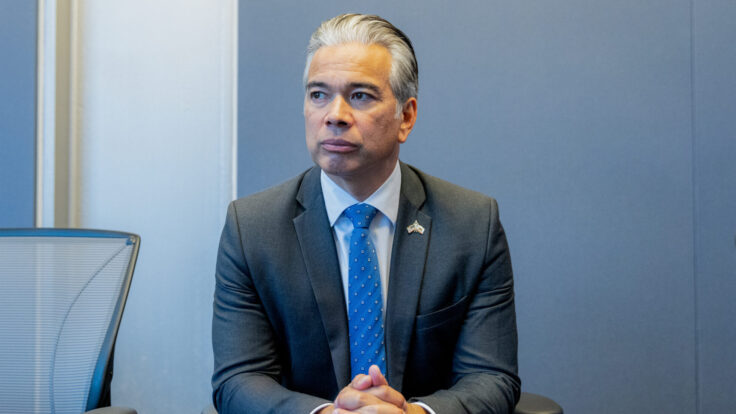
My first thought upon reading the complaint filed Monday by California Attorney General Rob
Bonta and his coalition of 11 other states challenging the Paramount–Warner Bros. Discovery merger was how thoroughly old-school it all felt. This is a case with obvious political overtones, yet there is no talk of Ellison family lobbying or President Trump influencing the Justice Department’s review. Nor is the case built around the consolidation of CNN and CBS, despite persistent chatter that what truly animates these Democratic A.G.s is the
prospect of major news operations ending up in the wrong hands. Instead, the complaint turned out to be a fairly conventional antitrust challenge focused on the competitive harms—fewer films, canceled projects, higher cable bills—that may arise when one company controls an outsize share of Hollywood’s
blockbuster pipeline.
Even there, the states’ strategy is notable both for what it embraces and what it avoids. Most strikingly, this is not a monopsony case. Labor markets receive only passing attention, despite the government’s 2022 success in blocking Penguin Random House’s acquisition of Simon & Schuster on the theory that it would reduce competition for authors. (“We didn’t identify a specific labor market,” Bonta
told Matt yesterday. The Writers Guild of America filed its own merger challenge today, claiming WarnerMount would kill jobs.) More predictably, the complaint largely
sidestepped streaming. Do some consumers stay home and binge Netflix rather than buy a movie ticket? Of course. But the states refuse to treat streaming as a meaningful substitute for theatrical exhibition or cable TV, and instead worked hard to define the relevant markets as narrowly as possible—a choice that predictably made Paramount’s market share look more imposing.
That tactic likely reflects the influence of Richard Parker, the former director of the F.T.C.’s
Bureau of Competition and now a partner at the Milbank law firm whom Bonta retained as outside counsel. The result is antitrust in its most traditional form: market definition, concentration metrics, H.H.I. calculations, and bargaining leverage. This seems like a complaint designed to survive judicial scrutiny, not merely dominate a news cycle.
Of course, that also gives Jeffrey Kessler and the Paramount defense team an obvious attack lane. Expect them to train their fire
on the states’ proposed market for anticipated “tentpole” films, which will be portrayed as an artificially constructed category designed to manufacture concentration. After all, who releases a movie hoping it won’t become a blockbuster? Surely, few saw the recent success of Backrooms coming. Obsession was made for less than $1 million and has grossed more than $400 million worldwide—far more than the latest Star Wars—which would almost certainly fall into
Bonta’s “tentpole” category. Minions & Monsters and Moana, both hoped-for tentpoles for Universal and Disney, respectively, are turning out to be merely regular old wide releases. To be sure, antitrust enforcers have occasionally defined markets in similarly narrow ways—think “anticipated bestsellers” in the Penguin Random House case, or “affordable luxury handbags” in Lina Khan’s challenge to the Tapestry–Capri merger. But David Ellison’s chief legal officer,
former D.O.J. antitrust chief Makan Delrahim, surely has an army of economists preparing to explain why “tentpoles” are not a market so much as an aspiration.
In short, this is a conventional complaint—but hardly a conventional case. States do not often take the lead in trying to stop a $110 billion media merger after federal enforcers have already walked away, and it’s notable that some of the attorneys general who joined the government’s challenge to Live Nation,
including Illinois and Maryland, chose not to sign on here. So don’t let the familiar antitrust jargon fool you. The theories may be old-school, but what comes next almost certainly won’t be: an injunction fight, accelerated discovery, armies of economists, and a race against a ticking fee that accrues starting October 1. Buckle up. This is about to get interesting. |
In the days leading up to the filing, there were, of course, the usual hints and whispers to reporters about
what was coming. Last Thursday offered a particularly useful clue when Delrahim took to LinkedIn to respond to an X post from anti-merger crusader Matt Stoller that made a glancing reference to David Ellison. (Stoller’s original point had something to do with Graham Platner, but I digress...) Delrahim seized the
opportunity to criticize Stoller and his ilk—whom, he warned, risked discrediting antitrust enforcement. More importantly, Delrahim reminded readers that the presumption of illegality when merging firms exceed certain thresholds is neither statutory nor inevitable. Philadelphia National Bank—the 1963 Supreme Court decision that remains the foundation for much of modern merger enforcement—wasn’t written in stone. In fact, Delrahim suggested there may be “at least seven votes, maybe eight or nine” on the Supreme Court to revisit it.
At the time, I wasn’t sure what to make of the comment. It felt a bit like the legal-wonk equivalent of threatening to move the company out of California—a last-minute attempt to discourage
Bonta from filing suit. Then two things happened. First, The New York Times reported that Paramount had retained Paul Clement, arguably the most formidable Supreme Court advocate in private practice. Second, the complaint arrived, leaning heavily on market-concentration theories that ultimately
trace back to Philadelphia National Bank and its progeny.
And if that didn’t feel enough like a preview of where this could be headed—a world in which Bonta secures an injunction and Paramount eventually asks appellate courts to reconsider the legal architecture underlying modern merger enforcement—there was also a widely circulated tweet from Semafor’s Rohan Goswami reporting that he had been “told” taxpayers could ultimately be on the hook for between $600 million and $1.2 billion in Ellison’s ticking fees if the states succeeded in delaying the deal. To be clear, that outcome would require a series of contingencies—including a court requiring the states to post a bond, and a later determination that an injunction had been wrongly issued. But the fact that the possibility was being discussed at all was notable.
My point
isn’t that this case is inevitably headed to the Supreme Court or destined to rewrite antitrust law. That’s one possible trajectory, but hardly the only one. The more immediate takeaway is that both sides appear to be signaling the costs of a prolonged fight, taking bargaining positions for the nearer term. There is undoubtedly some posturing here, although those gestures are perhaps more grounded in reality than word that Paramount might pack up its studio lot and relocate to Tennessee or
somewhere friendlier. |
As for what comes next, keep an eye on Thursday’s preliminary injunction hearing in Oakland before Judge
Araceli Martínez-Olguín, a Biden appointee. The proceeding concerns the previously filed consumer class action, which casts a wider net than the states’ suit—alleging competitive harm not only in theatrical film distribution but also in premium video distribution and national TV news. Still, the overlap is substantial. The states moved to relate the cases, creating a possibility that their challenge ultimately lands before the same judge. (For now, it’s assigned
to P. Casey Pitts, another Biden pick.) Either way, Thursday will be the first real opportunity to watch many of the core theories tested in open court, and it may offer an early glimpse of how the judiciary views the merger.
Meanwhile, the states have filed their own emergency motion for a temporary restraining order aimed at preventing Paramount from closing the transaction. That should move quickly; I wouldn’t be surprised to see a ruling within days. As I joked on
social media, thoughts and prayers to whichever law clerk is tasked with sorting through this record.
One notable feature of the states’ T.R.O. brief is a preemptive strike against Paramount’s argument that a delay would be inequitable because of the roughly $650 million in quarterly ticking fees that begin accruing if the deal remains unclosed after
September 30. The states essentially argue that Paramount voluntarily negotiated those costs and cannot now invoke them as a reason to avoid judicial scrutiny. They also lean heavily on the combined company’s projected $78 billion debt load, pointing to the aftermath of David Zaslav’s Warner Bros. Discovery merger—layoffs, write-downs, canceled projects, and yes, even the shelved Batgirl—as a preview of what may follow here. One passage captures the theme neatly:
“Although Defendants have stated that they plan to release at least thirty films annually, this self-serving assertion does not rebut the prima facie case. The commitment is unenforceable and implausible.”
If I had to handicap the next phase, I’d expect a T.R.O. preserving the status quo (meaning the deal can’t close next week as planned), followed by expedited discovery and a compressed evidentiary hearing on a preliminary injunction. That hearing, likely in August or
September—not Thursday’s consumer case, and not the filing of the complaint itself—may be the event that determines whether this merger proceeds on schedule or becomes mired in months of uncertainty. |
Thanks, Eriq. I’ll be back on Thursday night.
Matt |
|
|
|
Puck sports correspondent John Ourand and a rotating cast of industry insiders take you inside the executive suites and owners
boxes where the decisions that shape the entire sports business are made. You’ll hear interviews with players, network execs, and everyone in between. The Varsity is an extension of John’s private email for Puck by the same name. New episodes publish every Wednesday and Sunday. |
|
|
|
Ace media reporter Dylan Byers brings readers into the C-suite as he chronicles the biggest stories in the industry: the future
of cable news in the streaming era, the transformation of legacy publishers, the tech giants remaking the market, and all the egos involved. Also featuring a weekly dispatch from Puck’s crack streaming/media analyst, Julia Alexander. |
|
|
|
Need help? Review our
FAQ page or contact us for assistance. For brand partnerships, email ads@puck.news.
You received this email because you signed up to receive emails from Puck, or as part of your Puck account associated with {{customer.email}}. To stop receiving this newsletter and/or manage all your email preferences, click here. |
Puck is published by Heat Media LLC. 107 Greenwich St., New York, NY 10006 |
|
|
|
|