Hello and welcome back to the Tuesday edition of What I’m Hearing, helmed by Eriq
Gardner. Tonight, Eriq has an insider analysis of the recent rumblings from Britain that could impact the Paramount–Warner Bros. merger approval. Plus, the latest in the still-not-totally-settled Lively–Baldoni litigation, and a copyright fight with huge implications for both the music and film/TV industries.
All yours, Eriq (and send him tips at Eriq@puck.news).
Not
a Puck member yet? Never too late. Just click here.
Discussed in this issue: Lisa Nandy, Kat Von D, Blake Lively, André Birotte Jr., Miles Davis, Bill Patry, Taylor Swift, Michael Gottlieb, Bad Bunny, Justin Baldoni,
Donald Passman, Jeffrey Sedlik, Steely & Clevie, Rob Bonta, and more. |
|
|
|
A MESSAGE FROM OUR SPONSOR |
LALO Tequila is a gateway to modern Mexico and a celebration of life’s greatest moments shared with friends and family. For those who
value culture, connection, wellness, and good living, LALO is a way of life. |
|
|
|

| Eriq Gardner
|
|
- Passman vs. Claude:
Donald Passman, the Beverly Hills attorney and unofficial dean of the music business, spent last week at Taylor Swift’s wedding—he once helped her regain control of her masters, after all. Busy as he was, he didn’t have time to chat with me about his effort to opt out of the $1.5 billion settlement that Anthropic agreed to pay authors over its downloading and use of pirated books to train its Claude models. The opt-out deadline came and went back on February 9,
but Passman says he never received notice. So he’s now making a late bid to forgo what would likely amount to a few thousand dollars’ worth of settlement proceeds in exchange for preserving his right to sue on his own.
That’s notable because Passman is the author of All You Need to Know About the Music Business, which has functioned as something close to scripture for generations of music lawyers, managers, and executives. In emails to Simon & Schuster attached to his motion,
Passman complained that the only real winners in the Anthropic settlement were the attorneys. Dozens of others, including John Carreyrou, Dave Eggers, and Tom Shakespeare, have opted out and are now pursuing their own lawsuits. Perhaps Passman will soon follow them, but it’s striking that a legally sophisticated author is voting with his wallet that this was the wrong deal.
The 81-year-old dealmaker also mentioned that he’s contemplating
another edition of his famous book (there have been 10 so far). Maybe the next version will include a chapter on how to stage a celebrity wedding at an arena, invite half the entertainment industry, and somehow keep everyone quiet. (I won’t count Adam Aron’s quickly deleted LinkedIn post.) That, too, is a valuable business skill. - Blake v. Baldoni: The fight over fees: Blake Lively is seeking roughly $8 million in legal
fees from Justin Baldoni’s production company after partially prevailing on her Section 47.1 motion. The fee-shifting provision is meant to compensate Lively for successfully defending against Baldoni’s defamation-related claims. But it is not, at least in theory, designed to reimburse her for prosecuting her own affirmative claims, which almost surely cost far north of $8 million.
That distinction could become the next battleground. In support of the fee
request, Lively’s litigation consultant analyzed billings and excluded substantial portions of the legal work, including everything performed after June 2025. But litigation of this sort inevitably involves overlap. Many tasks advanced both Lively’s claims and her defense against Baldoni’s. Lively argues that money spent toward those intertwined efforts should still be recoverable. Baldoni is likely to have something to say about that.
If he does, we may get an even deeper look into how
this legal war was waged. The record already includes a 162-page invoice detailing the work performed by litigator Michael Gottlieb and his team—everything from fact-checking and media review to extensive research on sanctions, anti-SLAPP procedures, and related issues. But fee disputes have a way of pulling back the curtain even further. For instance,
one billing entry reflects research into perjury allegations arising from complaints filed with the California Civil Rights Department, where Lively first lodged her claims in December 2024. That’s an intriguing breadcrumb. Whether it points anywhere meaningful remains to be seen, but if the fight over fees intensifies, the invoices themselves may become their own evidence.
Meanwhile, it appears that Baldoni has just settled with his own insurers. They coincidentally provided up to $8
million in coverage, according to a lawsuit filed last year. On Monday, the parties dismissed the case. Terms weren’t revealed. - Who stole the beats?: Back around the time of Bad Bunny’s Super Bowl halftime show, I wrote about a copyright lawsuit brought by the legendary Jamaican production duo
Steely & Clevie suggesting that the Latin urban music phenomenon was built on stolen beats from decades prior. The suit, if successful, could implicate a vast swath of reggaeton music. A major summary judgment ruling issued on July 1 now suggests the case is headed for trial.
The decision is somewhat surprising. California federal judge
André Birotte Jr. embraces a framework that stresses the need to filter out unprotectable material such as prior art, stock elements, and other commonplace musical features. Yet after largely adopting the defendants’ preferred approach to judicial gatekeeping, he still concludes that a jury—not a judge—must decide whether the rhythmic architecture at the heart of reggaeton is protectable under copyright law. Birotte also declines, at least for now, to accept the defense argument
that Steely & Clevie have cobbled together pieces of three separate songs into a kind of “Frankenstein” copyright claim.
If the case indeed reaches trial, expect a heavyweight battle of musicologists. Birotte found most of the competing expert methodologies sufficiently reliable and will allow the experts to testify. No trial date has been set, but the parties have been directed to submit a proposed path forward, so a clearer timetable for this Los Angeles showdown should emerge soon.
- The tattoo copyright quandary: Speaking of copyright trials, it’s been a couple of years since that wonderfully odd one in which photographer Jeffrey Sedlik accused celebrity tattoo artist Kat Von D of infringing his portrait of Miles Davis
by reproducing it on a client’s arm. The case now sits at the center of a potentially consequential fight over how copyright cases should be decided—and it’s driving a wedge between two of the entertainment industry’s most powerful lobbying groups.
A jury cleared Von D of infringement, and a Ninth Circuit panel affirmed the verdict in January. But then Sedlik enlisted copyright legend Bill Patry to petition for rehearing before the full Ninth Circuit. Last month, the
court agreed, setting the stage for a broader debate that extends far beyond tattoos. The en banc court will now consider whether to rethink the Ninth Circuit’s longstanding extrinsic-intrinsic test for “substantial similarity,” the framework that has governed copyright disputes in Hollywood for decades.
In an amicus brief, the Recording Industry Association of America urged
the court to scrap the intrinsic test altogether, arguing that asking juries to compare the “total concept and feel” of works injects subjectivity into copyright cases, creates unpredictability, and can even allow obvious copying to escape liability. The Motion Picture Association, on the other hand, warned in its own brief against using an unusual dispute over a
photograph tattoo to overhaul a framework that has shaped copyright litigation for nearly half a century. The MPA acknowledges that the intrinsic test may need refinement, but argues that courts should preserve a role for juries to evaluate the overall artistic impression of works rather than reducing infringement analysis to a purely mechanical comparison of isolated elements.
It’s quite something that the industry’s trade groups have reached opposite conclusions about one of copyright
law’s foundational doctrines. The consequences here could ripple through everything from music-sampling disputes to screenplay lawsuits—and perhaps, before long, the coming wave of A.I. copyright litigation.
|
|
|
|
And now for this week’s main event… |
|
|
|
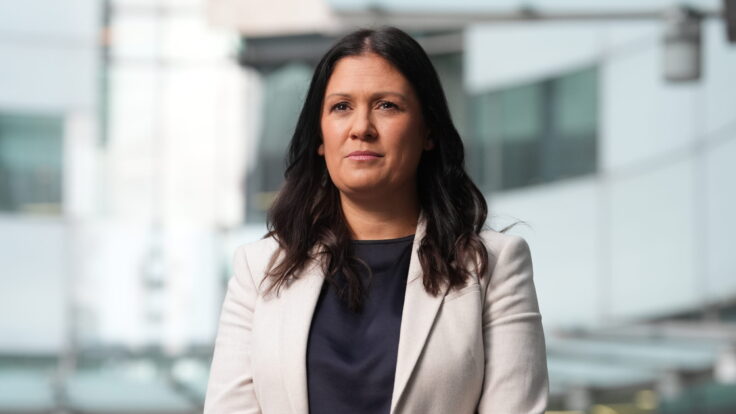
Paramount Skydance execs were left scrambling this weekend after comments from British
culture secretary Lisa Nandy indicated that she was intervention-curious. But could the U.K. stop the WarnerMount deal from closing, even if it wanted to? |
|
|
|
This past weekend, as the U.S. celebrated 250 years free from British rule, Paramount Skydance executives
found themselves pondering a question that might have amused George III: Could the U.K. still determine the fate of an American empire? After all, while Paramount’s $110 billion acquisition of Warner Bros. Discovery is nearing the conclusion of a sprawling global regulatory review, British culture secretary Lisa Nandy’s declaration that she was “minded to intervene” has introduced an unexpected wrinkle, sending WarnerMount’s architects scrambling to
figure out whether Britain can actually hold up the transaction.
To understand why Nandy’s intervention caused so much head-scratching, you have to start with the merger agreement. It conditions closing on the completion of necessary competition reviews around the world—specifically, mandatory waiting periods and required approvals. The less-than-obvious wrinkle here is that the U.K. has traditionally not operated a mandatory suspensory merger regime like the European Union does.
Britain’s system is less a tidy sequence of filing, waiting, and receiving a formal blessing than a period of regulatory courtship, with the parties testing concerns and negotiating informally before deciding whether actual intervention is necessary. It’s a very British arrangement—heavy on the foreplay, lighter on the paperwork. And it’s one big reason Paramount’s executives entered this process believing they could close the transaction even without an explicit green light from
London.
Alas, Nandy’s media plurality concerns caught almost everyone off guard. By signaling that she was considering a Public Interest Intervention Notice—a PIIN, in Whitehall-speak—Nandy threatened to unleash both Ofcom and the Competition and Markets Authority on the deal. That raised a surprisingly murky question: The merger agreement never expressly says Paramount needs Britain’s blessing. So if Nandy pulls the trigger, would Britain merely be opening an investigation—or actually
creating a genuine obstacle to closing? |
|
|
|
A MESSAGE FROM OUR SPONSOR |
LALO Tequila is a gateway to modern Mexico and a celebration of life’s greatest moments shared with friends and family. For those who
value culture, connection, wellness, and good living, LALO is a way of life. |
|
|
|
The answer is less obvious than the headlines suggested. A PIIN is merely a notice that launches a review
process, not a prohibition order. Standing alone, it is not necessarily the sort of governmental action that prevents two companies from consummating a merger. Even if the government wanted to complicate matters, creative solutions might exist—from ring-fencing U.K. assets to postponing certain integration steps. And the stakes are substantial: Starting on September 30, the Ellisons are on the hook for daily ticking-fee payments to WBD shareholders—adding up to about $650
million for every quarter the deal remains unfinished. Absent some additional restraint, Paramount could plausibly convince itself that this was merely another regulatory annoyance to be managed.
But Nandy’s statement to Parliament contained another wrinkle. She floated the possibility of “secondary legislation” to extend the public
interest regime to streaming and video-on-demand services. It was a reminder that Britain was not merely reviewing the transaction but also contemplating whether to rewrite the rules governing the review. What had looked like a slightly eccentric feature of the U.K.’s media plurality framework suddenly carried the potential to evolve into something much closer to a traditional stop sign. |
Of course, Nandy may simply be trying to maximize her leverage. Raising the prospect of a prolonged review
gives the government an opening to negotiate commitments on children’s programming, news production, and investment in Britain’s creative industries. (Warner Bros. owns the historic Harry Potter studio, about an hour outside London, which remains one of the area’s biggest tourist attractions.) Indeed, much of the chatter in London isn’t about whether the deal will be killed. It’s about the price of passage. What, exactly, is David Ellison prepared to
surrender?
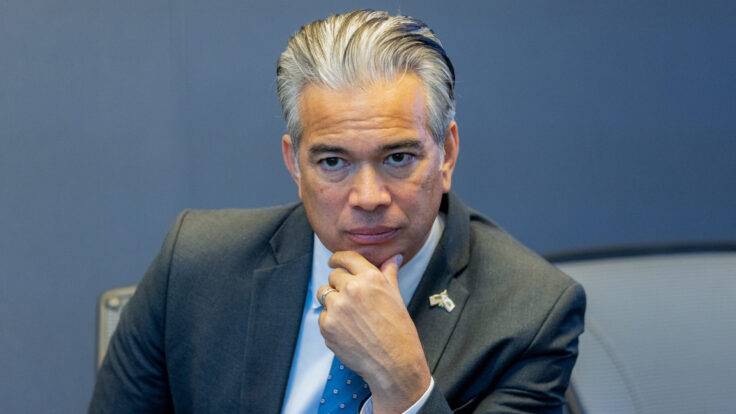
In that respect, Nandy’s position bears some resemblance to that of California Attorney General Rob Bonta and the coalition of state attorneys general still scrutinizing the transaction in the U.S. for maximum leverage. Neither side necessarily needs a slam-dunk legal case. The mere possibility of delay can be valuable. Every month of uncertainty raises costs, complicates financing assumptions, tests nerves, and increases pressure on dealmakers to offer
concessions—like, say, a divestment of CNN—that they might otherwise resist.
The crucial variable is credibility. Regulators derive leverage from the belief that they are willing and able to make good on their threats. Companies derive leverage from the belief that they are willing to endure delay rather than capitulate. The outcome often depends on which
side better projects resolve.
For the moment, the contest remains unfinished. WarnerMount is still assessing its options and negotiating with British officials. A quarter-millennium after declaring independence from the Crown, it seems, Hollywood still finds itself waiting to hear what London has to say. |
Thanks, Eriq. I’ll see everyone on Thursday.
Matt |
|
|
|
Puck founding partner Matt Belloni takes you inside the business of Hollywood, using exclusive reporting and insight to explain
the backstories on everything from Marvel movies to the streaming wars. |
|
|
|
Ace media reporter Dylan Byers brings readers into the C-suite as he chronicles the biggest stories in the industry: the future
of cable news in the streaming era, the transformation of legacy publishers, the tech giants remaking the market, and all the egos involved. Also featuring a weekly dispatch from Puck’s crack streaming/media analyst, Julia Alexander. |
|
|
|
Need help? Review our
FAQ page or contact us for assistance. For brand partnerships, email ads@puck.news.
You received this email because you signed up to receive emails from Puck, or as part of your Puck account associated with {{customer.email}}. To stop receiving this newsletter and/or manage all your email preferences, click here. |
Puck is published by Heat Media LLC. 107 Greenwich St., New York, NY 10006 |
|
|
|
|