Welcome to The Varsity, live from the City of Brotherly Love. I’m here to check in on
how Netflix is handling tonight’s Home Run Derby. I can reliably report that Bert Kreischer is nowhere to be found… at least so far.
Before we begin: Michigan won the College Football Playoff just two years ago, and its men’s basketball team won the NCAA tournament in April. So how is the school’s athletic
department so chaotic?
In today’s issue, Eriq Gardner dives into a legal fight between the Cubs and the owner of a building across the street from Wrigley. The case is interesting on many levels, but I am most fascinated by how it could affect other sports.
Could Formula One do away with balconies over their street races? What about backyards that abut golf courses during PGA Tour events? Also, I dish on the conversations I’ve had at various MLB All-Star Game parties this week, and explain how the MLS is using the World Cup to launch the biggest marketing campaign in its 30-year history. Plus, Wolfe Research’s Peter Supino offers a prediction on World Cup rights.
Also mentioned in this issue: the Khosla
family, Paul Allen, Lionel Messi, David Beckham, Magic Johnson, Tom Ricketts, Aidan Dunican, and more. |
- Seattle slew: The topic du jour in basically every sports conversation I’ve had today is the Khosla family’s agreement to buy the Seahawks from Paul Allen’s estate for $9.6 billion. The astronomical price represents just the latest escalation in the sports-team valuation sweepstakes, which has shown zero signs of abatement. The Seahawks figure is more than 60 percent higher than the $6 billion that the Washington Commanders went for in
2023, the previous record for an NFL franchise. Even the Padres sold for $3.9 billion in May—a huge jump from the $1.7 billion sale of the Orioles. In the NBA, the Lakers went for $10 billion shortly after the Celtics went for more than $6 billion.
- Cup stacking: We’ve now had our first glimpse at how Major League Soccer plans to capitalize on the popularity of the World Cup. The league, which will resume its season on Thursday and
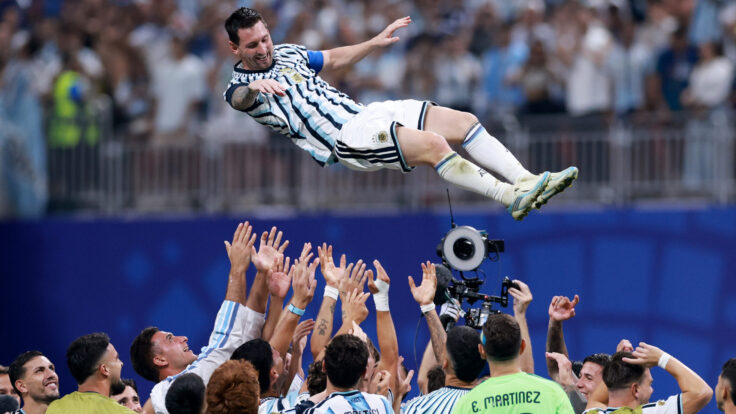
Friday, is spending north of $10 million on a marketing effort around its players, including Lionel Messi, and celebrity owners including David Beckham and Magic Johnson. The campaign, billed as the largest in league history, carries the tagline, “Thanks World, We’ll Take It From Here.” The league bought time to run the campaign during
the World Cup semifinals and finals on Fox. That’s all well and good, but it missed an opportunity to run these ads during the USMNT games. (Why did they wait so long to run the ads?) League owners certainly know that the best way to convert World Cup fans is to import the best players over to the league.
- Cup stacking, cont’d: Last week, I wrote about the already healthy appetite for the 2030 and 2034 World Cup rights when FIFA takes them to market later this year. Now, the analysts have begun handicapping the competition: Expect Disney, Netflix, and Big Tech to bid aggressively, per a report published today by Wolfe Research’s Peter Supino. Where does that leave current rights-holders Fox and Telemundo? “While a June boon for Comcast and Fox, the question becomes the World Cup’s impact to their
larger, streaming-first counterparts,” Supino wrote. “Strategically, we favor Fox’s upside once it completes the Roku acquisition.”
|
And now, here’s Eriq with a breakdown on an overlooked-but-consequential lawsuit that could
have lasting implications for the live sports business… |
|
|
|
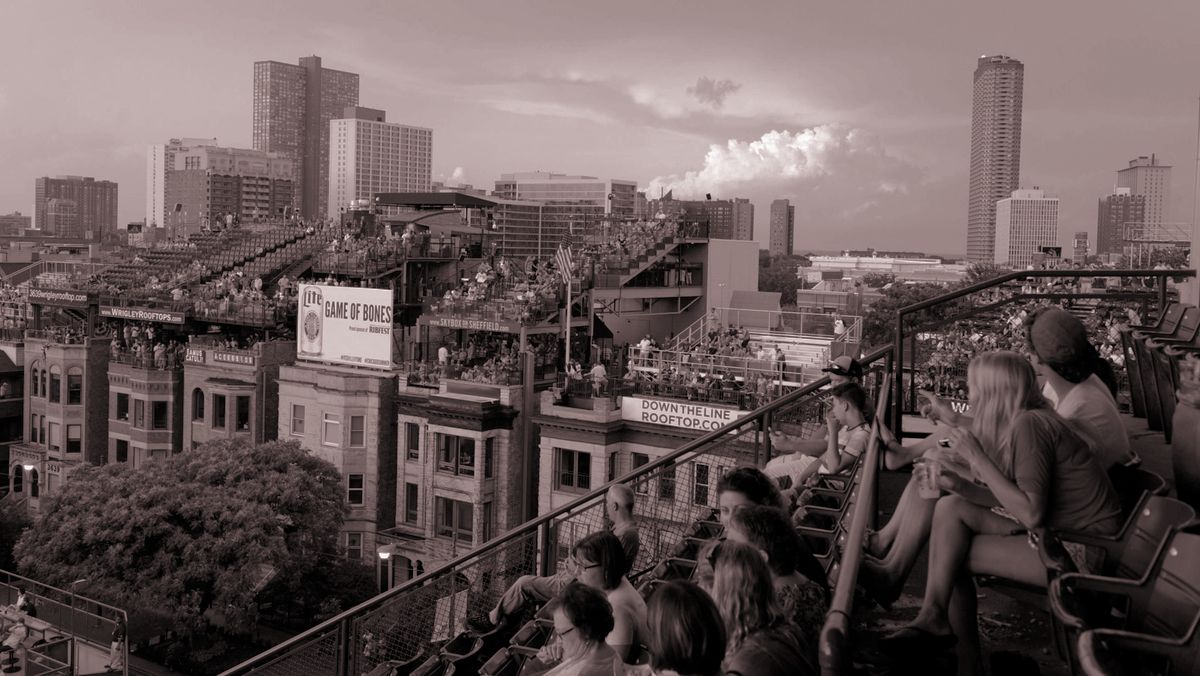
A case pitting the Chicago Cubs against the owner of the last independent rooftop
view into Wrigley Field could have lasting ramifications on sports viewership in the future. The question is: Can visibility itself function as a quasi-property right? |
|
|
|
We’re approaching the 10th anniversary of the Chicago Cubs finally ending their 108-year World
Series drought, which, according to baseball folklore, began when a team owner ordered a tavern-keeper’s malodorous goat out of Wrigley Field. As this year’s Cubs prepare for another postseason run, the organization may be tempting fate once again. The target this time is Rooftop by the Firehouse, otherwise known as Wrigley View Rooftop—the last independent building-top overlooking nearby Wrigley Field. In federal court, the Cubs are seeking to establish once and for all that a team can stop
neighbors from profiting from a view into an open-air stadium.
For my money, this is one of the more underrated legal stories in sports. As anyone who’s ridden Chicago’s Red Line knows, the Wrigleyville neighborhood boasts some extraordinary vantage points into the Cubs’ home ballpark—so extraordinary, in fact, that the City of Chicago long ago recognized the historical and cultural significance of the rooftop experience, blessing a permitting framework that allowed neighboring property
owners to host patrons during events at Wrigley Field.
The Cubs’ former owner, the Tribune Company, never fully embraced the arrangement, but finally came to terms with it through a 2004 settlement under which the team agreed not to obstruct rooftop sightlines and, for 20 years, cooperate on marketing in exchange for royalty payments from the rooftop businesses.
Alas, the truce didn’t last. After the Ricketts family acquired the team in 2009, the Cubs began
pursuing plans that threatened to obstruct views from neighboring rooftops, including the installation of massive video boards and other outfield structures. At a 2014 fan convention, Tom Ricketts compared the rooftops to a neighbor who watches a premium channel through the window and then charges others for
the privilege: “Then you get up to close the shades, and the city makes you open them.” Realizing what they were up against, some rooftop owners quickly sold out. Others sued, and after a series of setbacks, they, too, eventually capitulated.
Well, everyone except Aidan Dunican. The Irish immigrant carpenter, who arrived in Chicago in 1981, bought property across from Wrigley, secured permits, and built Wrigley View Rooftop around 2000, is now the last holdout. On game
days, his business sells building access, plus unlimited food and drinks. His refusal to sell out or sign a new agreement has produced a lawsuit that poses a surprisingly novel question: Can a sports franchise use unfair-competition law to control what paying customers see from private property next door?
That question may travel well beyond Wrigleyville—think balconies over Formula One street races, hospitality tents bordering PGA Tour events, chalets perched above ski-racing courses.
Curse or no curse, this won’t be the last team to try. |
Both sides have now filed sprawling summary judgment motions that recount the colorful history of
the rooftop wars, the Cubs’ yearslong campaign to bring the surrounding rooftops under their control, and, finally, the collapse of negotiations after the expiration of the 20-year agreement. Dunican, who has contended that he built his business in plain view of everyone, now argues that the Cubs’ proposed terms have all but guaranteed that he would lose money. In 2024, the team erected screens that partially blocked his view into Wrigley Field. Nevertheless, he says the customers keep
coming.
As for the legal claims, there is a fairly straightforward trademark dispute centered on allegations that Wrigley View Rooftop continued using Cubs marks and language suggesting an official affiliation with the team after the parties’ relationship ended. On that front, the Cubs appear to have the stronger hand.
The trickier and more consequential fight, however, concerns whether visibility itself can function as a quasi-property right. The Cubs have argued that Dunican has
been commercially exploiting their very product—their lawyers insist that a live baseball game is not merely something that happens inside Wrigley Field, but a commercial entity whose value they alone are entitled to capture. Dunican has countered that he’s simply selling access to his own property and charging customers to look at what the Cubs choose to put on public display. Dunican says that property owners have always been free to profit from lawful vantage points.
Although the
Wrigley case tees up a novel dilemma about sight lines, the sports industry has been wrestling with variations of the free-rider problem for well over a century. The closest analogue may date all the way back to 1886, when the Detroit Wolverines of the National League sought to stop a neighboring property owner from charging fans admission to watch games from the roof of his barn. The Michigan Supreme Court
refused to issue an injunction. Nearly 140 years later, Dunican has dusted off that precedent and placed it at the center of his defense.
The Cubs would rather the court evaluate the dispute through the lens of Pittsburgh Athletic Co. v. KQV Broadcasting Co., the landmark 1938 decision holding that a baseball club owns a protectable property interest in the commercial dissemination of its games—the legal ancestor of “any rebroadcast, retransmission, or account of this game” disclaimers. Dunican’s lawyers counter with Baltimore Orioles Inc. v.
Major League Baseball Players Association, the 1986 appellate ruling often cited for the proposition that state misappropriation law can’t re-create rights that Congress declined to grant under copyright.
Whatever happens here is likely to be cited far beyond Wrigleyville—by the rooftop restaurant overlooking a NASCAR street race, the homeowner perched above a college football stadium, or the hotel terrace with a commanding view of another major sporting event. For generations,
courts have recognized property rights in broadcasts, recordings, trademarks, tickets, and copyrighted works. Whether they’re prepared to recognize property rights in sight lines is a different question altogether. If the Cubs prevail, the decision may be remembered not as the final chapter of the Wrigley rooftop wars, but as the moment in which a court drew a legal distinction between seeing something and selling it. Cubs fans are just praying that Wrigley View Rooftop doesn’t end up being this
century’s billy goat. |
Thanks, Eriq. I’ll be back with more from Philadelphia tomorrow.
John |
|
|
|
Puck sports correspondent John Ourand and a rotating cast of industry insiders take you inside the executive suites
and owners boxes where the decisions that shape the entire sports business are made. You’ll hear interviews with players, network execs, and everyone in between. The Varsity is an extension of John’s private email for Puck by the same name. New episodes publish every Wednesday and Sunday. |
|
|
|
The ultimate fashion industry bible, offering incisive reportage on all aspects of the business and its biggest
players. Anchored by preeminent fashion journalist Lauren Sherman, Line Sheet also features Rachel Strugatz, who delivers unparalleled intel on what’s happening in the beauty industry, as well as Malique Morris on retail, D.T.C., and more. |
|
|
|
Need help? Review our FAQ page or contact us for assistance. For brand partnerships, email ads@puck.news. You received this email because you
signed up to receive emails from Puck, or as part of your Puck account associated with {{customer.email}}. To stop receiving this newsletter and/or manage all your email preferences, click here. |
Puck is published by Heat Media LLC. 107 Greenwich St., New York, NY 10006 |
|
|
|
|