• Washington
  • Wall Street
  • A.I.
  • Hollywood
  • Media
  • Fashion
  • Sports
  • Art
  • Join Puck Newsletters What is puck? Authors Podcasts Gift Puck Careers Events
  • Join Puck

    Directly Supporting Authors

    A new economic model in which writers are also partners in the business.

    Personalized Subscriptions

    Customize your settings to receive the newsletters you want from the authors you follow.

    Stay in the Know

    Connect directly with Puck talent through email and exclusive events.

  • What is puck? Newsletters Authors Podcasts Events Gift Puck Careers
The Stratosphere

Hi, I’m Teddy Schleifer. Welcome back to The Stratosphere.


Good afternoon from the annual Upfront Summit in Los Angeles, the tech conference with the best atmospherics in America, and one of the few conferences worth going to anymore.


If you’ve already subscribed to Puck, thank you. I'll also be hosting an exclusive, off the record call for Inner Circle members on Thursday at 1 p.m. PT to discuss my latest reporting. Interested in joining? Just email fritz@puck.news to upgrade your membership.


If you’re new here, I hope you’ll see the value in subscribing for full access to everything in today’s email: What I’m hearing about Yuri Milner’s Russian money, Sam Bankman-Fried’s new philanthropic war chest, and why Silicon Valley wealth managers are secretly grateful for Joe Manchin. 

SPONSORED BY FACEBOOK

facebook

But first, a few notes:

  • Scott Wiener, the San Francisco state senator who is widely thought to be a leading candidate to replace Nancy Pelosi in Congress next year, alongside the likes of Christine Pelosi and maybe even Reed Jobs, was asked about his intentions last week by the always-entertaining politico, and now Mission cafe owner, Manny Yekuitel. Wiener was circumspect: “As long as she is in that role, it's to San Francisco's benefit, it's to the country's benefit. Who knows what the future holds?” he told Manny at his namesake coffee shop. “I’m in no rush to leave the Senate.”

  • Georgia Democratic icon Stacey Abrams, a prodigious fundraiser with the technorati, is passing the hat in Silicon Valley next week, per two invitations I’ve seen. The first event takes place Thursday evening in the city, the second is Friday morning on the Peninsula. $1,000 gets you in the door; $19,700 gets you “An Intimate Conversation with Stacey.”

  • We are now entering Week Three of unanswered questions about Elon Musk’s $6 billion donation—one of the largest contributions ever—to some undisclosed-charity. It’s not that people aren’t asking: Musk didn’t return my emails about whether he cut the check to his foundation or to a donor-advised fund, as I suspect. Though one other possible repository I neglected to mention the other week is a Charitable Remainder Trust, which are another of the too-good-to-be-true tax-optimization vehicles that are increasingly popular in Silicon Valley.
yuri milner

Yuri Milner’s Eastern Promises

Economic sanctions targeting Russia, and oligarch Alisher Usmanov, are raising new questions about Milner’s past financial partners. So far, he’s staying quiet.

Teddy Schleifer

TEDDY SCHLEIFER

What is Yuri Milner thinking? That’s the question I posed last week to Milner’s spokesman, after Russia launched a full-scale invasion of Ukraine, and then again on Monday, after Western governments responded with crippling sanctions. Milner, after all, is easily among Silicon Valley’s most prominent Russians, having made billions of dollars as the force behind DST Global, the venture firm that placed historic bets on Facebook and Twitter, among other Bay Area landmarks. But it was Milner’s embattled friends that put him on my mind: The Russian provenance of DST’s early capital was supplied in large part by Alisher Usmanov, a Russian oligarch who made his fortune in metal and mining before teaming up with Milner in 2008.


The partnership worked out pretty well, for both of them. The Facebook investment in particular turned Yuri into Silicon Valley royalty, with first-name-only status on par with Jack or Sheryl, enabling him to drop $100 million in 2011 for the 25,000-square foot Chateau Loire in Palo Alto, setting a record at the time for the most expensive single-family home. Once a year, he plays M.C. alongside Mark Zuckerberg at the Breakthrough Prize award show, the closest thing this town has to the Met Gala. 


But the last few days have made clear that shaking the past isn’t so easy. On Monday, the European Union added Usmanov to its list of sanctioned Russian oligarchs, as part of the West’s attempt to isolate and punish Vladimir Putin and his allies. And so there is no gotcha when I ask: What does Milner think about the invasion of Ukraine? It may be a tough question, given his fiduciary ties to both Russia and the U.S. But I can assure you that it’s a question that others in Silicon Valley are asking this week, too.


To Yuri, who was born in Russia but later adopted Israeli citizenship, the storyline surely reeks of xenophobia and nativism—there is a categorical difference between an investor of Russian descent and an investor working on behalf of the Russian government. Milner, in his view, is merely the former. There are skeptics, though. In 2017, the Times published an investigative report tracing DST Global’s investment capital, through a labyrinth of shell companies, back to Russian entities including the state-controlled bank VTB and Gazprom, the Russian energy company. Milner rebutted the report’s insinuations as “guilt by association.” “Only a worldview that sees my nationality as inherently suspicious could find such a fairy-tale compelling,” he wrote. “Investments can be made on business merits only. Even by a Russian.”


But last week’s economic sanctions, and the broader war in Ukraine, are a reminder that foreign capital can come with political costs. Is the Russian government, which helped to bankroll Milner’s U.S. investment career, at fault? Are the sanctions against Usmanov, Milner’s former patron, unfair? Milner, for now, is staying quiet on those sorts of questions. When asked, a spokesman provided some helpful context on the current state of DST’s limited partners, or the people on whose behalf DST invests. Despite the early backing from Russian state interests in the aftermath of the financial crisis, the DST cap table is no longer as Russian as you may think: The firm has raised no cash from Russian institutions since 2011, and “did not raise capital from Russian LPs (including Mr. Usmanov) since 2012.” The firm says, therefore, “there is no capital from Russia in the last six funds,” and that, in total, 97 percent of the money “raised over the course of the past 12 years from international institutions and private investors.”


That’s all fine and well—the Russian state investments were years ago—but also sort of irrelevant to the question at hand. What does Yuri think? I asked again, surely belaboring the point. But at a time when there is such unanimity in the Western response toward Russia and its oligarchs, and a time when more entrepreneurs than ever are asking about the foreign entanglements involving their investors, it’s a much-whispered question, and one that I imagine Milner will have to answer at some point.

ADVERTISEMENT

facebook

We’re making investments in safety and security—and seeing results


Facebook has invested $13 billion over the last 5 years to help keep you safe. Over the last several months, we’ve taken action on:

  • 62 million pieces of explicit adult content
  • 51.7 million pieces of violent and graphic content

See how we're working to help you connect safely.

S.B.F.’s $20 Million Offensive


One question I wasn’t able to answer in my recent column about Sam Bankman-Fried was just how much of his multi-billion dollar fortune he is spending on politics these days. S.B.F., as he is now known, is waging a personal lobbying offensive to prevent the next pandemic. Meanwhile, the crypto king-cum-Democratic megadonor is one of the hottest commodities in progressive politics right now, with nonprofits, operatives and donor-advisers all thirsting after his business or patronage. 


So I asked S.B.F. himself, last week, to estimate just how much he has spent to date on his crusade to beef up America’s defenses against future pandemics. The answer, he told me, is about $20 million. 


That’s honestly a little more than I expected, but it includes an increasingly dizzying number of different ventures and investments: His donations to Guarding Against Pandemics, the political advocacy shop run by his brother Gabe; the $5 million that his L.L.C. dedicated to a California ballot initiative this fall; and the heretofore undisclosed amount he has siphoned off to Protect Our Future, the allied super PAC spending at least $10 million to boost anti-pandemic Democratic candidates in primaries this year. 


The combined sum is pretty extraordinary for a personal lobbying effort. And that doesn’t even include the gusher of money S.B.F. is directing toward other, nonpartisan philanthropic projects that also came into focus this week. On Monday, Bankman-Fried announced new details about the philanthropic arm of his crypto company. FTX’s Future Fund, which is being funded primarily with Bankman-Fried’s own digital assets, will distribute $100 million to $1 billion this year to a variety of effective altruist and related causes. Bankman-Fried and his brother also pulled back the curtain on their family’s personal foundation, disclosing that they recently gave $5 million to ProPublica to fund reporting on “biosecurity and public health preparedness.” If it feels like S.B.F.’s money is suddenly everywhere, you’re not alone. Cheat-sheets are in the mail.


While I had S.B.F.’s ear, I also asked him the question that has been preoccupying the donor-adviser class: Who are you going to hire to do your politics? There has been a feverish, borderline desperate crusade over the last several months to get S.B.F.’s attention and, of course, the associated salary and prestige. S.B.F.’s current stable of political advisers is lean and informal, basically just Gabe and Mike Sadowsky. “We're considering hiring a bit more, but feel pretty good with the current set of advisors,” S.B.F. told me last week. (That doesn’t include his crypto team at FTX that handles policy work for the company.)


Still, the level of Bankman-Fried’s ambition means he needs more staff. Shortly after connecting with him, I received an interesting tip about some goings-on in the Bahamas, where S.B.F. set up shop earlier this year, in part for the friendlier regulatory regime. Apparently S.B.F. recently summoned about 15 nonprofit advisers and consultants to the Caribbean to mull his next philanthropic moves and how someone with a $25 billion net worth might be smart to spend his resources. Sam told me the conclave was informal—this was not Davos or Bilderberg—and one of “a few gatherings in the last few weeks to talk about the foundation in general.” Nor was it a secret bake-off to become his political sherpa, despite gossip to that effect. But it was an instance where the rumors spoke to a larger truth: People are downright obsessed with him these days.

ADVERTISEMENT

facebook

Praise Manchin: The View From the Valley’s Wealth Managers


Some of my favorite people in this town are wealth managers, in large part because, unlike many in Silicon Valley, they don’t bullshit when it comes to talking plainly about money. Sure, they have their own euphemisms—“legacy preservation” or “intergenerational planning” or frankly, “wealth management” itself—but these financial advisers to the ultra-rich are some of the few straight-shooters. And by a quirk of scheduling, it just so happened that I was slated to grab coffee with three of them late last week. I walked away with two headlines from those conversations.


The first is obvious, but merits reflection: It is a hell of a time to be in Silicon Valley wealth management! The post-Covid melt up in public and private markets has made every asset allocator look like a genius. For a few months in early 2020, at the onset of the pandemic, it seemed for a moment that the ultra-rich were about to become less ultra rich. But no. “Covid has been great for the industry,” as one of those advisers put it to me rather bluntly. Clients are happy, asset management firms are raking in revenue, and the only challenge is hiring in a still-tough labor market to achieve the scale that they want. 


Yes, the Nasdaq is down as of late, and perhaps the long-awaited correction is arriving, and the party is about to end. But in the broader context of Covid, the only fools are the U.H.N.W. clients who dumped assets in March 2020 in fits of panic—there is, of course, no way to recoup that loss. But basically every client who listened to the guy they hired is richer today than they were two years ago when the pandemic began.


The other takeaway from these conversations was just how amazingly lucky the ultra-rich have gotten when it has come to Joe Biden. Tech executives and their advisers had basically resigned themselves to almost-certain tax increases after Biden was declared the victor in November 2020; estate attorneys went to work that holiday season by maximizing the amount eligible for estate-tax exemption, believing that Biden would reduce it; and then last year, as the rich fretted about a capital-gains rate as high as 43 percent, and maybe even an Elizabeth Warren-style wealth tax, the ultra-rich accelerated plans for stock sales to lock in gains at a lower rate, or even moved their domicile to lower-tax states like Texas and Florida. 


And then, thanks in part to Senator Joe Manchin, who gave the thumbs-down to Biden’s Build Back Better agenda, nothing happened. To capital gains. To the Qualified Small Business Stock tax exemption. To the trusts known as GRATs. To anything. Some wealth managers don’t regret the moves they made or the time they invested—it’s their job, after all, to prepare clients for every likely eventuality, and it seemed bankable that some tax somewhere would go up under a fully-Democratic Washington. Other wealth managers still think some redistribution is inevitable at some point in the Biden presidency. But for now, all those hours that wealth managers spent on the phone or on Zoom, advising or consoling their clients, was all for naught.  

 
swash divider
Facebook Twitter Instagram LinkedIn

You received this message because you signed up to receive emails from Puck.


Was this email forwarded to you?

Sign up for Puck here.


Sent to {{customer.email}}

Unsubscribe


Interested in exploring our newsletter offerings?
Manage your preferences.


Puck is published by Heat Media LLC.
64 Bank Street
New York, NY 10014


For support, just reply to this e-mail.

For brand partnerships, email ads@puck.news

SEE THE ARCHIVES

SHARE
Try Puck for free

Sign up today to join the inside conversation at the nexus of Wall Street, Washington, A.I., Hollywood, and more.

Already a member? Log In


  • Daily articles and breaking news
  • Personal emails directly from our authors
  • Gift subscriber-only stories to friends & family
  • Unlimited access to archives

  • Exclusive bonus days of select newsletters
  • Exclusive access to Puck merch
  • Early bird access to new editorial and product features
  • Invitations to private conference calls with Puck authors

Exclusive to Inner Circle only


Latest Articles

Sam Altman
Ian Krietzberg • March 2, 2022
The Great A.I. PAC Crackup
With public opinion—and a slew of presidential hopefuls—beating back A.I.’s “no rules” agenda, the lobbyist armies of Andreessen Horowitz and OpenAI are suddenly supporting safeguards they rejected just a year ago.
Obsession
Scott Mendelson • March 2, 2022
Letters from the HollyTube Revolution
The breakout weekends for ‘Backrooms’ and ‘Obsession’ tell us something real about the origin of Hollywood’s next generation of talent—and something more complicated about its future.
Scott Pelley
Dylan Byers • March 2, 2022
The ‘60 Minutes’ Adult Daycare Era
Bari Weiss’s takeover of CBS News, just eight months ago, has somehow already produced a decade’s worth of mess, reaching embarrassing new lows with Scott Pelley’s self-mythologizing tantrum and subsequent firing. How long before David Ellison sends in a pro to clean up after her?


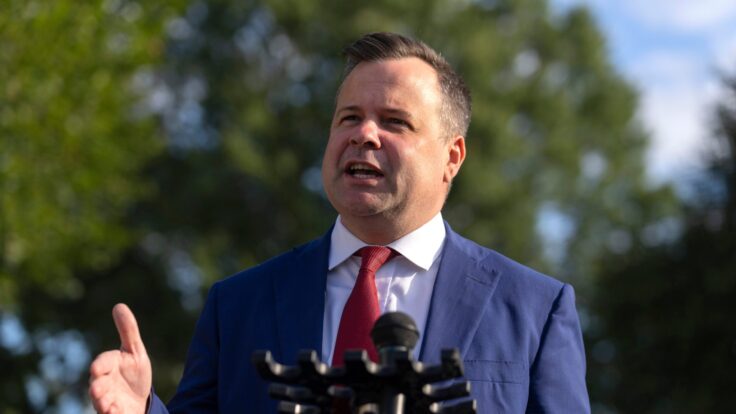
Rep. Randy Feenstra
Marianna Sotomayor • March 2, 2022
G.O.P. Jitters in Iowa and New Jersey
Trump’s endorsement streak comes to an end in the Hawkeye State, and an AWOL congressman gets an ex-Navy pilot challenger.
Maine Senate candidate Graham Platner
Leigh Ann Caldwell • March 2, 2022
Hill Rebellion & The Platner Files
The House rebukes the president on two separate bills, and Maine’s Graham Platner assures senators there isn't worse oppo to come.
Xavier Becerra
Peter Hamby • March 2, 2022
Revenge of the Normie Libs
In California’s primaries, voters mostly chose pragmatism over progressivism: Tom Steyer’s class crusade fizzled, Saikat Chakrabarti got Pelosi’d, L.A. rejected its wannabe Mamdani, and Spencer Pratt—yes, Spencer Pratt—is still in the running.


Jeremy Langmead and Toby Bateman
Lauren Sherman & Malique Morris • March 2, 2022
The Mr Porter Bloodletting & Prada’s Live Strategy
The online retailer laid off several editorial staffers as it and sister site Net-a-Porter continue to shrink. Plus, why Prada's events work.


Get access to this story

Enter your email for a free preview of Puck’s full offering, including exclusive articles, private emails from authors, and more.

Verify your email and sign in by clicking the link we just sent.

Already a member? Log In


Start 14 Day Free Trial for Unlimited Access Instead →


Latest Articles

Stephane de La Faverie
Rachel Strugatz • March 2, 2022
Martial Lauder
Now that ELC’s spring flirtation with Puig is over, investors would very much like it to get back to the long-promised turnaround. But finding buyers for its struggling brands is easier said than done. Plus, why the real narrative on the merger talks just won’t go away.
Jeff Immelt
William D. Cohan • March 2, 2022
The Emancipation of Jeff Immelt
The disgraced-ish former GE executive has been on a journey of personal discovery to reinvent his legacy and perhaps make amends—even when the facts don’t fit his new narrative. But not everyone who worked with him is ready to forgive or forget.
Sotheby's Art Auction
Marion Maneker • March 2, 2022
May Auction Report: Rational Exuberance
Lured by the optimistic tailwinds from last fall’s Lauder auction, high-value supply came back to the art market in May, with sales totaling $2.5 billion. But the comeback may not be quite as roaring as it appears: Unimpressive hammer ratios reveal buyers’ willingness to pay, but not more than they have to.


Adam Selman
Lauren Sherman & Malique Morris • March 2, 2022
The Adam Selman Effect Is Working at Victoria’s Secret
The lingerie retailer saw a dramatic uptick in profits in its first quarter thanks to an overhaul by its chief creative officer. Plus, thoughts on the hottest stylist in Hollywood and the counterintuitive path to luxury success right now.
Blake Lively court
Eriq Gardner • March 2, 2022
The Blake Lively–Justin Baldoni Suit Could Be Headed for a Do-Over
While Lively elected to settle with her ‘It Ends With Us’ director, her search for attorneys fees and damages has vexed the judge overseeing the case. Will the solution be a new suit in a new venue?
Brendan Carr
Eriq Gardner • March 2, 2022
Disney Is Ready to Clobber Brendan Carr
The F.C.C. chairman is forcing a showdown with Disney over its D.E.I. policies—seemingly a thin pretext for punishing ABC News. But Carr, usually a savvy operator, has an unusually weak hand. And Disney’s lawyers have figured out exactly how to exploit it.


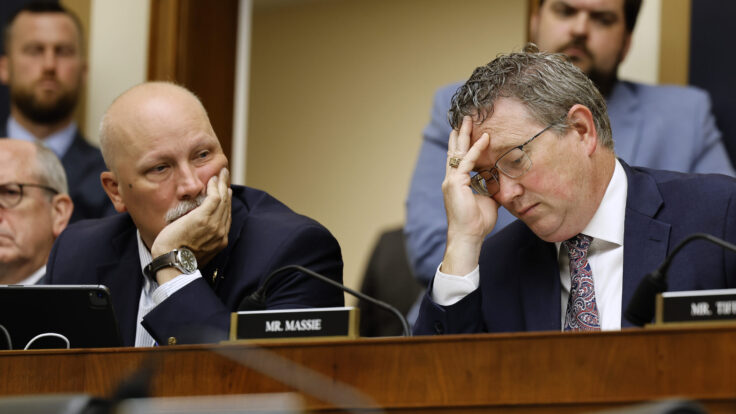
Chip Roy, Thomas Massie
Marianna Sotomayor • March 2, 2022
The Makings of a House YOLO Caucus
House Republicans are bracing for the return of members such as Thomas Massie and Chip Roy, who may come back as total renegades after losing primaries—and more Republicans may fall tonight.
Get access to this story

Enter your email to get access to one article and free previews of our private emails from Puck authors and editors.

OR

Already a Member? Sign in


Latest Articles

Burke Magnus
John Ourand • March 2, 2022
The Magnus Carta
ESPN’s indomitable content chief, Burke Magnus, on losing talent to the NBA sidelines, the heat around the NHL, and what he learns from the way his kids watch sports.
Bill Pulte
Leigh Ann Caldwell • March 2, 2022
The G.O.P.’s Pulte Problem
It seemed like Donald Trump was trying to make amends with Republican senators after he backed off of some controversial demands. The bonhomie lasted about 18 hours.
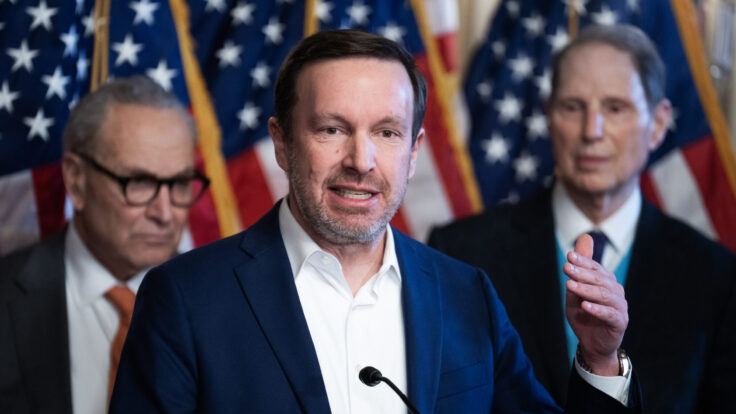
Chris Murphy
John Heilemann • March 2, 2022
Murphy’s Law
A candid conversation with the junior senator from Connecticut, Chris Murphy, about the president’s slate of terrible Iran options and the blatant corruption that has marked his return to office.


Jamie Mizrahi quince
Malique Morris • March 2, 2022
Quince and Repeat
As Everlane becomes a cautionary tale for retailers committed to selling “radical transparency” and sustainable fashion, Quince is becoming a billion-dollar business by remaining unapologetically transactional.
Ab-Anbar Art Gallery, London
Marion Maneker • March 2, 2022
Lifting the Fog on London’s Gallery Scene
In its sixth year, London Gallery Weekend isn’t just supporting nascent galleries and luring 50,000 art enthusiasts to town. It’s fortifying London’s place as a major art city.
Marc Zao-Sanders
Ian Krietzberg • March 2, 2022
Harvard’s A.I. Gut Check
An incisive conversion with Marc Zao-Sanders, author of the ‘Harvard Business Review‘’s latest report on how consumers are actually using A.I. Get used to seeing the term “cognitive offloading.”


Backrooms movie
Matthew Belloni • March 2, 2022
The 27-Year-Old Assistant Who Found ‘Backrooms’
Shawn Levy’s production company assigned a young staffer to monitor YouTube for potential talent. Four years later, Kane Parsons’ fantasy thriller opened to $118 million worldwide and has everyone in town talking about a possible sea change.


  • Terms
  • Privacy
  • Contact
  • FAQ
  • Careers
© 2026 Heat Media All rights reserved.
Create an account

Already a member? Log In

CREATE AN ACCOUNT with Google
OR YOUR EMAIL

OR

Use Email & Password Instead

USE EMAIL & PASSWORD
Password strength:

OR

Use Another Sign-Up Method

Become a member

All of the insider knowledge from our top tier authors, in your inbox.

Create an account

Already a member? Log In

Verify your email!

You should receive a link to log in at .

I DID NOT RECEIVE A LINK

Didn't get an email? Check your spam folder and confirm the spelling of your email, and try again. If you continue to have trouble, reach out to fritz@puck.news.

CREATE AN ACCOUNT with Google
CREATE AN ACCOUNT with Apple
OR USE EMAIL & PASSWORD
Password strength:

OR
Log In

Not a member yet? Sign up today

Log in with Google
Log in with Google
Log in with Apple
Log in with Apple
OR USE EMAIL & PASSWORD
Don't have a password or need to reset it?

OR
Verify Account

Verify your email!

You should receive a link to log in at .

I DID NOT RECEIVE A LINK

Didn't get an email? Check your spam folder and confirm the spelling of your email, and try again. If you continue to have trouble, reach out to fritz@puck.news.

YOUR EMAIL

Use a different sign in option instead

Member Exclusive

Get access to this story

Create a free account to preview Puck’s full offering, including exclusive articles, private emails from authors, and more.

Already a member? Sign in

Free article unlocked!

You are logged into a free account as unknown@example.com

ENJOY 1 FREE ARTICLE EACH MONTH

Subscribe today to join the inside conversation at the nexus of Wall Street, Washington, A.I., Hollywood, and more.

START 14-DAY FREE TRIAL

  • Daily articles and breaking news
  • Personal emails directly from our authors
  • Gift subscriber-only stories to friends & family
  • Unlimited access to archives
  • Bookmark articles to create a Reading List
  • Quarterly calls with industry experts from the power corners we cover