Welcome back to The Varsity, and R.I.P. to my iPhone, which is currently resting at the bottom of
the Chesapeake Bay following what was, until then, an excellent Father’s Day boat trip with the family. My apologies to everyone trying to call this morning. I should be back up and running by the time this hits your inbox.
In today’s issue, Eriq Gardner is here for his regular Monday report on the biggest legal issues roiling our industry: who’s suing whom; the latest messes in the N.I.L. era; and so forth. This week, Eriq has a real doozy that might rain on Jim
Dolan’s otherwise endless parade: news of a hacker ring that says it breached Madison Square Garden’s cyber defenses and then leaked a vast array of the security-obsessed venue’s visitors data. You might have missed this amid the sheer tonnage of Knicks coverage, but the inevitable consumer suits are about to test the old adage about winning solving
everything.
Pod alert: FanDuel president Christian Genetski joins The Varsity on Wednesday—and, yes, we address the Brendan Sorsby situation and all the sports betting scandals in the headlines. We also hit on the prediction markets, the demise of FanDuel TV, and the enduring popularity of the World Cup. Also, make sure to listen to yesterday’s episode with Nicole Auerbach, NBC Sports’s lead college football and
basketball insider, cutting through all the chaos in college sports these days.
Before we begin, I wanted to offer a quick bon voyage to O.G. SportsCenter anchor Linda Cohn, who is retiring this week after helming at least 5,650 editions of the studio show—the most of any SportsCenter anchor—since joining ESPN in 1992. There’s a reason why Cohn lasted as long as she did: She was well-liked and respected internally. Plus, she connected with
viewers. This interview, on Rich Eisen’s This Was SportsCenter, is worth a click.
Also mentioned in this issue: Wyndham Clark, Ben Stiller, Miles Russell, A Boogie Wit da Hoodie, Patrick McEnroe, Mark Walter, Josh Carpenter,
Tiger Woods, Mike Tirico, Carson Daly, Jalen Brunson, Greg Sankey, Kimbra Walter, Tony Petitti, Joe House, and more. |
Brady Meter: U.S. Open
Wyndham Clark
Grade: B–
|
Over the weekend, NBC’s broadcast team did a great job alerting viewers to the reality that the bridge and
tunnel crowd that had descended on Shinnecock Hills for the U.S. Open had been giving Wyndham Clark a hard time throughout the tournament. However, they weren’t as thorough in explaining why this cohort didn’t like the golfer. So I ended up texting SBJ’s Josh Carpenter and The Ringer’s Joe House, who quickly reminded me about the pro’s awful behavior at last year’s PGA Championship and U.S. Open—particularly his public meltdown
and decision to turn the Oakmont locker room into a low-grade war zone.
In general, though, I like NBC’s coverage of golf’s majors, especially its decision to present Sunday’s final hour without commercials—branded, in a clever form of transactionalism, the “Rolex Hour.” The broadcast works best when the talent tell stories around the event. This year, that mandate went slightly afield with Carson Daly’s
memories of playing junior golf with Tiger Woods, but Mike Tirico’s narration of the 17-year-old Miles Russell pulling his dad from the gallery to caddie on his final hole really hit the mark, especially on
Father’s Day. |
|
|
|
A MESSAGE FROM OUR SPONSOR |
|
|
|
- The growth of women’s sports: One of The Varsity’s leitmotifs since our inception two and a half years ago has been the inexorable rise of women’s sports. Private equity, family offices, and other alt asset managers have been scouting the right opportunities and making targeted investments, following the thesis that nascent women’s leagues have the most potential upside for a return on invested capital. The latest example arrived this morning as the
Professional Women’s Hockey League welcomed investments from Ilitch Companies, which owns the Detroit Tigers and Red Wings, and Kilmer Sports Ventures, which holds a stake in Maple Leaf Sports & Entertainment. The PWHL, which launched in 2024 and until now had been financed by Mark and Kimbra Walter, has grown from six to 12 teams—ergo the need for new cash.
- Green volley: The parsimonious revenue split
at tennis majors continues to be a point of contention for players, many of whom staged a symbolic media protest at Roland-Garros last month to oppose their 14 percent share. We won’t see the same next week at Wimbledon, which recently announced a 20 percent larger prize pool. Still, even with that increase, the players’ take will only be around 15 percent of all revenue. “The players have the right to ask for a little bit more,” ESPN analyst and former pro Patrick McEnroe said
at a pre-tournament presser. “I don’t think anyone’s thinking they should get 40 percent or 50 percent like they do in other sports. But mid-teens is pretty low.”
Players have noticed that the live events market has exploded in the years since Covid, when prize money actually decreased briefly. “Now we see what’s happening at all the tournaments,” McEnroe said. “The demand for tickets and prices have been going up exponentially, not to mention what the events are bringing in through
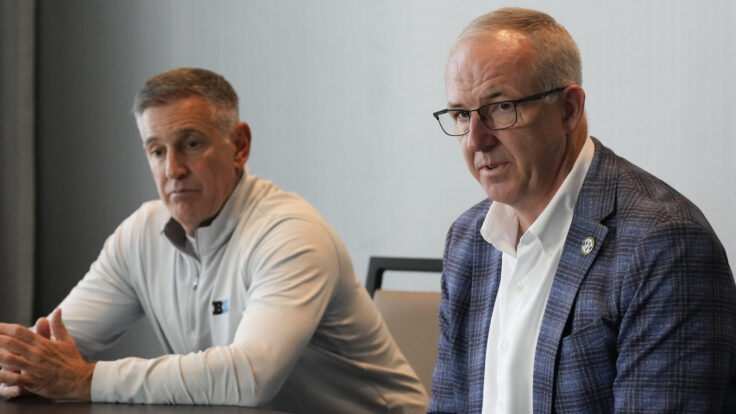
sponsorship and hospitality.” - Who really runs college sports?: One of the most understated, but consequential, storylines in the sports media landscape is the rivalry between SEC commissioner Greg Sankey and Big Ten commissioner Tony Petitti. The two men put up a united front on Capitol Hill, but they can barely agree on anything behind the scenes—a dynamic that has resulted in a fascinating paradox. On
yesterday’s episode of The Varsity, NBC Sports’s Nicole Auerbach broke down how the power balance is shaping up. “I don’t know if either of them has more power, because I think they have the same sort of constraints,” she said. “They have die-hard support within their league, but they’re dealing with the same issues with Congress, they’re dealing with the same issues within the NCAA. It’s almost by design that they can kind of check each other to stop one from doing too
much on their own.”
Meanwhile, every few months, the SEC threatens to cut ties with the NCAA and operate independently. But, as Nicole suggested, that leverage strategy has its limits. “One of the big talking points coming out of the most recent SEC spring meetings was, Hey, we’re really frustrated with the way things are going, and we can’t make changes, so maybe the SEC should do stuff on its own,” Nicole said. “It’s never not being discussed, but right now they can
just have their weighted voting and toss their weight around when they need to—and do it inside the larger system.”
|
And now, here’s Eriq on a breach of the Garden’s wall… |
|
|
|
An apparently massive cybersecurity breach at Madison Square Garden was all but lost in the
chatter surrounding the Knicks’ NBA Finals win. But as the confetti is swept up and the offseason begins, here come the inevitable lawsuits. |
|
|
|
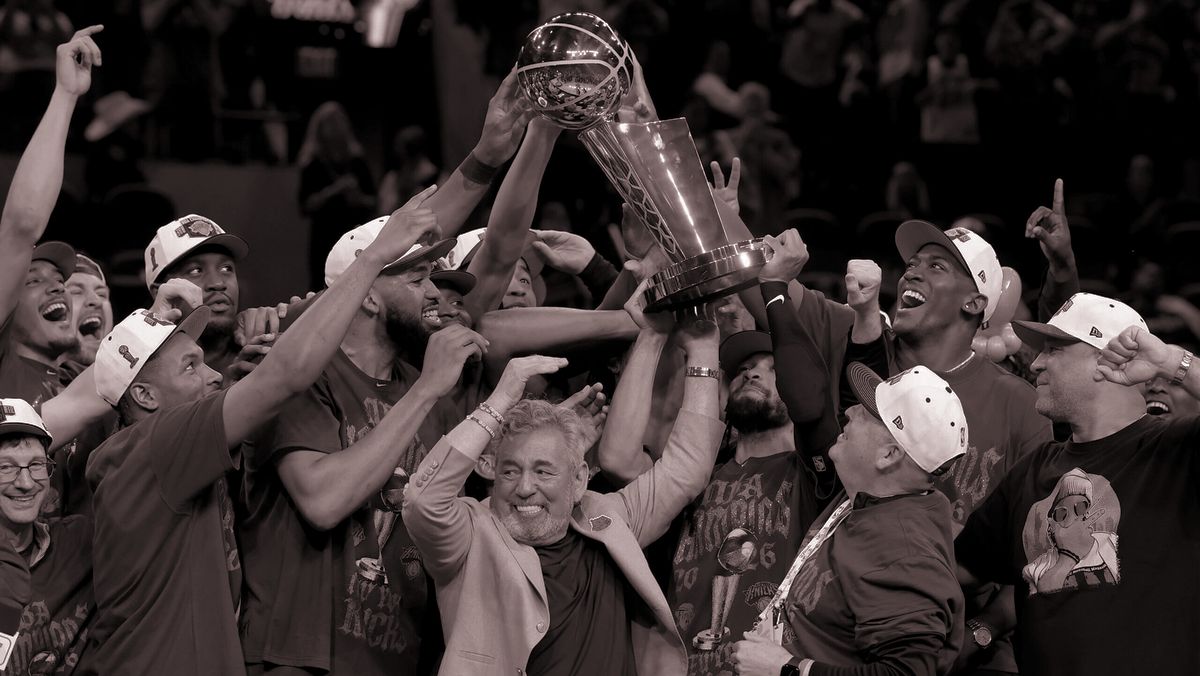
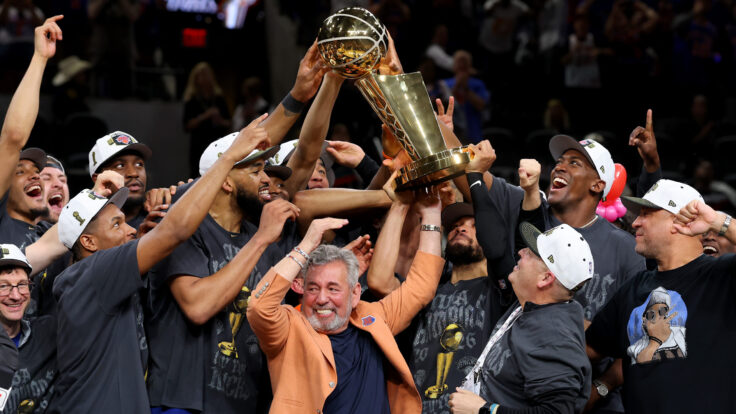
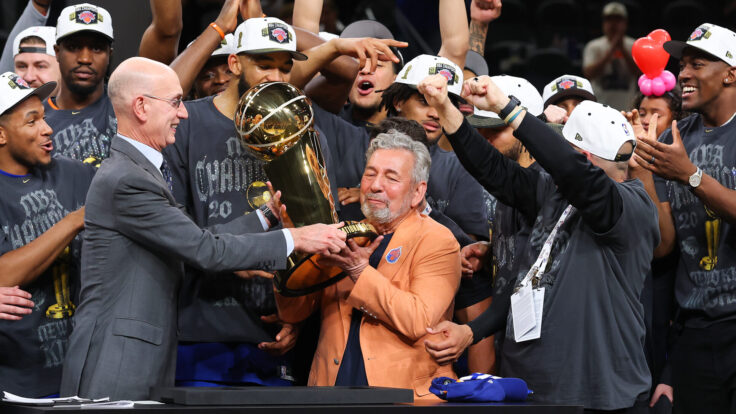
Last week, just as the New York Knicks were celebrating their first championship in 53 years, a notorious
hacking group known as ShinyHunters dumped a cache of compromised data from Madison Square Garden after owner Jim Dolan refused to pay an undisclosed ransom. The leak reportedly contained some 42 gigabytes of records relating to visitors, contractors, and employees. And yet, outside the legal community and a few cybersecurity obsessives, hardly anyone seemed terribly agitated. Perhaps the answer to New York magazine’s existential coverline last
week—“What If It All Came Out?,” a nod to the ambient dread of living with one’s secrets in the cloud—is simply this: Did the Knicks just win a title? Then who freakin’ cares.
Alas, not everyone shrugged. A handful of class actions have already dribbled in, each
accusing MSG of failing to safeguard sensitive information. Had the city not been preoccupied with a ticker-tape parade and championship delirium, this probably would have landed very differently. (MSG did not respond to a request for comment on this story.) |
|
|
|
A MESSAGE FROM OUR SPONSOR |
|
|
|
In some ways, this was a problem of Dolan’s own creation. For years, the owner of the Knicks, Rangers, and Sphere has used facial recognition technology, social media scraping, watchlists, and threat assessments to police the Garden’s gates, and
enforce policies like their infamous ban on any lawyer who’d dare sue them. (No, it’s not just Charles Oakley who’s persona non grata…) Wired recently went deep on the company’s panopticon, reporting that MSG security
tracked visitors’ movements inside Dolan’s venues, compiled “workups” on perceived targets, used facial recognition to identify people at the door, and even subjected a child and a New York City police officer to its surveillance machine. The reporting also described a private-security culture that extended beyond ordinary arena safety, with allegations of surveillance of critics, protesters, lawyers, and other supposed irritants to the Dolan empire.
That makes the ShinyHunters breach
more than a routine customer-data fiasco. If the hackers really obtained the sort of material now being described in lawsuits and breach reporting—visitor profiles, risk ratings, talent files, and internal security assessments—then MSG wasn’t merely sitting on names and email addresses. It may have been sitting on a treasure trove of unusually sensitive information—a cybersecurity liability. ShinyHunters had given MSG a deadline to respond before posting the material on its leak site, the usual
ransomware theater: Pay, and perhaps the data disappears; refuse, and your internal life becomes public inventory. MSG took its chances.
Whether these plaintiffs are actually positioned to hold MSG legally accountable is another matter. One plaintiffs’ lawyer raced to the courthouse with a complaint that mistakenly referred to “Plaintiff Avalos” when the man bringing the suit is actually named Victor Granados. (Jalen Brunson against a full-court press
this was not.) Granados’s team—three lawyers from Pennsylvania, two from Puerto Rico, one from New Jersey—believes he was caught up in the leak, at least “upon information and belief” (which is legalese for, We certainly hope so). The problem in these data-breach cases is often proving not merely that a company behaved creepily, or even carelessly, but that this particular plaintiff’s information was actually exposed and that the exposure caused a concrete injury. MSG will
likely waste little time questioning whether their client has standing to sue at all.
Would the case look stronger if it were fronted by someone indisputably contained in the files—say, Ben Stiller, whom MSG’s risk assessment reportedly categorized as “low risk,” or rapper A Boogie Wit da Hoodie, who somehow earned a “high risk” designation? Probably. But Stiller, who just struck a deal with HBO and A24
for a Knicks documentary, is unlikely to jeopardize his Garden credentials. Access, after all, is its own currency.
All of which brings us back to the central irony that MSG built an unusually invasive surveillance operation, a breach exposed the full scope of what it had compiled, and the city still couldn’t muster much outrage—because the Knicks are hanging a banner. That’s a remarkable advertisement for the immunity that championships provide. Dolan may have a cybersecurity headache,
but he also has a waiting list for premium seats… and, right now, that’s the more important data point. |
Thanks, Eriq. See you all tomorrow.
John |
|
|
|
Puck fashion correspondent Lauren Sherman and a rotating cast of industry insiders take you deep behind the scenes of this
multitrillion-dollar biz, from creative director switcheroos to M&A drama, D.T.C. downfalls, and magazine mishaps. Fashion People is an extension of Line Sheet, Lauren’s private email for Puck, where she tracks what’s happening beyond the press releases in fashion, beauty, and media. New episodes publish every Tuesday and Friday. |
|
|
|
Ace media reporter Dylan Byers brings readers into the C-suite as he chronicles the biggest stories in the industry: the future
of cable news in the streaming era, the transformation of legacy publishers, the tech giants remaking the market, and all the egos involved. Also featuring a weekly dispatch from Puck’s crack streaming/media analyst, Julia Alexander. |
|
|
|
Need help? Review our
FAQ page or contact us for assistance. For brand partnerships, email ads@puck.news.
You received this email because you signed up to receive emails from Puck, or as part of your Puck account associated with {{customer.email}}. To stop receiving this newsletter and/or manage all your email preferences, click here. |
Puck is published by Heat Media LLC. 107 Greenwich St., New York, NY 10006 |
|
|
|
|