Hi, and welcome back to Line Sheet. The cherry blossoms are blooming here in Paris, and the scent
of Nicolas Ghesquière–era Balenciaga is in the air. Can you smell the peplum?
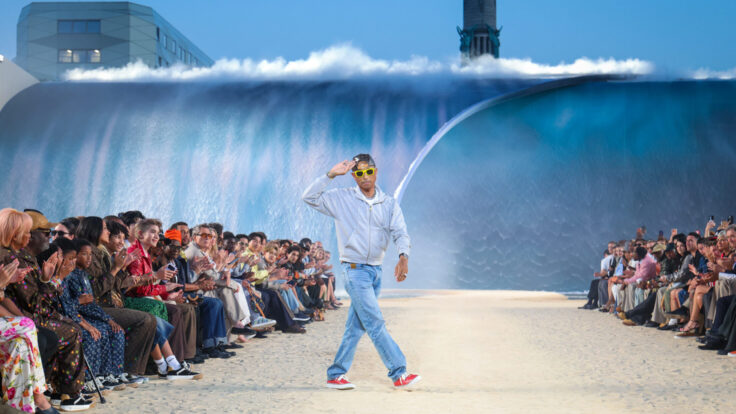
These shows take place over the course of nine days, but the next few feel uniquely crowded, with the entrance of Antonin Tron at Balmain, the exit of Pieter Mulier at Alaïa, and dozens of other proposals in between. On Thursday, I’ll have lots to say about what’s happening on the runway, including notes on Haider Ackermann’s wow Tom
Ford show, the best of the season so far, no doubt.
In this issue, you’ll find my report from Saint Laurent, as well as news of a change in ownership at Missoni. Authentic Brands Group, the licensor that was chasing it as late as last week, lost out to current investor FSI and Katjes International, a German firm linked to the candymaker of a similar name. More on that below, as well as a note on The Independents’ acquisition of creative talent agency MA+ Group. Plus, Malique
“ Malique@puck.news” Morris is here with a scoop about Net-a-Porter layoffs, which they’ve been hinting at since September.
For the main event, Rachel “ Rachel@puck.news” Strugatz returns with the story of Ben Bennett—the
mastermind of some of beauty’s biggest exits. She has the details on what’s happening behind the scenes at his company, The Center, which sounds like a cult or a Los Angeles private school but is actually a beauty brand incubator—potentially the most successful one around.
Also mentioned in this issue: Anthony Vaccarello, Kylie Jenner, Billie Eilish’s brother’s girlfriend, Luca de Meo, Toby
Bateman, German gummy candies, Rudy Manse, Tracee Ellis Ross, “Vanilla Skin,” Francis Belin, John Legend, Desert Vintage, Shaun Neff, Alex Drexler, Kendall Jenner, Susan Yara, Mickey Drexler, Chriselle Lim, José Criales-Unzueta, Ari Bloom, Heather Kaminetsky, and
more…
|
Three Things You Should Know…
|
|
|
 |
Malique Morris |
|
- Mass layoffs at
Net-a-Porter: Last Friday, at least 100 employees were laid off at Net-a-Porter and its menswear arm, Mr Porter, I’m told. The company also closed its in-house photo studios in London and the U.S., but will still operate one in Milan, according to someone familiar with the situation. The layoffs are part of an ongoing restructuring after Mytheresa acquired Yoox Net-a-Porter from Richemont and formed the LuxExperience group last year. I couldn’t confirm the final count, but last September,
LuxExperience said that as many as 700 employees would be let go as the company merged Mytheresa and YNAP’s operations, including consolidating facilities. (Asked for comment, a
LuxExperience representative referred to its previous public statements about workforce reductions.)Even more consolidation seems inevitable. I’m told that a few Mytheresa staffers have already begun working at Net-a-Porter and Mr Porter. The cost-cutting is in service of narrowing losses at Net-a-Porter, Mr Porter, and the off-price division, Yoox—all of which often contributed losses at Richemont. LuxExperience is looking to create a path to €4 billion in annual sales by 2030. The
company generated €2.7 billion in net sales for its 2025 fiscal year, which ended last June.
And yet Michael Kliger, the C.E.O. of LuxExperience and former C.E.O. of Mytheresa, has talked endlessly about maintaining each company’s differentiation. Mytheresa caters to ultrawealthy consumers who can afford The Row at full price; Net-a-Porter is where aspiring luxury shoppers go for a mix of high-end and mid-priced brands and directional editorial content. To maintain the
separation, each company now has its own chief executive. Francis Belin, a former Richemont and Swarovski executive, replaced Kliger at Mytheresa last November. Net-a-Porter is helmed by Heather Kaminetsky, who previously served as Mytheresa’s North American president. Toby Bateman, who helped launch Mr Porter, is now in the top job at the menswear e-tailer.
|
|
|
A MESSAGE FROM OUR SPONSOR
|
|
|
- It’s
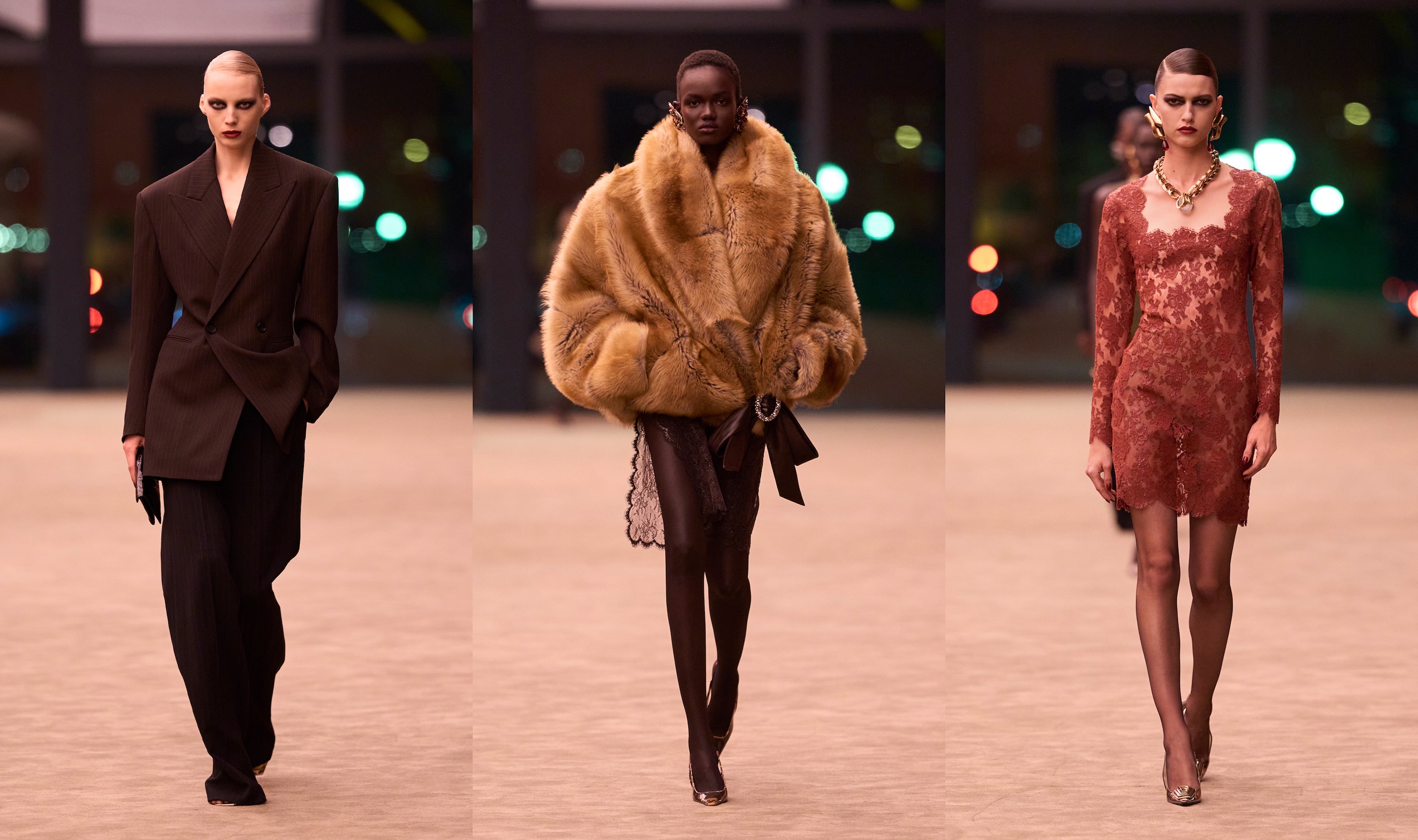
Saint Laurent’s world, we’re just living in it: After I posted a video of Tuesday night’s Saint Laurent finale, a friend asked, “What’s with these brands putting people in glass cages?” He was referring to the transparent structures built by Dior at the Tuileries, and also by Saint Laurent on the Place de Varsovie. I made a joke about how we’re all slaves to the fashion circus. But you know who isn’t a slave to fashion? Anthony Vaccarello.His vision for
Saint Laurent is clear and unwavering, and flies in the face of so many modern rules. It’s referential without feeling nostalgic, and driven by fantasy while also working with reality—like that vintage track jacket he made for a pre-collection that they can’t keep in stock. So many brands are suffering because they rely too much on the past, veering so close to a Saturday morning Desert Vintage drop that there’s hardly any reason to buy the new thing. Vaccarello delivers an old-school vibe, but
rises above to create something more immaculate, and often far more desirable, than the original.
|
- He’s
also setting trends, which is nearly impossible in these times. Just when you think a wide-shoulder suit doesn’t feel right anymore, he assures you it does. The collection’s lace dresses, with their square necklines and just-right snugness and length, will inspire a thousand knockoffs. At the same time, he’s not catering to anyone. There were few bags on the runway, a typical megabrand show requisite. So why isn’t this brand as big as Chanel or Dior? The ingredients are all there. Another task
for Kering C.E.O. Luca de Meo.
|
- Missoni
stays in Italy, but not in the family: Until last week, FSI, the Italian government–linked investment firm that bought a stake in Missoni in 2018, had been negotiating with the U.S.-based Authentic Brands Group to also come on board. Apparently, those talks fell through, and FSI wound up increasing its stake in the business to 73 percent while taking on a new minority partner, the German firm Katjes International—whose parent company is best known for making gummy candies. The
Missoni family, who did not control the voting rights, will exit the business it has owned since its founding in 1953.Under its newly created Quietly Luxury division (what a name), Katjes International has already bought a majority stake in skiwear label Bogner. In many ways, this feels like a JAB Holding–JAB Luxury situation. A decade ago, that conglomerate—itself an investment vehicle for the billionaire Reimann family—tried creating a luxury group
that included Jimmy Choo, Bally, and others. JAB Luxury didn’t work, and this likely won’t either.
I’m in favor of investors outside the fashion industry trying to master what operators inside have not, but few entities truly understand the capital requirements and management complexities of distributing, marketing, and scaling made-in-Europe luxury goods. Most companies with C.P.G. and food expertise, in particular, lack the commitment or are simply persuaded by experience that there are
other and better ways to make money. Katjes’ corporate literature suggests that the firm has a buy-and-hold philosophy, which is good for slow-cooking luxury, but they may not fully appreciate the cost structure. Anyway, as I’ve written before, this has all been a disappointment for certain members of the Missoni family, who would like to remain involved in the business and have now been carved out. More soon.
|
|
|
A MESSAGE FROM OUR SPONSOR
|
|
|
- MA+
Group sails off into sunset: Yet another agency has been acquired by The Independents, the private equity–backed conglomerate that now includes 21 different P.R., marketing, creative, and events production firms—from Karla Otto and Bureau Betak to Lucien Pages and Prodject. MA+ Group, the new addition, is the first talent representation agency to enter the fold.Unlike Great Bowery, WME Fashion, and other fashion-adjacent agency rollups in recent years, The Independents has been more
focused on events, creative strategy, and communications. Its portfolio companies are all high-margin service businesses with recurring revenue that investors prize. Acquiring MA+, which has diversified its services in recent years, could create some synergies, but I’m mainly curious about the overall end game here. The Independents offers its firms various platform benefits, plus an opportunity to get a big paycheck without totally cashing out. Most of the founders (workaholics who
love their jobs) stick around, and continue to operate relatively independently, with many of the agencies even competing against each other for work—all in hopes, of course, of a second exit when The Independents, itself, sells or goes public. The formula has made many of these firms highly productive. Is an I.P.O. inevitable?
|
|
|
Ben Bennett, one of the beauty industry’s most successful but lesser known executives, has
seemingly cracked the code for incubating and accelerating influencer-inflected brands—and for selling them at just the right time.
|
|
|
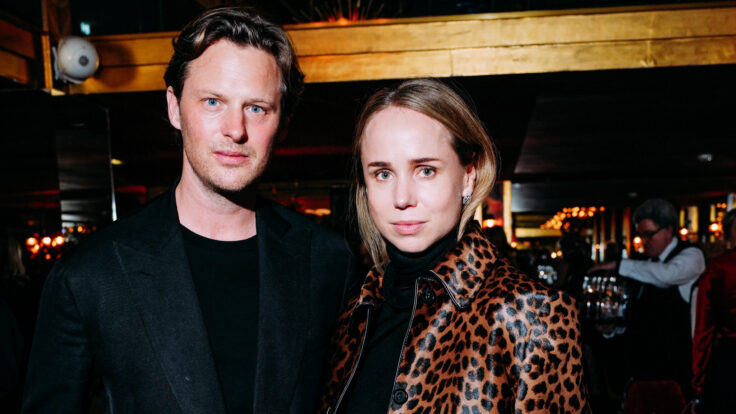
Ben Bennett, taut and well into his 50s with an unmistakably airbrushed look, is one of the
most successful beauty executives you’ve never heard of. “He’s very private. He likes to keep himself out of the narrative,” said a person familiar with his business. And yet, everyone in the industry knows his work. In 2020, he founded The Center, the trendy incubator that has generated endless intrigue and envy and many feelings in between. He has an aptitude for building brands alongside influencer talent that, somehow, outperform most of the usual made-for-Gen Z drivel. (A spokesperson for
The Center clarified that the company refers to itself as an accelerator, not an incubator. Bennett declined to be interviewed for this piece.)
So far, two of The Center’s brands have achieved exits: Naturium and Phlur, which were acquired by E.l.f. Beauty and TSG Consumer Partners, respectively, for $355 million and around $400 million. Saltair, another brand in Bennett’s five-business portfolio, has more than $100 million in revenue. The Center itself, however, has raised a very modest amount of capital: The company is almost fully funded by Alicia Sontag’s Prelude Growth Partners, beauty’s “Goldfinger” V.C., which has put at least $15 million into the incubator (I’ve heard they quietly invested another $15 million, although a spokesperson disputed this), following an initial $5 million-ish investment from Bennett himself.
I asked several industry types to define Bennett’s superpower. “He’s good at understanding white space on the shelf and creating a product to match—and matching the right
influencer,” one industry insider said. Another beauty veteran said that Bennett knows exactly when to exit, which is often before brands traditionally go to market. He’s not waiting for the $1 billion sale, an ego trap that many founders fall into. Last summer, when TSG acquired Phlur, the brand was said to be doing about $100 million in sales. Similarly, Naturium’s revenue was $90 million when it was acquired. These revenues, although impressive, are still more modest than many of the
assets currently in market, most of which still can’t find a buyer.
|
|
|
Indeed, timing does seem to be Bennett’s greatest talent. Several years ago, Bennett sold HatchBeauty Brands,
his first incubator, to American Exchange Group for an undisclosed price. (None of Hatch’s lines ever achieved a high-profile exit on the level of Phlur or Naturium.) And last fall, not long after the Phlur sale, Bennett bought the Bel Air home of Ryan Murphy, who had previously bought it from Tom Ford, for $24 million.
|
Most incubators fail because of lazy branding, cookie-cutter playbooks, and talent misalignment. Numerous
entrepreneurs, from Shaun Neff (Beach House Group) to Ari Bloom (A-Frame Brands), have tried to replicate the success of Kylie Jenner’s Kylie Cosmetics by pairing famous faces with generic-looking brands, to various degrees of success. Sometimes, the pairings have made sense (Tracee Ellis Ross’s Pattern Beauty), and other times not so much (Kendall Jenner and
Moon, a toothpaste brand, or John Legend and Loved01, a skincare line). Usually, the failure has been in assuming that massive celebrity followings automatically equate to big sales—and many of them have learned their lessons the hard way.
For his part, Bennett has taken a different tack. He prefers to work with small to midsize influencers, like skincare content creator Susan Yara, a co-founder of Naturium (and fun
Instagram follow), and Chriselle Lim, who joined Phlur as its creative director in 2021. It’s still a little blurry whether Yara joined after Naturium was created, or just waited to disclose her involvement until she started promoting the line, but fans didn’t care. The mass-priced skincare line was a hit, and three years later, became the first significant exit for an influencer beauty brand.
Phlur’s rise, in particular, was interesting to watch. After acquiring
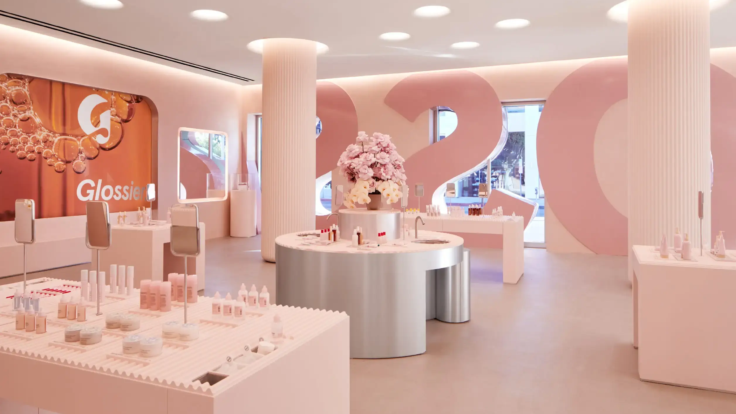
the struggling direct-to-consumer fragrance business in early 2021—I’m told it only cost him $1 million—Bennett tapped Lim as creative director, relaunched the brand with catchy fragrance names like “Missing Person,” “Vanilla Skin,” and “Father Figure,” priced its scents under $100, and partnered with Sephora—all of which produced one of the most viral fragrance brands of the past few years.
Lately, though, I keep hearing about Cyklar, a 2½-year-old bodycare brand that I hear is
already an over–$20 million business. Cyklar was founded in 2023 by beauty influencer Claudia Sulewski ( Billie Eilish’s brother’s girlfriend) but was quickly acquired by The Center and got the Bennett treatment. Bennett helped to overhaul positioning and pricing (body washes originally retailed for close to $60, and now they cost $35) and brought Sephora to the table.
Cyklar entered the LVMH-backed retailer in February, and last
week, it became the retailer’s number one bodycare brand, pushing the multibillion-dollar global powerhouse Sol de Janeiro down to the second spot, a person familiar with Sephora’s business told me. “Most launches don’t break through,” this person said, noting that of the 35 brands launched at the retailer last year, only a few reach the top of their given category, and very few make it to number one. I don’t think it will surprise anyone if the brand scales significantly this
year and next.
|
Vanity Fair style correspondent José Criales-Unzueta has launched a weekly
newsletter that you should subscribe to because it’ll be great and offer a real point of view. [Fit Check]
Here’s an interview with Rudy Manse, who ended up doing the costumes for Love Story and fixed a lot of the problems.
[ Cultured]
Mickey and Alex Drexler on Alex Mill! [ Vogue]
|
Until tomorrow,
Lauren
P.S.: We use affiliate links because we are a business. We may make
a couple bucks off them.
|
|
|
Puck fashion correspondent Lauren Sherman and a rotating cast of industry insiders take you deep behind the scenes of this
multitrillion-dollar biz, from creative director switcheroos to M&A drama, D.T.C. downfalls, and magazine mishaps. Fashion People is an extension of Line Sheet, Lauren’s private email for Puck, where she tracks what’s happening beyond the press releases in fashion, beauty, and media. New episodes publish every Tuesday and Friday.
|
|
|
The industry’s go-to source for unflinching reporting on the trillion-dollar business of artificial intelligence - perhaps the
single most important technology of our time. Ian Krietzberg, the powerhouse journalist behind The Deep View, delivers twice-weekly insights into the latest dealmaking and breakthroughs in A.I., and how the intersecting worlds of finance, entertainment, media, and politics are being transformed in its wake.
|
|
|
|
|
PETER HAMBY & ABBY LIVINGSTON
|
|
|
Need help? Review our
FAQ page or contact us for assistance. For brand partnerships, email ads@puck.news.
You received this email because you signed up to receive emails from Puck, or as part of your Puck account associated with {{customer.email}}. To stop receiving this newsletter and/or manage all your email preferences, click here.
|
Puck is published by Heat Media LLC. 107 Greenwich St., New York, NY 10006
|
|
|
|