 |
 |
| Welcome back to The Varsity, my new private email for Puck with everything you need to know about the sports business. I’m John Ourand.
🚨 Programming alert!: You will continue to get The Varsity for free for another couple weeks—but then I head behind Puck’s paywall, which is a lot more formidable than any All-Star Game defense. Stop screwing around and sign up here to convert to a paid membership if you haven’t already. I can virtually guarantee you that your boss—and their boss—are reading.
I spent my Sunday deep in the D.C. suburbs watching the Professional Lacrosse League’s Championship Series, sitting alongside the organization’s co-founder Paul Rabil as the Philadelphia Waterdogs were taking it to the Utah Archers. Rabil created the league five years ago with his brother Mike, and in doing so, structured a novel model for how to launch and run a startup league—complete with an ESPN national TV deal and blue-chip sponsors, like Ticketmaster. But it’s the Rabils’ passion that sets the PLL apart: Plenty of sports executives who have cut PLL deals over the past few years will tell you that they are betting on the Rabil brothers as much as they are on the sport of lacrosse.
Okay, let’s get started with all the gossip from Indy… |
| The Starting Five: All-Star Game Hangover Edition |
|
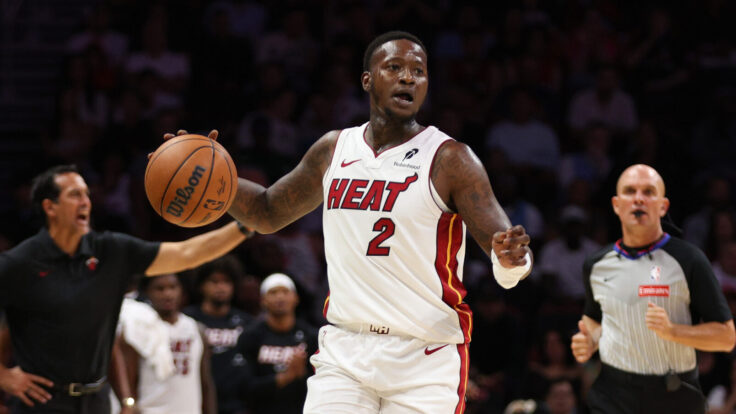
- All-Star level-setting: It seems that everyone hates the NBA All-Star Game these days. This year’s version featured no defense, no drama, and no visible player interest. The Eastern Conference scored a record-high 211 points. ESPN’s Tim Bontemps had a good story this morning that looked into how pissed off everyone has become about this game—Adam Silver, fans, and even some players. But you know who’s not upset? Sponsors.I called Tony Ponturo, a legendary sponsorship executive who ran the Anheuser-Busch account for 26 years, and asked him what the NBA should do to make the game more competitive. “If you’re a sponsor, you have to go into the whole All-Star weekend with your eyes wide open,” Ponturo said. “It is a broad entertainment spectacle with the best basketball players in the world. But it’s not going to be a competitive game. I don’t think it’ll ever be a competitive game, so you really have to look at it for its entertainment value. That’s how sponsors have to look at it—just be realistic for what it is.”
- Silver’s bullet: Over the past several months, Silver has been vocal about his frustrations regarding how NBA All-Star weekend is perceived. Privately, he regularly cites the example of last year’s game in Salt Lake City: In the days leading up to the contest, he has said, people would congratulate him for running a successful event. Then the actual game happened, and much of that goodwill vanished. In Indy this week, it was clear that Silver expected a more competitive showing—he said so on the record several times and even had Indiana legend Larry Bird talk about the need for players to take it all more seriously. Obviously, he didn’t get it.This morning, I was texting with an NBA coach about what the league should do to make the game more competitive. His answer was simple: eliminate it. The idea with the most traction is to copy the NFL’s model with the Pro Bowl and stage competitions that showcase NBA skills. The three-point contest between Steph Curry and Sabrina Ionescu, for instance, drew much more positive publicity than anything that came out of Sunday’s game. Ditto the Rising Stars Challenge. I would expect the league to stretch skills-based events across the entire weekend, which would help de-emphasize the game. As Ponturo said, “Let’s not keep making a farce of it if it’s perceived that way.”
My two cents: Maybe the NBA should only pay players on the winning team. The $500,000 cash reward seemed to work for the In-Season Tournament, where players really competed hard. Another idea being floated is a U.S. vs. The World game that would pit U.S. players against international stars. Of course, this type of game carries some risk, too. There’s a sizable contingent in the league office who think that this game would not be competitive either. Could the NBA come up with an American team that could compete with Jokic, Giannis, Embiid, Luka, and Shai Gilgeous-Alexander?
- The rights bake-off: Indianapolis was overflowing with reps from media companies expected to bid on NBA rights—including ESPN and Warner Bros. Discovery, of course, but also NBC, Netflix, Apple, and YouTube. A big ESPN contingent led by Roz Durant, and Chara-Lynn Aguiar met with the league on Friday afternoon; Jimmy Pitaro and Burke Magnus were also pressing the flesh in town. WBD also met with the NBA on the pending rights deal over the weekend, with Luis Silberwasser and Bruce Campbell taking the lead in that meeting. Amazon’s Jay Marine, NBC’s Jon Miller, and Apple’s Jim DeLorenzo also were spotted in the halls of the JW Marriott.But it’s unlikely those meetings changed the odds of who wins the NBA’s rights auction. ESPN and Amazon are still considered shoo-ins for their packages. To a person, Turner executives also express confidence that they will renew a package. (During his pregame interview on Sunday on TNT, Silver sounded hopeful and confident about a WBD renewal.) And I keep hearing that NBC is seriously in the mix for a slice of the rights pie. The question is whether Turner and NBC will battle over a third package, or if the NBA creates four of them, which would leave Turner and NBC with one each. All told, I still put the NBA’s over/under from its media rights haul at $5 billion per year, which is just about double what it currently brings in.
- Crumb’s next act: When Warner Bros. Discovery closed down its three regional sports networks last year, it looked like the end of a long and successful run for Patrick Crumb, a well-liked executive who ran those channels. But last week, Crumb accepted a position as president of sports ventures, where he will be charged with finding leagues and competitions that WBD can own—things like “The Match” or ELeague. “One of the ways that we can grow is by investing in our own I.P.,” WBD sports chief Silberwasser told me.Crumb’s first order of business will be golf, where WBD already carries “The Match,” owns Golf Digest, and has a wide swath of PGA Tour rights outside of the U.S. “We want to reinvent ‘The Match’ and put it on more of a growth trajectory to become bigger,” Silberwasser said.
- Breaking news: Just this weekend, I joined the millions of Americans who have cut the cord. For the first time in a quarter-century, I do not subscribe to a traditional cable TV provider. For the first time in my life, I am without a landline phone. The reason for the switch came down to cost. I was paying Xfinity $275.03 per month for cable/phone/internet. That price included $31.75 for a monthly broadcast TV fee, and $11.15 for what it called a “regional sports fee.” Sorry, that’s too much.I switched to Hulu+Live TV, saved a couple hundred bucks a month, and watched Terps basketball on Fox with no problems on Saturday and the NBA All-Star Game on TNT without a glitch on Sunday. Tonight, I’ll be wrapping up season two of The Bear. Hulu doesn’t carry RSNs, so we’ll see if I remain a happy customer on Opening Day… All of which leads to our main story today, on how Disney and Fox pursued Spulu in response to Comcast’s evolving video strategy.
|
 |
| The Sports Bundle Holy Wars Have Begun |
| Spulu wasn’t just a way for frenemies Disney, Fox, and WBD to join forces to solve a consumer problem. It was also a warning shot at Paramount and Comcast. |
|
|
|
| Less than two weeks since Disney, Warner Bros. Discovery, and Fox launched their own hastily conceived, prematurely announced, and semi-hostile sports streamer—henceforth known as Spulu in these digital pages—some of their ulterior motives are becoming increasingly clear. Yes, as I noted, they are collectively looking to lure a generation of “cord-nevers” onto the service. And, as my Puck partner Julia Alexander recently wrote, executives like Bob Iger are likely using the service as an R&D lab to help float a future ESPN service. But there’s another reason, too, that these companies all got together, and it flicks at the relationships-based essence of this very business: It was a warning shot fired at Comcast and Paramount.Disney and Fox, after all, have pursued a strategy intended to keep the cable bundle as healthy as possible for as long as possible. Fox keeps all of its live sports on its broadcast and cable channels; virtually none of it gets streamed outside the bundle. Same with ESPN, which has a direct-to-consumer service in ESPN+ that carries little programming from ESPN’s linear TV channels. Comcast and Paramount, however, have taken the exact opposite approach—one that Disney and Fox executives, in particular, have consistently viewed as reckless. It’s not just that both companies multicast their sports on cable and streaming—including NFL games, such as top-rated Sunday Night Football on Peacock and NBC. These companies, particularly Comcast, also sell their services at cut-rate prices, which undermine a pay TV business that is already stressed. |
| A MESSAGE FROM OUR SPONSOR |
|
 |
| If you want hockey stick growth on all your content metrics, here’s the answer.WSC Sports automates the instant creation and distribution of content with features that give you the control. The platform is built on sport-specific AI technology for over 30+ sports - a must for every content strategy.
Over 430 partners around the world, including the NBA, NHL, LaLiga, Bleacher Report, New York Rangers, ACC Digital Network, University of Southern California, and YouTube TV, rely on WSC Sports for technology that enables more views, more formats, and more fans. Drive record results with AI. Learn more.
|
|
|
| On Black Friday, for instance, people could subscribe to Peacock for as little as $1.99 per month, discounted further to just $19.99 for the year—a rate that includes most sports and entertainment content on NBC and its cable channels. Distributors, like Charter and DirecTV, are apoplectic because they can’t buy any single NBC station for as little as $20 per year. The view inside ESPN and Fox, from my various conversations since Peacock launched, is that these types of bargain deals undermine the whole system. Peacock lost $2.8 billion last year, but forces inside Burbank and Hollywood feel it also cost its competitors, too.The biggest complaint about streaming sports, in general, is that there are too many services. Executives and consumers alike have called for a rebundling, where they can access most sports content, from the same place, for one fee. But if Peacock is out there for a cut-rate price like $2 per month, there’s less of a need for that rebundling. Instead, that’s almost a micropayments business.
The beef with Paramount+, for its part, has less to do with cost and more to do with the belief that Paramount is pushing the streaming service more than its own broadcast network, CBS—going so far as to feature Tony Romo and Josh Allen in a commercial for the service.
To combat these strategies, Disney, Fox, and Warner Bros. Discovery set up their sports streaming bundle. Most sources believe it will be priced between $40 and $50. The idea is that sports fans who are not pay TV subscribers can subscribe to this service, then pick up Peacock and Paramount+ à la carte, and still pay less than they would for YouTube TV, to say nothing of what I was paying for Xfinity. |
|
|
| When Spulu was first announced a couple of weeks ago, it seemed obvious that it eventually would include other companies like Comcast and Paramount. Now, I would bet that Comcast and Paramount will remain on the outside looking in, as long as those companies continue to simulcast sports on both their TV channels and streaming services. Spulu, after all, will never undercut Peacock or Paramount on price. Even today, Disney, Fox, and WBD want to preserve the cable bundle as long as they can. Although I can see a scenario where Spulu finds success by steering its subscribers to pick up Peacock and Paramount+ to fill in its programming holes with NFL, golf, and international soccer. That’s the same strategy that distributors have used during carriage fights with these programmers.Of course, Paramount has bigger problems than a few antagonistic streamer superheroes ganging up against it. As my Puck partner Bill Cohan recently noted, Warren Buffett sold a third of his shares and presumably wants to sell more as the company’s market valuation drifts to around $8 billion, an astonishing nadir, and David Ellison appears to be the only suitor in its orbit. Paramount+ and Peacock are already in talks about a partnership, and one can’t help but wonder if it’s the first step in a larger deal or eventual acquisition. If that’s the case, the sports streamer holy wars will almost certainly go nuclear. |
|
|
| Thanks again to everyone who wrote in response to last week’s innumerable emails about the NFL’s “Spulu” surprise, my McManus interview, and all the industry gossip heading into NBA All-Star weekend. Keep it coming. Your replies go directly to my inbox. Here’s a sampling…“Congrats on your move to Puck. Particularly liked your recent news that the NFL is less than happy on the pending Disney/WBD/Fox streaming service. Not surprising that they are combing through their contracts to see if this is permissible or not. I would have done the same if I was still at the league but done so with the notion that those networks would have already had smarter people than me reading the same contracts.” —A former professional sports league executive
“I've long been a fan of yours, but never an SBJ sub—so was delighted to see you join Puck, where I already subscribe. Something I haven't seen mentioned about WBD/FOX/DIS: This happens to include the two NFL rights holders (Fox and ESPN) who don't put games on a streaming service. What this does, for folks like me who stupidly pay for Max/Peacock/Netflix/Hulu/Par+ AND YouTube TV is... maybe I can save $20-$30 a month by stripping out a bunch of linear channels I don't care for—particularly when almost all the content is being paid for elsewhere.” —Don Day, Puck subscriber
“Re: Your note around Netflix not being interested in live games. Got me thinking if the move for Netflix, in their sports-adjacent content, is to have almost YouTube-style NBA content on their platform. Lift and shift the NBA YouTube channel content into a tile on Netflix. They have the advertising infrastructure to support it now, too. Completely against their typical original content strategy, but plays well with their upper hand in licensing others’ content again. Don’t even think they’d need to license. The NBA’s social media strategy always seemed more branding than economics. Why not throw the same content on Netflix? Netflix eats some of YouTube’s lunch for free but still has sports on the platform, i.e., game recaps, top 10s, etc. Obviously can expand to all leagues that do the same on YouTube. Just a random thought.” —An executive |
|
|
| That’s all for this Presidents’ Day edition. See you Thursday.John |
|
|
|
| FOUR STORIES WE’RE TALKING ABOUT |
 |
|
 |
| Buffett’s Shari Short |
| You don’t get as rich as Buffett without knowing when to cut and run. |
| WILLIAM D. COHAN |
|
 |
|
 |
| Catch-81 |
| The Cafe Milano crowd on the political topic du jour. |
| TARA PALMERI |
|
|
|
 |
 |
|
|
| Need help? Review our FAQs
page or contact
us for assistance. For brand partnerships, email ads@puck.news. |
| You received this email because you signed up to receive emails from Puck, or as part of your Puck account associated with . To stop receiving this newsletter and/or manage all your email preferences, click here. |
| Puck is published by Heat Media LLC. 227 W 17th St New York, NY 10011. |
|
|
|