 |
 |
|
Welcome back to The Varsity, my twice-weekly private email on all the deals, friendships, and petty squabbles that comprise the business of sports and its media industrial complex. I am currently glued to Amazon Prime watching my hometown Commies take on the Iggles while Marchand plays the harpsichord in the background. Amazon is seeing record high NFL streams this season, which might reorient the market. More on this below…
Programming alert: ESPN’s Mike Greenberg joins The Varsity podcast this weekend. One of the top on-air voices at ESPN, Greeny will walk us through how the market for TV talent has changed during the last few years. Also, don’t forget to listen to my conversation from earlier this week with NBC Sports’ Mike “Fuckin’” Florio, the founder of ProFootballTalk. We go deep on NFL kremlinology, Goodell’s inner circle, and his theories about the Shield’s intent to continually stretch its schedule and total addressable market, both of which are totally addressed below.
Let’s get to it…
|
| Player of the Week: David Preschlack |
|
| Diamond Sports has been left for dead a dozen times over the past couple of years amid a veritable Bosch painting of glide paths, cliff paths, and grinfuckers. Leagues, distributors, and investors all had their knives out when Diamond filed for bankruptcy some 20 months ago. So hats off to C.E.O. David Preschlack, who engineered an improbable turnaround and positioned the mediaco to emerge from bankruptcy as early as next month.
Today in Houston, Judge Christopher Lopez approved the company’s reorg plan, which is a real jigsaw puzzle: Diamond, which is rebranding as FanDuel Sports Network and shedding nearly $9 billion in debt, has broadcast deals with 13 NBA teams, eight NHL franchises, six MLB clubs, and a partnership with Prime Video. Congrats to Preschlack for pulling it off, and good luck to him for operating within the labyrinthine constraints. |
| Down to the J.V.: Greg Maffei |
|
| Liberty Media’s outgoing C.E.O. is a casualty of Dr. John Malone’s decision to spin off the conglomerate’s live entertainment portfolio (though the company will keep Formula One and MotoGP as part of its core media business). As my partner Dylan Byers noted yesterday in his characteristically excellent In the Room email, “the folks who really deserve credit for Liberty’s success are Live Nation C.E.O. Michael Rapino and Formula One chief Chase Carey.” Maffei has managed the move with great aplomb on a well-choreographed media tour. But it’s a reminder that Malone remains as clear-eyed and tough as ever, even in his ninth decade. |
|
A MESSAGE FROM OUR SPONSOR
|

|
|
Reimagining the Defense Industry
As the world continues to digitalize and new challenges arise, governments are updating their cybersecurity defense systems and shifting from large traditional assets to advanced, smaller tech systems like autonomous drones. The Global X Defense Tech ETF (SHLD) invests in dozens of companies that may revolutionize the defense industry.
Explore the Investment Case Behind SHLD
|
|
|
|
|
- N.I.L. trends: The big name, image, and likeness collectives are spending nearly 75 percent of their funds on men’s sports, according to Octagon Worldwide president Phil de Picciotto, but the biggest brands joining the N.I.L. marketplace—including American Eagle and Motorola, which have deals with the gymnast Olivia Dunne—are favoring female athletes. Speaking at the University of Maryland’s Shirley Povich Center for Sports Journalism Symposium on Tuesday, de Picciotto, said that brands increasingly want to be associated with influencers, and female athletes “are doing a very good job generating content and garnering engagement.” (Disclosure: I’m on the Povich Center’s board.)
Indeed, it’s a more efficient return on invested capital. De Picciotto cited data suggesting that fans of women’s sports are more engaged and likely to buy sponsors’ products than men’s sports fans. “These companies don’t sponsor anymore out of some charitable intent. They’re doing this because it’s good business,” he said. “Spend is still evolving, and the marketplace will always be the judge and the jury here. It is about returns, ultimately. Women’s sports will know that it has made it and has an equal place in our world when it is not perceived by anyone as a charity, and when it isn’t perceived by anyone as being subsidized. But there are stepping stones that it will take to get there.”
- Dr. Phil’s sports woes: Dr. Phil’s Merit Street Media, which signed a deal with Professional Bull Riders in April, now will not be airing its season opener this weekend in Tucson. PBR yanked back its rights from Merit Street, claiming the TV shrink’s new streaming service didn’t pay its rights fees. Instead, the rodeo will be airing on Pluto TV and PBR’s YouTube channel and apps.
According to C.E.O. Sean Gleason, PBR gave Merit a contractually obligated cure period, followed by another extension. PBR reclaimed its rights after what was described as six weeks of negotiations without a payment. “They were a startup network and we definitely gave them a chance,” Gleason told me. “We were assured that they had the financial resources to make the deal work. After we gave them the cure opportunity, and they failed to cure the breach, we were forced to find other opportunities.” Merit, for its part, released a statement to The Dallas Morning News saying that the company was blindsided by PBR’s move and promised to “vigorously defend itself.”
- A WNBA growing pain: Regular readers of The Varsity know all about the WNBA firestorm that ensued back in September when USA Today’s Christine Brennan asked Connecticut Sun star DiJonai Carrington if she had poked the Indiana Fever’s Caitlin Clark in the eye on purpose. Some players and fans viewed it as a hostile, gotcha question, and the WNBA players association even called on the league to revoke Brennan’s credentials.
Reflecting on the incident earlier this week at the Povich Center event at the University of Maryland, Brennan offered a different perspective. Instead of trying to instigate trouble, she said that she was offering herself up as a “conduit” for Carrington to roundly dismiss the insinuation and move forward. “You give the athlete the opportunity to hit it out of the park. The athlete can take that question any which way they want to.”
Brennan, who is working on a book about Clark, also suggested that the WNBA had not fully provided the tools to help their players manage the increased exposure and scrutiny as the league has exploded in popularity. “I do wonder if the WNBA was preparing its athletes properly for questions that would come,” she said.
- When will the NFL add an 18th game?: On the Varsity podcast, NBC Sports’ Mike Florio described the NFL’s expansion to 18 games as a fait accompli. Florio even suggested the NFL should immediately push for an expansion to 20 regular season games, eliminating the preseason. Of course, any extension of the season would require approval from the NFLPA, and is therefore deeply in the realm of the hypothetical.
But Florio offered some intriguing, if imaginative, thinking on the topic.“The NFL has always done 20,” he told me. “Back when we were kids, I remember watching six preseason games and…14 regular season games. Then it went to 16 and four, and 17 and three. We’re going to move it again, 18 and two. I think they’re gonna move it eventually to 19 and one, and at some point—and I hope I live long enough to see it—it’s going to be at 20 regular season games and no preseason games. The logic that Roger Goodell always pushes is basically, Preseason sucks, regular season doesn’t; so let’s have more regular season games.”
- The Rays stay in Tampa: When Rob Manfred joined the Varsity podcast last month, he made it clear that he wanted the Rays to play their upcoming season in Tampa, even after Hurricane Milton severely damaged Tropicana Field. Just today, the team announced that it will play home games at the nearby, 11,000-seat Steinbrenner Field, best known for hosting the Yankees spring training games. The AP said that the Yankees will earn $15 million in insurance money for allowing the Rays to use the stadium. The Trop should be ready again by 2026. Complicating matters, of course, is the team’s desire to move into an entirely new stadium in St. Pete by 2028.
|
| Now, for the main event… |
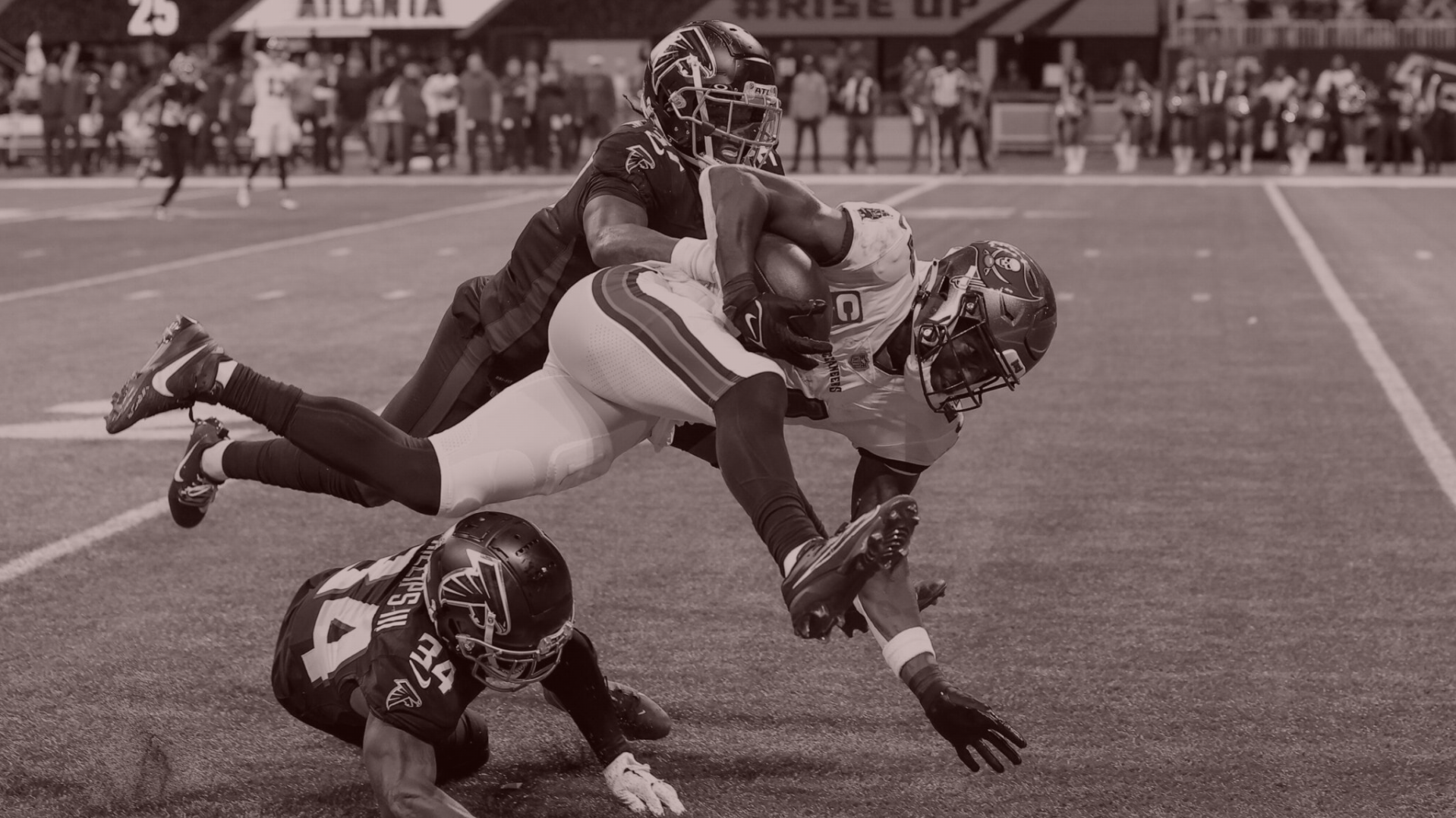 |
| Is the NFL Falling Hard for Amazon? |
| For the first time, a streaming service outdrew one of the NFL’s top TV partners in same-week viewership. Now, TV execs are grumbling that the NFL is setting up a future rights battle by giving streamers a taste of potential glory with the choicest matchups. |
|
|
|
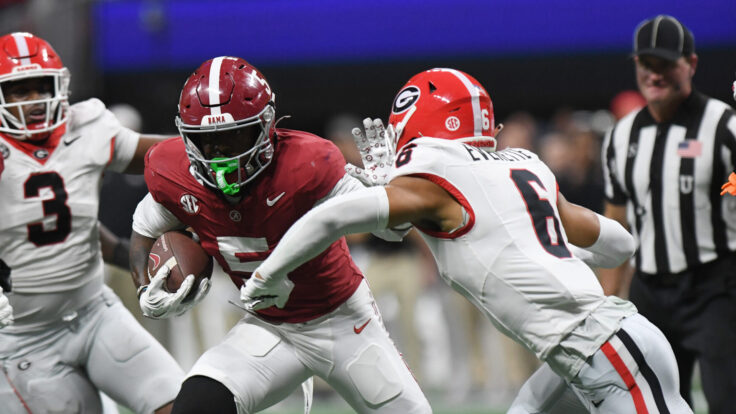
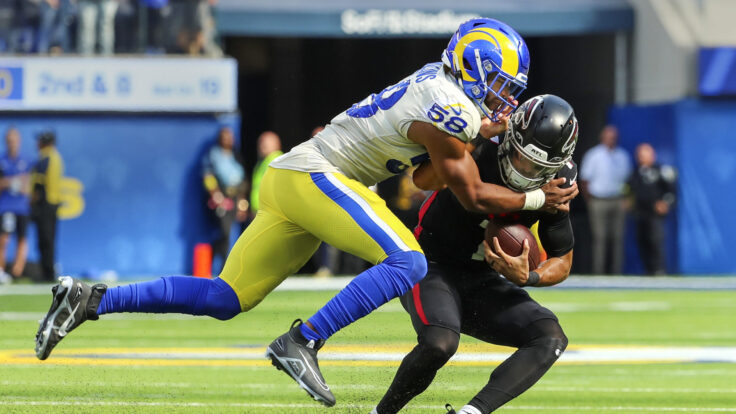
| Last week, the NFL achieved a significant milestone when viewership for Amazon Prime’s plucky Thursday Night Football telecast beat out ESPN’s Monday Night Football, marking the first time that any streaming service had attracted a larger audience in a same-week battle with one of the NFL’s top TV partners. Last weekend, Amazon netted 13.63 million viewers for the Bengals-Ravens game. Meanwhile, ESPN averaged 12.2 million viewers for the Dolphins and the Rams.
Yes, yes, there are some caveats here. Amazon is the NFL’s only real streaming partner (Peacock has had a couple games and Netflix gets two on Christmas), and I’m excluding a couple of ESPN/ABC doubleheaders that split up that Monday night audience. Also, Amazon had a far better matchup (an interdivision rivalry that the TV networks would obviously covet) than ESPN (a random interconference game between two teams that have no rivalry). But still… the precedent is emblematic of the sea change impacting the sports business as the growth of streaming threatens to finally extinguish the smoldering embers of the cable fire pit.
Interestingly, this news was greeted with wan reflections and jejune responses from the legacy executives I spoke to, nearly all of whom view live sports as the last bastion of linear and the inevitable plaything of streaming. In fact, many already believe that the major sports leagues are doing whatever they can to put streamers like Amazon in a position to succeed. The NFL wants to get Amazon and Netflix (and Google, and Apple, etcetera) hooked on live games, so they’ll become serious bidders when, as expected, the league exercises an out in its media rights deals at the end of the decade. Skydance and RedBird’s interest in Paramount Global was motivated, in part, by the company’s longtime NFL relationship, but it remains to be seen whether David Ellison’s CBS, or, in fact, any of the linear networks, will be able to compete for rights when the NFL reopens its deals.
These slighted feelings are compounded by an insidious reality. Amazon, of course, is paying about $1 billion per year to stream TNF, and the company forked over another $120 million to air the Black Friday contest, which effectively serves as a top-of-funnel experience for Prime shoppers. Disney, for its part, is paying about $2.7 billion per year. So, how did the streamer land Baltimore-Cincinnati, a heated rivalry, while ESPN got L.A.-Miami, a game with immaterial playoff considerations? “The league has bent over backward to help new partners at the expense of the returning partners,” one media executive told me, suggesting that the league is offering better contests to the streamer. “And it’s not like Amazon is overpaying for these games. They pay less than anybody else.” |
|
|
|
|
| Indeed, this exec has a point. Last year, the NFL changed its rule governing the number of times a given team can play on Thursday night, which subsequently allowed Amazon to showcase better teams and better games. As a result, Thursday Night Football is drawing more viewers through nine games than it has since 2015, when CBS had seven games and NFL Network had two through this point in the season. Amazon is averaging 13.08 million viewers, which is 36 percent higher than its first year with exclusive access to the series in 2022.
It’s easy to see why legacy executives are detecting an aroma of favoritism. Twelve of Amazon’s 16 games this season feature division rivalries: Amazon is following the Bengals and Ravens with Commanders-Eagles, Steelers-Browns, Raiders-Chiefs, Packers-Lions, and Rams-49ers. “It’s been building to this,” one executive said. “I guess it’s with the expectation of there being a bigger payoff down the road.”
Meanwhile, Netflix is carrying one of the most talked-about games of the year, Kansas City-Pittsburgh on Christmas day. (The company announced this week that it has sold out advertising inventory for both of its Christmas games.) There’s also Peacock, which carried the Chiefs-Dolphins wildcard playoff game exclusively last season, and opened this year with an Eagles-Packers game from Brazil. Both contests were high on TV networks’ wish lists. And Amazon’s Black Friday game this year not only features the Chiefs, but they’re playing the Raiders in a divisional rivalry game. These are the types of games you typically would never have seen moved away from broadcast.
Since the days of Pete Rozelle, the league has prioritized broadcast television, and the NFL still has a broadcast-focused outlook; all streamed games and all cable games have to be carried by a local, over-the-air station. Back in 2006, when NBC started carrying Sunday Night Football and ESPN had Monday Night Football, the NFL made it clear that ESPN had the league’s “cable package.” As such, it was saddled with mediocre games, like, say, the Rams versus the Dolphins. MNF would only feature popular teams like the Cowboys about once a season. Meanwhile, it felt as though teams like the Jaguars (or the pitiful Jets) were on MNF every other week.
ESPN’s schedule has since become much stronger, especially after Jimmy Pitaro took over the network in 2018 and reset relations with the league. But cord-cutting is affecting ESPN and all cable channels more than other broadcasters, which is one reason why the NFL allowed Disney to simulcast MNF games on both ESPN and ABC last year—and why the league agreed to add six simulcast games to ABC’s schedule in the middle of this season. Matchups drive viewership, and while network television still draws the most viewers, fans have demonstrated that they’re willing to find games wherever they’re carried.
Alas, these gripes will only grow louder and more frequent, and they are sure to be compounded by increasingly hazardous economic burdens. Disney, with its $200 billion market cap, spends $5 billion on the NBA and NFL because it needs the content to help build ESPN’s forthcoming “Flagship” streaming service. Amazon, with its $2-plus trillion market cap, is spending about half as much to service a platform that has much broader ambitions. Indeed, more than other companies, Amazon and Disney represent the battle between legacy media and Big Tech—fighting in the foreground about the choicest NFL games, but behind the scenes, engaged in a Vulcan chess match to build the internet’s premier front gate for sports consumption. That’s the only game to watch. |
|
|
| On McAfee leading that foul-mouthed chant during ‘College GameDay’: “It’s not just that McAfee did it on the show, he even posted it on Instagram. Can you imagine ESPN allowing someone to post that on an official channel just a couple of years ago? Gross.” —A former ESPNer
[Ed. note: ESPN officially is not commenting on any of this.]
Regarding Comcast’s openness to offload its cable channels: “Whether he was right or wrong, [former WarnerMedia C.E.O.] Jason Kilar is the only modern media exec who’s had the balls to try to upset the status quo and execute an ambitious vision of a digital future. I’m not saying other execs should follow his exact model. But it is clear that these companies need to brace themselves for short-term pain in order to build a bridge to the future, which no one has been willing to do just yet. It will be interesting to see who bites the bullet first and how they position their company moving forward.” —An entertainment strategist
A note on the NBA’s early-season rating drops: “Shaq isn’t wrong about the three-point shooting. It does make the game more boring to watch a team attempt 40-plus three-pointers every game. I don’t know when it’ll change, but I’d be pretty surprised if I’m watching the NBA in 10 years and that line hasn’t moved.” —An old-school Varsity subscriber
A reflection on Florio’s Varsity appearance: “I agree with Mike Florio that there is a number that’s likely been passed around the league office to sell NFL Network games to a third party if they can find the right buyer and their affiliate agreements allow them to do so. In a couple years, we could see the live games from both NBA TV and the NFL Network migrate to streaming partners.” —A Varsity subscriber
On the stars of Puck’s cinematic universe: “Will there ever be a Puck newsletter that doesn’t talk about Zaz? Geez. Every single one does.” —An investment manager
[Ed. note: I’d suggest both Lauren Sherman’s Line Sheet and Marion Maneker’s Wall Power as reliably Zaz-free zones.] |
|
|
Have a great weekend,
John |
|
|
|
| FOUR STORIES WE’RE TALKING ABOUT |
 |
| Wallace’s Exit |
| Inside Chris Wallace’s self-defenestration at CNN. |
| DYLAN BYERS |
|
 |
|
 |
|
 |
| The Grenell Snub |
| The blowback as Trump begins stocking his cabinet. |
| TARA PALMERI |
|
|
|

|
 |
|
|
|
Need help? Review our FAQs
page or contact
us for assistance. For brand partnerships, email ads@puck.news.
|
|
You received this email because you signed up to receive emails from Puck, or as part of your Puck account associated with . To stop receiving this newsletter and/or manage all your email preferences, click here.
|
|
Puck is published by Heat Media LLC. 227 W 17th St New York, NY 10011.
|
|
|
|