| Jon Kelly
|
|
Good morning,
Welcome back to The Backstory, your Saturday review of the best of Puck.
It was
another historic week: Matt Belloni enumerated Josh D’Amaro’s to-do list at Disney; Dylan Byers unearthed the rift between Matt Murray and Will Lewis at WaPo; Eriq Gardner got to the bottom of an existential Bad Bunny lawsuit; Julia Alexander scrutinized Peacock’s sports strategy; John Ourand collected all the dish from the Super Bowl;
Bill Cohan profiled an Epstein-files warrior; Ian Krietzberg detailed Waymo’s latest headache; Lauren Sherman documented the Marc Jacobs–Arnault rapprochement; Rachel Strugatz investigated a Sephora scandal; Sarah Shapiro anointed the end of the Abercrombie renaissance; and Marion Maneker acknowledged the Old Masters moment.
Meanwhile,
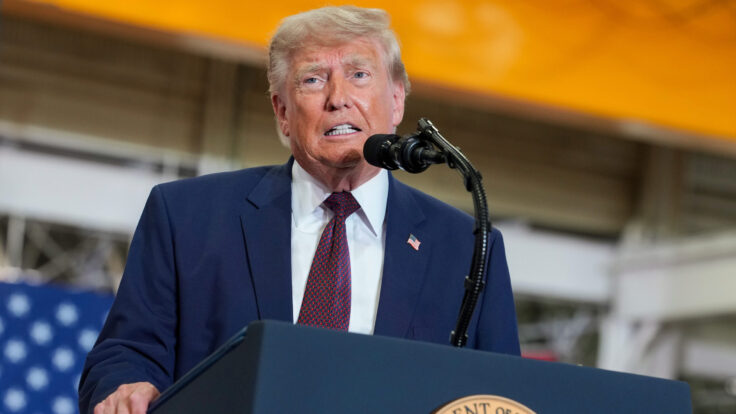
down in Washington, Julia Ioffe explained how Jared Kushner bungled the latest Ukraine tête-à-tête; Leigh Ann Caldwell recounted John Thune’s filibuster problem; Peter Hamby previewed some new polls that would terrify Trump; and Abby Livingston envisioned the G.O.P.’s ’26 tornado.
Check out these stories, and others, via the links below. And stick around for the
backstory on how it all came together. |
|
|

| FASHION
|
|
Lauren Sherman
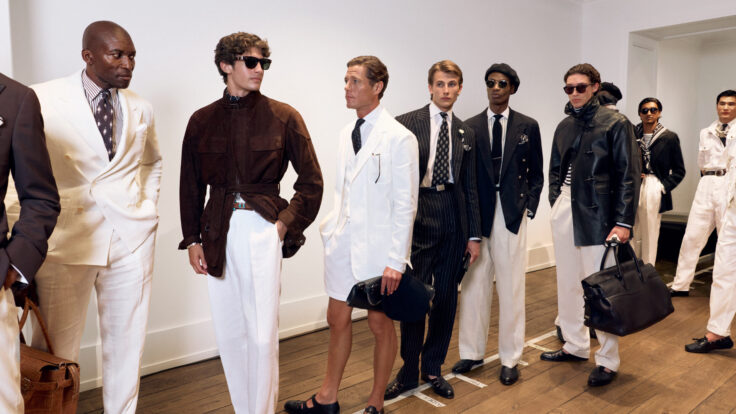
delights in Versace kremlinology and predicts a new bidder for Marc Jacobs.
and…
Rachel Strugatz
unfurls the latest Huda Beauty scandal.
meanwhile…
Sarah Shapiro runs the numbers on Abercrombie. |
|
|

| ART MARKET
|
|
Marion Maneker
charts the rise in Old Masters sales and unearths the bestsellers in the middle market. |
|
|

| HOLLYWOOD
|
|
Matt Belloni
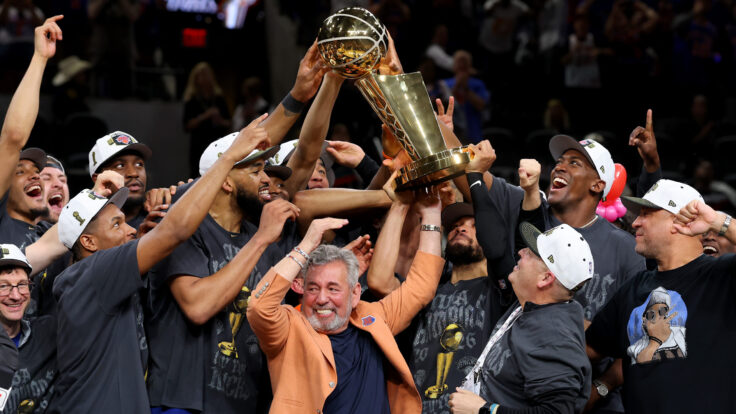
articulates the punch list for Josh D’Amaro and Dana Walden and scrutinizes the Melania opening.
and…
Eriq Gardner
explains the consequences of a stunning Bad Bunny lawsuit. |
|
|

| A.I.
|
|
Ian Krietzberg
details Waymo’s latest accident. |
|
|

| AIR MAIL
|
|
Gabe Sherman
places Murdoch in the mogul cosmology.
and…
Bronwen Carter checks out Eric Goode’s new hotel in Ojai. |
|
|

| MEDIA
|
|
|
|

| SPORTS
|
|
John Ourand
captures the industry’s collective anxiety over the NFL rights renegotiations.
and…
Julia Alexander puts NBC’s “Legendary February” into perspective. |
|
|

| WALL STREET
|
|
Bill Cohan
checks in with an Epstein-files crusader. |
|
|

| WASHINGTON
|
|
Leigh Ann Caldwell
grills Sen. Bernie Moreno about stablecoin, in partnership with Solana Policy institute.
and…
Julia Ioffe checks in with Ambassador Jared.
and…
Abby
Livingston decodes a Texas shocker while Peter Hamby measures Trump’s young-bro problems. |
|
|

| PODCASTS
|
|
Dylan puts Matt Murray in the hot seat on
The Grill Room.
and…
Ourand and NFL E.V.P. Jeff Miller talk about the 18th game and player safety on The Varsity.
and…
Lauren and Ian Schatzberg,
the founder of General Idea, get into the branding weeds on Fashion People.
and…
John Heilemann and MS NOW’s Alex Wagner wade into the Minnesota mess on Impolitic.
and…
Matt
and LightShed’s Rich Greenfield discuss the D’Amaro pick on The Town.
and…
Peter and Ian reveal ICE’s A.I. plays on The Powers That Be.
As a reminder, you can update
your profile at any time to get more stories like these directly in your inbox. Click here to customize your email settings. |
On Tuesday afternoon, I took an Uber across Lake Washington, from Seattle to Bellevue, for a small event
featuring my partner Ian Krietzberg, Puck’s resident A.I. wunderkind. The Pacific Northwest has an unfair reputation for somnolence; the reality is that it’s a more expansive version of Silicon Valley. As I looked out the windows of Ascend, a beautiful restaurant that would’ve been at home in Hudson Yards or Beverly Hills, I saw not only Mount Rainier, but the offices of Microsoft, Amazon, and ByteDance, the parent company of TikTok.
The timing of Ian’s chat was
fortuitous. Anthropic’s latest product release, among other factors, had prompted a sell-off across a number of enterprise technology stocks—signaling a rotation away, perhaps, from parts of the A.I. industry. It was the perfect moment for Ian to explain the exogenous factors and the industry’s interconnectivity across the economy, from financial services to manufacturing. After all, it’s all one world at the top of the pyramid.
In fact, the burgeoning A.I. trade is also relying on
government contracts for revenue to fuel those frothy valuations and market capitalizations. One voracious client has been the Department of Homeland Security—and ICE, in particular. In America’s A.I. Dragnet, Ian masterfully explains how a $30 billion budget has been deployed to marshal artificial intelligence resources into a veritable
surveillance state. “The department’s push into A.I., according to Nick Reese, who ran emerging technology at D.H.S. between 2019 and 2023, wasn’t supposed to look like this,” Ian wrote. “In the final weeks of Trump’s first term, the president signed Executive Order 13960,
promoting the use of ‘trustworthy’ A.I. in the federal government.” But, of course, Trump II has been far less constrained than Trump I.
In those early days, Ian reports, the administration engaged in all sorts of high-minded conversations around acceptable data use—including how to wall off various databases from D.H.S. that posed civil rights concerns. “Part of the challenge is that there’s data that is collected not for law enforcement purposes that is now being piped into law
enforcement,” Reese told Ian. But the second Trump administration pivoted toward a “move fast and break things kind of mentality.” If you want a more comprehensive assessment of the very real practical applications of this new platform technology, and how they square with our citizenship, I urge you to read Ian’s piece.
Shortly after our talk at Ascend ended, I mingled with clients and friends. Of course, we talked about Ian’s work and the markets, but the conversations also
meandered to different Puck obsessions. In particular, I was asked about the mass layoffs at the Post and Bob Iger’s successor, both of which would be announced the next day. (Believe me, Seattle is hardly a provincial town…) To each question, I merely offered that my interlocutor should look forward to reading about what really went down in future issues of Puck.
On Friday, my partner Matt Belloni dove into the Burbank plotline with a
characteristically excellent piece, Can Disney’s Josh and Dana Honeymoon Last?. Among other topics, Matt wondered whether the duo could solve Disney’s franchise challenges while managing ESPN and the company’s I.P. flywheel in the post-streaming-correction world. “Disney’s honeymoon period obscures a bunch of underdiscussed challenges across the company, but
especially in the content realm, where D’Amaro is the least experienced and potential conflicts are already brewing,” he wrote.
Meanwhile, in For Whom Will Tolls, Dylan Byers applied both industrial logic and empathy to the mass layoffs at Jeff Bezos’s media company. The Post, of course, is a victim of a
challenged business model and rapidly transforming consumer expectations. But it has also become a victim of cultural nostalgia—a regional media player that’s occasionally mistaken as a peer to The New York Times, when it’s really trying to do is avoid the fate of the L.A. Times. And, unsurprisingly, the descent has led to a collective dirge. Executive editor Matt Murray was quite candid about this interplay on
The Grill Room, Dylan’s podcast.
While we remain transfixed with A.I., the past does matter. Collective mourning for the Post, palpable from Washington state to Washington D.C., reminds us of the real power of brand affinity—especially in media, an industry that famously struggles to reinvent itself. It’s one of the great
complexities of our time, and precisely what you should expect to read about in Puck. |
|
|
Need help? Review our
FAQ page or contact us for assistance. For brand partnerships, email ads@puck.news.
You received this email because you signed up to receive emails from Puck, or as part of your Puck account associated with {{customer.email}}. To stop receiving this newsletter and/or manage all your email preferences, click here. |
Puck is published by Heat Media LLC. 107 Greenwich St., New York, NY 10006 |
|
|
|