 |
|
Hi you,
Last week was my birthday, so happy birthday to me and to all my fellow Virgos. It’s our season! I’m writing to you right now from a street corner in the Nolita neighborhood in Lower Manhattan. I lived in New York City for 12 years, until 2019, and worked in the adjacent neighborhood of SoHo for five of them, during my time at The Onion. I have just the edges of recollection of this part of town before it was taken over by models, expensive bistros, and luxury retail. Some would argue that by the time I arrived, in 2007, it was already too late.
For a while when I worked here, I was a regular at Delicatessen, one of those model-heavy, high-priced bistros, which nonetheless maintained a tether to the SoHo of old. One of the partners, John Buffa, is the grandson of the original owners. You can find him quoted in this 1998 New York Times article about how Nolita is changing too fast. Almost every morning, I’d grab breakfast and a chat with John, who regaled me with stories of the old days when SoHo was a textile labor hub. He seemed to know everybody who was anybody from that era, and had more than one story about the Mafia and various shootouts.
Yesterday, as I was squeezing my way through the annual Feast of San Gennaro festival, I wondered if John was still around. When I saw a man who looked plausibly Italian (is that racist?), I approached. He was wearing a priest’s collar and standing on a stoop across from the Basilica of St. Patrick’s Old Cathedral (featured in two different Godfather movies), so I took a swing. “Father, did you know a man named John Buffa,” I asked. He lit up: “Sure, I did!” So I proceeded, “Is he still with us?” To my relief, he beamed, “I just spoke with him! We talk at least once a month. He’s living in Florida now.” That put a huge smile on my face, and I’m sending as much of that smile to you through this email as I can.
Other than retracing my old steps, I’m in town to promote Season 2 of my PBS series, America Outdoors. We held a massive outdoor screening last week in Fort Greene Park, mere blocks from another neighborhood I hold dear. I felt the energy of Spike Lee, Erykah Badu, Yasiin Bey (formerly Mos Def), and other too-cool-for-school artists who partially inspired my decision to live there for eight of my New York years. When I saw hundreds of people show up for an outdoor screening of my outdoor show, it felt like a homecoming, and they looked like the New York I love: diverse, stylish, smarter than everyone else and fully self-aware of that fact. The series runs for another four Wednesdays, and you can check out my custom-built viewing guide to learn more about the stories we feature.
Some recent press of mine you can check out include my appearance on Firing Line with Margaret Hoover, where we discussed race in America, the healing power of the outdoors, and Trump in 2024 as well as this review comparing me favorably to Anthony Bourdain, Padma Lakshmi, and Barack Obama.
In tonight’s email, reflections on Walter Isaacson’s new Elon book and what happens when we allow private enterprise to replace public goods. Plus my thoughts on last week’s Apple product showcase. But first…
|
| What Else Is Grabbing My Attention |
|
- Cord Jefferson’s American Fiction is now the movie I most want to see thanks to this piece in Deadline chronicling the birth of this satire and Jefferson’s directorial debut. I’ve known Jefferson for a very long time, but don’t think I’ve seen him in person since he was a writer on Larry Wilmore’s The Nightly Show when I was a guest.
- This epic feature of Erykah Badu in The Cut. There’s a lot in here which explains my love of this artist, but none more so than this line: “Many people are not looking for a leader. They’re looking for someone who looks like one.”
- Clint Smith’s long read revealing the true history of Josiah Henson, the man who inspired Harriet Beecher Stowe’s Uncle Tom.
- And, finally, no, it’s not your imagination: We’ve just experienced the hottest August and summer on record, which has made disasters like those hitting Libya worse than they might have been. There’s no time like the present to do all we can to draw down carbon and make our infrastructure more resilient. Two tangible ways to contribute include: the climate action platform I’ve written about previously re-launched as Chilli and offers us ways to collaboratively work to bring down the temperature; the Future rewards card (disclosure: I’m an investor) that gives you cash back for reducing carbon; and if you want to actively work with your fellow employees to make your job a climate job, check out the All We Can Save project.
- I lied. There’s one more thing: Lauren Boebert. The Colorado congresswoman got kicked out of a live performance of Beetlejuice, the musical, last week. This Colorada Sun editorial provides a scathing critique of everything she is. This Instagram Reel from Nsé Ufot provides the laughter we need as a break from the absurdity.
|
 |
| Elon’s Star Power & Apple’s New Era |
| Musk’s interventions in Ukraine are just one example of the risks of allowing private enterprise to replace public goods. Plus, three takeaways from Apple’s latest product showcase. |
|
|
|
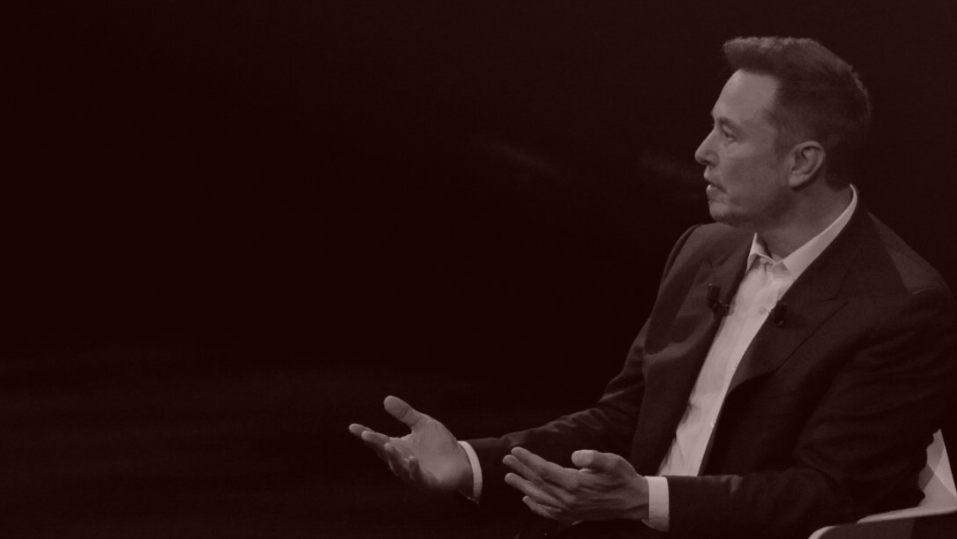
| There’s a lot of material in Walter Isaacson’s new book about Elon Musk, which I’ve yet to finish because last week was my birthday, and I don’t celebrate life by finishing 688-page books about highly intelligent but unstable egomaniacs. But I have read and listened to some of the people who have read it, whose reporting I generally trust. Casey Newton cataloged 9 wild details, mostly relating to the botched Twitter acquisition. (I wish Isaacson had spent more time exploring Musk’s relationship with race, from his South African childhood to the multiple allegations of racial harassment at Tesla’s factory in Fremont.) Meanwhile, Constance Grady at Vox did an admirable job of zooming out to critique Isaacson’s focus on the individual, rather than global or systemic, impacts of Musk’s growing power and personal flaws.
Musk, after all, has quickly become an important geopolitical player, in large part due to his ownership of SpaceX, which operates about half of all satellites orbiting Earth. In an excerpt from his book, published in The Washington Post, Isaacson reports how the Ukrainian military has come to rely on Musk’s satellite network for its operations—and also how Musk, when asked to extend the range of the network to an area where Ukrainian drone subs were attempting to strike back at the Russian navy, refused. The subs “lost connectivity and washed ashore harmlessly,” Isaacson writes. Of course, Musk’s growing influence in national security raises serious concerns about everything from his alleged drug use to his ability to influence (and be influenced on) battlefields. But Musk’s interventions in Ukraine are just one example of the risks we’re exposed to when a private company dominates a traditionally public sector like defense.
I’m not a reflexive critic of Elon Musk. I’m a Tesla owner, a reluctant Twitter/X user, and I’ve played around with Starlink, though I’m not a paying customer. I’m very much a part of Musk’s business universe. I’ve had friends employed at SpaceX, and appreciate what Musk is trying to do in space, and on Mars, even if I prefer the view (and atmosphere) from Earth. Basically, I respect parts of Musk’s hustle. He saw a gap in the aerospace market left by NASA and the government, and he’s exploited it well, brought costs down for rocket launches, improved space suits, and succeeded at satellite internet service where many others—remember Iridium?—have failed. Good for him, and, sometimes, good for us.
Of course, the power that Musk has over what was previously public policy isn’t unique to him. He’s just the latest manifestation of a trend toward concentration of economic and political power in the hands of fewer and fewer parties who aren’t directly accountable to a democratic process. In the recent past, we can look to the role of social media platforms like Facebook and Twitter, whose executives found themselves making decisions with geopolitical impact well beyond the walls of the U.S. State Department. Cybersecurity is another field that has required a significant role for the private sector, whose often superior products and services have become critical infrastructure. We can foresee a similar extra-governmental concentration of power already taking shape in artificial intelligence.
A growing lack of democratic accountability can be attributed in part to technological developments in which we have traded control for convenience. Back in 2008, I read Harvard Law Professor Jonathan Zittrain’s book, The Future of the Internet and How To Stop It. Zittrain, who I met in the early days of Harvard’s Berkman Klein Center for Internet and Society, was one of the first people I knew to identify the risk of concentrated, networked technology power in the form of what he called “tethered technology.” In his book, he pointed out that we didn’t really own our TiVo DVR recorders or our iPhones because, from headquarters, the companies behind those products could change their features or turn them off altogether. It was a prescient observation. Two years later, Tim Wu would make an even more focused argument in his book The Master Switch, which documented the history of information concentration in Silicon Valley and, as the book’s title implies, warned of our dependence on centralized technological power.
Musk’s dominance of space-based communications through SpaceX represents one recent version of this phenomenon, but the concept applies not just to end users and customers (e.g. SpaceX can disable my Starlink at any moment) but to nation states. Because of our dependence on information technologies, whoever controls that information also controls us. For decades, before the rise of the commercial internet, our collective paranoia was mostly directed at the possibility that it would be the government that could abuse such powers for surveillance or control. Those fears were warranted, as became evident during the global War on Terror, and later in the dystopian state of modern China. The information infrastructure of that country is heavily monitored by the government, and the imposition of a “social credit score” effectively gives Xi Jinping final control over the master switch.
But in the U.S., and the West more broadly, it’s private companies who surveil us and retain the power to control us, not the government. This is not entirely new, even in national security and warfare. In World War II, the government depended heavily on companies like Ford, General Motors, and IBM. The interests of the companies and the larger society weren’t always aligned. But at the end of the day, when those interests diverged, the government took measures to ensure that the nation’s needs were prioritized. This often involved direct intervention through rationing, regulations, and controls to guide production, distribution, and pricing in line with the war effort's requirements.
That is not the situation we find ourselves in today, for better and sometimes for worse, especially in the aerospace and communications infrastructure, where NASA has retreated and Musk has stepped in. In Ukraine, this has meant senior government leaders appealing directly to Musk and his ego to ensure their access to communications on the battlefield. It’s resulted in U.S. military leaders being reluctant to criticize Musk for fear that he might flip that master switch in a way that hurts their definition of U.S. interests. Musk’s massive satellite power, like Zuckerberg’s dominant social media power, is a flashing red light we should address sooner than later. |
|
|
| Speaking of consumer services that we rent but never truly own, Apple hosted another of its annual September product update events, and it looks like the reality distortion field is getting just a little bit weaker. It’s become common to say that Apple is more focused on incremental change than major leaps forward in innovation. After all, they have a $3 trillion kingdom to protect, and the way they do that isn’t by constantly taking huge bets with new devices but by steadily growing reliable revenue streams with the introduction of new software and services. To wit: Just over 25 percent of Apple’s revenue now derives from services such as Apple Music, Apple TV and iCloud. Back in 2015, that number was just over 10 percent.
Alas, it’s not as sexy to announce changes to subscription plans as it is to launch new gadgets. So we saw a barrage of numbers last week. The latest iPhone model number climbed to 15, with optical zoom up to 5, a processor named A17, and storage on the Pro model starting at 256GB. The only number that went down was the weight, ever so slightly. The Apple Watch is up to processor S9 and comes with 3,000 extra nits of brightness. Can you contain your excitement? Do you even know what a “nit” is? Doesn’t matter. There’s more of them.
To help us keep these larger media files in Apple’s proprietary and iCloud service, the company added two new storage levels of 6 terabytes for $30 per month and 12 terabytes for $60 per month. In the context of the conversation about price elasticity at the major streamers, it occurs to me that the most expensive service offering the largest volume of media and the most personalized and sticky, bingeable narratives isn’t Netflix, Disney Plus, Max or even Apple TV+. It’s iCloud. I pay Apple every month to stream the stories of me, my family, and friends, and I’ll never cancel.
There were three parts of Apple’s product announcements that concerned its Vision Pro “spatial computing” headset, but it’s still not due to arrive until “early” next year. In the meantime, the company is preparing its ecosystem to embrace the new giant goggles. The highest-end iPhones will be able to record 3D video that can be played back on the Vision Pro, which means you don’t have to look like such a creep while making your immersive videos. The new AirPods Pro will support higher audio quality with the headset. And the company introduced a new gesture. The two-finger, double pinch motion the company showed off in the Vision Pro release—a way of double-clicking or tapping in mid-air—is coming to the Apple Watch, allowing users to initiate actions using only one hand. None of this convinces me that a $3,500 device is going to fly off the shelf in numbers approaching that of the iPhone or iPad (as I’ve written about before), but I haven’t had a chance to strap the IMAX to my face yet. Maybe seeing will be believing.
Meanwhile, after years of promises, delay, and obfuscation, Apple finally changed the port on its latest iPhones from its proprietary Lightning port to the industry standard USB-C. The credit for this move goes to an often under-celebrated player in the Apple ecosystem: European regulators. After tiring of the piles of electronic waste building up from charging cables and adapters, the Europeans, not the Americans, put their foot down and demanded Apple get with the program. Now, the company that first put a USB-C port in a laptop in 2015 has finally brought that port to its mobile phone eight years later, which means we can charge our (new) iPhones with the same cable we use for all sorts of other products. This is both a good thing and far too late.
There was never a particularly good reason for Apple to insist on using the Lightning connector for so many of its devices, except that Apple owns the patents for that plug, allowing the company to collect small royalties on millions and possibly billions of cables and other accessories over a number of years. It’s like the company’s physical version of the App Store fee for developers. Now that the USB-C cable is coming to iPhone, those royalties will start to decline. I just wish the company were honest about the explanation instead of pretending we’re all idiots.
The last thing from the presentation that I’ll note is Apple’s updated statement on its climate impact, which arrives just in time for Climate Week in New York City, alongside the U.N. General Assembly. The company touted that certain configurations of the latest Apple Watch will be carbon neutral, through a combination of material selection, clean power used in manufacturing, the elimination of leather and plastics, the use of shipping rather than flying, and reliance on nature-based carbon offsets like planting forests and restoring mangroves—I’ve previously written about ReSeed which does just this (I’m an investor). This is good news, and more companies need to do more like this, including Apple. Inserted into the stream of Tuesday’s event was a five minute video where Apple leaders answer to Mother Nature herself, embodied by actress Octavia Spencer.
I love the role of Mother Earth being played by a Black woman. I appreciated the light comedy of the scene and admit I actually enjoyed most of it. It’s a good conceit to have to answer to Mother Nature herself over the climate impact of our actions. And it’s more than a metaphor. In a very literal sense, Mother Nature gives us life, and we have some obligation to respect that and as Spencer says, “Don’t disappoint your mother.”
Of course, amid Apple’s celebration of its progress in the sketch, the company avoided the most significant climate action it could take: making fewer devices in the first place. A more honest portrayal of Mother Earth would have asked the Apple team, “Do you really need to encourage people to buy new devices every instead of buying used from places like Backmarket? Why can’t your devices be more easily repaired or recycled?” I suppose ditching our Lightning cords will, eventually, be a step in the right direction, but we have many more steps to take, and we should run, not walk. |
|
|
|
| FOUR STORIES WE’RE TALKING ABOUT |
|
|
|
|
|
 |
|
|
|
Need help? Review our FAQs
page or contact
us for assistance. For brand partnerships, email ads@puck.news.
|
|
You received this email because you signed up to receive emails from Puck, or as part of your Puck account associated with . To stop receiving this newsletter and/or manage all your email preferences, click here.
|
|
Puck is published by Heat Media LLC. 227 W 17th St New York, NY 10011.
|
|
|
|