 |
|
Welcome to the latest edition of Line Sheet and hello from Los Angeles. In observance of Juneteenth, I’m keeping this short-ish.
The main event is an interview with Danielle Prescod, the author-influencer-D.E.I. consultant who launched her business exactly three years ago in the aftermath of the murder of George Floyd, when fashion brands seemed willing to do anything in their power to be less racist. Danielle has several updates on how that’s going (shocker: not as well as it could be) and she brings up many important points. I look forward to your feedback on this one.
But first, three quick thoughts:
- A somber palette for a somber mood?: A wise editor (hi Meenal, if you’re reading this) once said that a color is not a story. Meaning, you can’t hang a whole article on “Pink is In!” or whatever. I agree, except when I don’t. Last week, when I dragged Hunza G. mastermind Georgiana Huddart from her West Hollywood hotel to Tartine on Sycamore for lunch, she offhandedly mentioned that black is now the London-based swimwear brand’s most popular color in both the U.S. and U.K. markets.
You might think, sure, that’s obvious, but this is a new development at Hunza G., best known for its stretchier-than-taffy “crinkle” material, which is seamless and practically one-size-fits-all. Up until a year ago, pop colors like lilac were bigger hits for this wildly successful line, which Huddart and her business partner relaunched nine years ago. (Sales have tripled, or at least doubled, annually since she joined the business.) Huddart attributed it to economic malaise: People are still shopping, but with more practicality. I’m curious, have you seen this in your own sales reports? Sounds like the Roaring Twenties are on hold for the time being.
- Words, words, words: Best-selling author and T magazine editor Hanya Yanagihara’s novel A Little Life served as the inspiration for Valentino designer Pierpaolo Piccioli’s most recent menswear show, which kicked off Milan Fashion Week on Friday. Piccioli not only sent a copy of the book with each physical invitation, he also printed quotes from it on a black funeral-suit blazer and across a pointed-collar white shirt. And a handbag, too.
“How was this allowed by the New York Times?” a few people have asked me. Of course, Yanagihara wrote the book in her non-Times capacity as a very well-received novelist. The better question is whether she is collecting licensing fees. In this case, the quotes used from the book fell within the scope of fair use, so there was no licensing agreement put in place, and no payment. What’s more, neither Yanagihara nor the Times were aware of Piccioli’s plan beforehand, and had no involvement in the process. It was, according to a Times spokesperson, “a creative decision made solely by the brand, with copies of the book purchased as part of a direct arrangement with the U.K. publisher.”
- The Zegna effect: From Fear of God’s Los Angeles show back in April to 1017 Alyx 9SM’s latest this past weekend, Alessandro Sartori’s monochromatic vision for Zegna has made a subtle-but-noticeable impression on the mood of men’s fashion as a whole. Sales at the label, best known for its traditional men’s suiting, were up 7 percent in 2022 to nearly €1.2 billion: Not a bad showing given that, while suits might be trending, they’re still a shrinking category overall. (By the way, what did you think of today’s runway? I’d call it a textural dream.)
|
 |
| The Great Fashion Cancellation That Wasn’t |
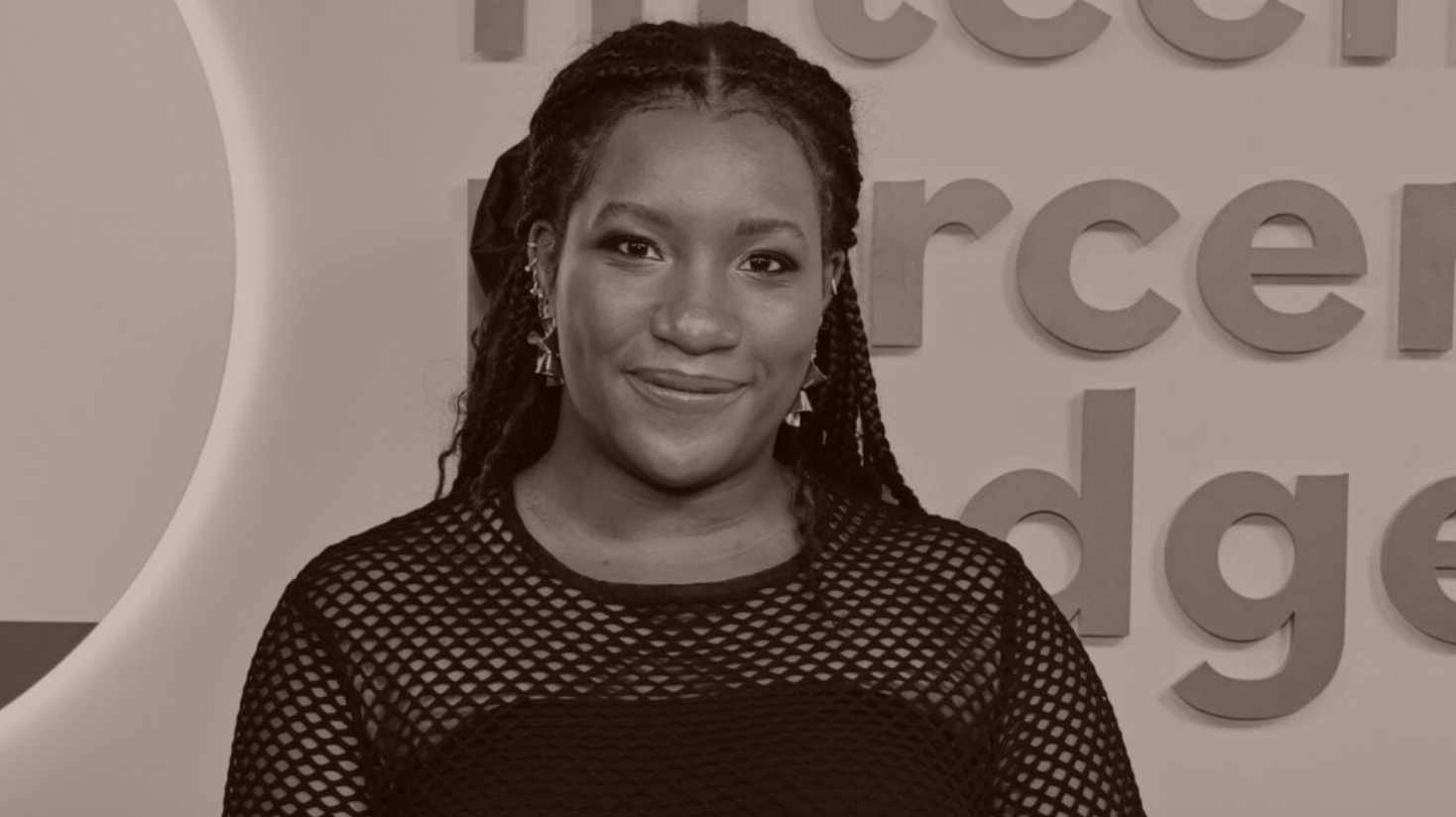
| Three years ago, after the murder of George Floyd, the fashion industry rushed to make up for past sins by installing chief diversity officers, focusing on D.E.I. policies, and working to reshape corporate cultures. These days, though, the effort has lapsed. An honest conversation with Danielle Prescod of 2BG. |
|
|
|
| One of my clearest memories from the spring of 2020 was a European private equity guy calling me in a panic, asking me if I knew of any Black-owned brands looking for investors. He was particularly focused on “streetwear” and “merch.” I said yes, but that many of these young brands were still at an early stage, maybe only generating one or two million dollars a year in revenue.
He didn’t care, even though his firm had only invested in brands that were far bigger. The reason, he said, was that merch brands were easier to scale than ready-to-wear, and there was, as civil rights protests took place right outside my Brooklyn door, an imperative to invest in these creators, and to take Black consumers—a growing segment of the luxury market—more seriously, too.
Whether or not he ever found what he was looking for, I don’t know. (He left the firm, and none of the investments listed on their site fit this category.) But his eagerness reflects the sentiment I observed among (predominantly white) executives, investors and marketers during the pensive and turbulent period following the murder of George Floyd.
In June 2020, Danielle Prescod, a longtime fashion editor who had been drawn into the world of influencing, launched 2BG Consulting with her friend and former Hearst colleague Chrissy Rutherford. The duo wanted to advise fashion and beauty brands on how to be anti-racist. (2BG stands for Two Black Girls.) At the time, Prescod had just finished the manuscript for her memoir, Token Black Girl and was the style director of BET; Rutherford, who now writes the popular newsletter FWD Joy, had just departed Harper’s Bazaar after an eight-year run.
At first, Prescod and Rutherford observed brands desperate to do better, willing to put time and money into making their processes, from staffing to marketing, more equitable. Three years later, as budgets are shrinking and larger brands are quietly conducting layoffs, their enthusiasm for “doing the right thing” has waned. “Shame was a very powerful motivator for these brands,” Prescod told me. “And they aren’t feeling the shame anymore.” Here’s a condensed and edited version of our recent conversation. |
|
|
| Lauren Sherman: For those reading this who don’t know you, can you give me the elevator pitch of who you are, and why you and Chrissy started 2BG?
Danielle Prescod: We work with fashion and beauty companies, but also influencers because they have such huge platforms and so much power to shift opinions and change things within the industry and beyond. We really want people in the fashion space to take this responsibility seriously. We always try to hammer home that what is cool—what is worthy, what is desirable—starts within this business. To assume that there is no responsibility to reflect the world at large is, I think, a huge mistake. So we try to direct people to real, actionable things that they can do to shift their business practices, especially when it comes to how they present on social media, how they present within their email marketing, etcetera.
And around the time you started this company, you were already working on your book?
The book was already written. I had already been thinking about the ways that white supremacy has an effect on the self esteem of people of color, particularly Black girls growing up in America—it was at the forefront of my mind. And then George Floyd was murdered at the end of May 2020, then the resurgence of the Black Lives Matter movement happened in June 2020. And that’s when we started our business. Chrissy and I both had videos that went viral that year, talking about racism, and all of these companies and individual influencers were reaching out to me asking, What should I say? What should I do? How can I help?
At the time, I was still working as style director for BET, where I had experienced a different kind of racism than I had working at mainstream publications. All of a sudden, my experience completely changed because I moved over to a Black publication. I had already been asking brands why I was suddenly not invited to attend their events, why their campaigns were all white, why we can’t feature their products; and, you know, these emails fell on deaf ears. Just in February 2020, I had a very public spat with The RealReal over the fact that they were letting a white woman lead their Black History Month initiative. And of course in June, like four or five months later, they were like, Oh, we’re really sorry about that.
Can you give some examples of how, when you went to BET, you were treated differently than when you were at Elle or InStyle or any other publication?
I got a lot fewer invites, cut off the Christmas gift lists. They were just telling me in so many ways that our press was not important to them. It was very difficult to wrangle talent, to be able to speak to certain actors, actresses, models, because they assumed our audience was smaller. In actuality, the BET audience was probably the biggest audience I’ve ever served. But because it lacks the prestige of Condé Nast, or Hearst, people were treating it as an afterthought. And that was really frustrating.
Fast forward to June 2020. What are the kinds of actionable things that you advised companies to do at the time?
The most consistent message we’ve given every client is that you cannot make this commitment without putting years behind it. You cannot just do this for a month. Smoking became disgusting to people because it was attacked from all sides. The government made legislation, and restaurants started banning it. Of course, there are still people who smoke, there will always be people who smoke. Racism functions like that. Without a lot of time, dedication and power behind anti-racism campaigns, it’s not going to move anywhere.
Part of the change needs to be in the way a product is marketed, but even if the intentions are altruistic, the marketing can read very false if it’s not executed properly. The same thing happens with sustainability—I know brands mean well, but often it just feels totally inauthentic. What do you think the ones getting it wrong are doing wrong?
The marketing piece is really the easiest one to fulfill, because what fashion people do best is create narrative storytelling, create imagery. One thing they can do is also make sure that the talent behind the scenes is also diverse. When I’ve modeled for campaigns, I’m still bringing my own foundation to set. I’m often doing the makeup person’s job, the hair person’s job, and the talent job. And I’m only getting paid for one of those jobs. They need to fold Black photographers, Black hair people, Latin X, Asians, and artists into their network.
Company culture is more difficult to change. For example, a really major brand had a trip a few weeks ago, to Europe, and it was only white people. I think there was one brown girl on the trip. This brand has a policy of responding to almost every comment on Instagram, but in this case, they deleted the comments calling them out for only inviting white people. We always advise, Do not do that. It just makes people angry. They’re pointing out a legitimate concern. Especially if you were a brand that made a pledge three years ago to do better and listen, learn and grow. Then demonstrate that you have. |
|
|
| In 2020 and 2021, many fashion brands committed more money to addressing diversity issues within their workplaces. They hired chief diversity officers. They promised to hire more people of color across departments, etcetera. Now companies are laying off people left and right, albeit quietly. Marketing budgets are being slashed. Where does that leave their diversity efforts?
It’s certainly been deprioritized in many cases. What companies have discovered is that they can still function, even if they’re threatened with cancellation, which is not really a thing. They know that, even if they had a hard few days, or a hard few weeks, eventually, sales and everything will bounce back. These companies fully don’t care.
If a company starts to fail, cancellation could be one symptom of the failure. But if you have a product that you know how to distribute well, and that people like, it’s hard to get people off of it.
Consumers don’t understand how much power they have—boycotting works. But like you said, it’s really hard to get people to switch face moisturizers no matter what. A lot of the guilty feelings have also dissipated. It’s that attitude that tragedy happens every day. There were a lot of factors that caused people to pay attention three years ago that have really shifted now. If you bring it, it’s like, come on, I just want to have a good time at Coachella. That’s why we emphasize that if you’re going to make this commitment, you have to care for life, you can’t just say that you care for three minutes. And you have to demonstrate that in your business practices going forward.
Are there any brands, maybe some with whom you’ve worked, that you think are really trying to do things right?
Mara Hoffman shifted their entire business to be more inclusive, size-wise and racially, to be more sustainable. In the beginning, it had a very thin-girl-who-goes-to-The Hamptons vibe. It was a years-long process, but it made me wake up one day and think, This brand suddenly speaks to me. From the beginning, Hill House Home made an effort to have a bigger size range—it’s difficult to go up to a size 2x or 3x when you’re a smaller company. When you go on their website, you never see just one type of model, you see a million different types of models. It’s a way for them to communicate, This is important to us and we want you to know that.
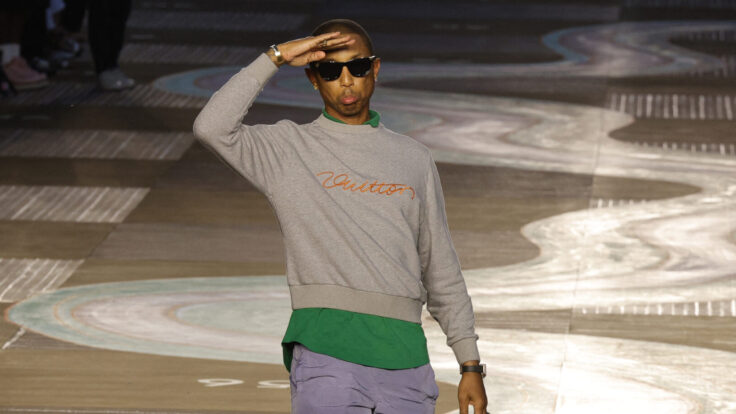
Pharrell Williams’ debut at Louis Vuitton is happening tomorrow. To me, his appointment there is more complex than him being a celebrity, or a Black celebrity. But we both know that the Black consumer is increasingly important to the luxury market. What do you think about it?
Pharrell has such an interesting point of view—how Pharrell dresses Pharrell, and how he expresses himself. You can tell that he loves fashion and design. I can’t really speculate on how it will go in terms of sales.
But I do think that a lot of luxury brands have a way of tokenizing people, especially celebrities who have huge star power. I really hate to see that because, unfortunately, when a lot of Black people go into stores to have a luxury shopping experience, they’re still being discriminated against, there’s still a lot of bias. I’m hoping that these brands realize that there’s still so many other things that need to be corrected in order for people to feel good shopping and interacting.
What else does the industry need to be thinking about more?
Equity is paying people fairly. |
|
|
| Bernard Arnault and Elon Musk, the two richest people in the world, had lunch together at LVMH’s Cheval Blanc hotel in Paris. Musk was accompanied by his model mom, Maye, while Arnault brought sons Antoine and Alexandre. Antoine posted some photos on Instagram. The New York Post insinuated that this was some strategic meeting about advertising. But I’m pretty sure it was more about the two richest men in the world being the two richest men in the world. My stylist friend wondered why Elon was wearing a black peak-lapel suit for daytime (with unhemmed pants). Maye was wearing a suit from Chiara Boni La Petite Robe, a popular label with Republican party members, including Casey DeSantis and Kimberly Guilfoyle. It is not, in case you were wondering, owned by LVMH. [NYP]
Whoever leaked this Meghan Markle-might-be-the-new-face-of-Dior item: call me next time! Anyway, a quick take: sure, it’s possible that it’s true. But the idea that this is somehow going to fix all of Harry and Meghan’s financial and image problems? Also, Bill Simmons is not the only person who can’t stand these two—and one pristine association won’t fix that. I still hope it happens, though: I love a celebrity “rebrand.” [The Daily Mail]
King Angelo Flaccavento on Pitti Uomo (I thought Fendi looked great). [BoF]
Lots of satisfying details in my favorite fashion writer Jon Caramanica’s Pharrell Williams profile. Most notably: If LV x PW is successful, this will be really good for Alexandre Arnault, who, according to the story, is the one who made the call to Williams last December. [NYT]
I couldn’t make it through even one episode of The Idol but will happily read any and all wardrobe recaps. [Grazia]
Both Sant Ambroeus and Hermès opened new locations in Aspen this weekend. We need Sant Ambroeus in LA. Thank you for hearing me out. [WWD and NYT]
A tale of two press trips: Reformation and J.Crew take Italy. [After School and Instagram]
Patricia Marx on a new bra engineered by the U.S. military for soldiers and beyond: “If you think Victoria has a secret, wait until you encounter the wall of obfuscation put up by the U.S. Army.” [The New Yorker]
The hits just keep on coming from Jacob Gallagher, who chronicles the rise of the going-out-top—for men—on the back of last week’s Saint Laurent show. [WSJ]
Jason Del Rey’s Winner Sells All, about the rise of Amazon, comes out tomorrow. I regret to inform you that AmazonLuxury—which still exists, by the way—is not a major focus of the book, but it is still absolutely worth your time, no matter what price arena you’re playing in. [HarperCollins] |
|
|
See you in Paris on Thursday,
Lauren |
|
|
|
| FOUR STORIES WE’RE TALKING ABOUT |
|
|
|
|
|
 |
|
|
|
Need help? Review our FAQs
page or contact
us for assistance. For brand partnerships, email ads@puck.news.
|
|
You received this email because you signed up to receive emails from Puck, or as part of your Puck account associated with . To stop receiving this newsletter and/or manage all your email preferences, click here.
|
|
Puck is published by Heat Media LLC. 227 W 17th St New York, NY 10011.
|
|
|
|