 |
|
Happy Sunday, and welcome back to Dry Powder.
|
|
The FTX bankruptcy is basically a one-off in nearly all of my years on and covering Wall Street—a remarkably complex affair involving a classic bank run, myriad moving parts, and a twist of potentially brazen criminality. So what to make of presiding C.E.O. John Ray’s recent suggestion that the exchange might actually be restarted, instead of simply liquidated?
Today, a close look at what that eye-popping proposal might involve, thoughts on a curious affidavit filed by FTX’s former general counsel, notes on the media hubbub surrounding Goldman’s recent layoffs, and why the open succession planning by Morgan Stanley’s James Gorman is unique among his distinguished peer group.
|
|
|
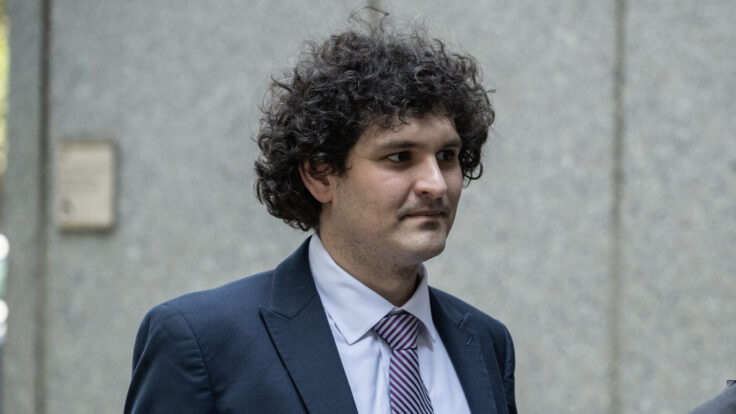
| Too much is still unknown about the alleged fraud of Sam Bankman-Fried to fully comprehend John Ray’s suggestion this week that FTX U.S. might be worth restarting. Ray, who took over as C.E.O. of the cryptocurrency exchange in November to manage its bankruptcy, is progressing rapidly with the forensic work required to clean up the mess, but the extent of the interconnected web of deceit and duplicity is still a mystery. There’s little question, of course, that S.B.F. controlled everything: Alameda Research, FTX International and FTX U.S., as well as the myriad of other companies he created to confuse and to obfuscate. What is still not known is how all these companies fit together and how the money flowed between them. Is FTX U.S. actually solvent, as S.B.F. is fond of asserting? And even if it is, did it remain solvent at the expense of FTX International and Alameda? And if so, why?
I, for one, feel like we won’t know the answers unless, and until, an examiner is appointed in the case—just as it took Anton Valukus, the examiner in the Lehman bankruptcy, to complete his investigation before we knew what really happened there. A group of U.S. lawmakers has joined with the U.S. Trustee in the bankruptcy cases to insist that an examiner be appointed. It’s time for Judge John T. Dorsey to make that appointment.
In the U.S. bankruptcy system, a debtor—such as the Alameda/FTX entities—is also referred to as a “debtor-in-possession,” as in possession of an operating business. In a more typical bankruptcy—and I’ve been an advisor on many of them—the situation is often described as “good business, bad balance sheet,” whereby the underlying business might be fine, or somewhat troubled, but that the bankruptcy filing was necessitated by too much debt. That’s the kind of thing that happens when a leveraged buyout goes bad. In those cases, the business keeps operating under Chapter 11 protection while the creditors fight over the carcass, who will own what, and how much recovery they will get on their defaulted debt. (A version of this could possibly happen with Elon Musk’s Twitter.)
Assuming the underlying business is halfway decent, continuing to operate the business in the ordinary course can lead to higher recoveries for the forlorn creditors, or customers, or those owed money, like vendors. Often, in fact, creditors get a combination of new debt, cash, and equity as part of a restructuring. And so if the business performs well during the bankruptcy proceeding—which can often go on for years, as will likely occur with FTX—the equity can turn out to be quite valuable, allowing for some profound recoveries, and even a profit, once the entity reaches the other side.
The FTX bankruptcy is quite a bit different, in that alleged fraud occurred alongside a classic run on the bank. Think of it as the Lehman bankruptcy, with all its extraordinary complexity, with a twist of criminality. Like the Madoff case, which was also a bit different in that the liquidation of Madoff’s legitimate business was overseen by the Securities Investor Protection Corporation (Madoff also filed for personal bankruptcy and his possessions were liquidated), the FTX situation is a Chapter 11 case, meaning that the debtor can try to reorganize the businesses, such as they are, and try to operate them in order to enhance the recovery for creditors and customers. Or try to sell off various pieces of the puzzle, as is happening under the auspices of Perella Weinberg, the boutique investment bank.
And that must be why John Ray is thinking about restarting FTX U.S. instead of just trying to liquidate the whole kit and caboodle. It doesn’t mean that FTX U.S. was solvent, as Sam claims, and that it shouldn’t have filed for bankruptcy, as Sam and his family continue to argue. What it does mean is that Ray et al. are at least giving some thought to the idea that FTX U.S. might still be a legitimate operating business—although why anyone would continue to want to trade cryptocurrencies is mystifying. It seems like a long putt to me, but if I were in John Ray’s shoes I would probably try to do the same thing, assuming the rot can be pared away from FTX U.S. and that there are customers and traders who actually would want to do business with the exchange, as they have suggested to him that they would do, or so Ray told the Wall Street Journal. That will remain to be seen. |
| The Sullivan & Cromwell Contretemps |
|
| Meanwhile, I continue to be riveted by the dispute about whether the white-shoe law firm Sullivan & Cromwell, which has been representing FTX before and after the November 9 bankruptcy filing, will get to keep that very lucrative assignment. On Friday, the judge approved S&C’s retention, despite plenty of opposition, along with approving the retention of other professionals in the case, including AlixPartners, as a forensic investigation consultant, and Quinn Emanuel, as a special counsel to the debtor. The judge said he could find no evidence of “any actual conflict.” Okay, fair enough, so S&C won that round, but unanswered questions remain.
And so the resolution of S&C’s retention remains fascinating, if only because of the hatred that S.B.F. and his former management team seem to have for the firm. S&C is probably best known as being the whitest of white shoe law firms and as being the longtime counsel to Goldman Sachs. The FTX bankruptcy has started to muddy those white shoes. According to an affidavit filed on January 19 by Dan Friedberg, the former general counsel of FTX U.S. and the chief compliance officer of FTX International, Sullivan & Cromwell should never have been hired as the debtors’ counsel in the first place given its role advising many of Sam’s companies prior to the bankruptcy filing. (Needless to say, the debtor disagreed, as did the creditors’s committee and, of course, S&C itself. In the end, even the U.S. Trustee overcame his objection.)
But if Friedberg’s claims are to be trusted—and he swore to them under penalty of perjury—they do raise disturbing questions about S&C’s behavior. In his affidavit, Friedberg explained that he was a creditor of FTX—he wrote that he had bought 25 Bitcoin “at about $300, or less,” now worth about $500,000—and that he opposed S&C remaining as counsel to the debtors. Friedberg reserved his vitriol for Ryne Miller, a former S&C partner who had joined FTX U.S. as its general counsel in 2021 and who also served as counsel to Alameda and FTX International. Friedberg argued that Miller did all he could to bring S&C into the companies because he “wanted to return” to S&C as a partner “after his stint” with the FTX et al. “This bothered me very much,” Friedberg wrote in his affidavit. According to Friedberg, Miller hired S&C to be “primary counsel” to FTX U.S., FTX Derivatives, and to Emergent, the company that S.B.F. controlled that bought his valuable stake in Robinhood, an asset since seized by the government. S&C was also “personal counsel” to S.B.F. and to Nishad Singh, another top FTX executive.
Friedberg wrote that he first became aware of the $8 billion “customer deficit” at FTX International on November 7, after S.B.F. informed a group of top FTX executives. “Prior to this disclosure,” he wrote, “I had no idea of any customer deficit” and “believed the customer assets were fully funded.” When Friedberg sought out Miller to inform him of the situation, he wrote that Miller already knew and was busy dialing up “all the billionaires that he knew” to try to raise more money for FTX International. Friedberg, suddenly righteous, was concerned that Miller was trying to raise new money under the circumstances of an apparent fraud. He urged Miller, as an attorney, to consider his “ethical obligations.” He also decided to resign because, he wrote, he “no longer trusted” S.B.F., Nishad, and Gary Wang, Sam’s co-founder.
He further wrote that Miller was determined to make sure that FTX et al. filed for bankruptcy in the United States so that S&C could get the mandate to represent the debtors. Friedberg wrote that he told Miller he didn’t think S&C was the “proper law firm” for the assignment because of conflicts, various claims against it, and its “exorbitant” fees. In his affidavit, as one example, Friedberg cited an S&C bill for $6.5 million in connection with representing Alameda on its “credit bid” for Voyager, which had filed for bankruptcy with Alameda as a creditor. Friedberg said he thought S&C would charge $500,000 for the assignment and was “shocked” when he got a bill for $6.5 million, based not on hours billed but as a “flat fee” based on the size of the deal—about $1 billion. In effect, S&C was billing like a M&A advisor, based on the deal size, not like a traditional law firm, which usually gets paid by the hour. (Some law firms do bill that way, famously, on Wall Street, like Wachtell Lipton, for one.)
Friedberg objected and said he would only authorize pay based on hours worked. Subsequently, he learned that Miller, who he asked to get a bill from S&C by the hours-worked method, had agreed to pay his old firm $2.5 million. (S&C shared with the court that it had been paid about $8.5 million by FTX entities for its legal advice since 2021.) Friedberg had similar complaints against S&C for its roles advising Alameda on a loan and purchase option for BlockFi, and, of course, on S&C’s role in advising FTX U.S. to file for bankruptcy when it “appears to be solvent.” He claimed the filing of FTX U.S. cost the company’s preferred shareholders “a substantial return.”
Frieidberg wrote that he wasn’t alone in believing S&C should not be retained to represent the debtors. “Both former employees and current employees are scared to raise these issues because S&C might take adverse action against them,” he wrote in his affidavit. “Any reputable law firm would withdraw from this matter and commence an internal investigation on the above issues. Instead, I expect S&C to take adverse action against me and disparage me publicly.”
That does not appear to have happened. Nor did the many objections to S&C’s retention win the day. (On Friday, the judge described the allegations against S&C in Friedberg’s affidavit as “full of hearsay, innuendo, speculation and rumors.” Ouch.) Normally, it can be challenging for a law firm that did pre-petition work for a debtor to get retained post-petition. It happens, of course, but the concern is that work that the law firm may have done prior to the bankruptcy filing may have played a role in leading to the filing or the problems that led to the filing or just generally put the law firm in a conflicted position, which is something bankruptcy courts work hard to avoid. A pre-petition law firm could also become a witness in a criminal trial, especially if they abetted the alleged criminality since attorney-client privilege is waived under such circumstances. Bankers also find themselves shut out of an assignment if they did work for a company prior to its filing for chapter 11.
In any event, for reasons we probably will never know, in this case anyway, the judge looked past those concerns and retained S&C, despite the objections of S.B.F. and other former senior FTX executives. Meanwhile, some are still scratching their heads regarding Friedberg. As readers of the S.B.F. Chronicles may recall, Marc Cohodes couldn’t figure out why Friedberg lived in Seattle when FTX U.S. was in Virginia and FTX International was in the Bahamas. He also wondered aloud about Friedberg’s involvement in an online poker cheating scandal, back in 2008, and noted that he had expunged all reference to it on his Linked In profile. (There has been much reporting about Friedberg’s past ties, as general counsel, to UltimateBet.) Like the judge, after reading Friedberg’s affidavit, Cohodes remained highly skeptical of him and his story. He also suggested that it was Friedberg who set up FTX’s banking relationships with both Silvergate and Signature Bank—banking relationships that are well off the High Street and that have been questioned in recent weeks. (Friedberg could not be reached to comment.) |
| Goldman’s Price of Success |
|
| Elsewhere on Wall Street, I am a little surprised by how consumed the financial press seems to be with the layoffs at Goldman Sachs. Obviously for the 3,000 or so Goldman employees who were let go, rather harshly according to the reporting, that’s a tough moment. But Wall Street has been party to a continuous boom and bust cycle since its founding under a Buttonwood tree in downtown Manhattan more than 200 years ago. In other words, culling poor performers after a boom cycle ends is standard operating procedure on Wall Street. It has been for centuries.
What seems to be the source of the media’s fascination with Goldman’s internal machinations is that it comes after a long period of unrelenting hiring and robust pay at Goldman and across Wall Street since the waters calmed after the financial crisis. It tells me that many reporters and editors in the financial press covering Wall Street these days must be relatively new to the beat; for anyone who was around during 2008 and early 2009, Wall Street was a layoff bloodbath. Thousands and thousands of Wall Street employees were hacked away, many of them never to return to the industry. The same thing happened after September 11. And after the dotcom bubble exploded in March 2000. And during the Credit Crunch that lasted from 1989 to around 1993. And after the market crashed in October 1987.
In other words, for anyone with any sense of history and the way Wall Street actually works, Goldman’s round of layoffs hardly qualifies as news. What counts as news is why anyone would ever think a job on Wall Street is anything but a high-beta proposition. There’s a reason people on Wall Street are so highly compensated for putting none of their capital at risk. They get paid absurdly well because there is so much money sloshing around when times are good, but the price to be paid for that warm bath is that when the inevitable downturn comes—and it always does—employees are expendable.
The more highly paid and the more senior you are, the more at risk you are for getting the ax when the Troubles come, along of course with the requisite number of junior employees who must be let go when investment banking volume dries up. Unless you are in the room when the cutting gets decided, you should consider yourself at a high risk for near-term defenestration. I can promise you this is a fact, based on my own experience once upon a time, nearly 20 years ago, at a little firm known as JPMorgan Chase & Co. |
| Gorman’s Succession Planning |
|
| In notable contrast to Bob Iger or Howard Schultz, Morgan Stanley’s James Gorman noted publicly in Davos this week that he has his three potential successors in place: presumably Ted Pick and Andy Saperstein, the firm’s co-presidents, alongside investment chief Dan Simkowitz.
I have never met Ted Pick, Andy Saperstein, or Dan Simkowitz, so I have no view as to who may be leading or lagging in the Morgan Stanley succession race. But I do know James (we were at Columbia Business School together many years ago). He has been an enormously effective leader for Morgan Stanley during the years after the 2008 financial crisis when he was among the first C.E.O.s of a surviving investment bank to realize that the world had changed dramatically: the Federal Reserve, the new chief “prudential” regulator of Wall Street, was determined to never again have Wall Street be the source of a financial crisis. That meant tighter regulation, more capital, less risk, and regular oversight and reporting to The Fed.
Gorman got the message early and often. He’s plenty smart but, just as importantly, he had been a consultant at McKinsey and had run Merrill’s brokerage and wealth management business before decamping for Morgan Stanley. In other words, he wasn’t a banker or a trader—he was a strategic thinker about Wall Street banking with a deep understanding of the brokerage and wealth management side of the business.
One of Gorman’s first moves was to buy Smith Barney from Citigroup, which itself almost went down the tubes during the financial crisis and needed to reorganize. Gorman’s bet was to make Morgan Stanley less reliant on the cyclical and predictable investment banking business and more reliant on the steady fee income of the brokerage and wealth management businesses. (Ironically that was the same thinking, under different management, that led the firm to buy Dean Witter back in the day, causing the bank much internal turmoil.) He bought E-Trade to boost Morgan Stanley’s online brokerage business and bought other smaller businesses designed to bolster his wealth advisory offerings.
As we know from the firm’s recent fourth-quarter financial reporting, Gorman’s strategies are paying off, especially compared to Goldman Sachs, which has been far slower in realizing how the world has changed and has instead hoped that the good old days, pre-2008, might return. Whereas Morgan Stanley’s market value once lagged behind Goldman’s, that has turned around in recent years, often with Morgan Stanley being worth around $30 billion more than Goldman. This past week, the spread widened further. Morgan Stanley is now worth $160 billion; Goldman is now worth $115 billion. That’s a real triumph for Gorman, especially since Morgan Stanley almost went down the tubes during the most acute moments of the 2008 financial crisis. Morgan Stanley trades at around 1.7x book value; Goldman trades around 1x book value. (Goldman went public in 1999 at 4x book value.)
Gorman, 64 years old, isn’t going anywhere soon. Nor, probably, does his board of directors want him going anywhere anytime soon. But he has identified the three candidates, and publicly, who are likely to be his successor. That’s a very different scenario than, say, the way Jamie Dimon, at JPMorgan Chase, and Brian Moynihan, at Bank of America, are running their succession processes. I’m sure both of them and their boards know who would run the bank if either of them disappeared tomorrow. But neither Dimon, 66 years old, nor Moynihan, 63 years old, talk much about departing, or who their successors might be. In fact, when they do talk about the subject at all, the point is that they aren’t going anywhere soon. Gorman, on the other hand, is at least willing to have the conversation about his own departure. “I will definitely step down, “ he told Bloomberg TV on Thursday. “I am not going to stay in this job for life. I have no interest in that.” |
|
|
|
| FOUR STORIES WE’RE TALKING ABOUT |
 |
|
 |
|
 |
| CNN After Dark |
| Discussing CNN’s fascinating new plan for late night. |
| PETER HAMBY & DYALN BYERS |
|
 |
| Bezos’s Field Trip |
| Reading between the lines of Bezos’ visit to The Washington Post offices. |
| DYLAN BYERS |
|
|
|
|
|
 |
|
|
|
Need help? Review our FAQs
page or contact
us for assistance. For brand partnerships, email ads@puck.news.
|
|
|
|
Puck is published by Heat Media LLC. 227 W 17th St New York, NY 10011.
|
|
|
|