Hello, and welcome back to The Best & The Brightest, your daily politics dispatch from
Puck. It’s foreign policy Thursday and I’m your host, Julia Ioffe.
Washington, D.C., is rapidly emptying out ahead of the Independence Day weekend—and next week’s NATO summit in Ankara. Expectations for this one are pretty low: Get through it without any drama. Below, my preview of the summit’s real agenda—and why many in NATO world are wondering if it’s time to stop summiting so damn often. Plus, up top, Marianna Sotomayor has more on how the
House Democratic caucus is preparing for the arrival of their new socialist colleagues.
Also mentioned in this issue: Bridge Colby, Chris Rabb, Mark Rutte, Cori Bush, Jamal Bowman, Alexandria Ocasio-Cortez, Kevin McCarthy, Hakeem Jeffries, Greg Landsman, Delia Ramirez, Darializa Avila Chevalier,
Melat Kiros, Volodymyr Zelensky, and more. |
|
|
|

| Marianna Sotomayor
|
|
- Hakeem’s House
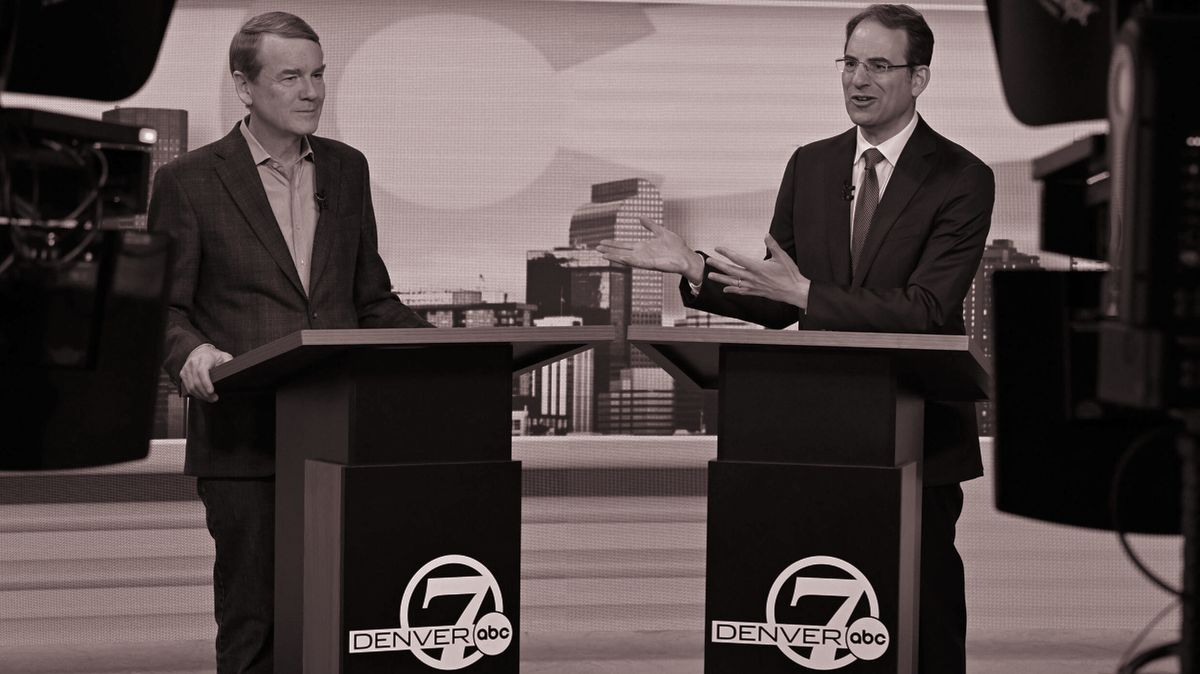
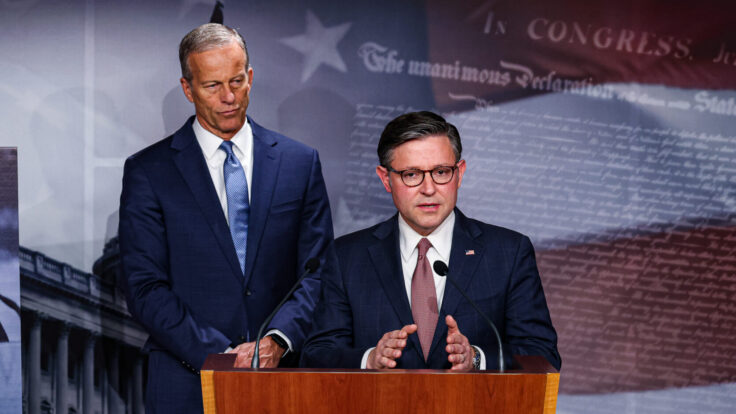
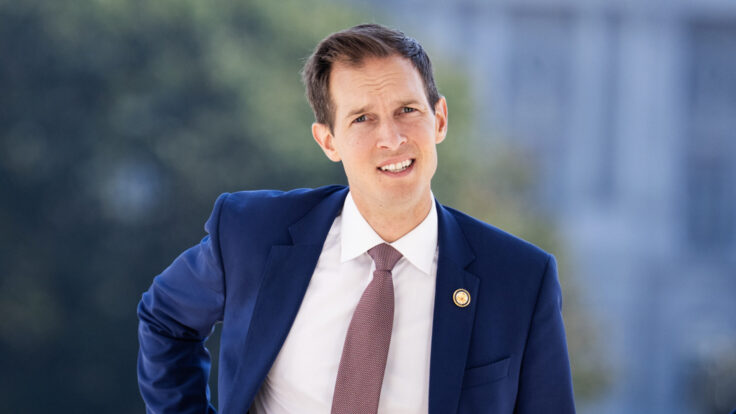
Freedom fear: Recent wins by democratic socialists in safe blue districts—Darializa Avila Chevalier and Claire Valdez in New York, Melat Kiros in Colorado, etcetera—have deepened anxieties within the House Democratic caucus that a small number of far-left members could hold their future majority hostage, just as the House Freedom Caucus controls Mike Johnson. Of course, liberal lawmakers are trying to tamp down the
perception that the incoming class are a bunch of hell-raisers. But progressives are also putting colleagues on notice, warning that they’ll continue to lose elections if they take their incumbency for granted.
In many ways, the jockeying for control has already begun. Several people familiar with the conversations among the D.S.A. bloc have told me that the group is keenly aware of the leverage it could have in a small majority and has already been plotting to make demands of
Hakeem Jeffries before deciding whether to support his speakership bid. Jeffries’s allies have an urge to dare the group to vote against the first Black speaker in U.S. history. But the threats have alarmed some members, who are hoping that Jeffries does not repeat the mistakes of former speaker Kevin McCarthy, who cut many deals, including to place potential antagonists on the powerful House Rules Committee—a decision that came back to haunt him. “That would be
an immediate failure,” one House Democrat said.
While some rank-and-file members have begun whispering about changing caucus rules to prevent future blockades, leadership is quietly messaging them to calm down and focus on actually winning the majority. Jeffries himself has repeatedly stressed that shared mission when asked about the impending D.S.A. dynamic. But other Democrats want Jeffries to stop punting the conversation and take a side. “I think leadership should continue to
emphasize that we are the reform and change party, but also lift up those of us who are in these super-competitive districts and ensure we’re the face of the party, not folks who have not just extreme views but in some instances, very bigoted views,” said Rep. Greg Landsman, a moderate who represents a swing district in Ohio.
All the agita could be overblown. Alexandria Ocasio-Cortez told me that the “hostility” she faced in 2018 from colleagues who
assumed she wouldn’t be a team player was unnecessary. She said she’s reminding lawmakers to “keep an open mind and not let all the hubbub create a reactionary environment.” Indeed, both A.O.C. and progressive Rep. Delia Ramirez told me that they are already working to help incoming members navigate the attacks by focusing on where the party’s political priorities overlap, which can help cement their survival in the House long term. And as several lawmakers and aides noted to me
this week, not all of the roughly six D.S.A. candidates slated to become members should be seen as equal rabble-rousers. Avila Chevalier and Kiros have made numerous extreme comments that others in the freshman class have not.
Naturally, some of the frustrations are more personal than political. Some establishment lawmakers have been put off that Avila Chevalier and Philadelphia’s Chris Rabb, who won his primary in May, still haven’t taken their calls. But as A.O.C.
herself proved, you can get more done as a coalition-builder than a bomb-thrower. I’m told that liberal lawmakers are guiding incoming members to wise up and just take the meetings.
|
|
|
|
And now, a modest proposal… |
|
|
|
The alliance’s summer meeting, which became a yearly event after Russia’s invasion
of Ukraine, has since devolved into an annual display of Trump-induced disunity. “It’s not productive. It risks being destructive,” said one former defense official. So why keep taking that risk every single year? |
|
|
|
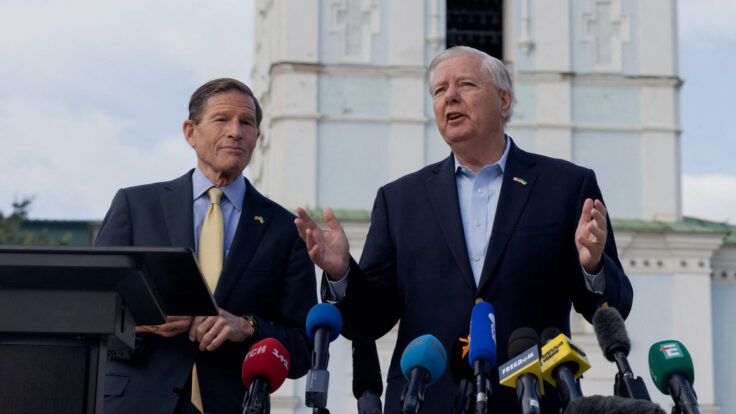
Next Tuesday, NATO officials—foreign and defense ministers, heads of state, and various
other functionaries—will descend on Ankara for the annual summit of the transatlantic alliance. Officially, the agenda will include strengthening the defense industrial base, especially in Europe; a tally of member nations meeting their defense-spending quota; and support for Ukraine.
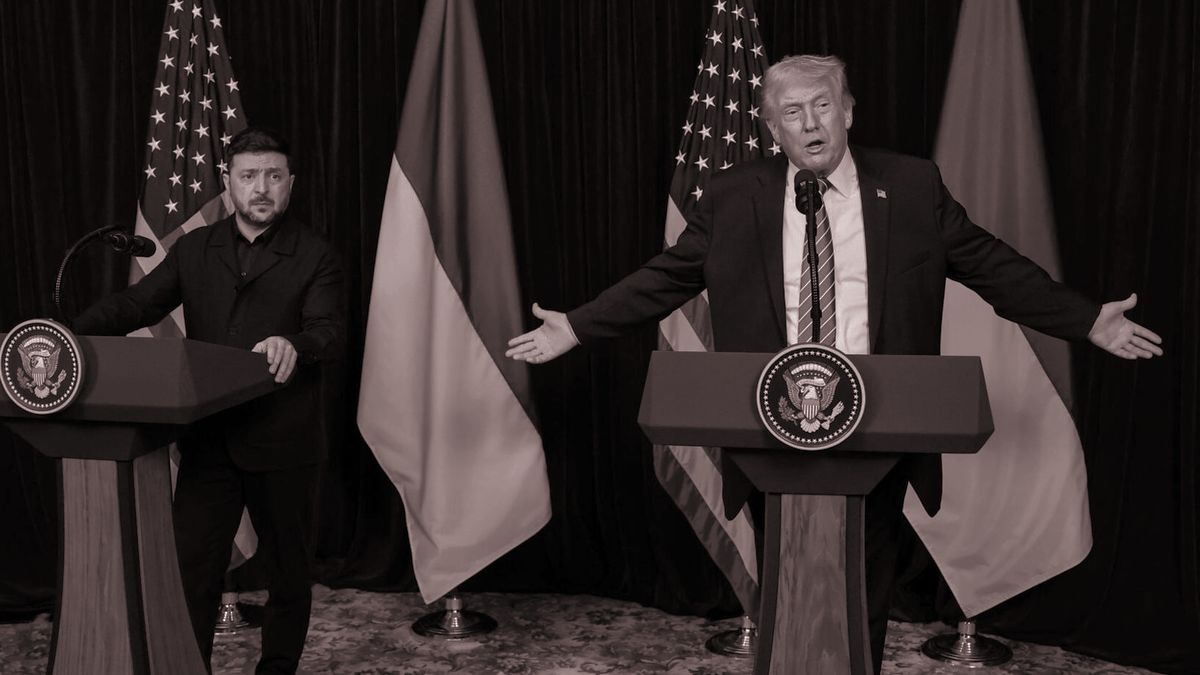
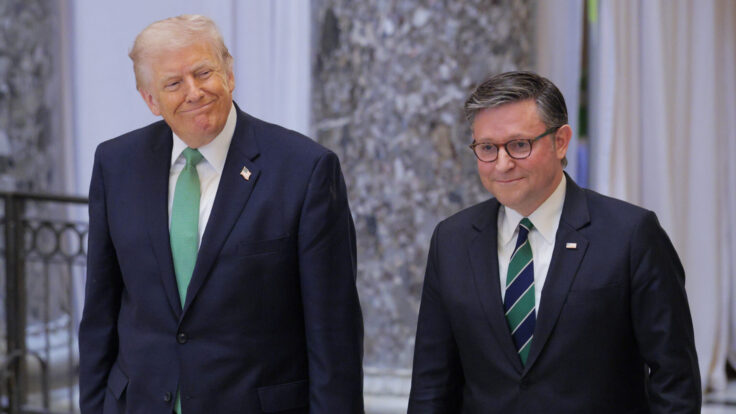
Unofficially, however, the main goal is simply to survive another summit with Donald Trump. What will happen this time? Will Ankara be like Brussels in 2018, when Trump threatened
to walk out in protest of NATO allies’ low defense spending and seemed ready to pull the U.S. out of the alliance altogether? Or will it be more like last year’s summit at The Hague, when the American president came away gushing about NATO and European patriotism after Secretary General Mark Rutte infamously referred to Trump as “daddy”? Will they get the Trump who praises them for finally hitting their defense-spending targets? Or will he focus on their reluctant and uneven
response to helping him with the war in Iran? No one knows, but everyone, feverishly, is trying to guess.
Of course, NATO summits had their ups and downs during the Biden interregnum, too. The 2022 summit in Madrid—just months after Russia launched its full-scale invasion of Ukraine—went smoothly and everyone sang from the same hymnal, but the 2023 summit in Vilnius was a disaster. Volodymyr Zelensky, unsatisfied with the receding horizon of NATO’s
promised open door, aggressively pressed the issue of his country’s membership—and because the allies hadn’t worked out a unified position beforehand, the disagreement spilled out into a bitter public fight. The headlines out of the 2024 summit in D.C. were hardly better: Instead of focusing on how to deter Vladimir Putin, the conversation was largely dominated
by how to contain Trump. (After all, everyone had just watched that train-wreck Biden debate.)
This volatility is why American and European diplomats, especially those who have taken part in NATO summits during the decade since Trump came to power, are increasingly asking themselves: Why are we doing this to ourselves? Why, they wonder, are they meeting every single year, risking all this drama and unpredictability, putting all their divisions and disagreements on display for
Putin, and thereby undermining the very point of the alliance? “Why would you torture yourself?” one former NATO ambassador wondered this week. “NATO didn’t always have an annual summit. Why are we putting ourselves through this?” |
It wasn’t always this way. In the 77 years since the transatlantic alliance was born, it has had 35
summits. It took almost eight years after the alliance’s founding, in 1949, for NATO to have its first full-fledged summit, in 1957. The next one was more than 16 years later, in 1974. Incredibly, there were only 10 NATO summits during the entirety of the Cold War, which was the whole reason the alliance was formed. The pace of the summits picked up after the U.S.S.R. collapsed and the alliance began to expand, but even then it was not an annual occurrence. Rather, the alliance convened
every two to three years.
And that was fine. There was simply no need to convene summits so frequently, in part because the allies were largely in agreement—and because the real work got done behind the scenes. Nor was there any need for all the pomp and circumstance (and logistical nightmare) of bringing in the outsize egos of the heads of state. “You’re relying on defense ministerial meetings, meetings of foreign ministers to work out the important questions,” said a former defense
official who has participated in several NATO summits. “There wasn’t a sense that you needed to bring together heads of state because it was all agreed beforehand. And that remains the case. The only time you see something exciting happening is because the staff really messed up, that it didn’t get worked out in advance.”
The summit only became an annual occurrence after 2022, when Russia unleashed the largest land war in Europe since World War II and reminded NATO yet again why it was
formed. The point was to show unity in the face of Putin’s aggression, which the alliance succeeded at doing in Madrid in 2022. But as the war dragged on and Trump came back into the picture, the summit became a place where the alliance’s natural fissures—it runs on the unanimous decisions of 32 of its very different members—became the main attraction. And Trump, as is his style, has turned the headline-grabbing drama up to the max.
So why, people are increasingly wondering, keep doing
something that has so much potential to go off the rails and signal disunity and weakness to Putin? “The idea is you need a forcing function to get agreement,” the former defense official explained. “It’s a normal diplomatic practice and often it gets results. But you’ve now had a series of summits in which it’s not working. Instead, you’re getting an airing of contentious issues in public. So wouldn’t it be better—if there isn’t agreement—to keep working it at the working level,
between foreign ministers and defense ministers? Because given the recent track record, it’s not productive. It risks being destructive, and it incentivizes mischief-making.”
As a result, people involved in these summits say, NATO summits have become shorter and less ambitious, leaving less room for one member—or one American president—to cause the kind of chaos that would give the alliance’s adversaries a win. In Ankara, for example, there will be an official dinner, a session that’s
essentially a report card of who’s spending how much on defense—and that’s it. “It’s hardly a summit, in all honesty,” said one former NATO official. “They try to make it such a light touch because they don’t want him to be on the ground too long.” A second former NATO ambassador agreed. “My sense is that they’ve painted themselves into a corner, and then they have to plan for very light communiqués so there’s less room for disagreements,” this person said. “They’re shifting to short meetings
because that reduces opportunities for crisis.” |
So then why keep doing this every single year? “I think it’s a bit on autopilot,” the former
defense official said. “Why do we do it? Because we do it.” This year, the answer is even more mundane. Two years ago, as part of Turkey’s lifting its veto on Sweden’s accession to the alliance, Recep Tayyip Erdoğan secured the honor of hosting the 2026 NATO summit. It would be a chance to put on a good show for the allies—and to talk about the coveted F-35. It would also allow NATO to appease a member that, as recently as 2019, was buying Russian weapons systems and in 2022
threatened to block Sweden and Finland from joining the alliance.
So that’s one big reason there’s a NATO summit happening this year. Otherwise, however, Europe and the U.S. are largely divided over its purpose—and, indeed, the mission of the alliance at all. Is NATO, as U.S. Undersecretary of War Bridge Colby
asked in Munich this year, for the conventional defense of the European continent? Or is it, as his boss said when he declared war on Iran just two weeks later, for helping the U.S. reopen the Strait of Hormuz in the Middle East? “The point [of these summits] now is to secure the U.S.’s commitment
to Europe,” the second former NATO ambassador explained bluntly. “The more you’re in doubt, the more you pretend.” Lord Ismay, the founding secretary general, famously said that the purpose of NATO was to “keep the Russians out, the Americans in, and the Germans down.” Now, according to this former ambassador, “NATO’s raison d’être is to keep the Americans in.”
But is this best done in public, where it can easily turn nasty—or, for the Europeans,
humiliating? It’s why the conversation in D.C. and many corners of Europe has quietly become about returning to a time when NATO summits were less frequent but more productive. “It’s something that’s been raised in years past, but now leaders are even more exhausted,” said the first former NATO ambassador. “Many allies have questioned, ‘Is this necessary?’” Said the second former NATO ambassador, “I personally think that there’s no need. The Allies should give themselves more flexibility and not
tie themselves to Trump’s tempers.” |
That’s all from me this week, friends. Enjoy your holiday weekend, and I’ll see you back here next
week. Until then, good night. Tomorrow will be worse.
Julia |
|
|
|
Puck founding partner Matt Belloni takes you inside the business of Hollywood, using exclusive reporting and insight
to explain the backstories on everything from Marvel movies to the streaming wars. |
|
|
|
The industry’s go-to source for unflinching reporting on the trillion-dollar business of artificial
intelligence—perhaps the single most important new technology of our time. Ian Krietzberg, the powerhouse journalist behind The Deep View, delivers twice-weekly insights into the latest dealmaking and breakthroughs in A.I., and how the intersecting worlds of finance, entertainment, media, and politics are being transformed in its wake. |
|
|
|
Need help? Review our FAQ page or contact us for assistance. For brand partnerships, email ads@puck.news. You received this email because you
signed up to receive emails from Puck, or as part of your Puck account associated with {{customer.email}}. To stop receiving this newsletter and/or manage all your email preferences, click here. |
Puck is published by Heat Media LLC. 107 Greenwich St., New York, NY 10006 |
|
|
|
|