 |
 |
|
|
| Quote of the Week: Stephen A. Edition |
|
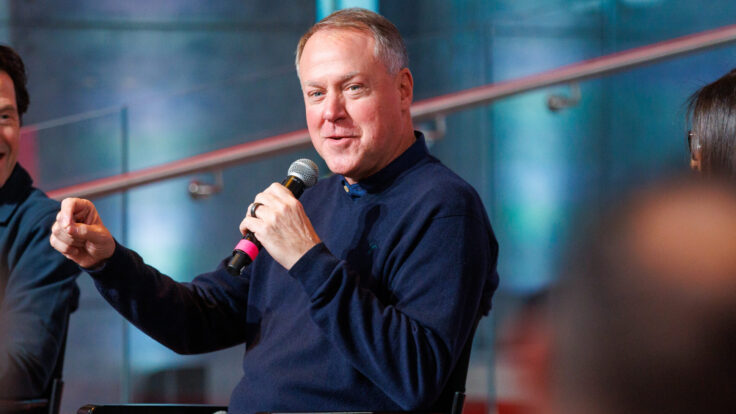
| “My days of youthful exuberance and idiotic enthusiasm and arrogance have come to an end. I will never sit up there and say that I’m more valuable than a $22 billion a year business. … What I will say to you, however, is that I am incredibly valuable. I know this.” —Stephen A. Smith, on negotiating a new deal with ESPN. |
|
A MESSAGE FROM OUR SPONSOR
|
| |
 |
| If you want hockey stick growth on all your content metrics, here’s the answer.
WSC Sports automates the instant creation and distribution of content with features that give you the control. The platform is built on sport-specific AI technology for over 30+ sports - a must for every content strategy.
Over 430 partners around the world, including the NBA, NHL, LaLiga, Bleacher Report, New York Rangers, ACC Digital Network, University of Southern California, and YouTube TV, rely on WSC Sports for technology that enables more views, more formats, and more fans. Drive record results with AI. Learn more.
|
|
|
|
|
- The latest news from the R.S.N. war zone: Greg Rigdon, Comcast’s president of content acquisition, has delineated the company’s local sports strategy, and it’s likely to infuriate the poor, downtrodden regional sports networks, whose uncertain future is a key leitmotif of The Varsity. Under the new guidelines, R.S.N.s can accept a move to a more expensive digital tier of subscription, albeit with far fewer subscribers (Root Sports Northwest, SportsNet Pittsburgh, and MASN have walked this path), or they can stay off of Comcast altogether (see: Altitude and MSG). Naturally, many in the industry are wondering whether Rigdon and Comcast will diligently hold this same line when the next set of negotiations come up—with Diamond’s Bally Sports channels, in a few months, and the Comcast-owned NBC Sports R.S.Ns, which start to expire before the end of the year.
Thus far, the R.S.N.s that walked the plank to the higher tier were smaller independent networks, with little bargaining power. Will these bigger R.S.N. groups have the juice to push back? Most of my sources don’t think so. Diamond Sports, which is thirsting for revenue as it emerges from bankruptcy, doesn’t have a lot of leverage at the moment. And Comcast would face political and, potentially, legal problems if it gives its own R.S.N.s a sweetheart deal.
- Netflix’s double fault: As the big leagues openly contemplate their streaming future, it’s hardly been a surprise that they’ve virtually all beaten a path to Netflix. The NFL is preparing a second season of Quarterback, and the NBA is trying to finalize an all-access show around its own in-season tournament. Meanwhile, Full Swing and F1: Drive to Survive have become veritable cultural phenomena. Alas, the outlier seems to be Break Point, the tennis documentary series that Netflix canceled after its second season.
The Times of London, which broke the story, suggested that a lack of unfettered access led to P.R.-ish vibes. But if there’s any real takeaway, it’s that the leagues need to offer up their biggest personalities and stars to ensure success. If Mahomes can sit for the first season of Quarterback, other league executives need to take note.
- Is the NBA ready for Europe?: As Sportico’s Kurt Badenhausen noted the other day, the NBA has retained the Raine Group to come up with ideas for European growth, which could lead to the launch of an NBA-owned league on the continent. It’s important to note, however, that NBA expansion into Europe is hardly a done deal. In a best-case scenario, any such league is still many years away from launching. But the exploration process nevertheless suggests both the NBA’s emphasis on global growth and its willingness to be creative.
This type of move will undoubtedly be compared to NFL Europe, which was so unprofitable that the league shut it down in 2007. But the modern NBA is such a global enterprise—just look at the international makeup of the all-star teams and the fact that American fans regularly follow top prospects, like Wemby, in pro leagues overseas—that it stands a far better chance of achieving success. The league launched NBA Africa a couple of years ago, so it’s no stranger to not only creating these types of properties, but attracting investors to support them.
- Wasserman on NBC: Super-agent and marketer Casey Wasserman’s appearance on Bill Simmons’ pod offered a masterclass on the evolving sports media business that’s well worth a listen. (As a bonus, Belloni was pretty damn good on the pod, too.)
Wasserman, the chairman of the 2028 Los Angeles Olympics, was particularly thoughtful about the evolving nature of the Games. I was struck, in particular, by his commentary regarding how NBC will program its Paris Olympics primetime block this summer. “NBC is not going to pretend like it’s live anymore,” he said. “What they’re going to do is treat it like a reality show. With reality TV, the magic is in the editing and telling the story of what you know is happening. … The three hours of primetime is going to be reality-like storytelling to create the drama and the story to produce the event.”
On some level, this vision may seem obvious. Olympic fans have been able to stream events live for more than a decade. Historically, however, NBC’s $7 billion investment to carry the Games has been predicated on driving viewers to that primetime block of programming, and monetizing them with higher ad rates. Any significant switch, no matter how obvious or necessary, is sure to cause some angst at 30 Rock.
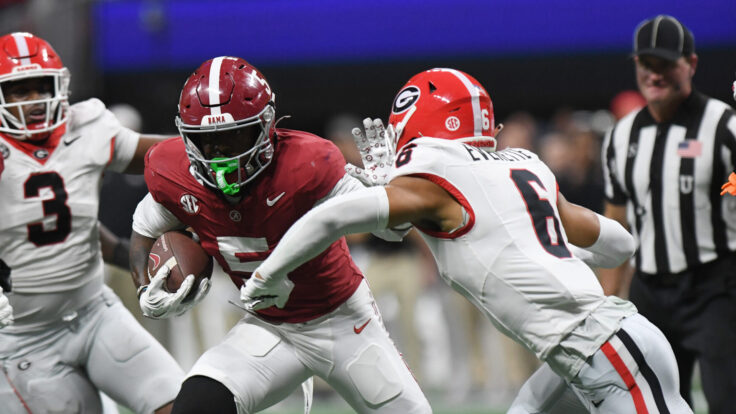
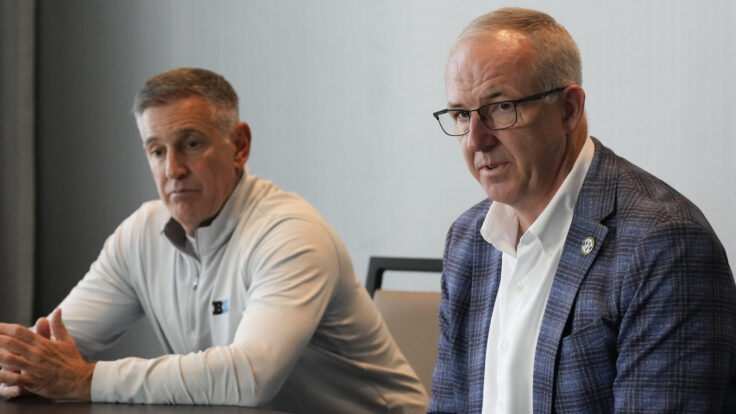
- More Wasserman: I also appreciated Wasserman’s take on another area of expertise: the future of college football. “I really think that we’re at the fork in the road,” he told Simmons. “Let’s not be shy. The Big Ten and the SEC look a whole lot like the AFC and the NFC, and that’s not an accident.”
The big money guys in sports, people like Wasserman and RedBird’s Gerry Cardinale, all see college sports as undervalued. On the pod, Wasserman said that college football brings in around $3 billion in revenue when it’s worth $6 billion-$7 billion. Right now, the economic environment is truly extraordinary to behold, almost like watching a new currency or pharmaceutical become unregulated. As the NCAA essentially recedes into oblivion, colleges are spending on facilities, coaches, and travel while players are cashing in on name-image-likeness deals and entering the transfer portal like it’s a 7-11. No wonder guys like Casey and Gerry are paying attention.
|
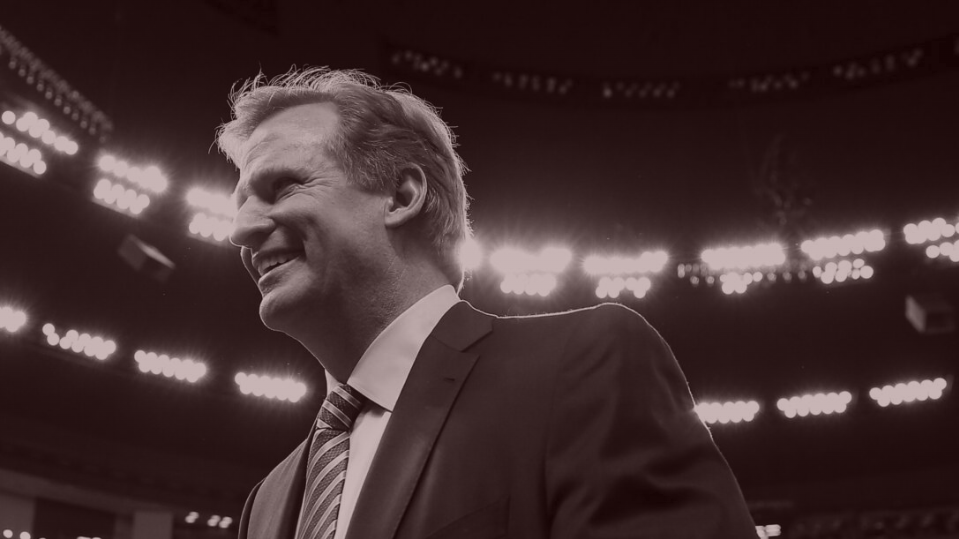 |
| Goodell Vibrations |
| Is the NFL commissioner angling to add an 18th game to the schedule? And will the league’s media partners, which aren’t exactly sitting on mountains of cash, put up a fight? |
|
|
|
| It wasn’t all that long ago, you might recall, that the predominant media narrative regarding the NFL coalesced around player safety. These were the heady days when the public was learning all about CTE and brain science and the notion that NFL rosters were made up not just of players but people, too. And yet, the NFL, which has deftly overcome every scandal and crisis in its history, moved past this unpleasant phase as well. It only tangentially re-emerged a few years ago, when the league persuaded the NFL Players Association to convert a fourth preseason game into a meaningful 17th regular season contest.
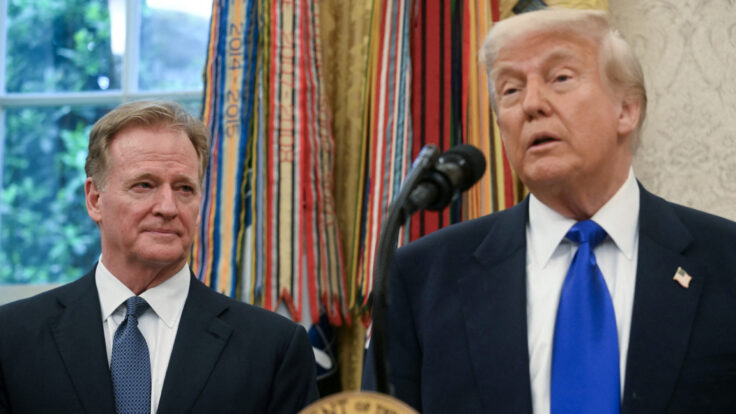
In the end, there is little that can stop the league’s economic manifest destiny. And now, the media and sponsor executives that I trust the most are convinced that commissioner Roger Goodell wants to eventually add one more game to the NFL’s regular season schedule, while likely further reducing the preseason to a mere fortnight. “And when Roger wants to do something, he typically gets it done,” one such executive told me, stating the obvious. Indeed, Goodell has personified the fortitude that has led the league through its various challenges, and he has minted money for his 32 bosses in the process. If he wants it, the so-called membership is almost certainly supportive.
Nothing is imminent, however, and none of the networks or streamers have heard anything from the NFL on this matter. In fact, in the most likely scenario, the NFL would have to wait at least six years to add a game. (Remember, the networks just finished the first year of an 11-year contract, though the NFL has an opt-out clause that it can exercise after the deal’s seventh year.) Indeed, as was the case recently, the NFL’s biggest challenge would come from the Players Association, which fought like hell the last time around and only consented to the new collective bargaining agreement that ratified the extra game after their share of revenue grew from 47 to 48.5 percent. Presumably, they wouldn’t increase the risk of injury without once again re-carving the pie. But there’s enough to go around—or at least there should be. |
|
|
|
|
| Interestingly, even if the business model of linear television seems to rely almost exclusively on live sports, I wouldn’t be surprised if Goodell countenances objections from some of the league’s media partners, and for good (and technical) reasons—at least initially. In the NFL’s previous rights deals, for instance, every media contract included language contemplating the addition of a 17th game. The deals did not spell out how much each network would have to pay for these added games, and it wasn’t pro rata either. Instead, the programming addition needed to be negotiated anew. Meanwhile, most of the current deals lack any such language—meaning that the existing networks are not automatically entitled to a theoretical 18th game.
On the other hand, if the NFL tried to craft a package for just the added games—and tried to sell it to a new media company—it would have major scheduling issues on its hands. The current networks and streamers are protected in terms of their windows on Thursday, Sunday, and Monday nights, plus Sunday afternoons. The NFL also doesn’t have the legal right to play on Friday and most Saturday nights, for instance, per the charmingly anachronistic Sports Broadcasting Act of 1961, which preserved the sanctity of amateur sports.
Sure, the NFL is the most powerful entertainment concern around, and it easily could (and will) coerce its media partners to pay up for the added games. But, as I’ve written ad nauseam, the market for sports rights is as tight as it’s been in the past 30 years. Networks are not sitting on piles of cash, and some of the league’s partners might not even exist as independent entities in a few years’ time. So while adding an 18th game sounds simple, it would require a lot of conversations and modifications to the existing contracts. The most likely scenario would be that the NFL adds a game to its schedule around a decade from now. And Goodell, who started his career as an intern at the NFL more than 40 years ago, is nothing if not patient and content to play the long game. |
|
|
“A couple of points on some of your stories:
- The NFL has some nerve complaining about the CFP when they decided to crash Black Friday via Amazon. That Friday has been a college football mainstay for nearly 30 years.
- I can see the NFL taking a stake in ESPN, which is carrying the CFP and—with the SEC, ACC, and Big 12—has a major say in college sports. I don’t think the CFP should bow to the NFL, but I assume the NFL’s investment will carry some sway.
- Finally, I like those Good Morning Football broadcasters, especially Peter Schrager and Jamie Erdahl. I hope it works out for all of them. The NFL moving production to the West Coast does seem odd and just as expensive as NYC.” —A Puck subscriber
“Remember that Netflix is not going to produce any part of WWE Raw. WWE produces everything. Fox, USA, and now Netflix literally get a feed and air it.” —A network executive
“The under-monetization of sports broadcast rights/access to sports leagues is the most overlooked story in media of the last 10 years. Nobody talks about how legacy media and Big Tech have, up until now, failed to fully leverage their sports I.P. and relationships across entire product suites and ecosystems (i.e., beyond just what we see on the screen come game day). I understand some of this is due to contractual restrictions. But it took until the 2020s for Disney and Paramount Global to simulcast NFL games designed for kids?
“Why isn’t Amazon integrating NFL talent, access, and collaboration efforts throughout Cloud, AWS, greater retail, Echo/Alexa, Kindle, etc. and promoting curated, fitness-related lists according to NFL star athletes’ diet/exercise routines? Given how global the NBA is, one would think Disney would want to better include the I.P. at the ESPN Complex in Disney World. There are so, so many other ways that live sports rights across the many leagues can drive downstream value for legacy media/Big Tech and, given the high costs, would presumably be high on the priority list.” —A Puck subscriber |
|
|
| If you read this far, thanks again for subscribing. It’s great to have you here, and we’re only just getting started.
See you Thursday,
John |
|
|
|
| FOUR STORIES WE’RE TALKING ABOUT |
 |
| A.I. Judgment Day |
| On Hollywood’s burgeoning A.I. filmmaker insurgency. |
| BARATUNDE THURSTON |
|
 |
|
 |
|
 |
|
|
|

|
 |
|
|
|
Need help? Review our FAQs
page or contact
us for assistance. For brand partnerships, email ads@puck.news.
|
|
You received this email because you signed up to receive emails from Puck, or as part of your Puck account associated with . To stop receiving this newsletter and/or manage all your email preferences, click here.
|
|
Puck is published by Heat Media LLC. 227 W 17th St New York, NY 10011.
|
|
|
|