 |
|
|
|
Give The Gift of Puck
|
|
Puck members can now spread the holiday cheer by giving the gift of Puck to friends, family, or co-workers with an exclusive 25% off code (HOLIDAYGIFT).
|
|
|
|
|
|
Welcome back to The Stratosphere.
|
|
Today, the inside story of how Jan Koum, the billionaire WhatsApp co-founder, became the second-largest donor in the entire presidential primary with a $10 million investment in Nikki Haley.
Mentioned in this email: Jon Lerner, Miriam Adelson, Brian Acton, Bernie Marcus, Yasmin Lukatz, Derrick Anderson, Laura Loomer (sorry), Sam and Gabe Bankman-Fried, Kate Czarniak and Eric Schmidt.
Also, if you’re still looking for a last-minute holiday gift, a Puck subscription is a pretty good one for your friends. Speaking of which: I’m off next week, and so I’ll see you after the holidays.
But first…
- 💰 DeSantis Disclosures: Ron DeSantis’s campaign recently rolled out an oddly timed list of all of their bundlers, becoming the first presidential campaign to disclose their National Finance Committee. The list—comprising several hundred names—was finally released, of course, to counter the media narrative that the entire G.O.P. donor universe is uniting behind Nikki Haley. That’s true—it isn’t. But the DeSantis roster includes plenty of people who I have confirmed are not, at a practical level, bundling for the candidate anymore. That’s a problem that goes well beyond the, ahem, media narrative.
- 🧾 An S.B.F. Coda: I finally got my hands on the latest tax filing for Guarding Against Pandemics, the political philanthropy funded by Sam Bankman-Fried and run by his brother, Gabe. The filing, which I’ve uploaded here, reveals everything the group did in 2022, including the fact that GAP took in $24 million for that calendar year, presumably all from FTX executives, and that they spent $28 million.
- 🔐 Speaking of S.B.F…: Crypto money is back, baby! A staggering $78 million has already piled into a series of super PACs, called Fairshake, that will support candidates running on a pro-crypto platform. That will make the group one of the largest players in the entire 2024 cycle, I’m sure. The most interesting donor is Andreessen Horowitz, whose eponymous founders very intentionally disengaged from politics during the Trump era. Now, they’re pledging to make political donations again—and are being remarkably public about their thinking.
- 💼 Big Hire Alert: Also, congratulations to Kate Czarniak, who I’ve learned is the new executive director of P150, the philanthropy advisory org founded by Eric Schmidt, which I recently reported was looking for a new leader. Czarniak most recently led the philanthropy advisory practice at the ultra-wealthy multi-family office Iconiq Capital.
|
 |
| Kingdom Koum |
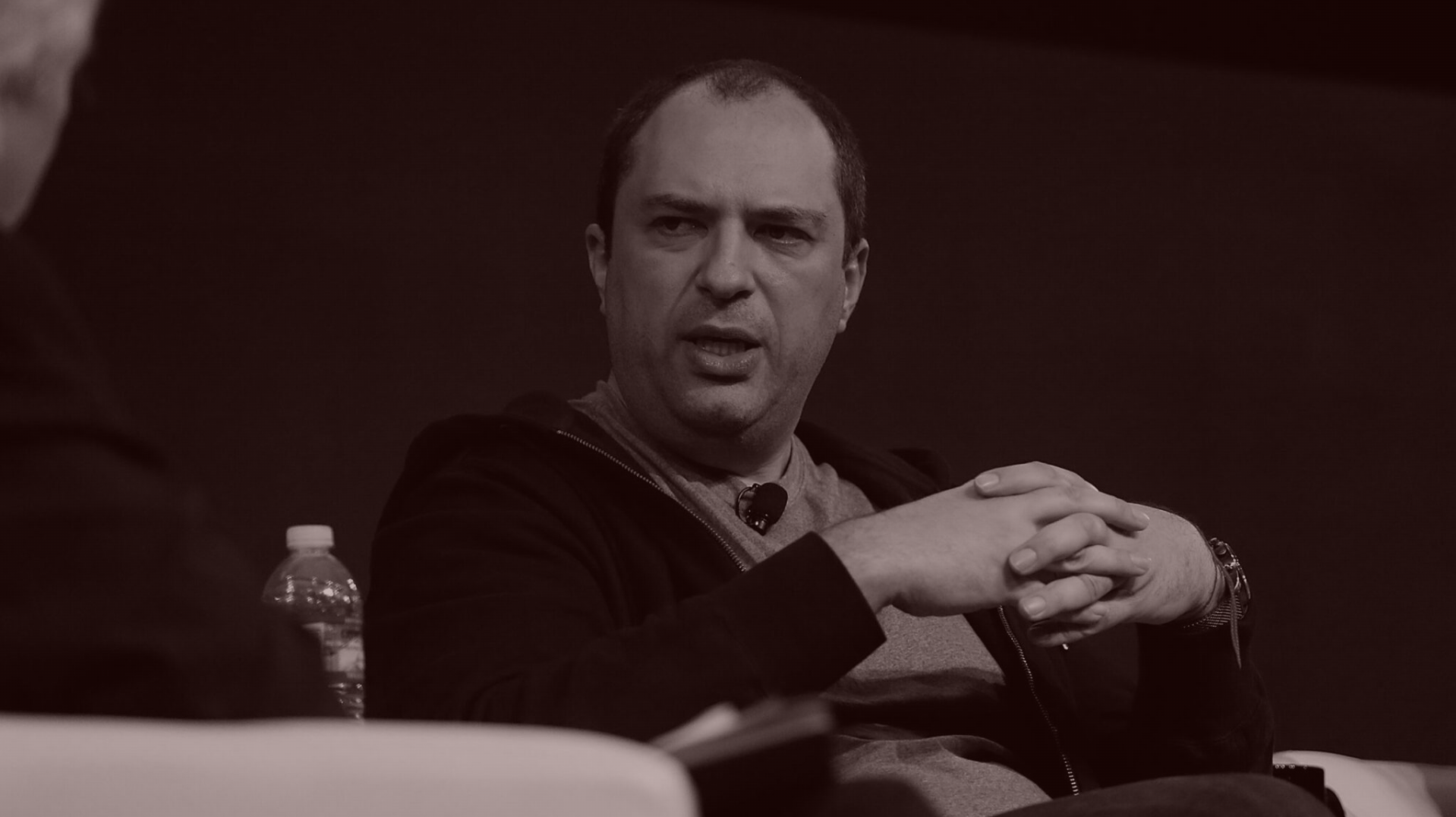
| Jan Koum sold his business to Facebook for $19 billion with plans to retire at 45, play ultimate frisbee, and collect rare Porsches. Somehow, he became the next Sheldon Adelson instead. |
|
|
|
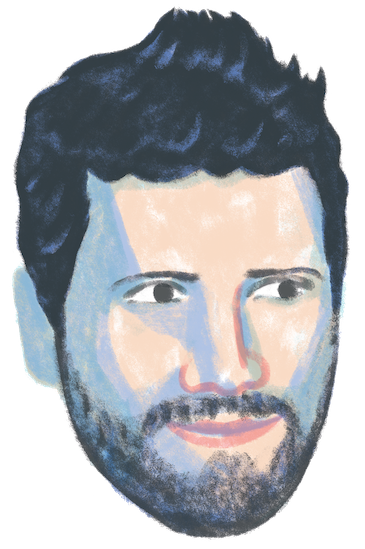
| A few years ago, WhatsApp co-founder Jan Koum struck up what might have seemed, from the outside, like an unlikely friendship with Miriam Adelson. Koum, then in his mid-40s, was a reclusive multibillionaire who had retired to tend to his hobbies, including “collecting rare air-cooled Porsches” and “playing ultimate frisbee.” Adelson, in her 70s, was for decades better known as the wife of Sheldon Adelson, the casino magnate and Republican megadonor. But the two crossed paths at a fateful moment in both their lives. Koum, an observant Jew who had begun pouring money into Zionist causes, was becoming increasingly interested in politics. And Adelson, who was still mourning the January 2021 death of her husband, perhaps saw in Koum someone who might take up his mantle.
Since then, Koum has stepped publicly into the political spotlight with a massive bet on Nikki Haley—$10 million and counting, as I first reported. Koum’s hard pivot to politics, and his crusade to elect Haley, has surprised some of his friends. Several told me that he was never known to talk politics: In fact, Koum hasn’t even voted since he cast an absentee ballot in 2008, according to records in Santa Clara County, where he is registered.
But Koum, who is worth some $15 billion, is now all in. Throughout the year, in excited phone calls and intimate conversations, he has pitched other major donors on supporting Haley, eagerly making the case for her candidacy (while largely avoiding campaign arcana like delegate math and buy points). He’s even offered to make introductions between the Haley team and some of these donors, sources familiar tell me.
The Haley team, surely recognizing how good they’ve got it, has worked hard to keep Koum in the fold. In September, her campaign made sure to invite him to the Reagan Library debate as a special guest, not far from his $187 million beachfront compound in Malibu. Koum attended, although the chatter following the event was that he’d largely avoided talking with other donors, almost as if he wanted to fade into the background.
Indeed, Koum has fastidiously worked to keep a low profile over the years, and true to form, he politely declined to comment for this story. But in conversations with his friends in Silicon Valley and elsewhere, I’ve managed to piece together how this political newcomer ended up becoming the second-largest money man in the entire Republican presidential primary—and why he may now be the single most important donor to watch. |
|
|
| Koum’s hardscrabble life story would have fit neatly in a Reagan stump speech. Born in Soviet-controlled Ukraine, he came of age in a household with no hot water but constant government surveillance. “I grew up in a country where I remember my parents not being able to have a conversation on the phone,” he once said. After the fall of the Soviet Union, he moved, at age 16, with his mother to Silicon Valley. The family was poor, relying at times on food stamps and welfare, and he dropped out of San Jose State University. But within a few years of studying computer programming, Koum got his big break, landing an early gig at Yahoo.
In his early 30s, Koum co-founded messaging startup WhatsApp, in part out of a desire to build an encrypted peer-to-peer network that could evade government control. The sale of his company to Facebook—the terms of which were signed against the door of the government office where he once waited for welfare checks—for a heart-stopping $19 billion was an epoch-defining moment in Valley history, making him staggeringly wealthy.
The money unlocked a new world for Koum, then 38. Just a week after he sold WhatsApp, in 2014, Koum scored a private sit-down with Benjamin Netanyahu during the Israeli prime minister’s trip to Silicon Valley, a privilege not exactly afforded to anyone. They got along: Netanyahu offered to help Koum and co-founder Brian Acton with WhatsApp’s cybersecurity.
Over the next few years, Koum would channel his fortune into Zionist causes, especially after his messy exit from Facebook in 2018. He gave tens of millions of dollars to groups like Birthright, the Adelson-backed project that sends kids to Israel for free, and similar programs organized through Chabad, the Lubavitch branch of Judaism—among them the European Jewish Association, to which Koum gave $17 million, and the Jewish Community Center of Moscow. His foundation, now worth $2.2 billion, also frequently co-funds Jewish efforts alongside Adelson, Bernie Marcus, Paul Singer, and Larry Ellison, ranging from an archaeological quest in Jerusalem to right-wing settler groups in East Jerusalem.
Koum, who was born outside Kyiv, has also become focused on the war in Ukraine. His family foundation “very quickly pivoted to becoming an emergency response foundation, working to help get people out of the
country and give those who stayed access to food, water, and safety while they were internally displaced,” according to comments a foundation employee passed to Arabella Advisors. And he remains deeply invested in Israel, especially after the Hamas attack on Oct. 7.
The seriousness of Koum’s foreign policy work is somewhat at odds with the cheery luxury of his personal life. He spends much of his time in Southern California, where he owns a number of mansions across Los Angeles and Malibu that rank as some of the most expensive real estate purchases on record. He owns a custom, 240-foot superyacht, Mogambo, as well as the 330-foot, $220 million Moonrise, which are both currently docked in the Caribbean. Koum also has his own museum dedicated to the rare Porsches he collects, a hobby that he treats with enviable intensity—he’s authored a two-volume book on the subject, published just a few years after leaving WhatsApp. (“My brand is Porsche,” he once told a Porsche-related publication. “The desire to buy a Porsche motivated me to work even harder.”)
But of all things, his shyness has perhaps become the defining characteristic of his public persona. It’s dutifully mentioned in every profile because it’s true: Koum doesn’t drink, is always called “sober,” has a dry sense of humor, and is not a party guy. I’m told that he cherishes the ability to vanish, to get away from people as he shuttles around the globe, especially now that he’s not the C.E.O. of WhatsApp or on the Facebook board. “He’s a very private guy. Even guys who are close to him don’t know much about how he spends his time,” said one person who has worked closely with him. “We only talk about tech and basic shit that you talk to friends about, like cars.” |
|
|
| So why, exactly, has Koum decided to sacrifice his beloved privacy and enter so decisively into the political fray? He never made a single political contribution before November 2021, when he wrote a max-out check to Republican Derrick Anderson, a former Green Beret who was running for Congress in Virginia. (This past September, he maxed out again to Anderson, who is running again for the seat vacated by Abigail Spanberger.) Then in 2022, he cut a series of major, out-of-nowhere checks to support hawkish, pro-Israel candidates running in primaries in both the Democratic Party ($2 million to an AIPAC-aligned Democratic group) and the G.O.P. ($1.4 million to the Adelson-founded Republican Jewish Coalition). All gifts charmingly list the 47-year-old as “retired.”
Key to Koum’s evolution is a close friend, Yasmin Lukatz, a Silicon Valley hyper-connector in the Israel community who is also, of course, the daughter of Miriam Adelson. Lukatz worked at the Las Vegas Sands earlier in her career as a special assistant to Sheldon, her step-father, and now helps run Israel Hayom, the Adelson-owned conservative newspaper. She also appears on Israel’s version of Shark Tank. Lukatz has lived in Atherton in a $35 million home just up the road from Koum’s compound, and Koum has spoken at events hosted by her network, ICON.
Lukatz, I’m told, linked Koum with her mom in the first place, and facilitated a series of talks between Koum and the Adelson family about partisan politics, philanthropy, and Judaism. The Adelsons have been close to Trump, but they have also backed Haley’s political work over the years and are insisting on neutrality in the primary.
Koum’s relationship with Haley, herself, has developed over the years principally through Jon Lerner, the candidate’s longtime pollster and senior aide, who has worked with Koum on philanthropic endeavors. (“[Lerner] has his hooks in him,” as one person familiar put it.) This February, Koum cut what was then just the second seven-figure check to her super PAC, Stand for America, for $2.5 million. In June, he did another $2.5 million. And I’ve been told that the next F.E.C. report in January will reveal another $5 million that Koum gave the group in August. That makes Koum, at $10 million, the second-largest known donor to a presidential candidate’s super PAC this cycle.
Koum, as you’d expect, is attracted above all else to Haley’s positions on foreign policy and Jewish issues, according to people who have talked with him. One person who has discussed politics with Koum told me the other week that he is “absolutely a Republican” and has bonded with Haley over Israel, among other issues. “It’s the total package that she brings to the table—all the strengths of Trump without the Trump baggage,” said the Koum confidant. And naturally, as his profile has grown, he’s also come under attack in uncomfortable ways: Last week, a blog post from pro-Trump influencer Laura Loomer claimed that he was a “key Zelensky ally” embedded inside the Haley camp; the post included an illustration of Haley and Koum beside a cash-spitting Ukrainian flag.
As a political newbie, Koum’s excitement about Haley is contagious, sources say, but he has also struck some professional political operatives as a bit naive, given the candidate’s soft polling. Koum’s top philanthropic aide, Yana Kalika, is somewhat involved in his political work, but Koum is mostly doing this himself, without full-time donor-adviser maestros on retainer. “He believes Nikki would be the best president, and in some sense he was less jaded than the rest of the political class,” said a second person familiar with the Haley-Koum relationship. “Everything else be damned.” Of course, if Haley flames out next month, Koum will look like a putz. The upside, of course, is that Koum is said to require very little donor maintenance, the term of art in political fundraising for hand-holding.
I know some anti-Trump Democrats who are cheering for Jan, seeing him as one of the few major G.O.P. donors to put their money where their mouth is, unlike big talkers like Ken Griffin or Steve Schwarzman. Senior Republican operatives and fundraisers are already taking note, eyeing him as potentially the rightful heir to the Adelson mantle. “Is he idiosyncratic to Nikki, or is he a long-term, new donor to be reckoned with?” said one Republican financier who has paid close attention to Koum. “With the younger tech folks, there’s more room for common sense. Donors who aren’t trying to be ‘Big Tech donors’—who are trying to get regulatory capture to win.”
Several major Jewish philanthropists and G.O.P. donors that I contacted for this story said they hadn’t yet heard of Koum. By the end of our conversations, some of them wanted introductions, too. |
|
|
|
| FOUR STORIES WE’RE TALKING ABOUT |
 |
|
 |
|
 |
|
 |
| Old School |
| What should we expect from our elite academic institutions? |
| BARATUNDE THURSTON |
|
|
|
|
|
 |
|
|
|
Need help? Review our FAQs
page or contact
us for assistance. For brand partnerships, email ads@puck.news.
|
|
You received this email because you signed up to receive emails from Puck, or as part of your Puck account associated with . To stop receiving this newsletter and/or manage all your email preferences, click here.
|
|
Puck is published by Heat Media LLC. 227 W 17th St New York, NY 10011.
|
|
|
|