{{ 'now' | timezone: 'America/New_York' | date: '%b %d, %Y' }} |
|
|
Hi, and welcome back Line Sheet. I’m at home in Los Angeles, for the foreseeable future. If you
want to chat about anything, please text me on WhatsApp, Signal, iMessage… I’m available on them all. Or just reply to this email.
In today’s issue, I’ve got intel on what Jonathan Anderson’s j’adorable Dior debut means for LVMH—and, really, the rest of the industry. Plus, a postmortem on the Bezos-Sánchez wedding, news about an iconic fashion brand on the block, and a special message from Rick Owens—who
wants everyone to know that he did not play “Ding-Dong! The Witch Is Dead” at his show in response to Anna Wintour’s inch-back from American Vogue. Finally, Saks Global’s first interest payment is due today; here’s what to expect.
Programming note: Chris Black, Tuesday’s Fashion
People guest, really hit the jackpot with this episode. We’ve got Anna succession, Bezos and Sánchez, Dior, a press trip ranking, and plenty more. Listen here and here.
Mentioned in this issue: Jonathan Anderson,
Dior, LVMH, Delphine Arnault, Victoire de Castellane, Maria Grazia Chiuri, genderless fashion, Kylian Mbappé, Roberto Cavalli, Saks Global, Marc Metrick, Lauren Sánchez, Dolce & Gabbana, Vittoria Ceretti, Rick Owens, and many more… |
|
|
A MESSAGE FROM OUR SPONSOR |
Make every purchase feel like a win with the free Carted app. Save any item from any store, and we notify you when
prices drop or items restock. Keep all your shopping finds in one beautifully organized place. It’s part wishlist, part shopping sidekick—perfect whether you're a collector, hunter or intentional shopper. We live for shopping wins. And we all deserve more of those. To celebrate the Carted x Line Sheet week, download Carted for free and you’ll go in the draw to win a $500 voucher to shop your wishlist. |
|
|
Four Things You Should Know…
|
- Another
Italian brand on the block: Just days before the launch of their Skims collaboration, I got a note that Hussain Sajwani, the chairman of Dubai property developer Damac, was looking to sell Roberto Cavalli, the brand he rescued out of bankruptcy in 2019. BoF first reported the news (you can’t win ’em
all).
But here’s some can’t-get-anywhere else intel: With a run rate of about $120 million a year, the brand is losing about $10 million a year, and the C.E.O. is leaving. And Damac, which acquired the distressed business in 2019 for at least $200 million, has already invested another $200 million-ish since. I reached out to DBA Partners, the bank that’s selling a stake in the business on behalf of Damac, but they did not respond to a request for comment. (I’m told Damac is open to a
minority investor with operational knowhow or a full offloading.) A rep for Cavalli did not respond to a request for comment.
As for who might buy it? Well, $120 million a year in revenue is not nothing. And Cavalli, whose namesake died last year, is an eternally resonant brand that has the potential to scale with the right owner. It’s also a thing with young people, which is why the Skims x Cavalli collab that launched last week was so sensible. Parade founder Cami
Téllez, a relatively serious vintage collector, is obsessed with it. (I could see her trying to find a backer to make a play for it, actually—although she’s currently in the midst of launching something new.)
It’s likely that the branding firms will go for it—remember that Saks Global and ABG have a luxury joint venture—but the dream will be Prada Group, OTB, or another Italian strategic group. To me, however, the natural home is Revolve, which is building an interesting
portfolio of hot-girl brands, from Alexandre Vauthier to Dion Lee. Or maybe Popular Culture, which runs Skims, Frame, Elder Statesman, and Good American. Jens and Emma Grede have never tackled a turnaround, but… - Saks’s $600 million lifeline: As we all know, Saks’s $120 million interest payment is due today. And yes, they did pay it! Last week, the company secured another $600 million
in debt ($400 million with another $200 million contingent) in a financing deal with existing creditors. This weekend, I was texting with my buddy (and Puck’s finance wizard) Bill Cohan, who will have more on this topic soon. The gist, according to Bill, is that this was some serious “creditor-on-creditor violence”—albeit a pretty sophisticated deal that will
extend Saks’s runway.
Of course, it’s possible that all this maneuvering is just a way to prepare for a restructuring. But let’s hope for the best, and that everyone who is supposed to get paid by Saks, Neiman Marcus, and Bergdorf Goodman gets what they are owed—including the back payments that are supposed to start in July.
Now that Marc Metrick and team have bought some time, they’re going to have to work triple duty to continue rebuilding relationships
with brands. Bill believes that they’ll make the interest payment, the vendor payments starting in July, and the commercial backed mortgage security payment in August. But the holiday season has to be good. - Bezos, Sánchez, and the beginning of the end: I agree with Bob Lefsetz, Jerry Saltz, et al. that the union that took place between Jeff Bezos and Lauren Sánchez in Venice this past weekend signaled the
demise of late-stage capitalism. What a great time to be a journalist. Some afterthoughts…
There’s a reason no one wants to take credit for Sánchez’s parade of outfits. She looked happy, though, and isn’t that what’s most important? The
Schiaparelli haute couture was obviously fabulous and the most appropriate for Venice, even if the length was wrong. I, too, would have advised her to wear Dolce & Gabbana for the ceremony, but I
think it would have made more sense to do something with embroidery, in a shinier fabric, rather than lace. (I also just can’t imagine being a bride in your 50s and wearing a giant white gown.) The Dior skirt suit was not right (too costumey). The most correct was the
Atelier Versace gown that she wore to the pajama party the night after the ceremony.
I thought Bezos looked fine, although Berlusconi’s tailor said the ceremony suit was “the most terrible, frightening, horrible
tuxedo ever seen in my life. I’m really suffering.” Best-dressed guests included Vittoria Ceretti in Gisele’s Dolce & Gabbana, Oprah Winfrey in brown satin pajamas, and Fabiola Beracasa in some gorgeous vintage thing. A lot of guests wore vintage and custom, because that’s the only thing that feels special these days when you have an unlimited budget.
As for the fashion people who ended up attending, you can forward your
compliments and complaints to François-Henri Pinault, Alexandre Arnault, Lauren Santo Domingo, Nick Brown, Derek Blasberg, Jamie Mizrahi, Jennifer Meyer, Sara Foster, Tina Craig, Sarah Staudinger, Edward Enninful, Domenico Dolce, Karlie Kloss, Amy Griffin,
Tommy Hilfiger, and Diane von Furstenberg. Overall, a better turnout than Sun Valley. - No-malice palace: In my Thursday Inner Circle issue about Anna Wintour’s American Vogue announcement—available to top-tier subscribers only, mind you—I mentioned that Rick
Owens had changed the music at his men’s show to include “Ding-Dong! The Witch Is Dead” at the last moment. (The news of Wintour’s pseudo-exit dropped in the hour before the show started.) I included the anecdote because I had confirmed it with multiple people, and I thought it was funny. Per usual, I reached out to the team at Rick Owens for comment, and also gave a heads-up to a person close to Wintour, as a courtesy.
About 18 hours later, I heard from the Owens team, who
insisted that the music had been chosen six months earlier, and sent me some show notes as proof. I updated the piece and added a correction. Then, I heard from Rick, who seemed very upset! “Disappointed you would announce I changed music in response to Anna Wintour news,” he wrote. “Malice is not my style. There is enough malice in the world and I would suggest you consider your contribution to it.” (Originally, this note was in all caps, but we don’t do that.) Anyway, as I said to
Rick, I didn’t take the rumored gesture as malicious, but rather a tongue-in-cheek joke, and I feel bad he is so stressed about it.
|
And now on to the main event… |
|
|
The industry breathed a sigh of relief when Jonathan Anderson’s Dior was good and featured
things people actually might want to buy. But one hit collection can’t save an industry battling numerous headwinds—the changing behaviors of Chinese consumers, the price misalignments, the downstream effects of secondhand retail, etcetera—and Anderson’s inspiring debut has only crystallized this reality. |
|
|
Last week in Paris, a few people asked me what I was going to do with myself now that all the major designer
appointments have been settled. I laughed and acknowledged that this may seem to be the case, but the reality is far more insidious. This round of musical chairs was merely a symptom of a far larger crisis gripping the industry—and one that isn’t abating anytime soon. At this point, we seem to know the fundamental questions: Is luxury all but fully consolidated, relegating the next generation of creative directors to serve as caretakers of these businesses rather than
innovators? Or can brands like Louis Vuitton, which generated an estimated €23 billion in 2024, double in size once again?
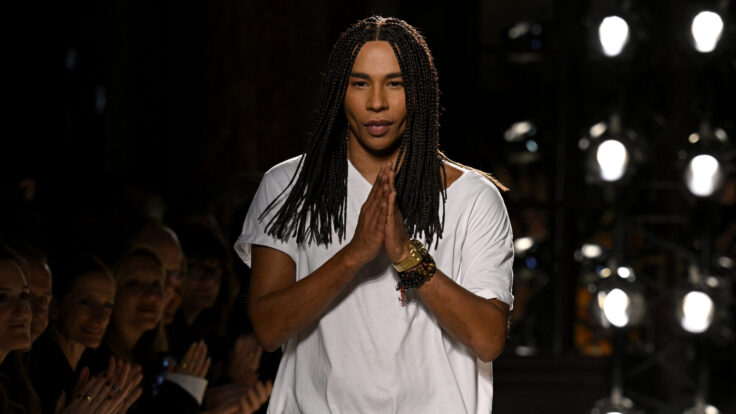
Market forces will dictate the answers, but so will individual talent. Which is why so much attention has been lavished upon Jonathan Anderson, who finally made his debut on Friday afternoon at LVMH-owned Dior. His menswear show was a genuine success, all the way down to the superficial details: the return to the lowercase typeface; the
placement of culturally relevant celebrities in the front row (Josh O’Connor, A$AP Rocky, Daniel Craig) and in advertising campaigns (Kylian Mbappé); and, of course, the compelling story told through clothes on the runway. |
|
|
A MESSAGE FROM OUR SPONSOR |
Make every purchase feel like a win with the free Carted app. Save any item from any store, and we notify you when
prices drop or items restock. Keep all your shopping finds in one beautifully organized place. It’s part wishlist, part shopping sidekick—perfect whether you're a collector, hunter or intentional shopper. We live for shopping wins. And we all deserve more of those. To celebrate the Carted x Line Sheet week, download Carted for free and you’ll go in the draw to win a $500 voucher to shop your wishlist. |
|
|
And then there was also the delicate daisy-chain necklace, designed in collaboration with
Victoire de Castellane and worn by C.E.O. Delphine Arnault, that manifested Anderson’s political wherewithal. De Castellane, who has designed high jewelry at Dior for 25 years, has always collaborated with the ready-to-wear designers. But she appeared distanced from Maria Grazia Chiuri’s work during her nine-year tenure. Returning de Castellane—a French aristocrat, much admired
by the once–middle class Arnaults—into the fold straight away demonstrated Anderson’s ability to not only manage high-altitude corporate politics, but also use them to his advantage. “J.W. understands that LVMH is like the government,” an executive said to me. “Top talent (elected officials) come and go, but the permanent bureaucracy is not like the deep state; it cannot be purged by DOGE.”
One LVMH insider suggested the daisy, which was also available as a ring, could
be the brand’s answer to Van Cleef & Arpels’ Alhambra. Given how luxury customers are favoring fine jewelry, this seems like the right strategy. If Anderson and Arnault are going to grow annual revenue to €14 billion—which, as I’ve reported, is the goal—they’re going to have to sell a lot of necklaces. |
This was also the first time in a long time that I saw individual items on the runway that were
deeply desirable to a range of customers. As with Anderson’s campaign starring Mbappé, the clothes were both familiar and new—and the right mix of feminine and masculine. There’s so much talk of genderless fashion, but this was truly a collection that anyone could relate to.
People will buy the slip-on sneakers dotted with shamrocks (a nod to Anderson’s Irish roots); the green half-zip; the blue shirting; the bar jackets (undoubtedly big for women next season, too); the little bar shorts
(undoubtedly big for the GLP-1 crew); and the jeans. The details—a tiny embroidered logo here, a ladybug up the sleeve there—make everything feel just a tad more special. (Although I’d argue that Anderson and Arnault’s talking point, underscoring the quality of the product, felt a little much; Dior’s baseline should be the highest quality.) No matter, I had gay men, straight men, and plenty of women, too, reaching out to say they wanted a piece of it. The preppy, Latter-Day Saints
canvassing uniform will also quickly trickle down to the high street. There’s currently a dearth of lightweight, non-stretch chinos for men available on the market, and Anderson might single-handedly change that.
Of course, the big question is whether men will be willing to shell out—or just settle for a tie. As with all luxury houses, the challenge is creating stuff that people are willing to pay an exorbitant amount for. The pricing, like that of Anderson’s predecessors, is high—€2,100
for a cable-knit sweater, €1,100 for a tuxedo shirt, €2,500 for the mini, very meta, Book Tote—mostly in line with Prada and other in-demand brands. And yet, a large portion of consumers may still feel that they are prohibitive. People with the means, the ultra-high-net-worth individuals who drive a significant percentage of sales, can afford four-figure jackets and six-figure coats. But you need the fashion enthusiasts to buy in first—the kids who can only afford the ties, which are going for
€250, and maybe a pair of sneakers—in order to convince the wealthier followers that it’s a worthwhile endeavor. |
|
|
As I gleaned from my time last week in Paris, the industry’s company town, a speedy recovery for luxury is
far from certain. Everyone talks about the changing behavior of Chinese consumers, the price misalignments, the effect of secondhand retail on the appetite for new products. What it all comes down to, though, is that fashion is not at the center of the culture like it was a decade ago. After all, nothing is any longer in the dawning, post-monoculture era. As one retailer said to me after we exchanged notes about the Dior show, “The luxury customer everyone is talking about isn’t buying
luxury now, but they’re still shopping.”
That’s a big problem for Kering, which has centered its entire business on high luxury. And it’s not going to be easy for LVMH, either, as many of their brands experience double-digit decreases in sales and analysts begin delicately scrutinizing Bernard Arnault’s entire strategy of stringing all those disparate businesses together. (When was the last time you heard an HSBC analyst give LVMH business advice? Never,
at least before last week, when Erwan Rambourg suggested they might consider offloading the high-performing Sephora.) My sense is that the Arnaults will stay the course, for now, and see if the Anderson experiment bears out their thesis that creativity can still fuel enough commerce to satisfy customers and shareholders, alike. |
What I’m Reading… And
Listening To…
|
Best of the men’s shows and more: Obviously
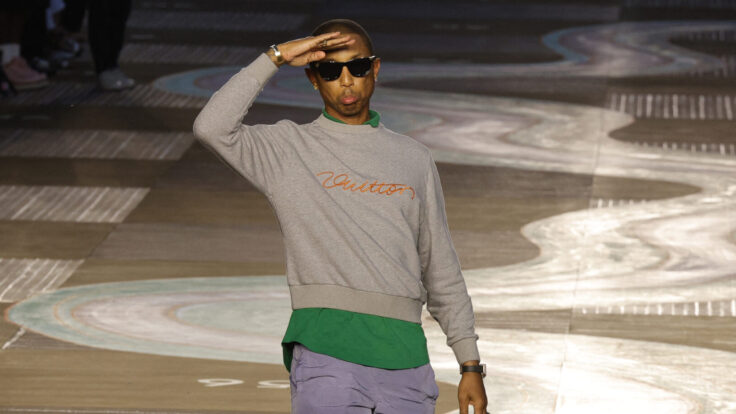
Dior. Also, Dries Van Noten received high praise, and quite a few people mentioned to me that they really liked Pharrell’s latest Louis Vuitton (one called it “Aimé Leon Dore for rich people, and I mean that in a good
way”). Jacquemus looked wearable—not a bad thing in this economy—and Hermès, Undercover, and
Sacai were all superb, per usual. I hope The Row printed its lookbook because it will be a collector’s item.
Congrats to the winners of the ANDAM Prize, including Meryll Rogge.
[WWD]
Apparently a large tin of potato chips (that honestly aren’t very good; too thin) is a great gift for a divorcée. [Wirecutter]
Spoiler alert: I really liked Michael
Grynbaum’s Empire of the Elite: Inside Condé Nast, the Media Dynasty That Reshaped America. You should preorder it because we’re going to be discussing it at length in the coming weeks. For now, though, enjoy the first excerpt, which gives a real sense of how extravagant things actually were back in the heyday of magazines.
[New York Times]
Wow, I know I’m late to this, but Keith McNally’s I Regret Almost Everything is a 10/10. I’ve been listening to the audio version while driving around Los Angeles. It’s incredibly honest, which is the only way to write. [Don’t be embarrassed about listening to an
audiobook. It’s still an accomplishment.]
Renae Plant, who “collapsed with joy” after winning a Princess Diana dress at auction—she took out a fourth mortgage in order to buy it—not only operates an online museum dedicated to the late princess, she is also the director of Camelot, a famous Silver
Lake preschool. (You definitely know someone who sent their kid there, or you have at least read the Jezebel article.) An incredible example of my worlds colliding. [People] |
And finally… Happy Birthday, Molly! There are few people who
could get me to feign dancing to “Pink Pony Club” at 11:38 p.m. on a Saturday, and you are one of them.
Until tomorrow,
Lauren
P.S.: We are using affiliate links because we are a business. We may make a couple bucks off them.
|
|
|
Puck’s daily art market email, anchored by industry expert Marion Maneker, offers unparalleled access to the mega-auctions and
galleries, elite buyers and sellers, and the power players who run this opaque world. Wall Power also features Julie Brener Davich, a veteran of Christie’s and Sotheby’s, who provides unique insights into how the business really works. |
|
|
Puck founding partner Matt Belloni takes you inside the business of Hollywood, using exclusive reporting and insight to explain
the backstories on everything from Marvel movies to the streaming wars. |
|
|
Need help? Review our FAQ page or contact us for assistance. For brand partnerships, email ads@puck.news. You received this email because you signed up to receive emails from Puck, or as part of your Puck account associated with {{customer.email}}. To stop receiving this newsletter and/or manage all your email preferences, click here. |
Puck is published by Heat Media LLC. 107 Greenwich St, New York, NY 10006 |
|
|
|