Welcome back to Puck.
Today, we’re taking a look at Silicon Valley’s next big political knife fight: the wild, well-funded effort to recall San Francisco District Attorney Chesa Boudin, and how tech money is shaping what will be one of the most important races of 2022.
If you haven't yet subscribed to read, you can do so here. We'll also be discussing the Chesa recall on the next episode of our podcast, The Powers That Be, which airs every Friday on Apple and Spotify.
As always, reply to this email with your feedback, ideas and story tips.
Teddy
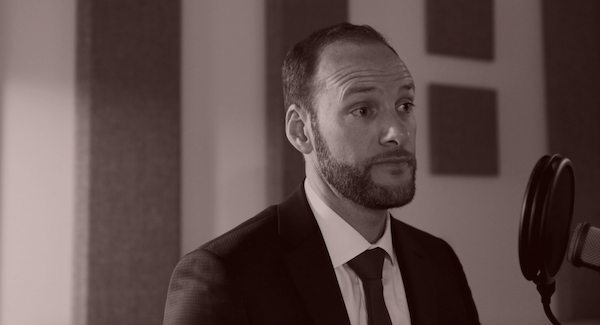
The recall election of Chesa Boudin, San Francisco’s avant-garde D.A., has turned bitter, pitting tech’s billionaires against one another—and forcing the city to look at itself, and its past, in the mirror. Last January, I fired up my AirPods to eavesdrop on a Clubhouse thrashing of Chesa Boudin, the 41-year-old, bleeding heart District Attorney of San Francisco, and the son of the infamous Weather Underground radicals Kathy Boudin and David Gilbert. In those lonely, divisive days of the pandemic, one of the few ways that Silicon Valley could find companionship was bonding over how Chesa—who had achieved first-name only status like Sheryl or Elon—was absolutely not crushing it.
Chesa, partly raised by his surrogate father Bill Ayers while his parents were incarcerated for an armed robbery gone awry, took the more establishment path to political power. Educated at Yale and Oxford, Boudin clerked on the U.S. Court of Appeals before becoming a public defender. Elected in 2019, he immediately became one of America’s most controversial prosecutors, deemphasizing placing non-violent criminals on trial. Chesa had struck a nerve in the city, a first-world utopia wrestling with social disorder, at a time of growing bipartisan outrage over mass incarceration, with a mandate to try something new.
I was expecting the usual kvetch-fest on the Clubhouse virtual chat, with the anodyne title, “The Future of SF.” Complaining about Chesa, after all, had become a cherished pastime amid the post-Covid crime wave and the proliferation of viral robberies and assaults near some of the country’s most expensive zip codes. Did you see that video of the smash-and-grab in SOMA? Was he really best friends with Hugo Chavez? Have you read my Medium post?
What I didn’t expect was for Chesa Boudin himself to somehow find the Clubhouse chatroom and, without any advance notice, give as good as he got. “The whole framework for these conversations is based on lies,” he said. Tempers flared and the listenership surged over the next half hour or so as the pugilistic D.A., armed with more-complicated statistics than Silicon Valley cared to admit, argued that the pandemic, not his own policies, was to blame for any rising crime nationally.
For the moment, it seemed that Chesa had gained the rhetorical upper hand in the endless tug-of-war between the city’s Haight-Ashbury counterculture and the techno-libertarianism that is displacing it. But in the months since the Clubhouse smackdown, which has attained almost mythological status of its own, the situation in San Francisco, at least as depicted in the media, has been deteriorating. Crimes like burglaries and auto thefts, coincidentally or not, have spiked under Chesa’s watch. So has the hostility. The investor-podcaster Jason Calacanis, who launched a GoFundMe for a reporter to investigate Chesa, has been raging about “Gotham City-level chaos.” And in the city that has for two decades nursed tensions between its leftist roots and its newfound identity as a capitalist playpen, everyone from Sam Altman to Tucker Carlson has an opinion on Chesa and crime. People feel unsafe—and don’t trust the city’s data. Enough so that in November, one of two pro-recall campaigns received 83,000 signatures, putting Chesa's fate on the ballot.
Things are somewhat quiet now, but the race is likely to attract upwards of $10 million from tech and non-tech donors alike. On Chesa’s side there are people including Larsen, the founder of Ripple, who is giving his ally $100,000. On the other side is seemingly everyone else… including ascendant political players like venture capitalist David Sacks ($75,000), seed investor Garry Tan ($50,000), and a whole roster of tech personalities that Chesa’s campaign wants to place center stage in their messaging campaign. “Chesa has an incentive to exaggerate my importance to change the subject from his record,” Sacks wrote me, pointing out, correctly, that he didn’t even fund the recall that qualified—he funded a separate one that failed. “I’m not on the ballot; Chesa is. His record and policies are all that matters.”
The bitterness is the culmination, or at least the evolution, of the decade-long disintegration of tech’s relationship with San Francisco. It didn’t always used to be this way. In the early 2010s, the city bent over backwards to placate its most important job-creating sector, passing tax breaks to woo companies like Twitter to its not-yet-fully-gentrified downtown. Venture capital firms flooded into South Park to gain proximity to a growing number of city-dwelling founders; tech leaders like Ron Conway, the “super angel” turned City Hall powerbroker, were at the height of their political influence.
But it has gotten to the point over the last few years where today, some tech folks privately tell me they see it as a professional liability, almost an embarrassment, to be vocally supportive of San Francisco, even if they genuinely are supportive. For some city officials, that discomfort is precisely the point. The city’s empowered left flank seems to take a special thrill in tormenting its millionaire-and-billionaire tax base; in a particularly telling moment, for instance, the city approved a measure last winter that formally condemned the naming of a local hospital after Mark Zuckerberg, who donated $75 million to the institution. More than a few indignant V.C.s have responded to the growing polarization by loudly decamping for more welcoming tech scenes in Austin and Miami.
For the conservatives and centrists who remain, saving San Francisco from crime and its liberal enablers has acquired world-historical importance. “Tech’s flaw is that they only want to solve global problems. No one wants to spend time on local, trashy problems because they want to solve world hunger, they want to solve climate change,” as one entrepreneur active in the city put it. “Now you’re stepping in shit and your windows are getting smashed, suddenly they care.” For every Chesa advocate in Silicon Valley who wants San Francisco to serve as a petri dish for sweeping changes in law enforcement, there are twice as many industry critics with no such interest in experimentation.
Chesa’s defenders have been eager to frame the recall around outspoken conservatives like Sacks, a G.O.P. fundraiser and powerbroker who plays maitre d’ to Trump-aligned figures like Ron DeSantis and J.D. Vance. But the truth is that opposition to Chesa is a bipartisan affair. Many of the Silicon Valley tech leaders I speak with who self-identify as progressives—and disagree plenty with Sacks—also quietly, and with a spritz of shame, tell me they are probably going to vote for the recall, too. Bryan Giraudo, the C.F.O. of a biotech company who described himself to me as “very, very apolitical,” said he and his wife got involved in the recall—funding the campaign’s “seed round” by helping to underwrite early polling—after becoming concerned that his young daughter couldn’t walk six blocks to get ice cream without needing to carry pepper spray. Now, he is one of the effort’s chief fundraisers, co-hosting an event on Wednesday, for instance, where tickets go from $1,000 to $10,000 a pop, according to an invitation I saw.
Those concerns extend well beyond Sea Cliff and Pacific Heights, where some of the city’s wealthiest residents reside, to small business owners and families who just want to feel safe again. In one of S.F.’s seedier neighborhoods the other week, I overheard a boxing instructor warn clients about nearby car break-ins, and rage that it was all the district attorney’s fault because criminals were “not fucking scared of him.” Last month, I came across a Walgreens in a predominantly Asian-American neighborhood that was shuttered due to a spate of shoplifting but, in a misleading but telling oversimplification, had hung a banner over its locked doors informing customers, “this store closure brought to you by Chesa.”
Tech didn’t engage much in that 2019 race, but over the last few years, support for criminal justice reform emerged as one of the few things that all of Corporate America—from Charles Koch to Zuckerberg—can get behind. Political donors and philanthropists of all stripes funded campaigns to decriminalize drugs and reduce sentences for non-violent offenses. Chesa, though, has threatened to obliterate that elite consensus, which, if anything, was deepened by last year’s murder of George Floyd.
Most tech leaders, by and large, have yet to weigh in on the recall election, which is still 7 months away. I asked major civic leaders including Conway, Marc Benioff, and Jeff Lawson of Twilio to articulate their position, but they declined. “This isn't something I want to weigh into at the moment,” Conway said. I will be particularly curious to see how some of the city’s most vocal supporters of criminal justice reform navigate these tensions. Will Zuckerberg, who still has a house in San Francisco and has fashioned himself as a big-spending reformer, say his piece? (A spokesman declined to comment.) Where will Zuckerberg’s Harvard roommate, Dustin Moskovitz, and his wife, Cari Tuna, land? How about Netflix’s Reed Hastings and especially his wife, Patty Quillin, who have been among the biggest spenders when it comes to tearing down the carceral state? (They didn’t return a request for comment through a rep.) The Chesa election is a litmus test for donors like them—just how far left are they willing to go?
Some of these tech leaders have an indirect role in the recall via outside groups. Moskovitz and Tuna, for example, have been among the biggest backers of Real Justice PAC, which has spent $100,000 to boost Chesa. But when I asked a spokesman if the billionaire couple did oppose the recall—something that activists have erroneously alleged as a matter of fact—the rep said Moskovitz and Tuna are “not opposing the recall or providing funding to the opposition.”
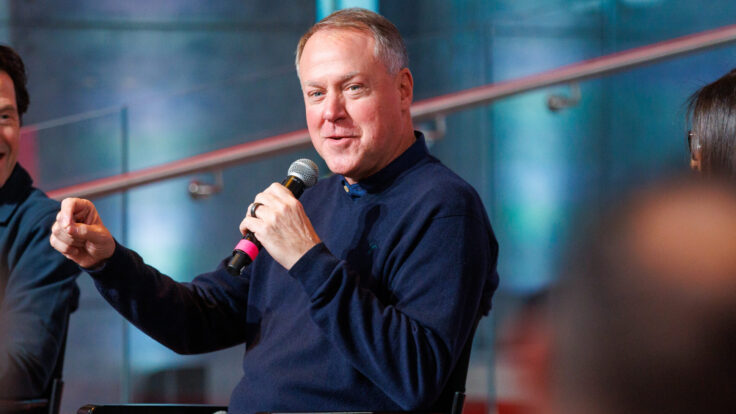
Meanwhile, Chesa supporters are trying to besmirch people like Mike Moritz, the longtime Sequoia Capital chairman who has always paid close attention to city politics. Moritz has helped fund a group called Neighbors for a Better San Francisco that is the single biggest donor to the anti-Chesa campaigns, but Moritz told me that his single contribution was solely for last year’s elections and that he has “made no contribution to the campaign to recall the DA.” (Moritz didn’t return a follow-up question for his explicit position on the recall.)
Both sides are playing the same game. It is all so classic San Francisco—activists seeking to tar the other side by using their support from billionaire donors as a cudgel, the facts be damned. But it also speaks to the power of these mega-donors, and the huge influence they are likely to have in this and other district attorney races. “When I see rich tech people on Twitter blaming Chesa Boudin for some particular crime, I assume, because they are not stupid, that they are familiar with the data on what does and doesn’t reduce crime,” said Jessica McKellar, an entrepreneur who put $50,000 into backing the DA. “I can only assume, then, that these people are not sincerely interested in reducing crime and instead have some other political agenda.”
One likelihood that multiple people floated to me is that prominent tech leaders will just quietly back the recall from the privacy of the voting booth, rather than fund it loudly and publicly. One San Francisco insider close with the tech community agreed with me that the preponderance of business leaders he knows are privately pro-recall. But, he predicted, many of them will not want “anything to do with” the campaign because it would just get them in trouble.
Who cares about one random race in America’s 66th biggest county? Well, combatants know on all sides that this is going to get awfully personal—Moskovitz already blocked Sacks on Twitter for his Chesa commentary—and serve as a national flashpoint in the debate over policing in America’s cities, and the political wisdom of the left more broadly. Chesa hasn’t lost yet, but you can almost smell the warming of the takes, and the Democratic midterm bed-wetting, already.
Naturally, the race is also becoming a microcosm of the challenges faced by the tech industry and San Francisco, itself, which are increasingly one and the same. The city’s problems are not just the city’s problems; they are the industry’s problems, and tech leaders have to care not only because they themselves suffer through the pains but because the pains are, possibly, a harbinger of the San Francisco Bay Area losing its luster. What if the talent goes elsewhere? San Francisco is not a penal state like Singapore, where jaywalkers were lashed, or even Rudy Giuliani’s New York. It is the place of Harvey Milk, the Grateful Dead and, frankly, of people like Chesa. Is that mutually exclusive of being the place of people like David Sacks, too?
No matter how nasty this all gets, the silver lining might be that, for the first time in a decade, the lords of Silicon Valley are actually paying attention to local politics. “At least [Sacks] is engaged,” said Larsen, who attended San Francisco State University and has largely been an anomaly for caring about city affairs. “Tech is way too disengaged with what's going on in the city. They're just cowed by some very vocal voices that will just accuse you of everything the second you speak up and do anything. There is an element of the city—like there is everywhere, but it's pretty effective in the city—that must shut you down. That's a shame, right? The tech industry is all very transient. It's all very new. And it's sort of been put in its place by some other people that think they are entitled to the entire conversation. That's just bullshit.”
FOUR STORIES WE'RE TALKING ABOUT 
Marvel has been so successful for so long, begging the question: if we've reached Peak Marvel, how is Kevin Feige using his power? MATT BELLONI 
Since leading Youngkin to victory, Roe has effectively rewritten the Trump-adjacent, post-Trump campaign playbook for 2022. TINA NGUYEN 
The line between philanthropy and politics has been obliterated. The upshot is that even more money is moving into the shadows. TEDDY SCHLEIFER 
“The Ax” was once an influential figure on Wall Street, before Eliot Spitzer put the kibosh on the research industrial complex... WILLIAM D. COHAN 
You received this message because you signed up to receive emails from Puck.
Was this email forwarded to you?
Sent to {{customer.email}}
Puck is published by Heat Media LLC.
For support, just reply to this e-mail. For brand partnerships, email ads@puck.news |


SHARE