Rowan's Rise, Critical Race Theory, and the A.I. Apocalypse
Good afternoon and welcome back to The Daily Courant, your regular digest of the latest and greatest journalism being published at Puck.
Plus, below the fold, Julia Ioffe considers the lessons from the Virginia gubernatorial race, where Republican Glenn Youngkin—another private equity mogul—gave voice to suburban panic over “C.R.T.” while never quite mentioning Donald Trump.
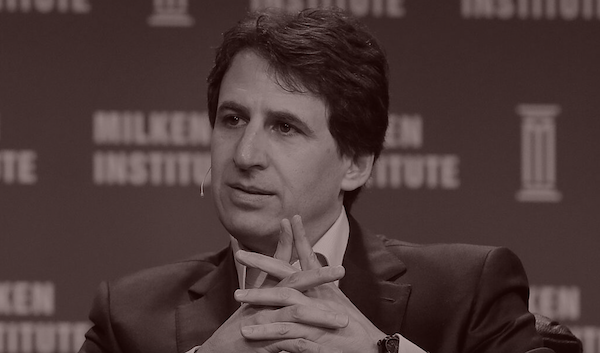
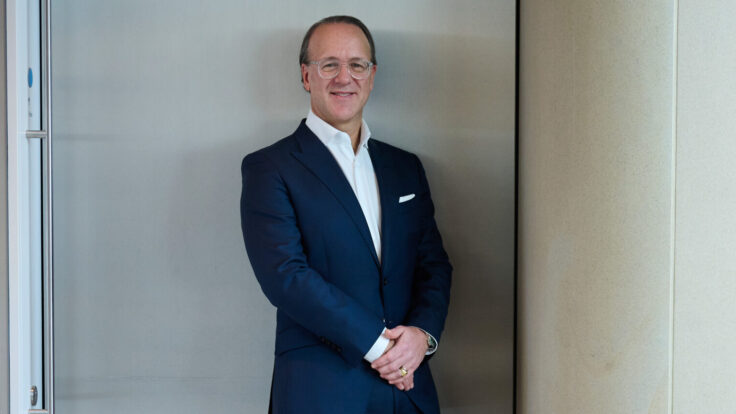
Apollo Global Management has long been identified with its co-founder Leon Black. Now his successor Marc Rowan is on a mission to change that narrative—pronto—and to make a killing in the process. The gargantuan private-equity business is undergoing a massive generational shift these days, with a whole new cadre of leaders taking control of, cumulatively, more than $1 trillion in dry powder. At Blackstone, the emperor of the industry with some $730 billion of assets under management, co-founder Steve Schwarzman (age 74, net worth these days: $41 billion) has designated Jon Gray, 51, as his successor, even as he remains understandably reluctant to relinquish center stage. At KKR, co-founders Henry Kravis and George Roberts, both 77, have turned over the reins of the firm, founded in 1976, to Scott Nuttall and Joe Bae. At the Carlyle Group, co-founders David Rubenstein, William Conway, and Dan D’Aniello have moved on and out in favor of Kewsong Lee. (Lee’s co-C.E.O., Glenn Youngkin, gave up the role in part to run for governor of Virginia, a race he won on Tuesday.) In May, the co-founders of TPG handed over the sole C.E.O. role to Jon Winkelreid. (TPG is an investor in Puck.)
Then, of course, there is the succession drama that played out earlier this year at Apollo Global Management. This was succession of a different sort—more Succession than succession—driven by crisis, rather than by careful planning. While all the details remain publicly scarce, you can rest assured that the process by which Marc Rowan took over from Leon Black at Apollo was hardly textbook, even though it all may work out just fine. (Apollo’s stock is up more than 60 percent since Rowan succeeded Black in March.)
I had lunch with Rowan in September. We dined on salads, using plastic silverware, at Apollo’s new cafeteria in its Manhattan headquarters at 9 West 57th Street. He was eager to show it to me. I’ve known Rowan for 30 years, from back in the days when Apollo was just starting out and I was a young Wall Street investment banker covering the burgeoning private-equity industry. Our latest conversation was off-the-record, so I can’t report about it. But I can tell you that I’ve never seen him happier, more energetic, and more inspired by the responsibility he has been given to lead Apollo at this critical juncture. It’s almost as if he’s been waiting to come out from under Black’s shadow, or yoke, for decades. It’s fascinating to watch, to be honest. I, for one, didn’t think Rowan had it in him to be an enthusiastic leader of one of the most important bellwethers of finance.
Apollo, as you readers know, is the alternative-assets behemoth founded 31 years ago by Black, the former head of M&A at Drexel Burnham Lambert (the defunct investment bank) and, among others, two of his protégés, Josh Harris and Rowan. The firm, with $481 billion of assets under management and a market value of $30 billion, has long been identified, even more than most other private-equity firms and their founders, with Black, who is 70 and more than a decade older than both Harris and Rowan. Channeling Black, Apollo has always been known as a firm that has been willing to take risks that other firms have not been willing to take, such as buying the debt of bankrupt or failing companies and then converting that debt to equity to get control. It is equally well-known for its relentless financial creativity. In the aftermath of the financial crisis, for instance, Rowan and Apollo started an insurance company—Athene—from scratch, took it public in 2016, and then Apollo just recently agreed to buy it back, making another fortune.
All this financial engineering made Black very rich—his net worth is estimated at around $10 billion—with all the usual accoutrements of the very wealthy: a Manhattan townhouse (it used to be the Knoedler art gallery), a home in Beverly Hills (that used to belong to Tom Cruise), and a palatial mansion in Southampton. In 2012, he bought Edvard Munch’s pastel, The Scream, for nearly $120 million. Until recently, he was chairman of the board of trustees at the Museum of Modern Art. Such was Black’s pervasiveness at Apollo that until he was tapped in March to succeed him, Rowan had opted for semi-retirement rather than get all bollixed up in the question of whether he or Harris, or someone else, would be Black’s successor...
FOUR STORIES WE'RE TALKING ABOUT 
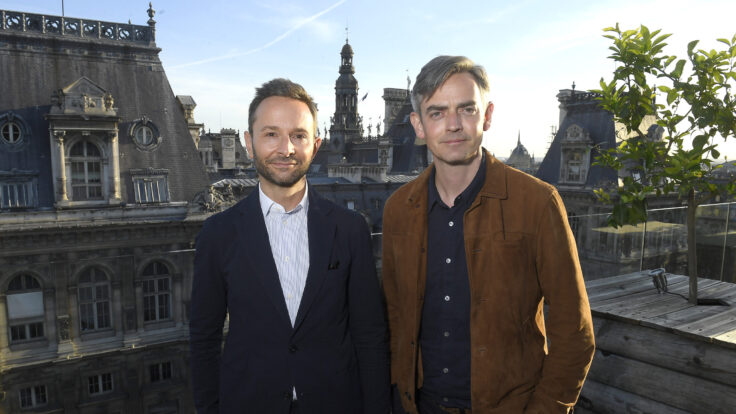
The Puck team discusses the tragedy on the set of Rust, what the Dune box office presages for the post-pandemic film business, and the most ridiculous parts of the TMTG pitch deck. PETER HAMBY, MATT BELLONI, AND WILLIAM D. COHAN 
Culture wars work, and Glenn Youngkin just rode the so-called "critical race theory" issue straight to the governor’s mansion. JULIA IOFFE 
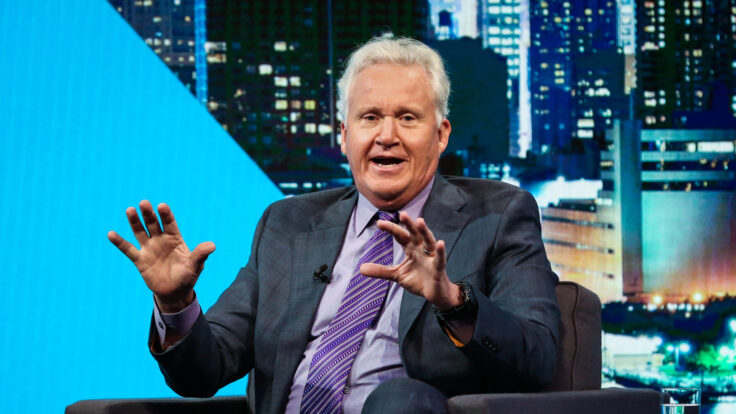
A candid conversation with Eric Schmidt about artificial intelligence, Joe Biden, and how “woke-ism” has transformed the C-suite. TEDDY SCHLEIFER 
The DWAC merger is full of red flags: peripatetic sponsor, nonexistent product, outrageous valuation. But a mysterious bulk order may be the most telling market signal of all. WILLIAM D. COHAN 
You received this message because you signed up to receive emails from Puck.
Was this email forwarded to you?
Sent to {{customer.email}}
Puck is published by Heat Media LLC.
For support, just reply to this e-mail. For brand partnerships, email ads@puck.news |


SHARE