The GE Conundrum and More Bari Weiss Drama
Happy Monday and welcome back to The Daily Courant, your regular afternoon dispatch highlighting the most important journalism at Puck.
Plus, below the fold, Tina Nguyen reports on the conflicting motivations and political undercurrents behind Bari Weiss's pre-accreditation academic outpost for aspiring Substack stars. And Matt Belloni examines whether Kathleen Kennedy is at fault for the turmoil inside Lucasfilm.
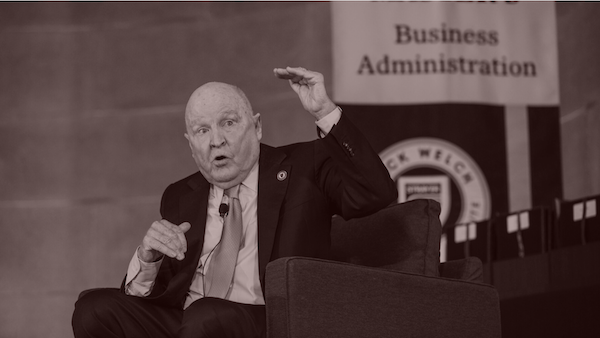
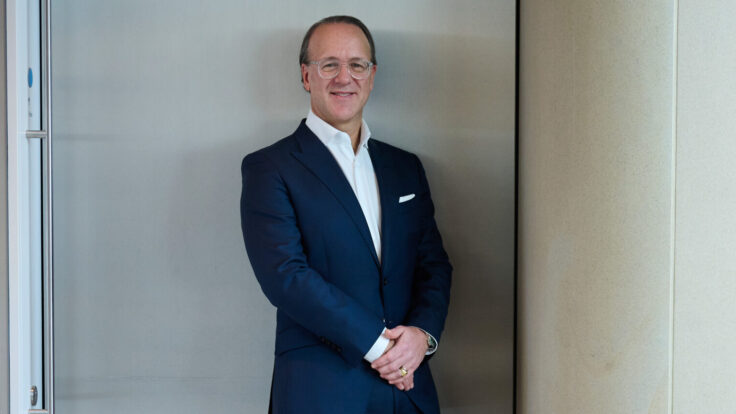
Twenty years after stepping down as the leader of GE, and being minted the C.E.O. of the century, Jack Welch’s baby is about to become three companies. What went wrong? The news that GE, the venerable conglomerate founded in 1892, was committing an act of corporate meiosis and splitting itself into three pieces—a jet-engine manufacturing company; a health-care machine manufacturing company; and a power business—leads me to ask a deceptively simple question. Who lost GE, and when?
Was it Jack Welch, the revered “C.E.O. of the Century,” as Fortune dubbed him, who made GE the most valuable and respected company in the world, but perhaps made it too hot to handle in the process? Did Jack pick the wrong successor in Jeff Immelt? After all, he had a bench that included, at one time or another, Dave Calhoun, the C.E.O. of Boeing; David Zaslav, the C.E.O. of Discovery Communications and the architect of the still-pending Hollywood blockbuster merger with the Warner Media assets; David Cote, who went on to become the highly successful and respected C.E.O. of Honeywell after Jack forced him out of GE; Jim McNerney, one of Calhoun’s predecessors atop Boeing; and Bob Nardelli, who after losing out to Immelt became the C.E.O. of Home Depot, and then Chrysler.
Or were the seeds of GE’s demise already planted by the time the Immelt era had begun? While Immelt inherited a straight flush from Jack four days before September 11, he quickly found out that the world had changed after both the attacks on the World Trade Center—GE made the jet engines on the planes that hit the towers and GE had partially reinsured both towers—and the imposition of the Sarbanes-Oxley law, which came in the wake of the corporate scandals that plagued the late 90s. Had Jeff played Jack’s winning hand poorly?
Or was it the moment, in October 2015, when Jeff encouraged Trian Partners, the activist hedge fund run by Nelson Peltz and his son-in-law Ed Garden, to buy $2 billion of GE stock, only to watch the value of the GE stock continue to decline, invoking Trian’s ire...
FOUR STORIES WE'RE TALKING ABOUT 
Kathleen Kennedy is one of the most prolific producers in Hollywood. But it's time for someone else to manage the franchise. MATTHEW BELLONI 
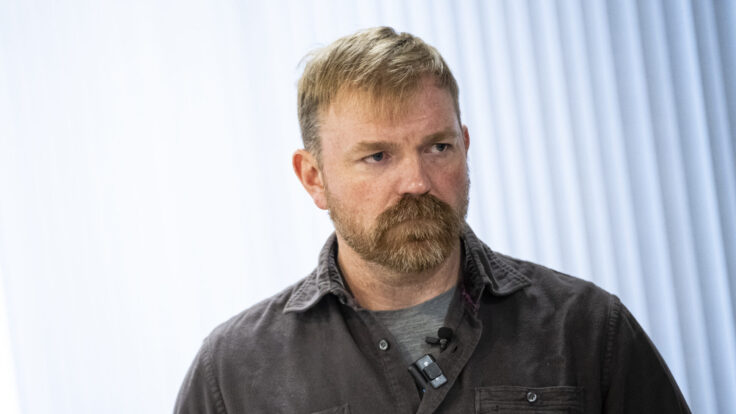
Time will tell whether the University of Austin becomes the next Hillsdale, the next Yale... or a brick-and-mortar Substack. TINA NGUYEN 
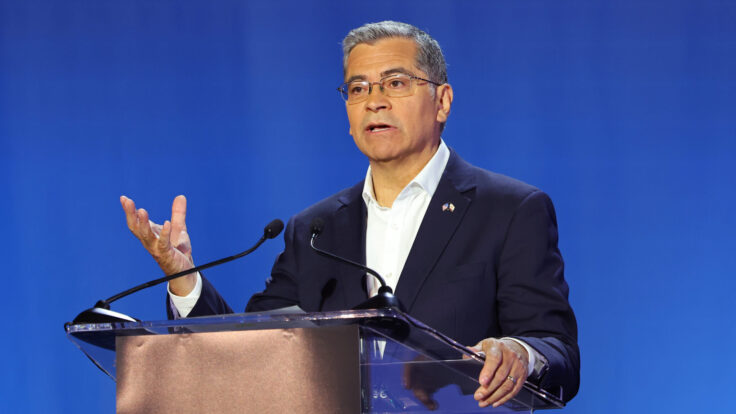
As global supply chains break down, the U.S. Department of Energy faces a political-economic crisis of its own making. PETER HAMBY 
Tesla has broken the will of short-sellers, market prognosticators, and even the all-seeing Michael Burry. But is the party finally ending? WILLIAM D. COHAN 
You received this message because you signed up to receive emails from Puck.
Was this email forwarded to you?
Sent to {{customer.email}}
Puck is published by Heat Media LLC.
For support, just reply to this e-mail. For brand partnerships, email ads@puck.news |


SHARE