2024 Odds, Baldwin's Nightmare, and the Future of Film
Happy Tuesday and welcome back to The Daily Courant, our afternoon digest highlighting what's new and noteworthy at Puck.
Today, Tina Nguyen considers the financial impact and political fallout of Donald Trump's astoundingly-valued, hastily-considered media venture. The economics of the SPAC merger appear to maximize the upside of his short-burst, social media micro-aggressions. But it attaches Trump’s name to a potentially ruinous project that might embarrass his followers more than engage them—especially if the stock price drops back down to earth.
Plus, below the fold, don't miss Peter Hamby, Matt Belloni, and William D. Cohan on the latest episode of The Powers That Be, discussing the tragedy on the set of Rust, what the Dune box office presages for the post-pandemic film business, and the most ridiculous parts of the Trump Media and Technology Group pitch deck.
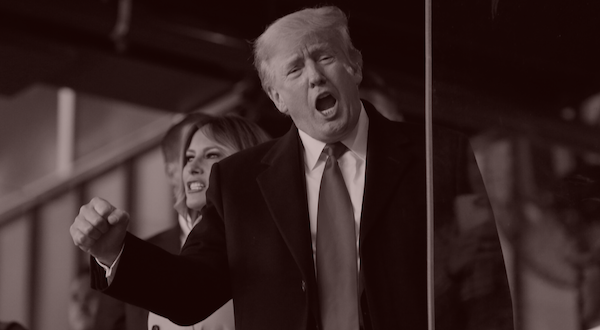
The DWAC merger appears reckless, even to those in Trumpworld. As one former senior advisor put it: “It's got as much gas as the Hindenburg.” For the past 10 months, I’ve been transfixed by how the banishment of Donald Trump from social media has affected his political salience and what he might do to reclaim the spotlight. Trump may not have been the first American politician to fully recognize the power of Twitter and Facebook to dominate media coverage, but he sure was the first to leverage it ad infinitum. So surely he would plot some way back to the fore, I assumed, if not only for political purposes then for measures of, well, rhetorical self-satisfaction. And if not for those, at least as a business opportunity. Trump is a guy who ran for president largely to use the office as a marketing platform, and barring an unforeseen act of enlightenment, he would presumably want to maximize the financial upside from short-burst social media micro-aggressions.
In the course of my past reporting, sources close to Trump often predicted two possible outcomes. One: Trump would acquire or partner with a lesser social media company and rebrand it in his likeness, similar to how he built his business portfolio—certainly the core real estate business, but also the peripheral cologne, vodka, and tie shingles. Or, second: he would endeavor to build his own media company from scratch, from the tech stack to the actual product itself.
Naturally, the former seemed more likely. Trump has a long history of slapping his name on chintzy and sometimes stomach-churning products, from discontinued Trump Steaks to the discredited Trump University, in order to secure short-term profits. And given the extraordinary operational and engineering challenges in launching a social media company from scratch, the true start-up option seemed like a fantasy. So I was not entirely surprised, earlier this month, when Trump announced that his Trump Media & Technology Group (TMTG) would go public via a merger with Digital World Acquisition Corp., a publicly-listed shell company. TMTG’s forthcoming app, a Twitter knock-off called Truth Social, appears to be cobbled together from the open-source software Mastodon, in violation of its license agreement. “This thing is strung together like a 12 year old’s firework program for Fourth of July,” a former Trump senior adviser recently told me, barely concealing his laughter. “Hopefully after you light it, someone doesn’t get shot and killed...”
FOUR STORIES WE'RE TALKING ABOUT 
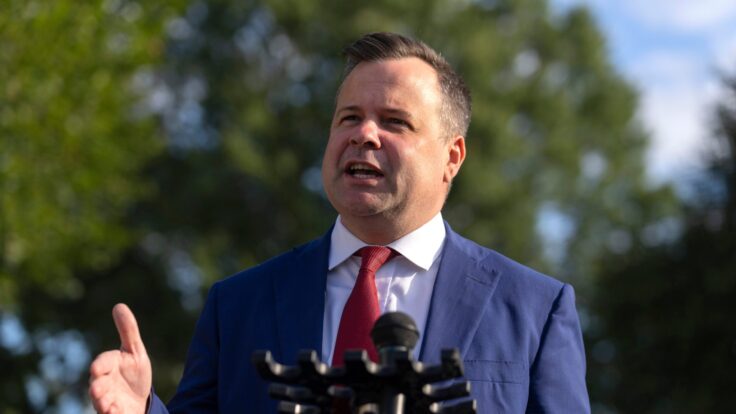
The Puck team discusses the tragedy on the set of Rust, what the Dune box office presages for the post-pandemic film business, and the most ridiculous parts of the TMTG pitch deck. PETER HAMBY, MATT BELLONI, AND WILLIAM D. COHAN 
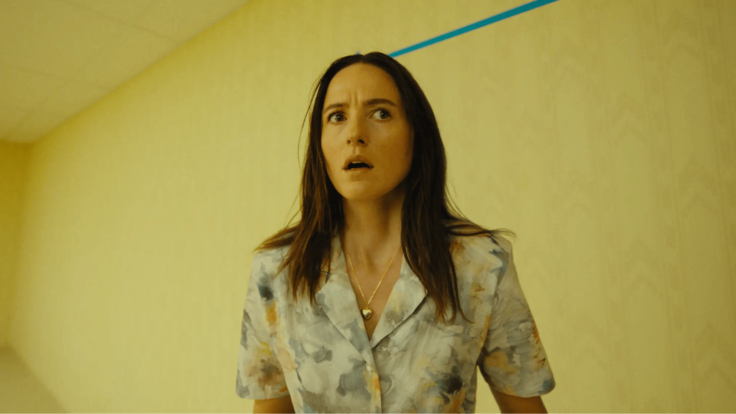
A right-wing finishing school for conservative media personalities outside of Los Angeles has spawned an unlikely academic movement to preserve Trumpism after Trump. TINA NGUYEN 
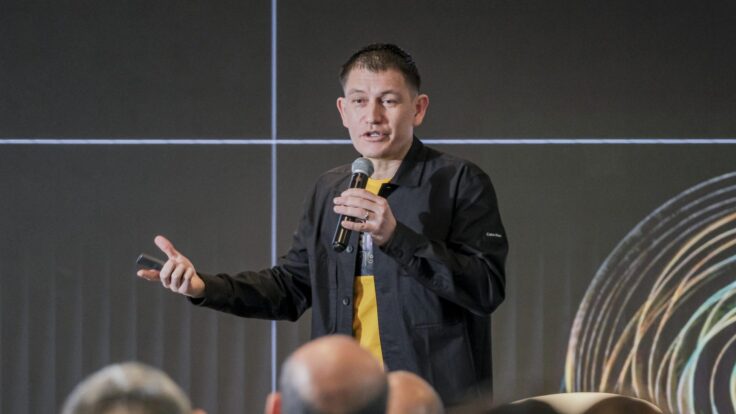
A conversation with Matthew Ball about how Hollywood botched the rise of the internet—and how studios could reverse their fortunes. MATT BELLONI 
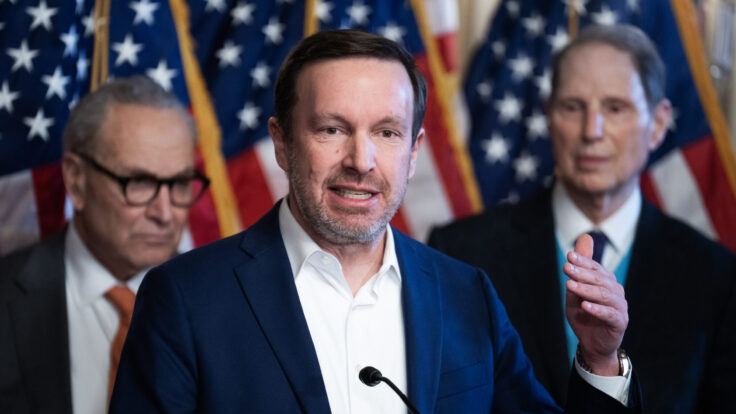
Treasury is one of those positions that will always go to someone who knows more than a little something about banking, finance or business. But the political winds have changed. WILLIAM D. COHAN 
You received this message because you signed up to receive emails from Puck.
Was this email forwarded to you?
Sent to {{customer.email}}
Puck is published by Heat Media LLC.
For support, just reply to this e-mail. For brand partnerships, email ads@puck.news |


SHARE