Hello and welcome back to the Tuesday edition of What I’m Hearing, with team captain (and Knicks
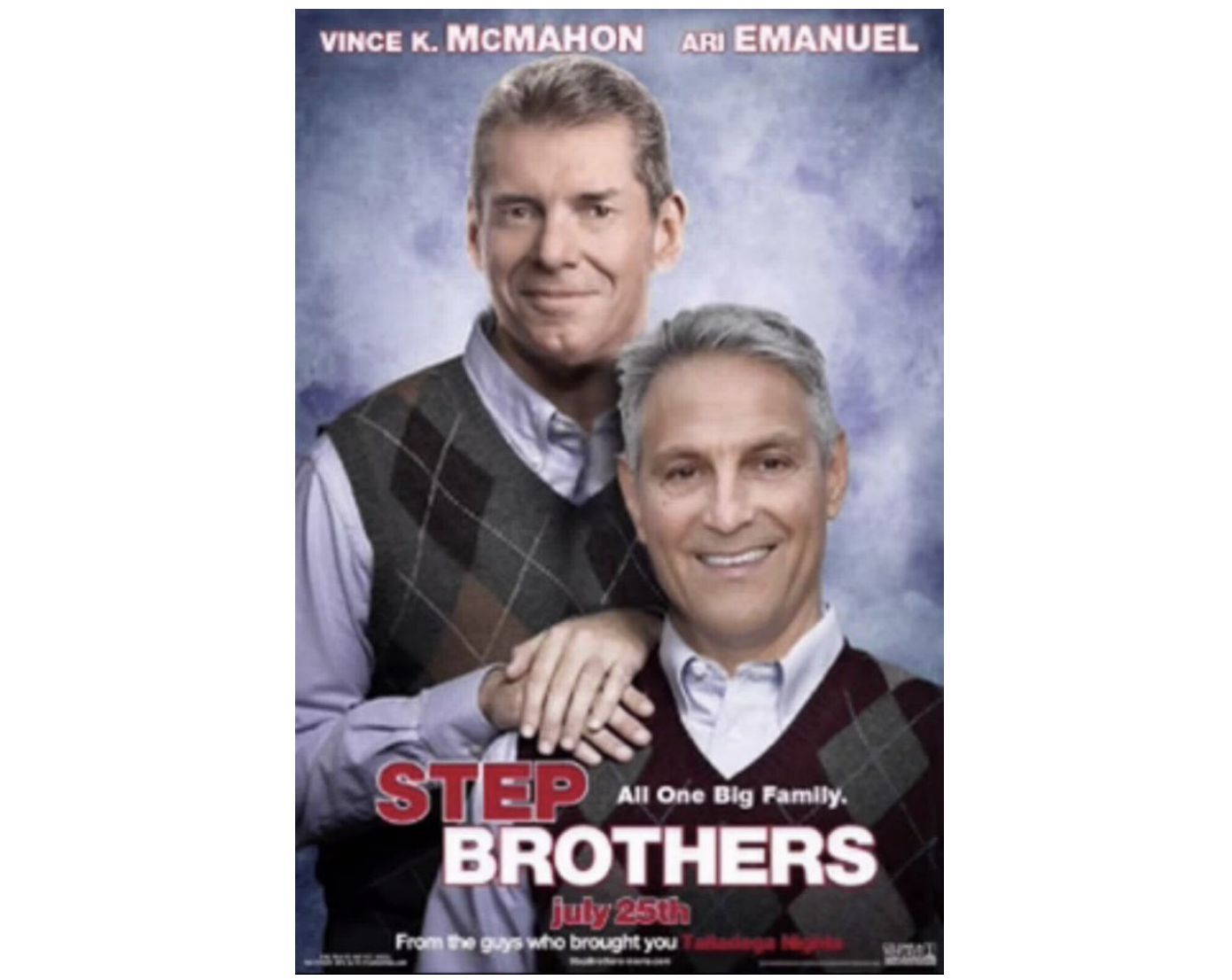
fan) Eriq Gardner. Tonight, Eriq looks at the lawsuits targeting Netflix algorithms, and whether machine-curated content should receive the same First Amendment protection as the human-made stuff. Plus, a Batman brouhaha for Warners, three new A.I. cases, and the Ari Emanuel/Vince McMahon Step Brothers poster you can’t unsee.
All yours, Eriq (and send him tips at Eriq@puck.news).
Not a Puck member yet? Never too late. Just click
here.
Also discussed in this issue:
Daniel Petrocelli, Amy Coney Barrett, Andrew Sosa, Joey Zhou, Stephen Colbert, J. Travis Laster, Edward Davila, Ken Paxton, Arnold Schwarzenegger, Prince, and more. |
|
|
|

| Eriq Gardner
|
|
- Did Warners try to
“squelch” a negative review?: There are times when studios obviously get a little too aggressive on the copyright-takedown front, like when CBS caused YouTube to remove Stephen Colbert’s Michigan local access show. Moments like these tend to prompt reminders that the Digital Millennium Copyright Act includes penalties for copyright owners who knowingly misrepresent infringement. That said, there haven’t been many cases testing that provision. The most famous
example—the “toddler dancing to Prince’s ‘Let’s Go Crazy’” case—wrapped about a decade ago, with an appeals court holding that copyright owners must consider fair use before sending takedown notices, while leaving open the possibility that algorithms could do at least some of that
work.
Which brings me to a weird little case I’m following. The plaintiff is Andrew Sosa, who says Warner Bros. wrongfully took down his YouTube review of The Batman. Sosa alleges that Warner invoked its copyright interest in the movie even though his video used very little footage, and the takedown came just three hours after the review was uploaded—evidence, he says, that the studio never meaningfully considered fair use. He also claims that Warner has a habit
of using takedown notices to “squelch” negative reviews. That was enough for a federal judge, on May 5, to let Sosa’s D.M.C.A. misrepresentation claim proceed.
Now that Warner Bros. has lost its bid to dismiss the case, it has fired back with a counterclaim. (Read here.) Frankly, it’s not terribly impressive. Warner is trying to pin liability on Sosa for using a
promotional movie poster and a couple of screenshots, arguing that he didn’t have permission. But did he need it? That’s the fun part. - The texts that caused WWE to settle: World Wrestling Entertainment and its former board of directors have settled their way out of a trial that was supposed to begin this week over
whether the company shortchanged shareholders when it was sold to Endeavor and merged with UFC, thereby creating the publicly traded TKO. The terms will be revealed later, and Judge J. Travis Laster, the vice chancellor of the Delaware Court of Chancery, still needs to approve the deal. But it’s not hard to see what might have led WWE to settle.
Start with Laster’s rulings in the weeks leading up to trial: the sanctions order over destroyed Signal messages, plus his
refusal to exclude WWE’s post-merger media rights deals with Netflix and NBCU as evidence of value. Then add the atmospherics. With a UFC event on the White House lawn closing out the week, did anyone at TKO really want a Delaware trial spoiling the vibes?
The late filings indicated that shareholder lawyers were preparing to make the proceeding as uncomfortable as possible. There were text messages between Vince McMahon and Ari Emanuel exchanging “I love
you” greetings; adverse inferences that McMahon steered his company to Emanuel upon promises of a post-sale role and indemnification from hush-money-related legal troubles; and even the silly meme Vince sent Ari just days before the merger announcement—a little piece of dealmaking ephemera that, in another world, might have made for one hell of a trial exhibit.
|
- Three A.I. cases to
watch: Every day seems to bring some bold new lawsuit, fresh theory, or novel lawyerly attempt to flip the script on A.I. Last week, the largest musicians’ union in North America sued Warner and Universal for licensing sound recordings to Suno—the A.I. music company that the labels were previously suing for copyright infringement before they suddenly made peace late last year. Now the union says the labels had no right to cut that deal without giving notice under the
“new use” provision of their labor agreement.
That’s not the only bit of A.I. litigation jujitsu to arrive in the past few days. Nanonoble, the Chinese owner of Hailuo, has just countersued Disney, Universal, and Warner Bros., claiming the studios’ lawyers at Jenner & Block violated the video-generation tool’s terms of use when they signed up for the service, generated outputs, and then used those outputs as exhibits in a copyright complaint. Nanonoble’s theory is that because the studios
acted through their agents—i.e., their lawyers—they triggered an indemnity obligation, meaning the studios should effectively forfeit whatever copyright damages they manage to win.
Both good cases to watch. And yet, amid all the fresh chaos, don’t lose sight of the old warhorse. On Thursday, the Third Circuit will hear arguments in Thomson Reuters v. Ross Intelligence, the years-long fight over whether Ross was operating under fair use when it used Westlaw summaries and
its proprietary key-number system to train an A.I.-powered legal search engine. It’s the first time an appeals court will confront fair use in the A.I.-training context.
|
|
|
|
And now, Eriq analyzes the new Texas lawsuit targeting Netflix algorithms… |
|
|
|
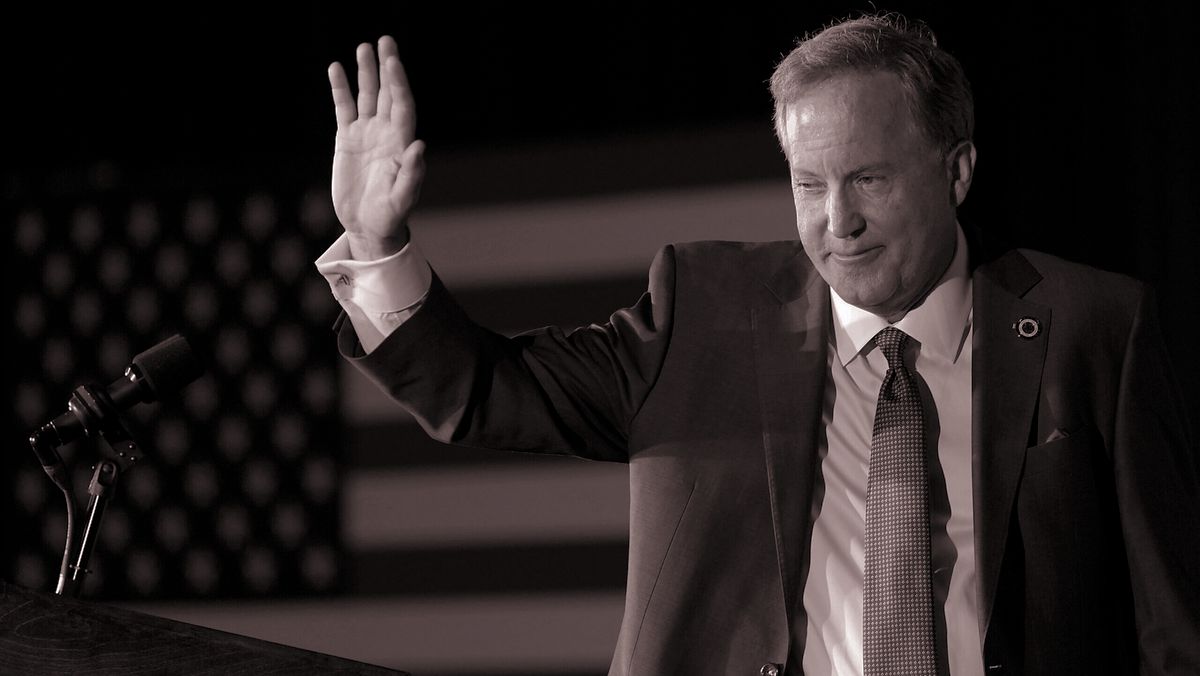
Ken Paxton, the Texas attorney general running for Senate, is suing Netflix for being too
appealing to kids. It might be a long shot, but the power of recommendation algorithms has never really been litigated—and Netflix, along with TikTok, may be in more trouble than it seems. |
|
|
|
Last month, Ken Paxton, the Texas attorney general now running for Senate with
Trump’s enthusiastic backing, filed a lawsuit against Netflix with an ominous opening—“When you watch Netflix, Netflix watches you.” His thesis was even more sinister. According to Paxton, Netflix deliberately designed its platform to keep children glued to their screens. “Netflix uses dark patterns to do this discreetly,” the complaint
alleges. “Dark patterns are subtle features engineered to manipulate users to take the actions Netflix wants them to take.” Unaware of these subterfuges, Paxton writes, “Texans signed up in droves and handed their children the remote.” |
|
|
|
A MESSAGE FROM OUR SPONSOR |
For your awards consideration, HBO Max presents INDUSTRY. In Season 4, Harper and Yasmin are on opposing sides
of a high-stakes financial deal that could bring them both down. Who will finish on top? |
|
|
|
Sure, but… what entertainment company doesn’t try to hook viewers? For decades, that sort of thing
was considered squarely within the realm of First Amendment protection. Hollywood’s business model has always been to persuade people to watch its stuff. And when states have wandered too far into trying to regulate these tactics, courts have generally swatted them away. Remember when former California Gov. Arnold Schwarzenegger tried to restrict the sale of violent video games to minors? The Supreme Court
ultimately held that law unconstitutional, reaffirming that entertainment products do not lose First Amendment protection just because kids like them.
So what makes this different? Netflix, for its part, argues that Paxton’s lawsuit rests on a misunderstanding of how its platform actually works. On Monday, the company made a special appearance in a Collin County courtroom to
argue that Texas lacks jurisdiction because the policies under attack were devised and overseen by executives in California. As for the broader allegations, Netflix has so far kept its powder dry. But it told me the lawsuit “lacks merit and is based on inaccurate and distorted information.” The company also noted that autoplay can be disabled, and the platform allows parents to retain control over children’s viewing.
Regardless, Paxton’s strategy is easy to spot. He is plainly trying to
exploit what many regulators and plaintiffs’ lawyers now see as an opening: product-design liability. After years of hitting Section 230 and First Amendment roadblocks, the argument is no longer that the content itself is harmful. Now, it’s that platforms have engineered systems to exploit vulnerabilities, maximize engagement, and encourage compulsive use. The legal target is shifting from the actual show, song, video, or post to the machinery controlling how it is served up.
The
distinction is gaining traction in courtrooms. Earlier this year, a Los Angeles jury found Meta and YouTube negligent, awarding $6 million to a 20-year-old California woman, represented by Mark Lanier, who claimed that the two platforms were designed to hook young users, creating an “engineered addiction” that harmed mental health. That followed a $375 million New Mexico verdict against Meta over claims that the company misled users about child safety and failed to protect young
people from exploitation. (The state had sought $2 billion.) It was only a matter of time before the theory migrated to streaming services. |
If Paxton’s lawsuit represents one front in the emerging war over content in the digital age, another battle
is already underway. This Wednesday, a federal courthouse in San Jose will host a hearing that could prove even more consequential. Before regulators can rule on how Netflix is permitted to engage viewers, they first have to answer a more fundamental question: What exactly counts as editorial judgment in the algorithmic era?
At issue is California’s SB 976, the “Protecting Our Kids from Social Media Addiction Act,” scheduled to take
effect next year, which prohibits platforms from serving personalized feeds to minors absent parental consent. Rather than wait, TikTok is asking Judge Edward Davila to block enforcement of the law now. What makes this hearing particularly fascinating is that the court has zeroed in on asking the parties to brief him on how much human involvement in an algorithm is required to qualify a
personalized feed as protected speech.
The inquiry has already staked out some new legal territory. For starters, TikTok is effectively opening the black box of its recommendation engine, submitting declarations from product and design executives who describe the human judgments, policies, and editorial choices that influence what users ultimately see. That algorithm took on near-mythical status as the app’s adoption exploded in the past half decade—a reputation the company hasn’t exactly
discouraged. A few years ago, when lawmakers were consumed with fears of covert Chinese influence over American teenagers, it would have been hard to imagine TikTok voluntarily inviting a court to look under the hood. Now TikTok product manager Joey Zhou is proclaiming, “The sophisticated predictive models of the recommendation do not remotely operate through
random chance, like the roll of a die. Quite the opposite.” |
|
|
|
A MESSAGE FROM OUR SPONSOR |
For your awards consideration, HBO Max presents THE CHAIR COMPANY. After an embarrassing incident at work, a man (Emmy®
winner Tim Robinson) finds himself investigating a far-reaching conspiracy. Don't miss the series The Daily Beast called a “MASTERPIECE”. THE CHAIR COMPANY is now streaming on HBO MAX. |
|
|
|
The implications extend well beyond TikTok. The question goes to the heart of First Amendment doctrine as
algorithms increasingly determine not only how content is delivered, but how it’s created. At what point does human involvement become so attenuated that constitutional protection begins to fade? That is a question that particularly interested Justice Amy Coney Barrett during arguments in Moody v. NetChoice, the Supreme Court’s 2024 attempt to
grapple with Florida and Texas laws aimed at preventing platforms from allegedly “censoring” conservative viewpoints. Barrett’s concern was not academic: If a platform’s ranking system becomes less a tool for executing human editorial policy and more an autonomous prediction engine, courts will have to decide whether the First Amendment follows the human intention, the machine output, or neither.
The result in Moody was something of a muddle. The Court
broadly reaffirmed that social media companies possess First Amendment rights to organize, prioritize, and exclude content. But it offered little guidance on the harder questions involving algorithmic recommendations, engagement optimization, and product design. Those issues were largely kicked down the road.
That road now leads straight to Davila’s courtroom. And
unlike the culture-war framing that dominated Moody, this case centers on the fundamental question of whose speech is it, exactly, when what appears on a screen is the product of human judgment, machine learning, and automated optimization working in tandem.
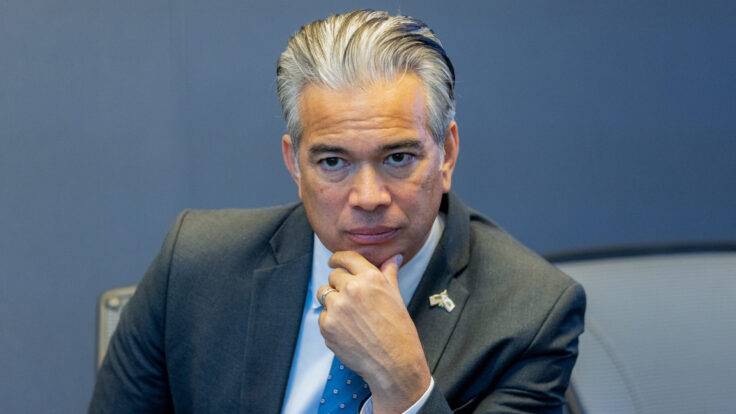
California Attorney General Rob Bonta, defending SB 976, points to scale. TikTok’s algorithms generate billions of unique feeds. Even conceding that the company makes broad policy decisions about what content
gets promoted or suppressed, the state argues that TikTok is largely ignorant of the specific output appearing on any individual screen—and at that level, the recommendation engine is no longer merely implementing human editorial choices. The algorithms, California argues, are “making ‘decisions’ of their own, based on billions of inputs and considerations that are far beyond the comprehension of any human being.”
TikTok, represented by the veteran Hollywood litigator Daniel
Petrocelli, sees the matter differently. He writes in a brief: “There is no basis in the First Amendment for distinguishing between human control over how speech is compiled and human execution of compilation decisions at the individual level. The Constitution, TikTok argues, protects editorial judgment whether exercised by a newspaper editor arranging a front page or engineers designing a system that arranges content at scale. The company also presses the
slippery-slope concern: If First Amendment protection requires a human personally reviewing each piece of delivered content, personalized feeds on Apple News and personalized playlists on Spotify become equally vulnerable to regulation.
There is obviously an awkward aspect to TikTok’s position. To win First Amendment protection, the company must emphasize the policies, teams, engineers, and product judgments shaping what users see. That helps in Davila’s courtroom. But it is not always
how platforms prefer to describe themselves when facing product-liability claims, consumer-protection suits, or especially political accusations that they manipulate public discourse. The more human the feed becomes for constitutional purposes, the less plausible it may be to describe the platform elsewhere as merely reflecting user choice. In other words, the defense strategy may win today’s fight while making others harder to win. But that’s a story for another day. |
Thanks, Eriq. See everyone tomorrow.
Matt |
|
|
|
Puck founding partner Matt Belloni takes you inside the business of Hollywood, using exclusive reporting and insight to explain
the backstories on everything from Marvel movies to the streaming wars. |
|
|
|
Ace media reporter Dylan Byers brings readers into the C-suite as he chronicles the biggest stories in the industry: the future
of cable news in the streaming era, the transformation of legacy publishers, the tech giants remaking the market, and all the egos involved. Also featuring a weekly dispatch from Puck’s crack streaming/media analyst, Julia Alexander. |
|
|
|
Need help? Review our
FAQ page or contact us for assistance. For brand partnerships, email ads@puck.news.
You received this email because you signed up to receive emails from Puck, or as part of your Puck account associated with {{customer.email}}. To stop receiving this newsletter and/or manage all your email preferences, click here. |
Puck is published by Heat Media LLC. 107 Greenwich St., New York, NY 10006 |
|
|
|
|