{{ 'now' | timezone: 'America/New_York' | date: '%b %d, %Y' }} |
|
|
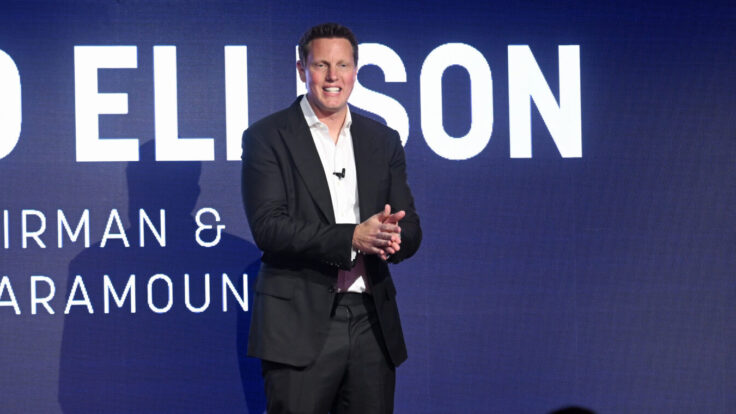
Welcome back to What I’m Hearing+, and a bittersweet farewell to Jared
Kushner, who has sadly exited the Paramount bid for Warner Bros. Discovery. No reason was stated, but we’ll know what’s up if Jared and Ivanka are suddenly hosting a glamorous travelogue show on Netflix. Anyway, Eriq Gardner is back today with a break from WBD
coverage to focus on the coming year in A.I. and the law. ’26 will be a big year for how the rules of the road are written…
Discussed in this issue: Brendan Carr, David Zaslav, Vladimir Putin, Mikhail Bulgakov, Johnny Depp, Greg Lindberg, R.J. Cutler, Bob Iger, Sam Altman, Harrison Ford, Scarlett
Johansson, Johnny Cash, Elon Musk, Ari Emanuel, Luca Guadagnino, Andrew Garfield, Ron DeSantis, and more…
Not a Puck member yet? Just click here. |
|
|
A MESSAGE FROM OUR SPONSOR |
FYC SINNERS - “A Wholly Original and Powerful Cinematic
Tapestry” See why the New York Times calls Sinners “one of the most exhilarating movies of the year, defying expectation at every turn, drawing from different genres for a uniquely American story about race and resistance, art and community” |
|
|

| Eriq Gardner
|
|
- Brendan Carr vs.
networks over “the demise of broadcasting”: A few weeks ago, given F.C.C. commissioner Brendan Carr’s generous mood, I raised the question of what the TV station owner Nexstar wanted this holiday season. After all, Carr has made it clear he’d like to shift power away from the national networks—typically liberal, coastal operations—and back toward the more Trump-friendly local stations. He invited public comment. And now, the affiliates have submitted their
letter to Santa.
Local broadcasters say that they deserve relief from what they call the “onerous” reverse retransmission fees they pay the networks. They also say exclusivity doesn’t mean what it used to, now that networks funnel their best content, especially sports, to their own streaming platforms. The big ask? Local stations want the right to
negotiate directly with virtual M.V.P.D.s, like YouTube TV and Sling, rather than be boxed in by whatever deals the networks strike. That would blow up the current playbook for content distribution.
The networks, for their part, are practically circling the courthouse parking lot. Fox and Paramount, which owns CBS, submitted comments insisting that affiliate deals are governed by market dynamics, not federal decree. Both companies argue that the F.C.C. has zero authority over streaming
services. Disney, which owns ABC, went further, flatly declaring that the commission lacked the power to impose “good-faith bargaining” rules between networks and affiliates. NBC owner Comcast offered the most apocalyptic warning: Carr’s intervention, its lawyers said, could spell “the demise of broadcasting.” Had the F.C.C. been meddling in recent
years, they argued, the company never could have landed its new NBA rights package. (Surely, David Zaslav at Warner Discovery would have liked that.)
Carr now has to decide how far he wants to push this campaign. Will it be a regulatory stocking stuffer? - Depp’s Stalin-era passion project: It’s almost New Year’s, which means a new crop of works are entering the public domain: The Maltese Falcon, Betty Boop,
etcetera. But what about titles stuck in legal limbo? One I’ve been tracking is The Master and Margarita, the iconic Russian novel by Mikhail Bulgakov, which director Michael Lockshin turned into a box office sensation in Russia last year. Before it had a chance to set any records, however, Vladimir Putin’s government yanked it, apparently unenthused by a dark satire about an authoritarian regime. U.S.-based Luminosity Pictures came on
board to strike international distribution deals, contingent upon clearing English-language rights.
That’s where things got messy. It turned out that a pair of other producers, Svetlana Migunova-Dali and Grace Loh, have separately been developing an English-language version, with Johnny Depp attached as a producer too, as
reported by The Hollywood Reporter, and are standing in the way of a global release of Lockshin’s film.
How did Depp’s camp manage to block a release of a Russian-language blockbuster in favor of his own English-language adaptation? I can fill in those details: Luminosity believed that clearing
English rights would be straightforward. Bulgakov’s novel had been published samizdat-style in the Soviet Union in the mid-1960s, without any U.S. copyright registration. In Luminosity’s view, the text was in the public domain, and free to adapt. The Depp camp disagrees, claiming they acquired motion picture rights from the heirs of a Russian general who was at one point married to Bulgakov’s widow. Caught in this thicket of post-Soviet estate intrigue and murky copyright precedent, a
California federal court declined to wade too deep. In June, the judge denied affirming Luminosity’s right to distribute, explaining that even if The Master and Margarita itself lacks copyright protection, that doesn’t mean film adaptations do. Each one can hold its own independent copyright. That ruling is now on appeal at the Ninth Circuit. - Sony’s baby daddy issues: Sony is defending itself against a bizarre lawsuit brought by Greg Lindberg, the embattled insurance billionaire who last year pled guilty to a $2 billion fraud scheme and is reportedly angling for a Trump pardon. What’s upset
Lindberg isn’t that producer R.J. Cutler has made a documentary about how he funneled insurance funds into his own pocket. Instead, Lindberg takes issue with the filmmakers digging into his alleged effort to engineer a massive family via a sprawling network of egg donors and surrogates, which, according to Bloomberg,
he’d orchestrated “largely through manipulation and deceit.”
Lindberg, who’s suing in Florida for $10 million, claims that the filmmakers are interfering with confidential agreements he struck with the women involved, and is asking a judge to block the film’s release entirely. Sony, for its part, just removed the case from state to federal court this past week. I’ll keep you updated…
|
|
|
Now, a preview of the upcoming A.I. courtroom showdowns… |
|
|
A field guide to the A.I. cases and deals that will shape 2026,
including Disney’s recent peace treaty, the Elon-Altman feud, the next round of labor negotiations, the whole ScarJo voice issue, and many more… |
|
|
So what does it really mean now that Disney, the company most synonymous with
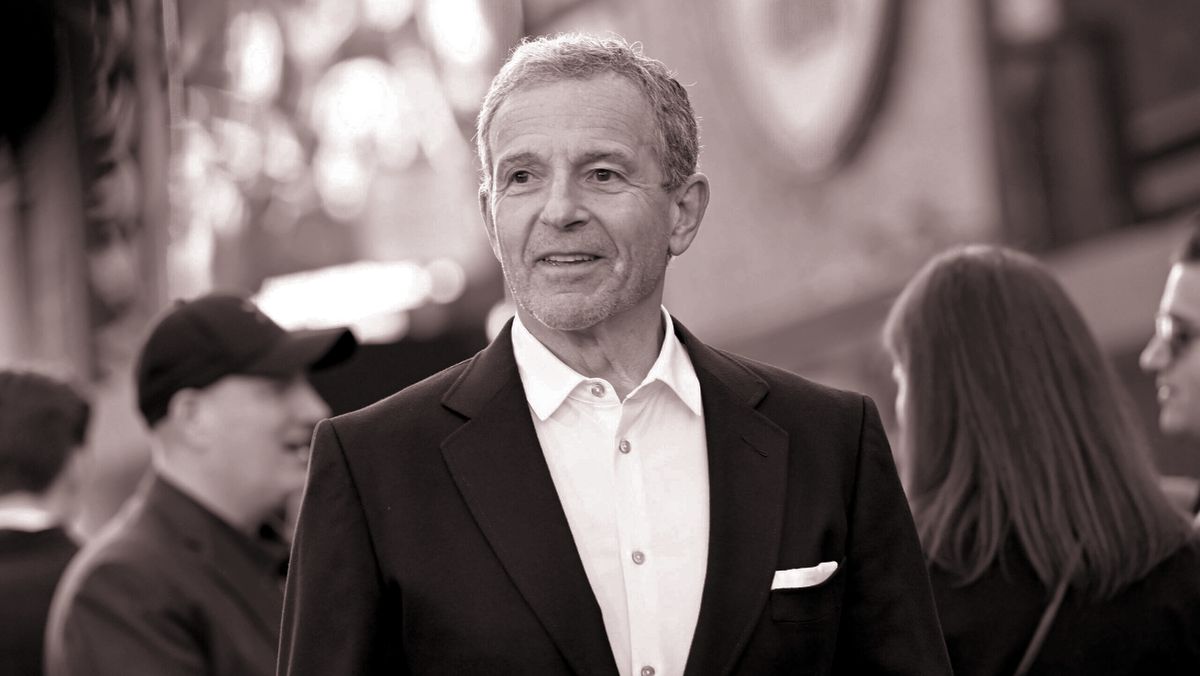
ferocious copyright protection, is suddenly allowing Sora users to drop Mickey and Minnie into their A.I.-generated videos? Some will hail this landmark licensing agreement as proof of Hollywood embracing new technology. But Bob Iger and Sam Altman have raised more questions than they answered, and it’s atop my list of the most intriguing entertainment industry A.I. cases and deals to follow in ’26.
The deal itself seems eerily reminiscent of the accord
that record companies once made with Spotify. About 15 years ago, you’ll recall, the music industry had been nursing P.T.S.D. from file-sharing when a well-capitalized Swedish startup offered fans unlimited access for a monthly fee. The labels, wisely, took equity alongside licensing payments, betting that participation would beat resistance. Disney, guided here by general counsel Horacio Gutierrez, is making a similar wager: Better to be a stakeholder than roadkill. (Notably,
Gutierrez is a Spotify veteran.) This arrangement also buys optionality. By aligning itself with OpenAI now, Disney can conserve its firepower for other battles—most notably, the one looming with a far more familiar adversary, Google.
If this is détente, though, it comes with plenty of ambiguity. Disney and OpenAI promise “robust controls,” but who exactly defines what’s “illegal” or “harmful”? Just as importantly, who moderates the moderators? Will Disney be held liable—legally
or reputationally—if Sora users deploy the Mandalorian in grotesque ways? Or if Deadpool starts showing up in campaign ads?
Even the supposedly bright lines are… smudged. Take the pronouncement that no talent likenesses or voices are included. Fine. But how exactly do you separate Han Solo from Harrison Ford? Or Leia from the late Carrie Fisher? Presumably, the A.I. will be able to manage this murky grey area—creating animated images that are close enough
for fan fiction, but far enough to avoid triggering SAG-AFTRA (or so Disney hopes). That guild, for its part, is already promising to keep an eagle eye on how this all unfolds. |
|
|
A MESSAGE FROM OUR SPONSOR |
FYC SINNERS - “A Wholly Original and Powerful Cinematic
Tapestry” See why the New York Times calls Sinners “one of the most exhilarating movies of the year, defying expectation at every turn, drawing from different genres for a uniquely American story about race and resistance, art and community” |
|
|
And then there’s the preeminent question: What exactly are users allowed to do
with these creations? Sure, fans can generate and share shortform videos featuring Disney’s crown jewels—but do they actually own anything? Will there be restrictions on, say, licensing their A.I.-generated mashup of Darth Vader and Homer Simpson to Netflix, Paramount+, or (dare I say) YouTube? Under U.S. law, creators of derivative works often hold a separate copyright in their original additions. Which opens the door to a legal hall of mirrors—thousands of micro-rights-holders with
legally cognizable interests in Disney-adjacent content.
Of course, it’s also possible that Disney isn’t really open-sourcing its characters. Maybe Sora users won’t even get commercial rights at all—perhaps they’ll even have to license their creations back, ensuring that Disney+ has a steady pipeline of algorithmic slop and that no overeager fan can sue the studio for reverse infringement. So yes, some are calling this a watershed moment in Hollywood’s techno-embrace. I’d caution
patience. The copyright lawyers I know will be billing briskly for years to come. |
How the Disney–OpenAI deal will actually be implemented—and whether it becomes a
template for future partnerships—isn’t the only thing I’ll be watching out for next year. When it comes to A.I. and the law, there are several other questions already flashing on my radar:
1. Will any A.I. copyright suit actually reach trial?
So far, more than 70 such cases have been filed, and the tally grows almost weekly. While none are firmly set for trial in the coming year, the likeliest candidates in 2026 include the book authors’ suit against Meta, The
New York Times’s case against OpenAI, and a consolidated action over Google’s web-scraping practices. Even short of a trial, these cases are poised to deliver consequential rulings as summary-judgment briefing comes due, particularly on the central question of whether training A.I. models on copyrighted works qualifies as fair use.
2. How about appeals?
The odds of a significant ruling are pretty high. Several interlocutory appeals are already in motion, and
none looms larger than Thomson Reuters v. Ross Intelligence, now before the Third Circuit. The dispute, over the use of Westlaw headnotes to train an A.I.-powered legal search engine, has drawn a broad array of amicus briefs from Hollywood studios,
record industry giants, the Writers Guild, the
News/Media Alliance, and others. The resulting opinion could shape how courts approach the core fair-use inquiries: what counts as “transformative,” and how the possibility of licensing training data should factor into the market-harm analysis.
3. And what about the Supreme
Court?
Yes, the justices are poised to leave a sizable imprint on A.I. law through their forthcoming decision in Cox v. Sony Music, a case testing the consequences for internet service providers that fail to cut off known repeat infringers. As I wrote a few weeks ago, the ruling could have meaningful spillover effects on how A.I.
companies design guardrails around user behavior. Based on the oral argument earlier this month, the court appears to be searching for a middle ground—unwilling to bless a billion-dollar verdict, but also reluctant to let entities that derive financial benefit from piracy off the hook. A decision is expected this spring.
Meanwhile, the court has quietly teed up another potentially seismic issue. Just weeks ago, the justices asked the Copyright Office to weigh in on a
petition raising the question of whether A.I.-generated outputs are entitled to copyright protection at all. If the court decides to take the case, the implications would be enormous.
4. How will Trump’s executive order purporting to invalidate state A.I. regulation actually play out?
The
president can’t preempt state law by fiat. But with Trump’s push, the D.O.J. will be stepping into court regularly to aggressively challenge state A.I. laws on the theory that they impermissibly regulate interstate commerce or conflict with federal policy. States will also bring their own cases when agencies begin cutting off grant money. California suing after the F.C.C. yanks broadband funding is one plausible early flash point.
Which state laws become the subject of litigation remains
to be seen. Transparency mandates—including those requiring A.I. companies to disclose training data—are near certainties. A showdown between Trump and Ron DeSantis is also a reasonable and provocative possibility, especially now that the Florida governor is shepherding an ambitious slate of consumer-protection measures on the A.I. front, as my colleague Peter Hamby recently
noted. Murkier is the fate of local laws aimed at curbing nonconsensual deepfakes of voices and likenesses. SAG-AFTRA has pushed hard for these measures nationwide, but they invite First Amendment scrutiny, leaving an opening should the federal government decide to wade in.
5. Speaking of which, what will be the big “likeness” fight to
watch?
When a star like Scarlett Johansson complains that her voice is being used without permission for an A.I. chatbot, it commands attention. But for all the noise—and the wave of statutes passed in response—there have been surprisingly few cases testing these new likeness protection laws. That’s why my eyebrows went up when Johnny Cash’s heirs sued Coca-Cola in Nashville over a commercial aired during this college football season—one featuring a singing voice “remarkably like” the Man in Black. It may not be a classic deepfake, but as far as I can tell, it’s the first lawsuit brought under Tennessee’s much-ballyhooed ELVIS Act (“Ensuring Likeness, Voice, and Image Security”). It’s early, but this case jumps to the top of my docket to watch.
6. How will the next round of collective
bargaining reshape A.I. in Hollywood?
The last round of negotiations between the studios and the guilds—and the work stoppages that followed—may feel uncomfortably recent, but it’s already time to head back to the bargaining table. Will this cycle go more smoothly? Perhaps. The 2023 agreements imposed modest guardrails on the use of A.I., including notice and compensation requirements when productions deploy digital replicas of performers. But plenty of unresolved issues remain,
especially now that companies like Disney and Lionsgate are beginning to license their I.P. to A.I. developers.
Expect model training to move closer to the center of the conversation this time around. So, too, will the scope of consent and the adequacy of compensation—areas where the existing framework is likely to feel thin as the technology advances. The good news is that, for now at least, no one appears eager to relive an all-out labor war.
7. And which A.I. dust-up is
most likely to demand popcorn?
That one’s easy: Elon Musk versus Altman, over whether OpenAI abandoned its founding mission and remade itself into a profit-seeking enterprise snugly aligned with Microsoft. The fight pits two of tech’s most recognizable figures against each other, with Altman firing back that Musk has waged a “yearslong harassment campaign.” Along the way, some familiar names show up, including Ari Emanuel, who
joined the investor group that Musk assembled in a bid to buy OpenAI. Musk is represented by Marc Toberoff, who is best known for his copyright termination efforts, including ongoing litigation against Warner Bros. over Superman and Paramount over Top Gun.
The two sides have spent the past year mired in discovery, all of it set to spill into public view at a trial scheduled for March. And if that weren’t sufficiently cinematic, Amazon MGM is poised to release
the already shot Artificial, directed by Luca Guadagnino and starring Andrew Garfield as Altman—proof that, in this saga, the litigation and the screen adaptation may arrive almost simultaneously. |
Thanks, Eriq. Kim Masters is here tomorrow, then I’ll be back on
Thursday.
Matt |
|
|
The ultimate fashion industry bible, offering incisive reportage on all aspects of the business and its biggest
players. Anchored by preeminent fashion journalist Lauren Sherman, Line Sheet also features veteran reporter Rachel Strugatz, who delivers unparalleled intel on what’s happening in the beauty industry, and Sarah Shapiro, a longtime retail strategist who writes about e-commerce, brick-and-mortar, D.T.C., and more. |
|
|
Puck founding partner Matt Belloni takes you inside the business of Hollywood, using exclusive reporting and
insight to explain the backstories on everything from Marvel movies to the streaming wars. |
|
|
Need help? Review our FAQ page or contact us for assistance. For brand partnerships, email ads@puck.news. You received this email because you signed up to receive emails from Puck, or as part of your Puck account associated with {{customer.email}}. To stop receiving this newsletter and/or manage all your email preferences, click here. |
Puck is published by Heat Media LLC. 107 Greenwich St., New York, NY 10006 |
|
|
|