 |
 |
|
Hi, and welcome back to Line Sheet. I landed in Milano this morning, just in time for the Fendi show. More on that below, plus a few other fashion-y tidbits. Lucky for you, superstar Rachel Strugatz is back with the real story of what happened with Violet Grey, the luxury beauty emporium purchased by—who else?—Farfetch in 2022. This is an element of the Farfetch fallout that few have explored, and of course, Rachel has the goods on what went wrong (beyond the obvious) and who is maybe, possibly, probably going to buy it. (The name may sound familiar to you…)
P.S.A.: If you need some podcasts to listen to during the Fashion Month marathon, might I suggest the Hermès and Novo Nordisk episodes of Season 2 of Acquired, the former of which just dropped this week? (I am sure you’ve already listened to last year’s LVMH ep.) They are long, but fun. Also, please don’t send me your Spotify playlists in return—my musical tastes are very limited.
P.S.: If you want to sign up for Puck before we see each other this week, use my extra-special code (LINESHEET, duh), for a meaningful discount.
Mentioned in this issue: Farfetch, José Neves, Violet Grey, Cassandra Grey, Fendi, Kim Jones, Alessandro Michele, Samuel Ross, A-Cold-Wall, Moncler, Ruba Abu-Nimah, NTWRK, Aaron Levant, BuzzFeed, Hailey Bieber, Sant Ambroeus, Net-a-Porter, Cos Bar, Pati Dubroff, Margot Robbie, “brand heat,” and much, much more.
|
|
A MESSAGE FROM OUR SPONSOR
|
 |
From Ethan Coen and Tricia Cooke, this comedy caper follows Jamie, an uninhibited free spirit bemoaning yet another breakup with a girlfriend, and her demure friend Marian who desperately needs to loosen up. In search of a fresh start, the two embark on an impromptu road trip to Tallahassee, but things quickly go awry when they cross paths with a group of inept criminals along the way.
|
|
|
|
|
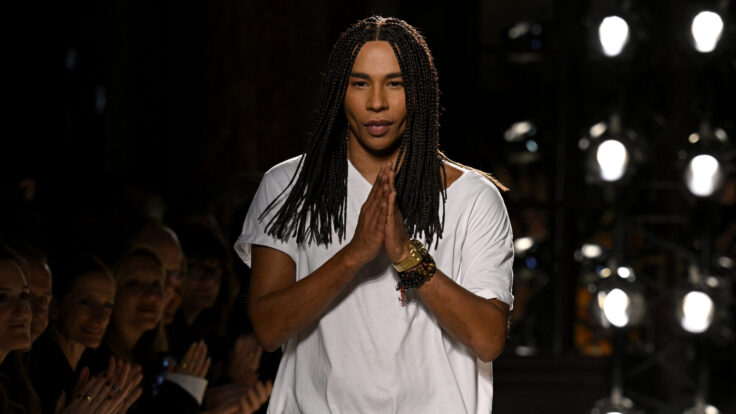
- A quick Moncler update: The company got back to me after the newsletter dropped to say that, yes, Ruba Abu-Nimah is the new “brand creative director” of Moncler, which is to underscore that she is not the new designer, but in charge of brand image, that sort of thing. Fun!
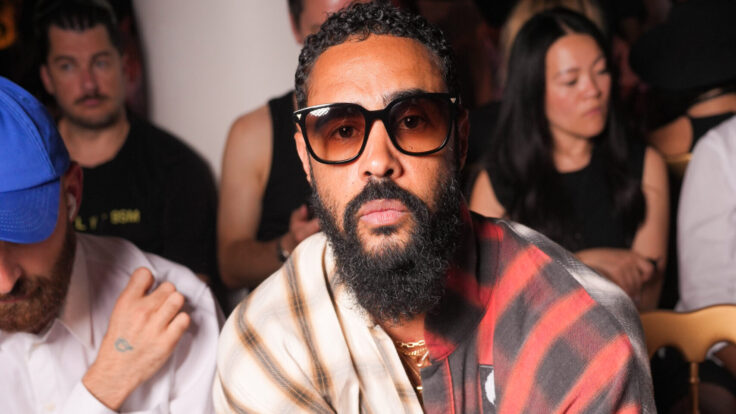
- And an even quicker question: Is this a prison photo or the Yeezy Season 10 lookbook?
- In niche sneakerhead media news: Livestreaming shopping platform NTWRK, once called “QVC for the YouTube generation” (this was before TikTok existed, okay), has acquired Complex from BuzzFeed, which bought it for $300 million in 2021. NTWRK paid $108.6 million in cash for Complex. Some argued it was BuzzFeed’s most valuable asset—advertisers love young men who spend money—but had to be offloaded to ensure its survival. (Apparently, BuzzFeed is still trading on the Nasdaq, closing at 22 cents per share today.) No surprise NTWRK and its backers, including Paul Wachter’s Main Street Advisors—which manages investments for Jimmy Iovine, LeBron James, and others—were interested.
Before launching NTWRK, C.E.O. Aaron Levant was best known as the co-founder of ComplexCon, the company’s live-event play. He also founded a streetwear trade show, Agenda. NTWRK’s calling card has been exclusive collaborations with the likes of Post Malone, Lewis Hamilton, and BLACKPINK that are sold through the platform. Whether Complex still has gravitas with consumers is arguable—as a media property, its relevance has dwindled. But Levant has insisted that live events be a key component of the NTWRK experience from day one, and ComplexCon is a known entity. Oh, and there’s a “strategic partnership” with Interscope Geffen A&M (IGA) and Capitol Music Group to create products and bring artists into NTWRK events. Any ex-Complex people want to weigh in?
- It begins again: My first show of the week was Kim Jones’ Fendi womenswear. Fendi is one of those secondary LVMH brands that is this close to being a primary, thanks to 20 years of strong executive leadership and good, salable bags. But brands need a reason for being. For many European houses, the reason is the atelier, the dressmaking. For others, it’s the leather goods. No matter what the business actually is, people need to understand what it was.
Fendi is trickier. Fur may be creeping back into fashion—the pendulum always swings—but it will never again be a utility. In order for Fendi to succeed in modern terms, it needs a strong fashion point of view, which Jones has not managed to give it. Today’s show was about the accessories; the clothes were simply something to hang the double-strap clutches and scrunchy boots upon, nothing sensational. Jones is exceptional in many ways, but this is not the right match. If LVMH hasn’t given the house to Alessandro Michele already, they should. He would be able to take the story of the family and build a whole world.
- A-Cold-Wall weirdness: I heard a couple of weeks back that Samuel Ross, the British designer behind A-Cold-Wall, had left the brand. This weekend, I was able to confirm, with the additional context that much of Ross’s team is staying on. This appeared to be a hiding-in-plain-sight situation: Ross’s Instagram has been A-Cold-Wall–free for months. Then, more news dropped: According to an announcement on Instagram, Tomorrow—the showroom-turned-brand-operator that acquired a minority stake in the business in 2018—had bought it outright.
At one point, A-Cold-Wall was generating something like $10 million a year in sales, but it always felt like it had the potential to scale to a $100 million, $200 million business, and serve as Tomorrow’s answer to Off-White—you know, a moneymaker that allowed the other brands in the portfolio to percolate. We all know now that model was flawed, but I suspect Tomorrow believes A-Cold-Wall was worth saving. (There is more on Vogue Business explaining their thinking.) Tomorrow is backed by the European private equity firm Three Hills Capital Partners, which is also behind Sant Ambroeus, the appallingly overpriced, salmon-colored, fashion-people-beloved restaurant mini-chain. I’m sure I’ll see you there this week.
|
 |
| Grey Expectations |
| The latest plot twist in the Farfetch unwinding coalesces around Violet Grey, a once hot brand, and its innovative founder—and whether she has the will and ambition and cash to reclaim her old company. |
|
|
|
| Amid all the Farfetch bullshit from last week—the consummation of the Coupang deal, the defenestration of Line Sheet protagonist José Neves, the attendant and predictable executive shuffle—I suddenly realized I hadn’t heard a peep about Violet Grey. Farfetch acquired the beauty retailer for $55 million in early 2022 to become the backbone of Neves’s ill-conceived move into beauty. It was a terrible idea, both retrospectively and also at the time, because not only should Farfetch have clung to its platform roots, but plenty of other high-end retailers had struggled to sell beauty. Anyway, it happened…
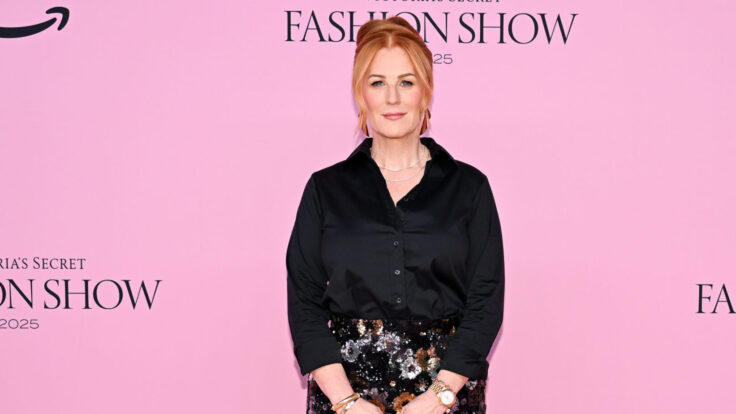
At the time, Neves argued that he had a secret weapon: Cassandra Grey, the business’s mysterious socialite founder. Post acquisition, Grey was elevated to a few new roles: adviser to Farfetch Beauty and head of its new (also ill-conceived) incubation arm, NGG Beauty, which was an offshoot of Off-White parent New Guards Group, which Farfetch acquired in 2019. |
|
A MESSAGE FROM OUR SPONSOR
|
|
From Ethan Coen and Tricia Cooke, this comedy caper follows Jamie, an uninhibited free spirit bemoaning yet another breakup with a girlfriend, and her demure friend Marian who desperately needs to loosen up. In search of a fresh start, the two embark on an impromptu road trip to Tallahassee, but things quickly go awry when they cross paths with a group of inept criminals along the way.
|
|
|
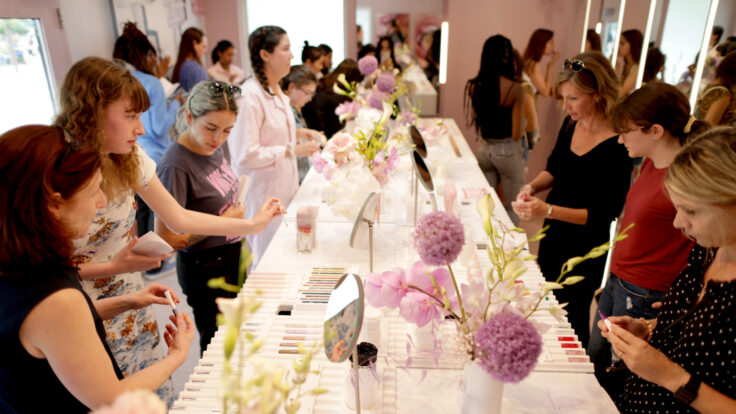
| Violet Grey was doing about $20 million in annual revenue when Farfetch acquired it, which is small but not that small. And there was considerable ambition to scale revenues. In April 2022, Farfetch started selling luxury beauty lines like La Mer, Chanel, Augustinus Bader, and Westman Atelier alongside its high-end fashion and accessories, but the venture bombed spectacularly. In the end, Violet Grey’s sales dropped significantly under Farfetch’s ownership, decreasing by 40 percent in 2022 and again in 2023. Needless to say, the beauty division shuttered in August 2023. By last October, Farfetch was said to be exploring sale options for Violet Grey.
There have been no takers yet, obviously because Farfetch had to essentially sell itself first. But sources within the company said that Coupang is still planning to offload Violet Grey and other non-core assets that Farfetch acquired over the years. I heard that Coupang would like to sell Violet Grey back to Grey, who I just learned also happens to be the most interested potential buyer. (Coupang and Grey declined to comment. So did Sarah Brown, Violet Grey’s executive director.) |
|
|
| According to the original deal logic, Violet Grey was intended to function as a multibrand online beauty shop that would benefit from amplification on Farfetch’s platform. In theory, the marketplace would leverage the editorial and e-commerce site’s expertise in the category to give itself permission to sell a lot more stuff. Mostly, though, it felt like Farfetch bought Violet Grey so that Grey and her team could function as pseudo-consultants for the marketplace, and they were given a nearly impossible task: selling beauty entirely online.
Sure, people buy a lot of Hailey Bieber’s lip gloss online, but about 90 percent of beauty purchases still happen inside of a store because, well, all the touching and feeling and shade-matching. It’s not just Farfetch that couldn’t make it work; Net-a-Porter, the first of the luxury players online to get into beauty, is reportedly slashing its assortment from 200 to 70ish brands.
Given the industry-wide reconsideration, the trading range for Violet Grey can’t be very high, and Coupang is presumably motivated to move the operating cost off the P&L fast. Also, Grey could probably find pledges for the fundraising in a matter of hours, given her network. But is it actually worth it? Restoring and replatforming Violet Grey will require far more capital. Reviving the retailer would also require a strong operator who could stabilize and then scale the business, both online and by opening up locations in key cities. |
|
|
| Despite this, I do believe that Violet Grey is worth saving. Violet Grey was like the Barneys of beauty; it launched a lot of brands and became an incubator for Augustinus Bader and Dr. Barbara Sturm. The retailer was really, really careful about what they sold, often relying on a committee of influential industry experts to vet products before putting them online with a “Violet Code Approved” seal.
In an ideal world, Violet Grey would serve as the luxury arm of a bigger retailer or merge with another independent beauty seller that has boutique distribution but lacks an online voice or presence (like Cos Bar, Space NK, or Blue Mercury) and function as a shop-within-a-shop, similar to Space NK in Bloomingdale’s or Ulta Beauty in Target. But this probably won’t happen, especially if Grey recovers the business. (Several years ago, there was talk of merging Cos Bar and Violet Grey, but the two couldn’t come to an agreement on valuation.) “The appeal of the company is not that it’s a successful business, because I wouldn’t say that it is right now, but the brand is intact and strong,” a source said. “The business isn’t impressive—the brand is.”
Other industry types have suggested that Violet Grey could drop commerce altogether and become a content-only play. The site could leverage its point of view, expertise, and keep talking to its slightly older, affluent customer. This proposition isn’t terrible, but this is surely a method of making a bad business worse. After all, content is the lowest-margin model among the many available to Violet Grey. And this would require a major learning curve—Violet Grey would have to embrace TikTok and evolve its content so it speaks (and sells) to a slightly younger shopper.
At this point in the Farfetch cautionary tale, it’s important to recall that Neves bought Violet Grey by following the same undisciplined thesis that led him to purchase Browns, Opening Ceremony, Stadium Goods, or NGG. He was desperate to buy revenue, and also blinded by prestige brands, despite the fact that the purchasing path for beauty on the marketplace was not clear and none of the acquisitions aligned with Farfetch’s original marketplace business model.
If the original concept was poor, the execution was worse. I’m told that senior leadership at Farfetch was more into spending millions of dollars on campaigns and coming up with esoteric taglines than actually differentiating Farfetch Beauty from competitors. When asked to identify the main reasons a customer should shop for beauty on Farfetch versus Sephora, Ulta Beauty, or any other leading retailer, members of senior leadership at Farfetch were said to have given nonsense answers like, We are beauty without boundaries, or We are genderless beauty. “What does any of that mean?” a source said. “Do you have products you can’t get anywhere else?”
Employees involved with the beauty launch thought that Farfetch should have focused on cultivating exclusive products and having a loyalty program. There was also reportedly no single executive solely focused on building Farfetch’s beauty business. “The major flaw was their naiveté that beauty was not different from fashion or other businesses they were in,” another source said. Alas, now it’s up to Grey to see if she wants to give it another go. |
|
|
| That’s it from Rachel and me. One more thing on the marketing phrase of the moment…“brand heat”: I had lunch last week with a good friend who is the C.E.O. of a P.R. agency. They said that every executive wants to talk about “brand heat” these days. Then I had lunch with another C.E.O. the next day at the same restaurant, and they were also talking about brand heat. Then I heard someone who is not a comms person or a C.E.O. talking about it. The heat is on! And if it’s not, you’re screwed.
Until tomorrow,
Lauren |
|
|
|
| FOUR STORIES WE’RE TALKING ABOUT |
 |
|
 |
| World War Z |
| Exclusive polling on Biden’s Gen Z Problem. |
| PETER HAMBY |
|
 |
|
 |
|
|
|
|
|
 |
|
|
|
Need help? Review our FAQs
page or contact
us for assistance. For brand partnerships, email ads@puck.news.
|
|
You received this email because you signed up to receive emails from Puck, or as part of your Puck account associated with . To stop receiving this newsletter and/or manage all your email preferences, click here.
|
|
Puck is published by Heat Media LLC. 227 W 17th St New York, NY 10011.
|
|
|
|