 |
|
Welcome back to The Varsity, my twice-weekly private email about the sports media business—the executives making the best deals, and the ones blaming others for their misfortune, plus everyone else in between. Happy WNBA Draft Day to all who celebrate.
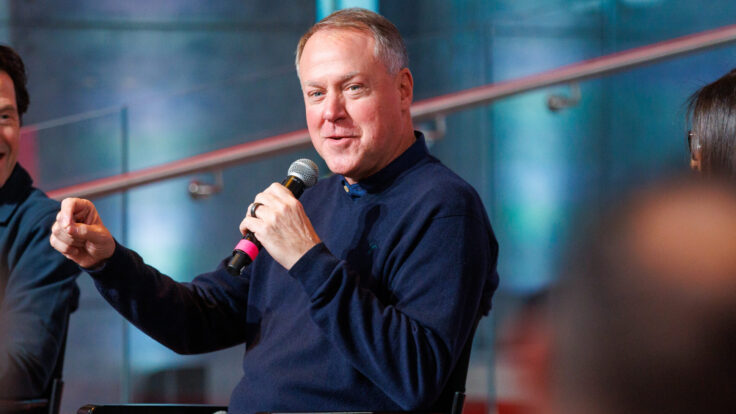
My travel schedule this week includes a stop in New York, where I’ll be attending a dinner honoring Sean McManus, the legendary sports executive who ran CBS Sports from 1996 until his retirement this past weekend. Sean is probably best known for his deep relationships in the business, so I am expecting a room filled with muckety-mucks befitting the man of honor.
Before I begin, a reminder that this private email is firmly behind Puck’s impenetrable paywall. Sign up here if you want full access. Be warned: If you keep forwarding this email, we will sign you up for Marchand’s Alanis Morissette Deep Cuts playlist.
Let’s get to it…
|
| The Starting Five: CBS, MLB & UFC Edition |
|
- Goodbye, Sean!: What a farewell for McManus, who briefly returned to his production roots at the conclusion of CBS’s coverage of The Masters, on Sunday, for his final signoff. Just before the end of the telecast—and with it, McManus’s legendary 28-year run overseeing the division—CBS golf producer Sellers Shy gave McManus his headset and had him count the broadcast off the air.
McManus, who addressed the CBS Sports production crew via the producer’s line before the network went on air, managed his feelings throughout the telecast. But after the telecast, he emotionally hugged his wife and family and several colleagues. Then he made his yearly ritualistic walk to Amen Corner to pay tribute to his father, Jim McKay, the renowned host of ABC’s Wide World of Sports and unflappable anchor for 12 Olympics. McKay, who changed his last name (as people often did back then) before hosting The Real McKay, died 16 years ago. “I have a nice conversation with my father, who loved Amen Corner almost as much as I do,” McManus said during a Zoom presser last week.
During his nearly three-decade tenure at CBS Sports, McManus represented a resounding stability, overseeing the deepest and longest-standing relationships with leagues and conferences. It’s ironic that his departure comes as Paramount Global, the network’s parent company, is facing one of the most challenging sales processes in modern media history.
- Goodbye, Verne: CBS announcer Verne Lundquist also bid adieu after 40 years of calling incredible shots at Augusta National (although none more memorable than Tiger’s iconic chip in 2005). Lundquist, of course, was the rare announcer who knew when to talk and when to stay quiet. I’ve written several profiles of Lundquist through the years, and in our conversations he always describes his style as minimalist, letting the pictures on the television convey the story.
I remember talking with Lundquist about one of his most famous calls, the Auburn Kick Six game, in 2013. As you may recall, Auburn’s Chris Davis returned a missed Alabama field goal 109 yards for a game-winning touchdown in the Iron Bowl. It was, to most, a perfect call: “Davis goes left. Davis gets a block. Davis has another block. Chris Davis! No flags! Touchdown, Auburn! An answered prayer!”
Ever the perfectionist, Lundquist told me that he was happy with the call, but he wishes he’d added a detail foreshadowing that Davis was going to score after he crossed the 50-yard line. “It’s the mistakes that eat at you,” he told me.
- Spulu? Not so fast…: Disney, Fox, and Warner Bros. Discovery will launch their sports streaming service this fall. But, as my partner Eriq Gardner reports, it looks likely that Spulu—which is called “Raptor” internally (jeez, these guys need Puck’s resident branding experts to lend them a hand…)—will have to defend an antitrust lawsuit before it launches. As part of the preliminary injunction filed in the Southern District of New York, sports streamer Fubo TV is seeking expedited discovery followed by an evidentiary hearing in its antitrust lawsuit against Spulu (or Raptor!). DirecTV’s Rob Thun and Dish Network’s Gary Schanman both wrote letters supporting Fubo TV, Cablefax reported.
- MLB blackouts see daylight: Last week, I was chatting with an executive who described his exasperation at not being able to watch an Orioles game in Delaware, part of the franchise’s market, after his Acela broke down in the state. An Orioles fan and an MLB Extra Innings subscriber, he popped open his laptop to watch the Baby Birds’ first pitch against the Red Sox, only to find the game blacked out. A couple days later, Jayme Hoskins, the wife of Milwaukee Brewers 1B Rhys Hoskins, tweeted about the same problem as she tried to watch her husband’s game in Camden Yards.
Obviously, MLB’s blackout rules have frustrated fans for decades. For instance, the Orioles’ games on MLB Extra Innings are blacked out from parts of Delaware and Pennsylvania, all the way down into North Carolina and everywhere in between. And yet, this is the price of doing business with the woebegone regional sports networks, who understandably pay more to exclusively carry teams’ games locally.
That situation is changing, but not fast enough for many fans. In its handling of the three teams sans R.S.N. deals—the Padres, Diamondbacks, and Rockies—MLB has moved away from that kind of exclusivity; those teams’ games are not blacked out in-market. MLB’s plan, as it continues to pick up local rights, is to shelve its local blackout rules. Slowly, but surely…
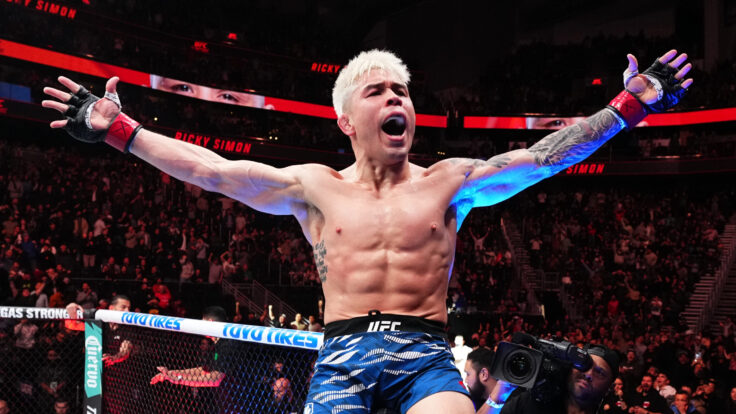
- UFC rights bonanza: The biggest sports business story right now is obviously what the NBA will do with its media rights packages. The second biggest? It could be the UFC’s media rights, which are up in December of 2025. I’m following closely to see whether ESPN lets the UFC get out of its exclusive negotiating window—which officially starts in January 2025—or whether it forks over enough money to prevent the rights from ever going to market. I’m told that UFC and ESPN have had preliminary discussions on a renewal and that talks will get more serious in the fall.
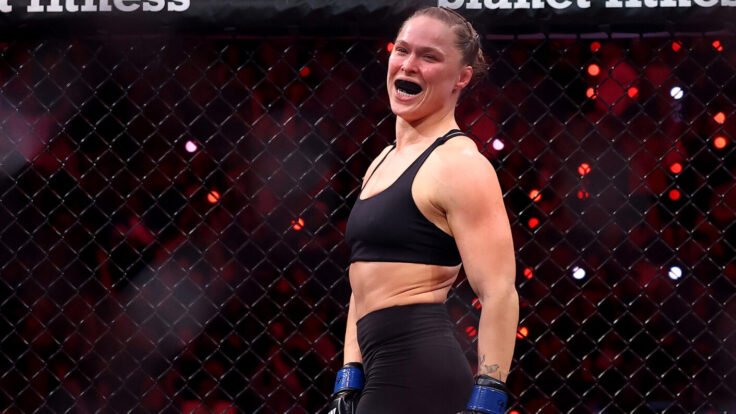
It’s no surprise that UFC is lining up some of its best cards as negotiations heat up. Last weekend’s UFC 300 took place before a sold-out audience in Las Vegas. And Conor McGregor, UFC’s biggest star, returns to the octagon in June after a three-year hiatus. These kinds of event-sized matches build buzz and help convince networks to open their pocketbooks.
The ESPN-UFC talks may be viewed as a bellwether for the business. It’s no secret that the UFC has helped build up the subscriber base for ESPN+. On the other hand, ESPN may depend less on UFC in the future as it looks to launch its main channels via direct-to-consumer next year. ESPN executives have said that they want to renew, but with the general tightening of the sports rights marketplace—and the network’s various and pricey interests, including in that aforementioned NBA package—everyone is watching where the price ends up.
|
 |
| Of Mice and R.S.N.s |
| Another setback looms for Diamond Sports as it heads into its latest bankruptcy court hearing: DirecTV and Comcast are going full-blown “cliff path.” |
|
|
|
| The Diamond Sports saga, one of the most persistent leitmotifs in the Varsity Cinematic Universe, now appears to be entering its final chapters. Yes, regional sports network roll-ups don’t intentionally mimic Shakespeare, but this whole ordeal has become, in so many ways, a replica of his five-act dramatic structure. Bear with me…
First, there was the exposition phase, during which Bob Iger offloaded the unloved regional sports assets—which he inherited as part of his 21st Century Fox conquest—for $10 billion to Chris Ripley and Sinclair five years ago. And then, of course, there was the so-called rising action, during which Sinclair set up a subsidiary, Diamond Sports, to oversee these Bally Sports-branded R.S.N.s right as consumers were cutting cords en masse. Then came the climax, which played out in the form of an inelegant bankruptcy, followed by the falling action, which came in the form of Diamond’s $450 million bankruptcy restructuring and Amazon’s $115 million bailout. Now it’s time to figure out whether we are headed for a resolution or a catastrophe.
Unsurprisingly, the level of activity and agita has increased in the lead-up to its bankruptcy court hearing on Wednesday. Last week, I noted that the NBA told Diamond executives that it would not sign a long-term R.S.N. deal until it finalizes its national and global rights deals—and those aren’t expected to be signed until late spring or early summer. In the meantime, there are two other negotiations, with DirecTV and Comcast, that are even more important for Diamond to complete. Diamond’s deals with both expire in the next few weeks, adding a healthy dose of deadline pressure to the proceedings.
I’ve talked with multiple sources representing all sides of this dispute, and it appears extremely unlikely that Diamond will have any kind of long-term distribution deal in place with DirecTV or Comcast by Wednesday’s hearing, which several executives described as “perfunctory.” Diamond will inevitably hang its hat on a long-term deal that it signed with Charter 10 days ago, one that it hoped to use as a blueprint for its DirecTV and Comcast deals.
DirecTV is said to be closer to a deal than Comcast, but that doesn’t mean much in these types of negotiations. The problem is that neither DirecTV nor Comcast are biting on the structure… at least not yet. Over the 25 years I’ve spent reporting on this stuff, I’ve learned that distribution executives are even worse than reporters when it comes to deadlines, and these types of negotiations are almost always finalized in the hours before, or after, a deadline. This one should be no different.
Of course, one reason why there’s so much angst right now is because of a fundamental disagreement between Diamond and the distributors. The company has already conceded to allow DirecTV and Comcast to put its Bally Sports-branded R.S.N.s on a digital tier, which is expected to significantly reduce their audience. The current beef is all about how quickly the transition is consummated. Diamond’s David Preschlack has been pushing for what he calls a “glide path”—a process, similar to what he sorted out with Charter, that essentially migrates the R.S.N.s to a digital tier over time. Meanwhile, Comcast’s Greg Rigdon and DirecTV’s Rob Thun have expressed little interest in that approach. They want to put the Bally Sports R.S.N.s on a digital tier immediately—the so-called “cliff path,” which would cut affiliate revenue by about a third in one fell swoop.
During negotiations, Comcast and DirecTV have complained that they have spent years overpaying for the Bally Sports R.S.N.s. Diamond’s counterargument is that unless it emerges from bankruptcy, local sports rights will go to local broadcast groups (think Nexstar, Sinclair, Scripps…), forcing distributors like Comcast and DirecTV to pay even more for the same content. For their part, distributors say that while they prefer Diamond stays healthy, they are not willing to cut a bad deal out of fear that local broadcasters will step in. (All of these deals have lots of history baked into them.)
Diamond’s Comcast negotiations have generally transpired with Rigdon, the company’s president of content acquisition. Comcast president and C.E.O. David Watson also has been part of some meetings. It would not be surprising to see Diamond try to draw Brian Roberts into the discussions, too, especially since Roberts owns the Philadelphia Flyers through Comcast Spectacor. Plus, Roberts’ NBC is angling to pick up a package of NBA rights.
Diamond’s hope is that Roberts will offer a “glide path” lifeline as a way to ensure that NHL owners—Diamond carries 11 NHL teams—keep their local media revenue spigot flowing. Could a Diamond deal that ensures NBA owners continue getting paid sweeten NBCU’s position in their rights negotiations? Alas, it’s way too early to know whether these arguments will have any sort of sway. This philosophy obscures Roberts’ ruthless history of negotiating, such as when he tendered a competing bid for the 21st Century assets, including many of these very R.S.N. entities, which forced Iger to pony up nearly $20 billion more—a truly Shakespearean twist in its own right. |
|
|
| On the Paramount Global shenanigans: “One comment on your piece about David Berson. I’m a big fan: David and I worked together at ESPN, and he’s more than ready to lead CBS Sports. But I think it’s naive to assume that a change in ownership won’t impact how CBS Sports does business. There will be huge pressure to cut costs, and it’s highly unlikely new owners will allow the sports group to operate business-as-usual, even if they think of it as a ‘crown jewel.’ David is certainly up to the task, but there’s no doubt that McManus is getting out just in time.” —A former ESPN executive
On Peacock’s Olympics ambitions: “Speaking of Peacock carrying all the Olympics events live, I still remember the 1992 Triplecast, where we would be awake at 2 a.m. (PST), because that’s when so many events started live. It cost $99 for the whole 17 days. The Triplecast was then summarily killed, and we returned to the dark ages of very little live programming from so many Olympic broadcasts. NBC sacrificed the true sports audience in favor of attempting to reach the casual fan.” —A happy Varsity subscriber
And a little nostalgia for the road: “That was a great Cablefax note. I remember the rumbling of my fax machine every night back in the 1990s.” —A cable executive |
|
|
See you Thursday,
John |
|
|
|
| FOUR STORIES WE’RE TALKING ABOUT |
 |
| Art Market Shocks |
| Introducing Wall Power, Puck’s private email covering the art market. |
| MARION MANEKER |
|
 |
|
 |
| CNN Mysteries |
| Notes on three trending media micro-sagas. |
| DYLAN BYERS |
|
 |
|
|
|
|
|
 |
|
|
|
Need help? Review our FAQs
page or contact
us for assistance. For brand partnerships, email ads@puck.news.
|
|
You received this email because you signed up to receive emails from Puck, or as part of your Puck account associated with . To stop receiving this newsletter and/or manage all your email preferences, click here.
|
|
Puck is published by Heat Media LLC. 227 W 17th St New York, NY 10011.
|
|
|
|