 |
|
Welcome back to The Varsity, a private email on the business of sports—what the executives are really talking about, what the leagues are really worrying over, and what everyone is actually saying about everyone else. I’m John Ourand.
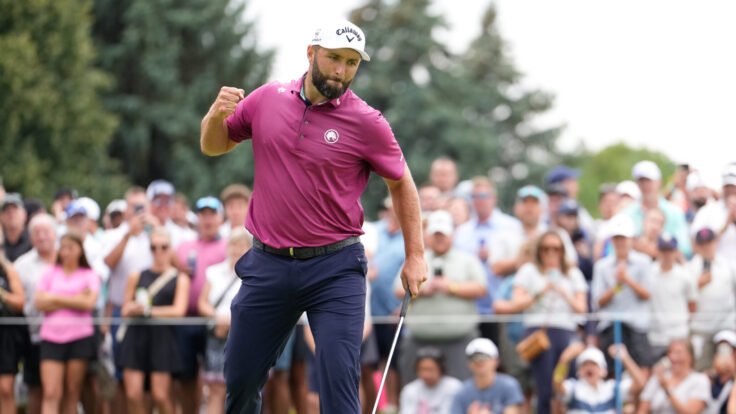
Happy Masters Day—the first official day of spring, as far as I’m concerned. Please say a prayer for all the water-logged sports executives traipsing on a soaking wet course today without their iPhones. This is not the kind of Augusta National hospitality they expected. Although they’d all still rather be at Amen Corner than in their corner offices.
Perhaps it goes without saying, but one of the benefits of joining Puck (it’s only been two and a half months!) is the opportunity to work with the best of the best. At the risk of parroting Jon Kelly’s weekly email, The Backstory, I want to point you to two stories that you really must read. First, check out Bill Cohan’s two-part interview with disgraced Apollo Global founder Leon Black. It’s utterly fascinating. Black talks candidly about his Jeffrey Epstein relationship, and goes into great detail about the lengths he went to keep his affair with Russian model Guzel Ganieva secret. Read both of these stories in full… trust me on this one.
Then there’s Dylan Byers’ latest reporting on the fallout from NBC News’s disastrous decision to hire (then fire, following an on-air talent revolt) Ronna McDaniel. Dylan writes: “‘No drama’ has essentially been the modus operandi at NBC News, and it’s part of why the Comcast guys in Philly like [Cesar Conde].” Of course, Comcast has applied that “no drama” mantra to NBC Sports, as well, in the 13 years that it has owned the company.
Finally, I’m excited to announce that I am no longer Puck’s new kid. We recently acquired Marion Maneker’s excellent substack newsletter, Artelligence, on the business and personalities that run the art world. Marion’s private email for Puck, Wall Power, launches next week. Look, I’m not going to pretend that I know a lot about the business of art—though I have visited the Louvre, and once ate lunch outside of the Tate Modern. But just as Lauren Sherman’s private fashion email, Line Sheet, is essential reading no matter who you are, Marion’s product will be, too. Sign up here. I know that Marchand, an amateur watercolorist, can’t wait.
Now let’s get to it…
|
| Player of the Week: David Berson |
|
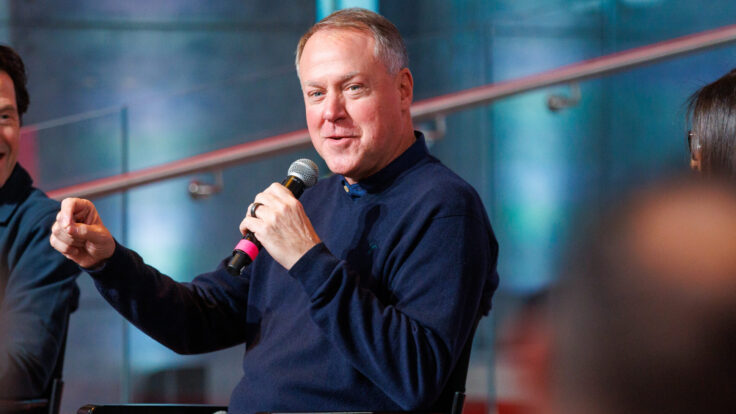
| On Monday, David Berson will officially become the head of CBS Sports, just as Sean McManus’s legendary, 28-year-run atop the org chart comes to a close. It’s hard to imagine anyone more prepared to handle the job than Berson, who joined the network 13 years ago and was almost immediately anointed McManus’s heir apparent.
Alas, the handoff from McManus to Berson is a somewhat boring and predictable succession story. Berson has been involved in just about every high-level rights and programming decision at the network since he started, which is why nobody’s expecting any significant changes at CBS Sports under his leadership. Paramount Global? That’s a different story… And yet either way, whether CBS is owned by David Ellison’s Skydance or Apollo, CBS Sports will remain a portfolio jewel. |
| Down to the J.V.: Alex Rodriguez and Marc Lore |
|
| Back in 2021, Alex Rodriguez and Marc Lore—the Jet.com and Diapers.com founder whose new-ish Wonder mobile restaurant startup has experienced some Quibi-style capital incineration—bought 40 percent of the then-woebegone T-Wolves and WNBA’s Lynx, and had the option to buy another 40 percent this year. A couple weeks ago, however, team majority owner Glen Taylor pulled the offer to consummate the second half of the transaction after A-Rod and Lore submitted their financing too late after a deal between A-Rod, Lore, and David Rubenstein’s Carlyle Group fell apart. Eventually, the two appeared to raise financing via the guys at Dyal Capital, now Blue Owl, a division of Neuberger Berman. (Mike Rees, Dyal’s founder, has recently fetishized buying his hometown Steelers. Rubenstein, of course, just bought my O’s.)
A-Rod and Lore disagree with Taylor. But at this point, everyone is mad at everyone. On Wednesday, Adam Silver publicly floated the idea that the NBA would reject similar multi-year transition deals in the future. At stake is the multibillion franchise, which will only see its valuation increase once the NBA signs its multi-jillion-dollar media deal this spring or summer. |
| The Starting Five: Augusta Edition |
|
- Caitlinsanity, Part 1: The NCAA hasn’t even started its new TV deal with ESPN yet—the eight-year contract begins in September—but given the stratospheric ratings for women’s college basketball this season, some have questioned whether the deal, which carries a rights fee payment of around $85 million per year, is already undervalued. However, it’s still a good arrangement for the NCAA, and the org was smart to bundle the women’s tournament with all the other NCAA championships.
As regular readers of The Varsity know, the market for live sports rights is tightening, given cord-cutting and the inexorable migration to streaming. Sure, the women’s basketball tournament would have found a television home (so too would have softball, baseball, and volleyball). But what about swimming and diving? Or track and field? The question is whether the NCAA would have brought in more money by pulling out women’s basketball and then selling the other NCAA championships á la carte. But I’m told by executives who study this market that, economically, the difference was negligible. Other networks—Warner Bros. Discovery, NBC, et al.—were interested in various parts of the package, but the money wasn’t big enough to justify splitting it up.
Another silver lining to be considered: Sports media is a relationships business, and the NCAA was probably wise not to get too cute with ESPN. The network, after all, has extraordinary leverage to elevate women’s sports and has already proven itself to be a great collaborator. ESPN provided a ton of promotion for this year’s tournament; produced its studio show from the Final Four; and it carried the championship game on broadcast television—all things the NCAA has pushed the network on.
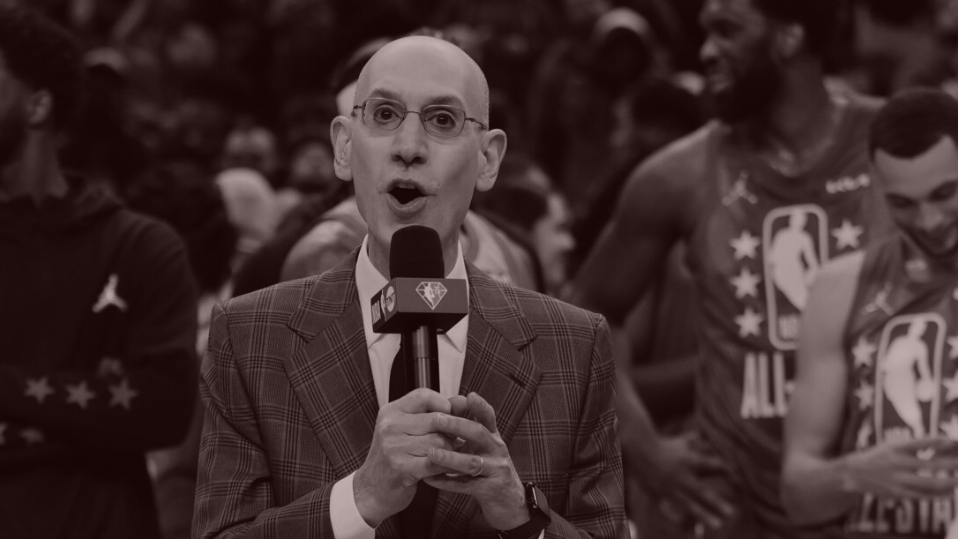
- Caitlinsanity, Part 2: Speaking of the NCAA’s deal, Adam Silver made a similar decision with the WNBA—choosing to bundle its rights alongside the NBA’s under the premise that one single, monster offering containing both leagues would be more attractive to streaming companies, in particular, than separating them out. “It’s in the league’s interest to the extent we can do integrated deals,” Silver said Wednesday after the league’s board of governors meetings in New York. “To the extent we can present ourselves as a year-round basketball product, that becomes increasingly important, I think, particularly to streaming platforms that are dealing with potential churn.”
The NBA had considered selling the WNBA’s rights on their own, and hired Endeavor to give its view of the market. (Not coincidentally, Endeavor also brokered the NCAA rights deal with ESPN. The vortex of Mark Shapiro/Karen Brodkin/Hillary Mandel’s relationships is never-ending…) And in some ways—especially as college stars Caitlin Clark and Angel Reese enter the WNBA—the league is in the best position it’s ever been to profit from its rights. But even in the same package, the NBA has flexibility to sell WNBA games to other media companies. (Scripps and Amazon Prime both carry WNBA games.) And Silver presumably views a goldilocks deal for the WNBA as a great way to earn an even better one the next time around.
- NBA and chill: If you listen to the way Silver discusses the NBA’s media negotiations, it seems more certain than ever that the league will wind up with a streaming partner. “When you think about moving from traditional television broadcast or cable or satellite to a streaming world, it opens up all kinds of possibilities,” he said yesterday. Of course, for much of the past year, Amazon has been considered a front-runner for picking off a significant NBA package. But the league also appears enamored with Netflix, given the streaming giant’s global footprint. (The NBA has made sure that all of its global rights expire at the same time as its domestic rights.)
Even beyond streaming companies’ global reach, Silver appears smitten with how they could distribute NBA games. “There’s been so much discussion now about moving games from traditional television to streaming, but for the most part, what we’ve seen so far is, in essence, the same feed,” he said. “What’s happening now through cloud services, through artificial intelligence, through all kinds of innovation around sports programming, is you’re able to present the games in entirely different ways, almost unlimited permutations, and creating all sorts of personalization for fans.”
- Olympic gold: It wasn’t so long ago that NBC treated its Olympics like a two-and-a-half week primetime show, funneling viewers to its broadcast network where they would watch the biggest events in primetime under Bob Costas’s narration. Dick Ebersol would spend years lobbying the I.O.C. and host cities to schedule the most popular events (swimming in the first week; gymnastics in the second) so that they occurred live in primetime on the East Coast.
The primetime block, after all, essentially paid off NBC’s Olympics rights fees: These marquee events brought in the most viewers by far, enabling NBC to sell more ads at higher rates. Since it took ownership of NBC in 2011, however, Comcast has pushed to move away from that primetime dependence. This year, Peacock will carry all events live.
We’re one hundred and six days out from the Games (give or take), and NBC has already brought in more revenue from digital ads than past Olympics, selling out all inventory for both the Opening and Closing Ceremonies on both linear and digital. “We’ll reimagine our primetime shows with more of the athletes’ stories,” said NBC’s top ad sales exec, Dan Lovinger.
- It seems like yesterday: When I received that first text this morning about O.J. Simpson’s death, I immediately had a flashback to Oct. 3, 1995—the day that he was acquitted of murdering Nicole Brown and Ronald Goldman. When I recall the way I watched the verdict, it makes me (and probably most of you) feel like I was living in the Stone Age. At the time, I wrote a daily newsletter about the burgeoning cable TV business that we faxed to subscribers. (You might laugh at the idea of a faxed publication, but at the time it was a technological marvel—especially since all the other newsletters that we published were folded into envelopes and sent via snail mail.) On the day of the verdict, another reporter brought her big and bulky TV into the newsroom, and set it up on a conference table. What seemed like the entire newsroom—reporters, editors, ad sellers, publishers, marketers… you name it—crowded around so we could watch it live.
I sometimes take for granted the speed at which we get information today. But back then, none of us had email, and the internet was barely a thing. The Washington Post didn’t even have a website yet.
|
 |
| As I Lay Diamond |
| News and notes on the most famous bankruptcy restructuring in the history of regional sports networks. |
|
|
|
| The Diamond post-bankruptcy saga continues, with all the landmines that we’ve been predicting and some that we have not. To wit: The business plan that company executives will present to a bankruptcy court judge in just six days, on April 17, includes only one long-term contract in hand—a deal with Charter Communications. (I’m told that talks with Comcast and DirecTV are progressing, that ubiquitous deal term of art.) None of this uncertainty is surprising. Distributors have well-earned reputations as brutal negotiators, and wouldn’t neglect the opportunity to steal a cane from an old man—or fleece a regional sports network emerging from bankruptcy.
That’s all well and good, but industry executives have been caught off-guard by Diamond’s inability to cut deals with the NBA. After all, the league has a vested interest in keeping the lucrative local rights fees flowing from the R.S.N. business. But the NBA is taking a tougher stance: League executives have been clear with Diamond that they won’t consider any long-term deal for their teams’ digital rights until the NBA’s national and global media rights negotiations wrap up—something that’s not expected to happen until later this spring or early summer, a lifetime away for Diamond, which needs to show the revenue. There is even the possibility that talks could stretch into the fall.
In retrospect, of course the NBA would want to deploy its leverage. All of the streaming companies, including ESPN and Peacock, have shown interest in picking up the league’s digital rights. So, too, has Amazon (obviously), which agreed to invest $115 million in Diamond, presumably viewing the distressed asset as a low-risk way to enter local markets. Regardless of the investment, the NBA has told Amazon executives they will have to deal directly with the league, starting with the national and global packages. I imagine that the NBA cuts a series of one-year digital rights deals with Diamond for the 2024-25 season, which would expire before the new national and global deals kick in, allowing the league another bite at the apple.
Fifteen NBA teams have linear TV deals with Diamond, and for the past several years, the NBA has licensed its team digital rights to the R.S.N.s on a year-by-year basis—an annoyingly iterative cadence, sure, but one that allowed for flexibility in case Diamond went bankrupt. Now, the NBA is naturally concerned about timing: If Diamond is unable to emerge from bankruptcy, the league needs to have enough time to make a new plan for the following seasons.
If Diamond, quelle horreur, does not emerge from bankruptcy and winds down its business in the middle of next season, the NBA would have to follow MLB’s model, and take control of everything—from producing games to finding distributors to carry them—as occurred last season when Diamond walked away from the Padres and Diamondbacks contracts. One way or another, this is all going to go down in the next few months.
The NBA—and Amazon, for that matter—still want the Diamond networks to come out of bankruptcy, continue carrying games and, of course, pay their rights fees. The R.S.N. business may be declining, but it’s still profitable and can churn revenue while Amazon builds out its local streaming service. The next week will go a long way toward determining whether Diamond will be a part of that future. |
|
|
| “For all this talk about advertisers needing to better support women’s sports, the fans and viewers need to do their part, too. How many of those 18.9m viewers have ever been to a WNBA game? How many fill out a women’s bracket along with their men’s bracket? That’s a great number, but we need more people watching two random teams in January, or taking their family to a WNBA game. Time for EVERYONE to step up their support, not just advertisers.” —A Varsity subscriber
“Norby was ‘defenestrated’? I love that word from my SAT prep vocab memory.” —A sports agency executive
“I love that your angles on the Paramount+ deal blend so well with Bill Cohan’s.” —A happy subscriber
“I love my Puck subscription. My favorite part of your column is when you make up all of the feedback you’ve received from your previous columns. It’s genius.” —A former Fox Sports executive
[Ed note: Not true! Every note in this section has come from a paying subscriber.] |
|
|
|
| FOUR STORIES WE’RE TALKING ABOUT |
 |
|
 |
| Ronna at Sea |
| Chronicling McDaniel’s nascent journey into media and MAGA exile. |
| TINA NGUYEN |
|
 |
|
 |
|
|
|
|
|
 |
|
|
|
Need help? Review our FAQs
page or contact
us for assistance. For brand partnerships, email ads@puck.news.
|
|
You received this email because you signed up to receive emails from Puck, or as part of your Puck account associated with . To stop receiving this newsletter and/or manage all your email preferences, click here.
|
|
Puck is published by Heat Media LLC. 227 W 17th St New York, NY 10011.
|
|
|
|