Welcome back to The Varsity. I’m John Ourand, on my way to a screening
of Wicked: For Good at the Motion Picture Association here in D.C. Hopefully the movie restores some of my faith in humanity after watching the formerly 1-11 Brooklyn Nets crush my now 1-12 Wizards yesterday. (It’s only a matter of time before they sign Marchand to a two-way.) At least they’re tanking into one of the best draft classes of the past decade.
🎧 Pod alert: Given the flurry of sports media news over the past few weeks (YouTube TV and
more!), I rang up Axios’s Sara Fischer to join Wednesday’s edition of The Varsity. Also, make sure you listen to yesterday’s pod: National Women’s Soccer League commissioner Jessica Berman outlined her league’s roadmap for continued growth.
In tonight’s issue, we recap YouTube TV’s three-month run where it set a blueprint
for future carriage deals. Also, the latest developments on Sinclair’s move to take over Scripps and WBD’s auction process. Plus, as NWSL prepares for Saturday’s championship game from San Jose, we’ll take a look at its growth prospects in media, expansion, and salaries.
Okay, let’s get to it… |
|
|
A MESSAGE FROM OUR SPONSOR |
Forever at the top of its game, the trailblazing BMW 7 Series. Engineered to win. Learn more at BMWUSA.com |
|
|
- Scripps
in the night: This morning, the news that Sinclair was in the process of acquiring Scripps sent tremors through parts of the sports media ecosystem—particularly those corners proximate to the NWSL and WNBA, both of which have deals with Scripps Sports. Sinclair does not have a great reputation in the industry, especially following its disastrous four-year run operating regional sports networks and its current plans to sell Tennis Channel. But sanguine sources pointed out that the deal will
give Scripps stable finances and a broader reach, with many more local stations.
Ultimately, this is an immaterial and inconsequential deal for the industry. Sinclair will not be at the table for NFL or MLB rights, obviously. Sources suggest that the biggest potential problem for the NWSL and WNBA may be the conservative politics of Sinclair executive chairman David Smith, which have influenced programming decisions at the company’s networks in the past. In a
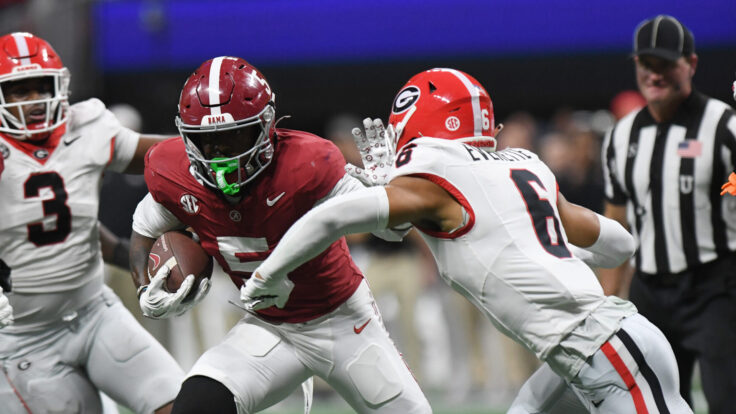
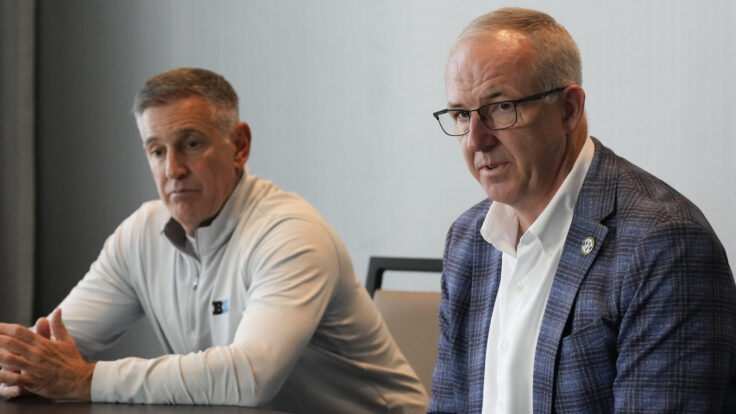
note, Curry Baker, an analyst at Guggenheim Partners, wrote that “the biggest hurdle we see to completing a Sinclair/Scripps combination are social issues (family control, pro forma ownership structure, and Board representation).” - CFP bracketology: The biggest players in the College Football Playoff industrial complex are looking to make some tweaks. SEC commissioner Greg Sankey, arguably the most powerful figure in
amateur-ish sports, told several reporters that CFP expansion is a “priority”—he wants to increase the number of CFP teams from 12 to 16 and, as he told The Athletic, prefers eliminating automatic qualifiers. “If we’re bringing in a lot of teams from outside the 12 in and displacing the top 12, I think that’s problematic,” he said.
Sankey has a
valid point. Should whoever wins the ACC—to say nothing of the AAC—really make it into the tournament? Virginia is for lovers, so maybe that’s why their defense allows nearly 300 passing yards per game in a subprime conference. (The Cheap Seats inbox is open, Cavaliers Nation…) Sankey also knows that his request is likely to fall on deaf ears, at least for now. - Berman’s broadcast blitz: On Saturday morning, as the National Women’s Soccer League was
gearing up for a semifinals matchup between the Washington Spirit and Portland Thorns FC, league commissioner Jessica Berman joined me for an episode of The Varsity. Nearly four years into the job, Berman has overseen an extraordinary period in which the NWSL has cemented itself as one of the fastest-growing leagues in sports.
That momentum, as is the case with any professional league, is tightly linked to its media rights strategy. The NWSL currently airs across
several networks and platforms. While fans quibble about the difficulty of finding games—a complaint that’s not unique to the NWSL—Berman explained why a multinetwork, multiplatform approach remains essential at this stage. “Our fan base really believes and understands that we want to force-multiply the number of people who love and appreciate women’s professional soccer,” she said. “In order to do that, we have to be everywhere. We have to be ubiquitous with the places and spaces where people
consume content.” - NWSL’s boom: Another sign of the NWSL’s momentum is the league’s accelerating expansion. Earlier this year, the NWSL announced two new franchises—Boston Legacy FC and Denver Summit FC—both set to debut next season. Each club has already locked in its season opener date, and Berman said that both are tracking to break attendance records for new teams. Just last week, Arthur Blank shelled out $165 million to bring a
team to Atlanta in 2027. The league also plans to add another expansion club in 2028.
I asked Berman how she selects new markets. “The first is ownership—both the financial wherewithal, as well as their willingness to invest, being there for the right reasons, and believing in the long-term growth of this league,” she said. “The second criterion is to look at the infrastructure—their plans for a training facility and their plans for their stadium. We want to make sure it meets the
standards of the players in our league, and that it meets our standards of being the best league in the world. … And the third is the market: How do they respond to women’s sports? Is there interest from the market? What does the soccer landscape look like? Does the demographic footprint of the market align with what we see as the demographics of the NWSL? In this case, in Atlanta, there’s no question.” - WBD’s elephant man: On Friday, my partner
Dylan Byers surfaced fresh intel on the Warner Bros. Discovery auction following the Journal’s reporting that the new bidding deadline is November 20. As expected, Paramount, Comcast, and Netflix are all preparing offers, with the Ellisons remaining the only party interested in acquiring the
whole enchilada. WBD is hopeful to close a deal before year’s end, which seems entirely fantastical. Then again, so has this entire process.
Meanwhile, Zaz whisperer and WBD board chair emeritus John Malone likened the suitors to the parable of the blind men and the elephant during a recent CNBC hit. “We have three or four aggressive bidders,” he said. “They each are seeing a different elephant because of where they come from and why this asset would be
important to them in their future and the future of their companies. Larry Ellison sees this as a global technology platform that could really use A.I. to dramatically change the whole ballgame in social networking and streaming. The Netflix guys just see it as a great way to have the best library and the best production studio in movies and television. … So, I’m sure they’re studying the heck out of it.”
|
And now, on to the main event… |
|
|
As the dust settles following the denouement of the Disney–YouTube TV deal, it’s
increasingly clear that the next-gen distributor got a lot of what it wanted during its rash of negotiations this fall. And it’s only a matter of time until it fully eats up the sports business. |
|
|
Back in the summer, executives at YouTube TV decided to rewrite the rules of engagement between
distributors and TV network owners. The company’s deals with Fox, NBCUniversal, and Disney were all set to expire, and that presented an opportunity to deploy the leverage befitting a growing platform distribution business affixed to a $3.5 trillion behemoth parentco.
YouTube TV leaders set out to convince their partners at three of the largest legacy media companies on Earth to make their direct-to-consumer apps available in Primetime Channels, its marketplace, which would allow the
platform to sell everything à la carte. The YouTube TV executives also wanted to ingest the programming from the networks’ direct-to-consumer services, thereby allowing customers to watch said programming without leaving the YouTube ecosystem. Oh, and they also wanted total flexibility in how they packaged those channels on YouTube TV. |
|
|
A MESSAGE FROM OUR SPONSOR |
Forever at the top of its game, the trailblazing BMW 7 Series. Engineered to win. Learn more at BMWUSA.com |
|
|
Network executives were prepared for these fights. Obviously, they did not want to cede
any control of their programming to a distributor, and they all dug in for existential negotiations—especially over the consequential ingestion question. Each negotiation played out slightly differently. YouTube certainly didn’t end up with everything it originally wanted. But it gained new ground and, indeed, redefined the rules of engagement. |
In August, Fox made a deal that allowed YouTube to ingest programming from Fox One, its new
streamer. Fox had numerous points of leverage in the form of its NFL and college football rights, not to mention the popularity of Fox News. Ultimately, though, Fox negotiated on price—its executives decided that the ingestion issue was not worth the fight. Fox One doesn’t carry any exclusive sports—at least not yet—and so the company appeared content to view the deal as an extension of the TV Everywhere model rather than a new precedent.
NBCUniversal, for its part, offered a little more
pushback—but not much more, honestly. Peacock, its subscale streaming service, carries a lot of exclusive sports content, and executives are perpetually under pressure to grow its subscriber base. In the end, though, NBCU not only allowed Peacock to be offered through YouTube Primetime Channels, but also agreed to launch a channel on YouTube TV that featured sports that had been exclusive to Peacock. That channel, called NBCSN, will carry everything minus Peacock’s expensive and exclusive
NFL game.
In retrospect, YouTube TV’s negotiations with Fox and NBCUniversal were warm-ups—yes, both companies ran crawls warning subscribers that their channels could go dark, but both deals closed before that happened. The Disney situation was always going to be different. From the outset, YouTube TV pushed Disney to allow it to offer the ESPN Unlimited streaming service as part of YouTube Primetime Channels. Disney executives repeatedly nixed that idea, and never budged. ESPN doesn’t
allow Amazon, Roku, or Apple, to sell its D.T.C. service à la carte, and it wasn’t about to make an exception.
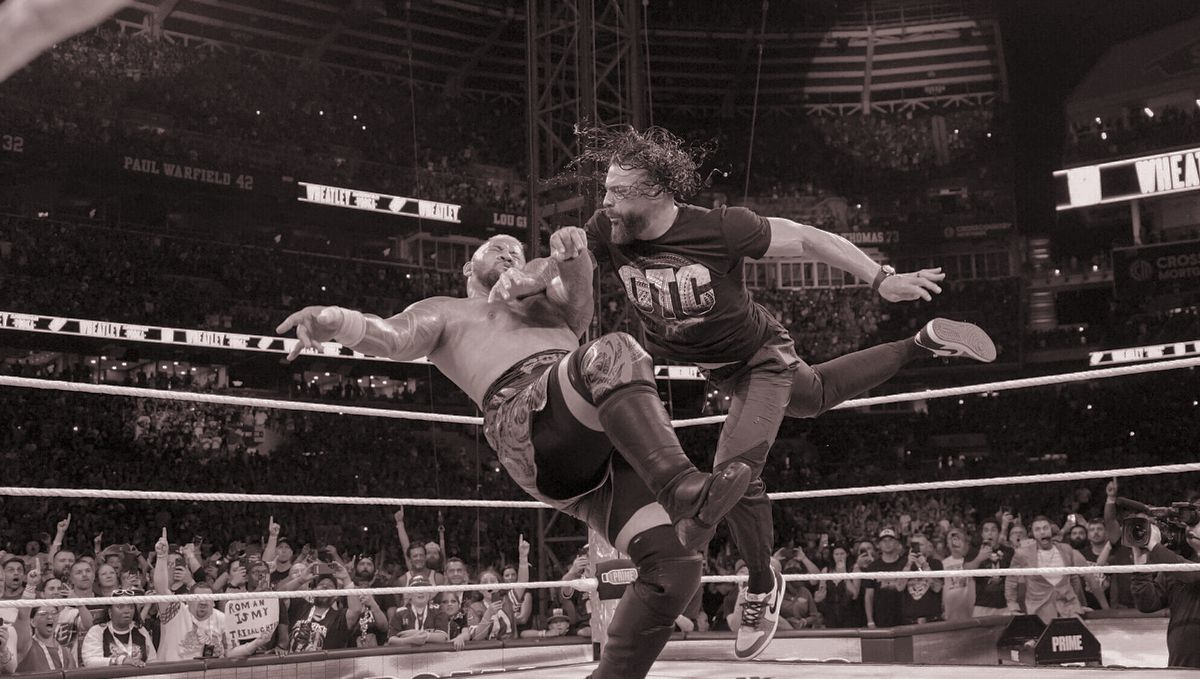
In the end, though, Disney did allow YouTube TV to ingest almost all of the sports programming that appears on its app—everything from WWE Premium Live Events to Division II college football. (Carveouts include MLB.TV, a deal that ESPN has finalized even if it hasn’t yet been announced.) The arrangement was not entirely novel: Cable operators and satellite
providers have similar access to that content, but they don’t have the same ability to offer the sheer volume of games that YouTube TV does. |
YouTube TV didn’t achieve all of its goals, of course. The battle over full-freight ingestion will
be punted to subsequent rounds of negotiation in the offing. But the distributor did, sources reaffirmed for me today, sufficiently separate itself from its peers and create a blueprint for how consumers watch sports in this streaming era, particularly by securing rights to streaming-only sports from NBC and ESPN. Critically, YouTube TV also negotiated the right to create genre-specific packages. By next year, YouTube TV will likely be able to offer a lower-cost sports bundle to its
subscribers.
Customers consistently complain about the difficulty of switching between apps, especially when compared to the channel surfing that once guided the linear experience. Now, YouTube TV has all those rights within its own environment. “This is an absolute win for sports fans,” LightShed Partners’ Rich Greenfield told me today. “This is becoming the platform of a sports fan’s dream.”
Rich’s comment speaks to a larger, more salient point that was
articulated in these negotiations. Not long ago, cable distributors were among the least popular companies in our economy—not quite in the same pantheon as cigarette manufacturers and low-cost airlines, but you get the point. Anyway, one of the quirks of this three-part negotiation was the fact that customers never seemed to turn against YouTube TV—a generally well-liked product attached to perhaps the most successful business in media. Beyond any questions about ingestion or exclusive rights,
that might have presented the largest sea change here: In the rules of engagement between distributors and networks, YouTube TV isn’t perceived as the bully. |
On the new Pac-12: “You described the Pac-12 as a ‘washed-up mid-major conference built
around Oregon State.’ That is a weird way to describe a conference that features Boise State (a CFP participant last year), Gonzaga (a perennial national title contender in college basketball), and San Diego State (another consistent NCAA tournament team that made the national championship game just a few years ago). I'd bet whoever wins that conference makes the CFP most years. I get where you're coming from, for sure, but I feel like the Pac-12 deserves just a little more respect.” —A
Varsity subscriber
On ESPN’s foray into restaurants: “I absolutely loved ESPN Zone and went to locations in four states. With consumers today looking for ‘experiences’ and multiscreen viewing opportunities, you could make a case for bringing the chain back in select locales.” —A Varsity subscriber |
See you tomorrow in the Inner Circle,
John
This issue was assembled with the help of
Curtis Rowser. |
|
|
Ace media reporter Dylan Byers brings readers into the C-suite as he chronicles the biggest stories in the industry:
the future of cable news in the streaming era, the transformation of legacy publishers, the tech giants remaking the market, and all the egos involved. |
|
|
Join Emmy Award-winning journalist Peter Hamby, along with the team of expert journalists at Puck, as they let you in
on the conversations insiders are having across the four corners of power in America: Wall Street, Washington, Silicon Valley, and Hollywood. Presented in partnership with Audacy, new episodes publish daily, Monday through Friday. |
|
|
Need help? Review our FAQ page or contact us for assistance. For brand partnerships, email ads@puck.news. You received this email because you
signed up to receive emails from Puck, or as part of your Puck account associated with {{customer.email}}. To stop receiving this newsletter and/or manage all your email preferences, click here. |
Puck is published by Heat Media LLC. 107 Greenwich St., New York, NY 10006 |
|
|
|