Welcome back to The Varsity. I’m John Ourand, writing from the sports
wasteland that is Washington, D.C., where the Wizards have the NBA’s worst record, the Caps are in last place in their division, and the Commanders are already jockeying for next year’s draft position.
The one local team that’s doing well is the Washington Spirit, and I’ll be at Audi Field on Saturday for their NWSL semi match against the Portland Thorns. Just before kickoff, I’m sitting down with league commissioner Jessica Berman for a conversation about how
the women’s soccer league can continue its growth trajectory. Look out for it on the Varsity podcast over the weekend.
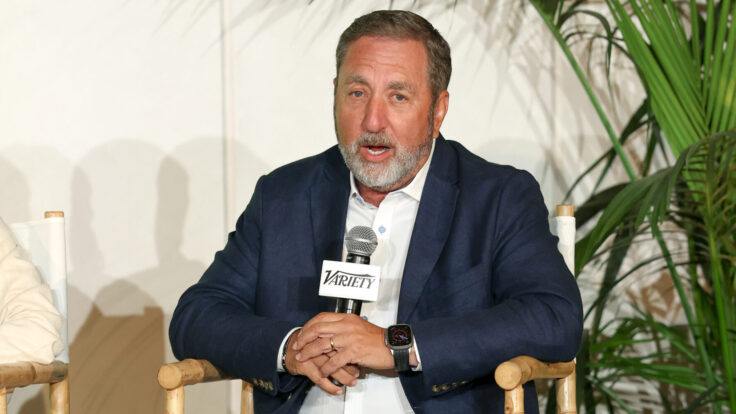
While you’re at it, be sure to catch yesterday’s conversation with former ESPN and NFL Media executive Steve Bornstein on the state of the business. Much more from that interview—which also goes down in history as The
Varsity’s first video podcast and inaugural foray into the rapidly growing, hyperscaling R.S.N. business—below. (You will recall that we’re partnering with NESN on the show.) Yes, I know that we need to increase our hair and makeup budget.
Below, I’ve got more on the YouTube TV–Disney fight, Versant’s sports ambitions, and industry chatter around
NBCUniversal’s Monday stand-alone sports launch. Plus, Bornstein discusses the NFL’s deal to take a 10 percent stake in ESPN and shares his prophecy about the best up-and-coming sport.
Okay, let’s get to it… |
Player of
the Week: Scott Boras
|
The week after enduring one of the worst betting scandals in its history, Major League
Baseball held its annual G.M. meetings in, of all places, Vegas. Most teams’ front-office executives shied away from talking about the Guardians pitchers or, frankly, any of the issues that have arisen as legalized gambling has proliferated in pro sports. But Scott Boras, the most influential agent in the business, took a different tack, telling The Athletic’s Evan Drellich, “If a guy throws a damn pitch in the dirt, there’s going to be an integrity question about that. … You can’t have that.”
Boras, whose legendary roster has ranged from the onetime can’t-miss bust Brien Taylor to the $765 million man Juan Soto, has a point. The professional sports leagues are correct that legalized gambling is preferable to the old days. But as these
events accumulate, each league will have to develop appropriate governance. That’s the best way to manage their P.R., and also their games. |
A few years ago, the Italian trading card giant with a sizable U.S. operation based in Texas sued
Michael Rubin’s Fanatics for alleged anti-competitive practices. Fanatics countersued, and that litigation is ongoing. This week, however, we learned that Panini was also being sued by Wild Card for the same alleged violations. The news of that lawsuit emerged shortly after it leaked that Panini had hired Citi to explore a possible sale. Panini
has not responded to Wild Card’s suit. |
- The Versant bears: Versant made headlines this week by branding its sports division USA Sports and signing a five-year deal for Pac-12 rights—thereby adding a washed-up mid-major conference built around Oregon State to a sports portfolio that includes the WNBA, USGA, Atlantic 10 Conference, and League One Volleyball. You can count influential analyst Craig Moffett unimpressed. “Surely you will have heard by now that the word versant,
from French, translates to ‘a slope.’ Allow us to assume it’s a downward one,” he wrote in a research note this morning.
Moffett reported that 86 percent of Versant’s revenue will come from two areas: linear distribution (affiliate fees) and advertising. And both are shrinking. “Those declines are secular; they cannot be expected to reverse,” he wrote, specifying that “declines in subscriber counts” caused Versant’s affiliate revenue to drop 3.5 percent in 2023 and 6.6 percent in 2024.
Meanwhile, Versant’s ad revenue declined 13.5 percent and 7.2 percent in 2023 and 2024, respectively, because of “continued ratings declines that reflect both declining subscribership and declining viewership.” - NBCSN redux: NBCUniversal will launch a new sports channel with an old name, NBCSN, for YouTube TV subscribers on Monday. (It will be available to Xfinity subscribers soon after.) Not to be confused with the old NBCSN—the inheritor of
Versus and the Outdoor Life Network that shuttered in 2021—the new linear TV channel will carry sports that had been exclusive to Peacock, including rights to the Monday night NBA package, MLB games, Premier League matches, WNBA contests, Big Ten games, and Notre Dame football, as well as shoulder programming from Dan Patrick, Mike “F’n” Florio, Dan Le Batard, and Matthew Berry.
YouTube TV will offer the channel to its
nearly 10 million subscribers; Xfinity is still figuring out where to place it. But after calls to a bunch of distribution executives, it seems like negotiations are going to center on where to tier the channel as much as its price. NBCUniversal obviously wants NBCSN in front of the widest possible audience, and distribution executives will want to use it to draw subscribers to their sports tiers. - Apple waives the wall: Apple TV is ditching its MLS
Season Pass paywall next season, which means that all of the league’s games will be available to all Apple TV subscribers, according to a report this afternoon from The Athletic’s Paul Tenorio. For the first three years of their 10-year, $2.5 billion rights deal, Apple charged $14.99 per month, or $99 per season, for MLS Season
Pass. Both Apple and MLS officials have said viewership has hit their goals, but neither side offered specific numbers. Apple signed an MLB deal for Friday night games in 2022, but the company had been otherwise slow to enter the sports business until this fall, when it signed Formula 1 to a five-year, $750 million deal that starts next year.
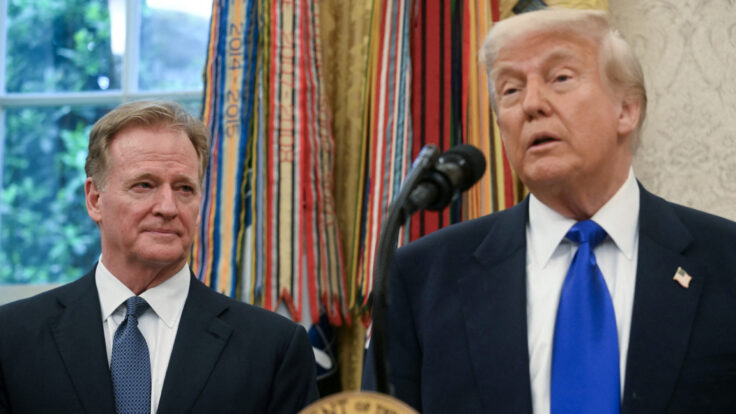
- The Roger and Bob show: After ESPN and the NFL announced a deal in August granting the league a 10 percent
equity stake in the network—and handing ESPN full control of NFL Network and NFL RedZone—questions immediately abounded. What would this mean for ESPN’s coverage of the league, or the NFL’s relationships with its other media partners? I asked Steve Bornstein, longtime sports media executive for both organizations, those precise questions on the latest episode of the Varsity podcast. Here’s what he had to say: “I happen to believe that relationship is on really solid footing
today. I don’t anticipate much difference in their operating ability. It’s not rocket science—sports is what’s driving all of today’s linear media, and there’s no second to the NFL in programming. If you’re programming a television network devoted to sports, then you have to have a great relationship with the most important content there is. The NFL and ESPN have demonstrated that, and it’s been mutually beneficial.”
Steve continued: “That doesn’t stop ESPN from criticizing the NFL, and
it doesn’t stop the NFL from satisfying its other partners. You have good management at both places, and they’re executing to the best of their ability. … I tried to do this when I was at the NFL. I couldn’t pull it off, but Roger [Goodell] and Bob Iger figured out how to do it. I tried to get ESPN involved with NFL Network 15 years ago.” - Sleeper growth sport!: Meanwhile, few people have a sharper eye
for untapped potential in sports than Bornstein. As media companies race to capture the next generation of fans, investors pour billions into women’s sports, and college programs regularly break attendance records, he told me that he foresaw an enormous opportunity hiding in plain sight, overlooked by broadcasters and brands alike. “The one sport that I think truly has a lot of room to grow, that has some attention, but not enough attention, is women’s volleyball,” Bornstein told me. “I’ve been
making a living for the last 40 years on identifying underserved sports—I look at women’s volleyball and see a big upside. The game I follow is the college game. … Women’s volleyball, to me, has every element of what makes a compelling sports story. I just don’t think it gets the attention it needs, and that it will get. Volleyball is a sport that’s primed to grow big.”
|
And now, on to the main event… |
|
|
With the informal deadline of Thursday’s earnings in the rearview, YouTube TV and
Disney are still negotiating to find a deal. But the open items—ingestion (quelle horreur!), the ESPN app, and obviously pricing—suggest the divergence in their endgames. |
|
|
Last night, mere hours before Disney released its fiscal fourth-quarter earnings, C.E.O.
Bob Iger and ESPN chairman Jimmy Pitaro were laser-focused on one particular business issue: their YouTube TV distribution deal. Disney’s channels, including ABC and ESPN, had been dark on YouTube TV since October 30—practically eons in broadcasting time, and veritable light-years during football season. Facing an informal deadline of this morning’s earnings call, they led their negotiating team to make more progress with YouTube in a matter of hours
than had been achieved cumulatively in the previous two weeks.
Alas, the optimism was short-lived. By the time this morning’s call kicked off, Disney executives characterized the negotiation as far from complete. “These discussions could go for a little while,” C.F.O. Hugh Johnston said on the call, fulfilling his fiduciary duty while also presumably sending a signal to his negotiating partner. Iger also used the audience of financial analysts to send his own
message. “The deal we have proposed is equal to or better than what other large distributors have already agreed to,” he said at the close of the call. “We are not trying to break any new ground.”
Iger and Pitaro may have originally coveted a completed deal to dangle before Wall Street, but negotiations continued throughout the day. This afternoon, sources told me that the two sides are inching closer to an agreement, though they were reluctant to predict when that would happen.
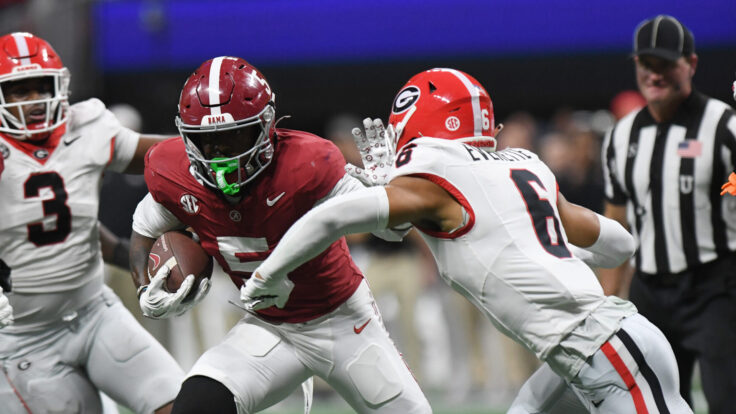
Obviously all parties would like to have an agreement in place before the weekend, when ABC and ESPN will have their strongest college football slate in weeks: Oklahoma–Alabama and Texas–Georgia are on ABC. So, too, is Notre Dame–Pittsburgh for the die-hard Irish fans. Oh, and the Cowboys are on Monday Night Football once again this week.
As I’ve reported ad nauseam, and as Iger alluded to on the call, price continues to be the main issue. YouTube wants a new,
lower rate to kick in when they eventually become the country’s largest distributor—a near certainty absent some sort of nuclear winter—over the next few years. Naturally, Disney wants to hold the fee structure, since their most-favored nations obligations would force them to open up their other distribution deals with other providers to renegotiation. They’re also hitting the mattresses over ESPN’s app: I’m told that Disney will not allow the app to be sold as part of YouTube’s Primetime
Channels. Of course, YouTube has its own concerns around ESPN’s app. Mostly, it wants assurances that ESPN isn’t going to pull games off its linear channels and put them exclusively on the app.
YouTube is also still pushing its ingestion strategy, wherein subscribers would not have to leave its owned and operated environment to watch events that are exclusive to a third-party app. If YouTube is paying upwards of $10 per subscriber per month, it wants to know that its customers
have access to that programming. But ESPN doesn’t want to give Google that much power over its programming or information about its business. None of the networks do, really. During a CNBC appearance today, Johnston was asked about this issue and intimated that Disney would push back on any YouTube TV plan that involved ingestion. “Anything that we have, we actually would prefer to run through a lot of our own distribution channels,” he said. |
For all the obvious reasons, this deal is being closely monitored by the entire sports business
industry. Unlike YouTube’s previous negotiations with NBCU or Paramount, this is ESPN. If YouTube can survive a sports rights trench war in the throes of football season and win the negotiation, it will become a harbinger of declining rights fees across the industry. Historically, of course, networks have used these kinds of negotiations to persuade distributors to help them absorb the ever-increasing costs of sports rights. And, given that they are the content providers, they’ve always
had leverage over the cable companies, which consumers usually resented anyway.
But as my colleague Julia Alexander recently observed, YouTube TV is a different type of distributor. Not only does its parent company have a $3.4 trillion market cap, but Google alone is planning on spending $85 billion on A.I. capex this year. So
what if some YouTube TV subscribers get pissed and cancel over an ND–Pitt game this weekend if a deal doesn’t come to pass? “I wonder whether Sundar Pichai even knows this dispute is happening,” one longtime affiliate executive told me, kinda half-joking. “YouTube TV is immaterial to Google’s stock price—immaterial. Whereas ESPN, Disney, and ABC are a very material component for Comcast, Charter, and DirecTV. If YouTube TV loses 3 million homes, it’s not going to
affect its stock price.”
All of which may explain why Disney stock dropped by nearly 8 percent today, its worst day since April. It may also explain why YouTube is still negotiating even after the subscriber defections following two Monday Night Football games and two weekends of SEC football. “We perhaps have some leverage as well, because there are other places people can go to get sports,” Johnston said on CNBC today. And while that’s certainly true, YouTube TV can undeniably
play a much longer game. |
A YouTube exec on Disney-YouTube: “Disney is fundamentally misrepresenting the facts.
They are asking YouTube TV for a rate above what Charter and DirecTV pay for the ABC networks. They have also asked us to pay more for their content than what they charge Hulu and Fubo, two smaller players that they own. Disney won’t even agree to give YouTube TV the rates they offer the largest player if/when we reach that size. To be clear, we’re not asking for better rates, as Disney is claiming; instead, we’re asking for size-based M.F.N.s that will guarantee we’re not going to pay more than
larger distributors if/when we pass them.” —A YouTube exec
More Disney-YouTube: “I was traveling last weekend so wasn’t truly impacted by the YouTube TV–Disney dispute, personally. But my 15-year-old son took it upon himself to buy a month of ESPN Premium so he could watch college football on Saturday. He’s lucky we received a note about the $20 credit from YouTube TV, which helps offset!” —A sports executive
On ESPN Bet: “Has anybody noticed
that when ESPN ventures out of its lane (e.g., sports betting, video games, restaurants, cellphones), it ends pretty quickly with expectations not met? Maybe it’s worth examining why.” —A media executive
On Paramount’s UFC execs: “You wrote about Glenn Jacobs moving from ESPN to Paramount, but you neglected to mention the No. 1 highlight of his career.” —A
journalist |
Have a great weekend. See you Monday,
John
This issue was assembled with the help of
Curtis Rowser. |
|
|
Ace media reporter Dylan Byers brings readers into the C-suite as he chronicles the biggest stories in the industry:
the future of cable news in the streaming era, the transformation of legacy publishers, the tech giants remaking the market, and all the egos involved. |
|
|
Puck fashion correspondent Lauren Sherman and a rotating cast of industry insiders take you deep behind the scenes
of this multitrillion-dollar biz, from creative director switcheroos to M&A drama, D.T.C. downfalls, and magazine mishaps. Fashion People is an extension of Line Sheet, Lauren’s private email for Puck, where she tracks what’s happening beyond the press releases in fashion, beauty, and media. New episodes publish every Tuesday and Friday. |
|
|
Need help? Review our
FAQ page or contact us for assistance. For brand partnerships, email ads@puck.news.
You received this email because you signed up to receive emails from Puck, or as part of your Puck account associated with {{customer.email}}. To stop receiving this newsletter and/or manage all your email preferences, click here. |
Puck is published by Heat Media LLC. 107 Greenwich St., New York, NY 10006 |
|
|
|